
Azeula Fortress
აზეულის ციხე (Azeula Tsikhe)
Georgia · Tbilisi · Near Tbilisi
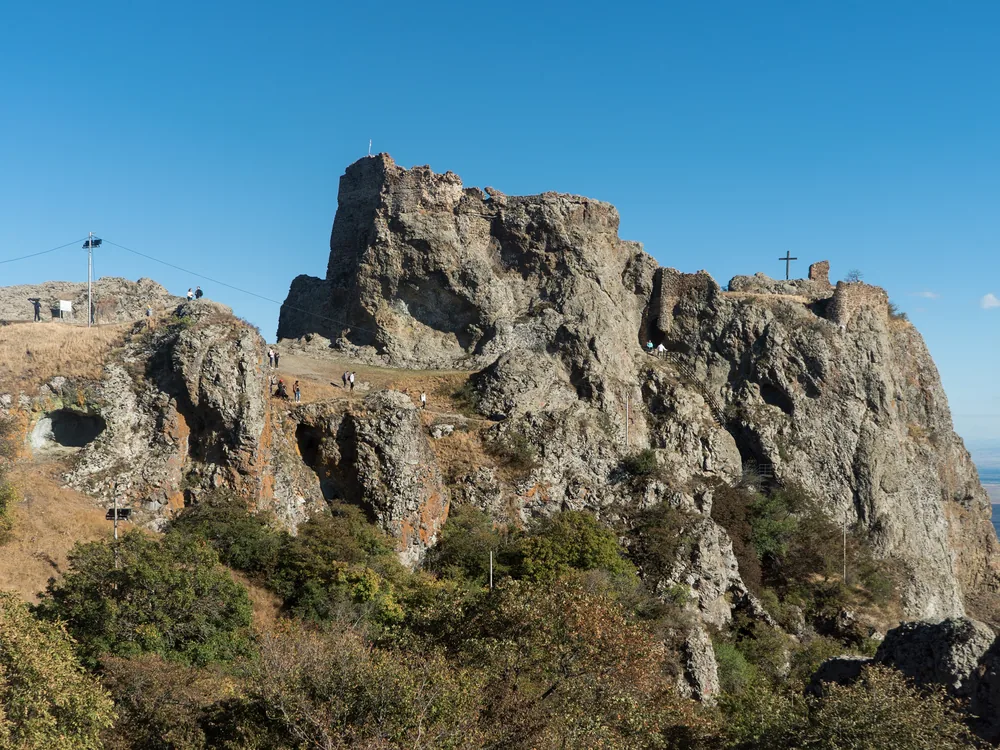
Medieval Georgian fortress on the hills above Tbilisi, built in the early medieval period as part of the defensive network guarding approaches to the Georgian capital; the site is a small stone fortress with curtain walls and tower remains characteristic of early medieval Caucasian defensive construction; Azeula is not widely documented in English-language sources and is visited primarily as part of a multi-site day tour from Tbilisi that combines the fortress with Sameba Cathedral (Holy Trinity Cathedral, the largest church in Georgia, completed 2004) and the Chronicle of Georgia (Khronika Sakartvelos, a monumental sculptural complex completed 1985); the GetYourGuide tour is a 6.5-hour multi-site excursion, not a standalone castle-only visit
This page is part of an independent travel guide and is not affiliated with, endorsed by, or operated by Azeula Fortress.
© Castles & Palaces
Quick Facts
- Hours
- Mon–Sun Daylight hours
- Day trip from
- €56
- Duration
- 6.5 hours (full multi-site day tour)
- Best time
- April to October
- Booking
- Required — book 1+ days ahead
- Nearest city
- Tbilisi
Featured Tour
Tbilisi: Azeula Fortress, Sameba Cathedral & Chronicle of Georgia Tour
Cancellation available · Instant confirmation
Highlights
- ✦IMPORTANT: The GetYourGuide tour combines Azeula Fortress with two other major Tbilisi sites in a 6.5-hour excursion — this is a multi-site day tour, not a standalone castle visit; visitors should choose this tour for the combined experience of all three sites rather than for the fortress alone
- ✦Sameba Cathedral (Holy Trinity Cathedral), completed in 2004, is the largest cathedral in Georgia and the principal seat of the Georgian Orthodox Church — an imposing gilded structure on a hill above the Kura river that dominates the Tbilisi skyline and represents the scale of religious construction in post-Soviet Georgia, where the Orthodox Church has re-established its cultural centrality with considerable architectural ambition
- ✦The Chronicle of Georgia (Khronika Sakartvelos) is a monumental sculptural complex completed in 1985 on the initiative of sculptor Zurab Tsereteli — 35-metre-tall stone columns carved with bas-relief figures depicting the history and mythology of Georgia, standing on the shore of the Tbilisi reservoir; it is one of the most unusual public monuments in the Caucasus and is visually overwhelming in a way that photographs consistently understate
- ✦Azeula Fortress occupies a hilltop above Tbilisi with views over the surrounding landscape — the kind of defensive position that the Georgian kings and their predecessors used extensively across the hills around the Kura valley to guard the capital from multiple directions, and whose ruins dot the Tbilisi uplands in a way that maps the strategic geography of medieval Georgia
- ✦Tbilisi's layered historical geography — Roman, Persian, Arab, Byzantine, Mongol, Ottoman, Russian, and Soviet — is legible from the hilltops above the city in a way that the streets and neighbourhoods below suggest but cannot fully explain; the fortress position gives the day tour its geographical framework
Skip the queue with a guided tour
Skip-the-line tickets & expert guides
Georgia's capital sits in the Kura river valley at the intersection of routes that have made it strategically significant for two thousand years — the Caucasian pass routes connecting the Black Sea to the Caspian, the north-south passages between the Russian steppe and the Iranian plateau, and the east-west roads that Alexander the Great's successors, the Parthians, the Romans, the Byzantines, and the Sassanid Persians all contested with various degrees of success. Tbilisi has been captured, burned, ruled, and rebuilt by sufficiently many different civilisations that the city's history is sometimes described as a compressed version of Caucasian history itself. The hilltops above the city, including the ridge where Azeula Fortress stands, were part of the defensive network that medieval Georgian kings built to guard the capital's approaches.
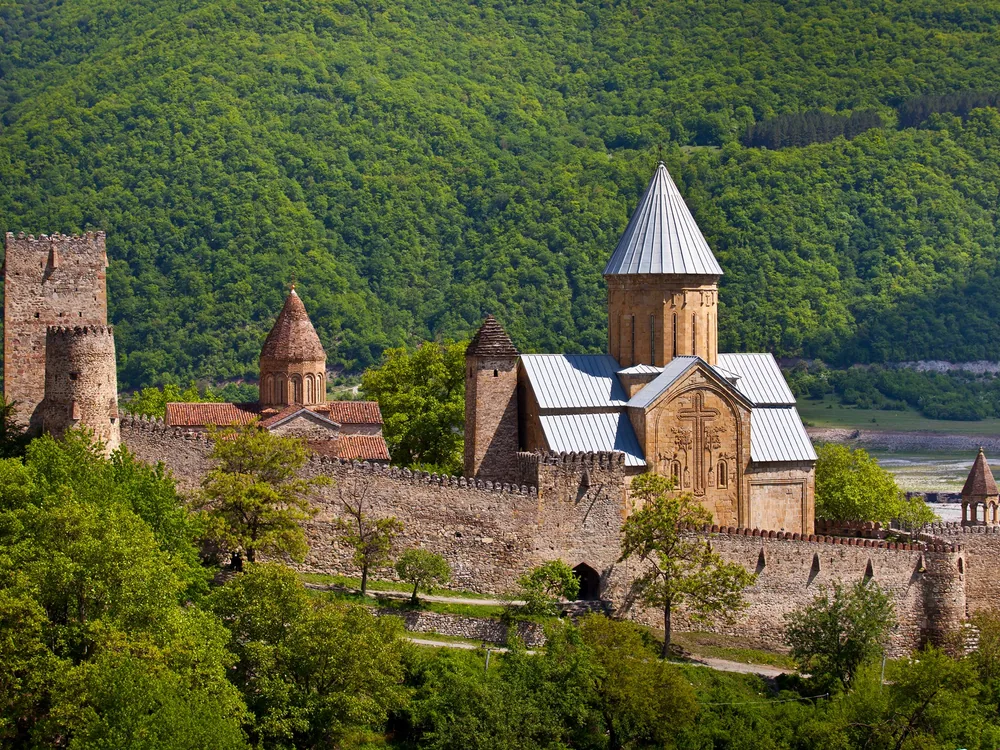
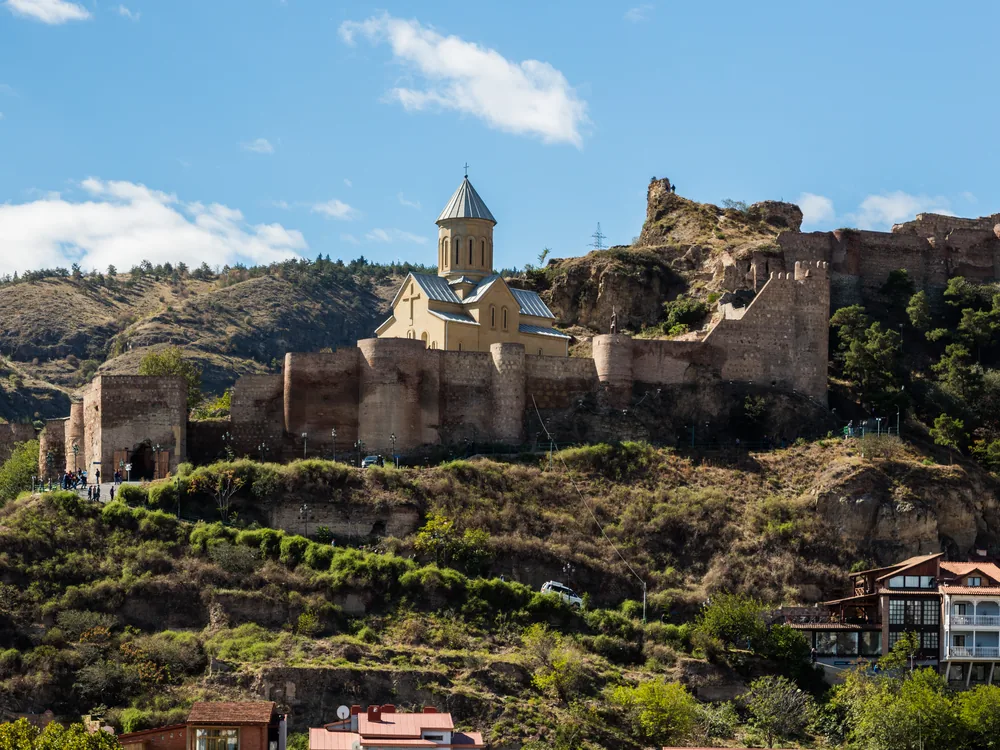
Azeula Fortress is a medieval site whose detailed history is not well documented in English-language sources. The fortress dates from the early medieval period — the first millennium BCE to first millennium CE in the broad sense used for this region, with construction more specifically associated with the medieval Georgian kingdom's defensive infrastructure on the hills above the Kura. The site is characterised by stone curtain walls and tower remains of the type found throughout the defensive hilltop positions around Tbilisi, built from the local Caucasian stone and positioned for maximum observation of the valley approaches below. It is a smaller and less well-documented site than the major Georgian fortress complexes — Narikala in central Tbilisi, Ananuri on the Georgian Military Highway north of the capital — but its hilltop position gives it a quality of view and landscape setting that more famous sites, buried in the city fabric or deep in gorges, sometimes lack.
The GetYourGuide day tour combines Azeula Fortress with two other Tbilisi landmarks in a 6.5-hour excursion. This combination is what the tour is, and it should be understood and chosen as such: you are booking a day tour of three distinct sites rather than a dedicated castle visit, and the quality of the experience depends on the combined programme rather than Azeula alone. The two companion sites are significant enough to make the combination worthwhile for visitors with a full day in the capital.
Sameba Cathedral — officially the Cathedral of the Holy Trinity, known in Georgian as Tsminda Sameba — is the principal Georgian Orthodox church in Tbilisi and the largest church in Georgia. It was completed in 2004 after construction beginning in the 1990s: a post-Soviet project of considerable ambition that placed a large gilded-domed cathedral on a prominent hill above the Kura river, immediately visible from most of the city and from the approach roads. The Georgian Orthodox Church's recovery of public prominence after Soviet suppression is one of the defining features of post-independence Georgian society, and Sameba is the most architecturally assertive expression of that recovery. The interior is decorated in the Byzantine Orthodox tradition — mosaic programmes, painted saints, gilded iconostasis — and the cathedral complex includes a number of smaller chapels and support buildings that together constitute a major Orthodox monastic and ecclesiastical centre. The scale and the setting make it visually one of the most impressive Orthodox buildings constructed in the post-Soviet period anywhere in the former USSR.
The Chronicle of Georgia (Khronika Sakartvelos) is a different kind of monument entirely. Completed in 1985 and created by the Georgian sculptor Zurab Tsereteli, who subsequently became famous (and controversial) for his monumental public works in Moscow and elsewhere, the Chronicle consists of 35-metre-tall stone columns — massive pillars carved with bas-relief figures depicting episodes from Georgian history, religion, and mythology. The columns stand on the shore of the Tbilisi Sea (the reservoir northwest of the city), visible from the water and from the surrounding hills, and the cumulative visual impact of multiple 35-metre carved columns grouped together is considerable. Tsereteli's monumental style — dense figure programmes on large scales, historical and mythological themes, stone and bronze materials — is recognisable from his other works, and the Chronicle is among his most ambitious completed projects. For visitors unfamiliar with Georgian history and mythology, the carvings are visually impressive without being fully legible; a guide who can identify the key figures and episodes significantly enriches the experience.
Tbilisi as a city rewards time beyond the day-tour programme. The Old Town (Abanotubani and Narikala area) has a distinctive architectural character shaped by the overhanging wooden balcony houses of the 18th and 19th centuries, Persian and Ottoman building traditions, and the thermal sulphur baths that give the Abanotubani neighbourhood its name and its domed roof profile. The Narikala fortress, built from the 4th century and rebuilt across many subsequent periods, overlooks the Old Town from a ridge and is easily combined with an afternoon walking the old city streets. Georgian cuisine — khinkali dumplings, khachapuri cheese bread, the wine tradition of the Kakheti region — makes the evening meal in Tbilisi one of the more rewarding food experiences in the Caucasus.
Ananuri Fortress, on the Georgian Military Highway north of Tbilisi and already on this site, is the most natural companion for visitors with additional time in Georgia — a substantially intact riverside fortress complex with two churches, 16th-century walls, and a setting on the Aragvi river reservoir that is among the most photographed sites in the country. Gori, the birthplace of Stalin and home to the Stalin Museum, is approximately 75 kilometres west of Tbilisi and can be combined with a Caucasian fortress day for visitors interested in the full arc of Georgian and Soviet history on a single road.
History
Azeula Fortress is a medieval Georgian fortification on the hills above Tbilisi, part of the defensive network that guarded the approaches to the Georgian capital across multiple historical periods. The fortress dates from the early to high medieval period of the Georgian kingdom. Its detailed construction and ownership history is not well documented in English-language sources. The site is now an open-air ruin visited as part of a multi-site day tour from Tbilisi that also includes Sameba Cathedral (completed 2004) and the Chronicle of Georgia sculptural monument (completed 1985).
How to Visit
Getting there: The fortress is visited as part of an organised tour from central Tbilisi. Tbilisi is served by international flights via Tbilisi International Airport (TBS) with connections from Istanbul, Dubai, Vienna, and other European hubs. The city centre is about 20 minutes from the airport by taxi or airport express.
Tickets: The GetYourGuide "Tbilisi: Azeula Fortress, Sameba Cathedral & Chronicle of Georgia Tour" is a 6.5-hour multi-site day tour covering Azeula Fortress alongside Sameba Cathedral and the Chronicle of Georgia. The fortress itself is an open-air site that may also be accessible independently on foot.
Practical tips: This is a multi-site day tour rather than a standalone castle visit — Azeula is one of three stops, alongside Sameba Cathedral (the largest church in Georgia) and the Chronicle of Georgia (35-metre carved stone columns on the Tbilisi reservoir shore). Book for the combined experience of all three sites rather than the fortress alone. The fortress stop involves walking on uneven terrain.
Combine with: Ananuri Fortress is 72 km north on the Georgian Military Highway — a substantially intact medieval fortress complex reflected in a turquoise reservoir, the most recommended castle addition for visitors with more time in Georgia. Narikala Fortress in Tbilisi's Old Town is an easy same-day extension.
Frequently Asked Questions
The GetYourGuide tour is a 6.5-hour multi-site day tour that combines Azeula Fortress with two other major Tbilisi landmarks: Sameba Cathedral (Holy Trinity Cathedral, the largest church in Georgia, completed 2004) and the Chronicle of Georgia (a monumental sculptural complex of 35-metre carved pillars completed in 1985 by sculptor Zurab Tsereteli). Azeula Fortress is one of three stops. Visitors booking this tour should expect a combined Tbilisi excursion rather than a dedicated castle visit.
Location
Azeula Fortress, Tbilisi hills, Georgia
Nearby Castles
Tours & Tickets
Powered by GetYourGuide
From
€56/ person