
Albrechtsberg Palace
Schloss Albrechtsberg
Germany · Saxony — Loschwitz, north bank of the Elbe, Dresden · Near Dresden
Built 1854 · Late Classicism with Italian Renaissance villa influences, notably the Villa d'Este near Rome; three-winged palace with terraced gardens descending to the Elbe
This page is part of an independent travel guide and is not affiliated with, endorsed by, or operated by Albrechtsberg Palace.
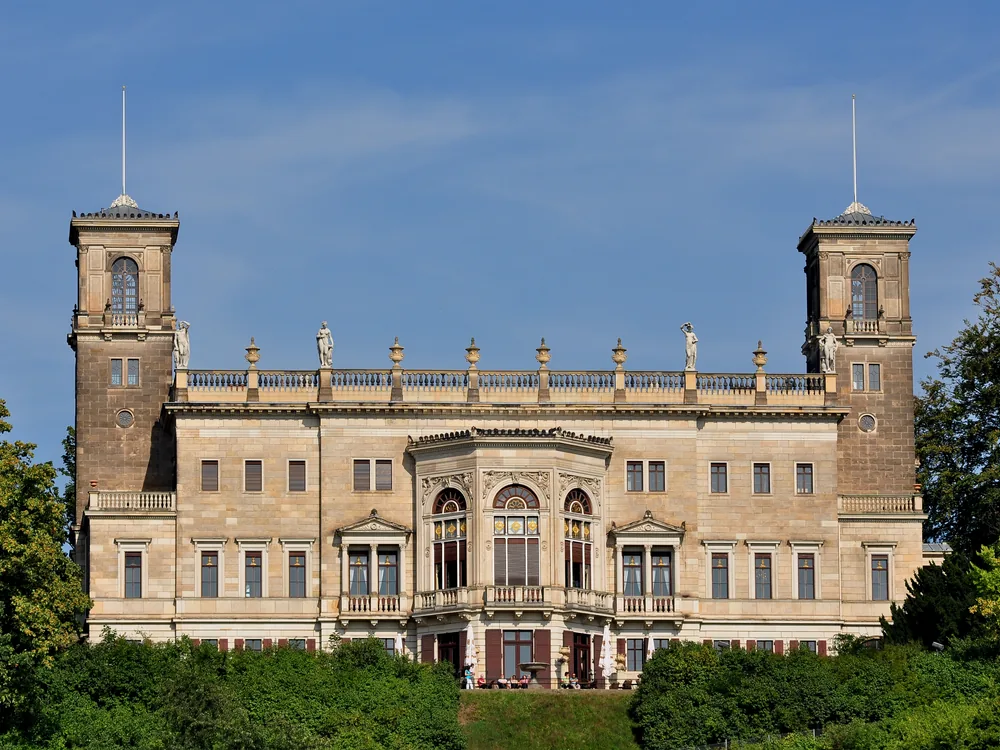
© Castles & Palaces
Quick Facts
- Hours
- Mon–Sun No general public admission — access via ticketed classical concert events only
- Tour from
- €40
- Duration
- 1–1.5 hours (concert length)
- Best time
- Year-round
- Booking
- Required — book 3+ days ahead
- Nearest city
- Dresden
Featured Tour
Dresden: Classical Concerts at Albrechtsberg Palace
Cancellation available · Instant confirmation
Highlights
- ✦One of the three 'Elbschlösser' (Elbe palaces) — the trio of Prussian royal villas (Albrechtsberg, Eckberg, Lingnerschloss) built for three princes on adjacent hilltop sites above the Elbe's north bank in the 1850s, transforming the Loschwitz hillside into a residential statement of Prussian dynastic prestige
- ✦Designed by Adolf Lohse with direct reference to the Villa d'Este near Rome — the Italian Renaissance villa model translated into the Saxon landscape, with terraced gardens descending in stages toward the river
- ✦In 1943, the palace interior served as a children's air-raid shelter, protecting Dresden's children from bombing raids; it survived the February 1945 firestorm that destroyed the city centre almost entirely intact
- ✦After the war, the Soviet Foreign Trade Ministry requisitioned the palace and operated it as the 'Intourist' hotel from 1948 — a rare 19th-century Prussian villa reinvented as a Soviet travel-bureau property
- ✦The only way to experience the palace's historic halls today is through the classical concert series held inside — a small-audience chamber music experience in one of Dresden's best-preserved 19th-century interiors
Skip the queue with a guided tour
Skip-the-line tickets & expert guides
Three Prussian royal villas were built side by side on the hills above the Elbe's north bank in Dresden in the 1850s, close enough that their gardens almost touch. Albrechtsberg, Eckberg, and Lingnerschloss — the Elbschlösser, or Elbe palaces — were each commissioned by a different Prussian prince, each on a hilltop site with a view down to the river and across to the forested valley beyond. Of the three, Albrechtsberg is the largest and the most directly indebted to Italian Renaissance precedent. Its architect, Adolf Lohse, drew explicitly on the Villa d'Este near Rome, giving the palace three wings and terraced gardens that descend in stages toward the river, adapting the Italian hillside villa model to the Saxon landscape and the particular view of the Elbe bend that Prince Albrecht of Prussia — brother of King Frederick William IV — had selected for his summer residence.
Albrechtsberg was built between 1851 and 1854 for Prince Albrecht, and its position above Loschwitz gave it one of the most envied private panoramas in 19th-century Saxony: the Dresden skyline with its Baroque towers visible in the distance, the river curving through its forested valley below, and the Blaues Wunder suspension bridge — completed in 1893, a few years after the palace was finished — framing the view to the west. The terraced gardens, stepping down through formal levels toward the riverside, made the approach to the palace one of its own best features.
The 20th century subjected Albrechtsberg to a compressed sequence of radically different uses. From 1937, the SA occupied the building for equestrian training and stable operations. In 1943, as Allied bombing intensified across Germany, the palace was converted into an air-raid shelter for Dresden's children. It survived the catastrophic February 1945 bombing that consumed the historic city centre — the palace's position in Loschwitz, several kilometres from the most heavily struck areas, protected its fabric while the city centre burned. After the war the Soviet Foreign Trade Ministry requisitioned Albrechtsberg and operated it as the Intourist hotel from 1948, converting a 19th-century Prussian dynastic villa into a Soviet state travel-agency property for more than four decades.
Since German reunification, Albrechtsberg has served as an events venue. Access to its historic halls is available only through the classical concert series held inside — there is no general museum admission, no ticket desk at the gate, and no self-guided route through the building. A concert at Albrechtsberg is a small-audience chamber music experience inside some of Dresden's best-preserved 19th-century interiors, with the Elbe visible through the terrace windows and the full biographical weight of the building's 20th-century history present in the rooms around you.
History
Albrechtsberg Palace entered the record in 1851, when Prince Albrecht of Prussia — a brother of King Frederick William IV — commissioned the Berlin architect Adolf Lohse to design a summer villa on the Elbe heights north of Dresden. Lohse completed the three-winged palace in 1854, taking direct inspiration from the Villa d'Este near Rome and creating terraced gardens that step down toward the river, making Albrechtsberg the most architecturally ambitious of the three Elbschlösser. The palace remained in Prussian royal hands until the broader collapse of the Hohenzollern dynasty in 1918. By 1937, the SA had occupied the building for equestrian training and stable use. In 1943, as Allied bombing raids on Germany intensified, the palace was repurposed as a children's air-raid shelter; it survived the February 1945 bombing that consumed Dresden's centre largely intact, sheltered by its distance from the most heavily struck areas. The Soviet Foreign Trade Ministry requisitioned it after the war and operated it as the Intourist hotel from 1948 until German reunification in 1990. In the post-reunification period the palace was returned and converted into an events venue, hosting the classical concert series that now gives the public its only access to the historic interior.
How to Visit
Getting there: Albrechtsberg Palace is on the Elbe's north bank in Loschwitz, approximately 5 km east of central Dresden. Take tram line 11 to Körnerplatz or Loschwitz, then a short walk uphill along the Bautzner Straße. By car from the city centre, follow the Bautzner Straße east toward Loschwitz; the Blaues Wunder bridge is a few minutes' walk west of the palace.
Tickets: There is no general walk-up admission to Albrechtsberg Palace. The GetYourGuide classical concert ticket — a classical concert in the palace's historic halls, with the specific concert date and program listed on the GetYourGuide page at time of booking — is the only ticket available for this venue. Concert dates rotate; pull the current 2026 schedule from the live listing before planning your visit. Book in advance and check dress code and arrival time per the organizer's instructions.
Practical tips: The concert is the experience — Albrechtsberg's historic rooms are not accessible independently. Check the current program on the listing; the concert series typically presents chamber music in an intimate small-audience format. The Blaues Wunder bridge and the Pillnitz riverside path are worth incorporating into the visit as outdoor extensions before or after the concert.
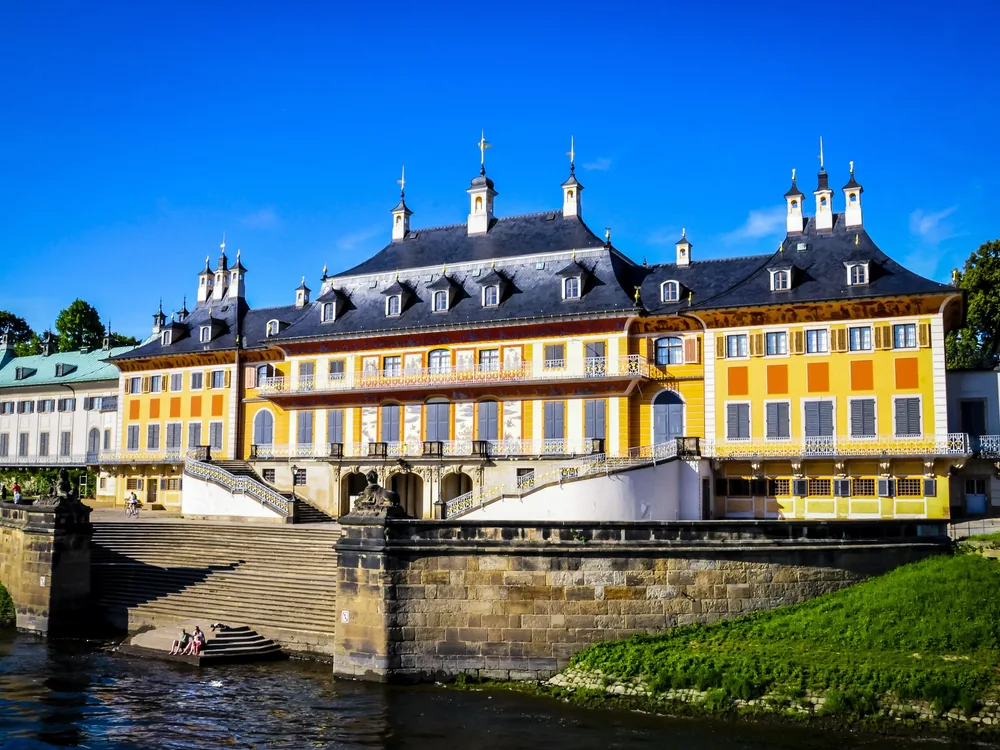
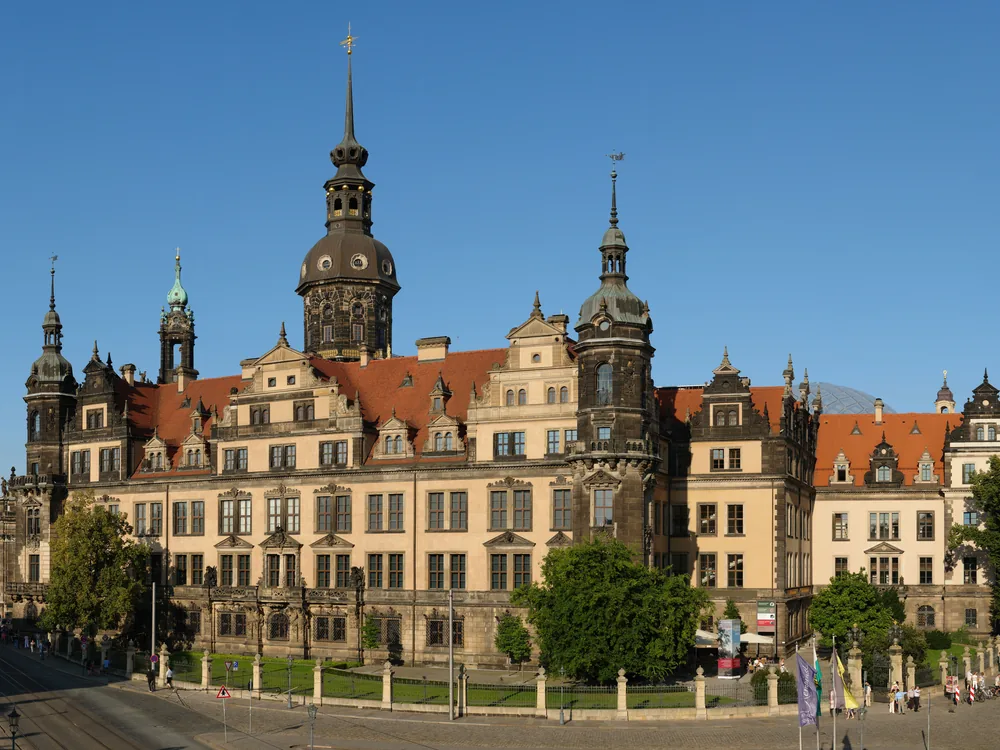
Combine with: Pillnitz Castle (5 km upstream on the Elbe — the summer residence of the Electors of Saxony, a remarkable ensemble of Chinese-Baroque pavilions in Pillnitz Palace Park) and Dresden Castle (5 km west in the city centre — the residence of the Electors of Saxony and Kings of Poland, now housing the world-class Green Vault treasure collection).
Frequently Asked Questions
No — there is no general public admission to Albrechtsberg Palace. The palace is accessible only through ticketed classical concerts held in its historic halls. Check the current GetYourGuide listing for the next available concert date.
Location
Bautzner Str. 130, 01099 Dresden, Germany
Nearby Castles
Tours & Tickets
Powered by GetYourGuide
From
€40/ person