
Braunfels Castle
Schloss Braunfels
Germany · Hesse · Near Braunfels (near Wetzlar)
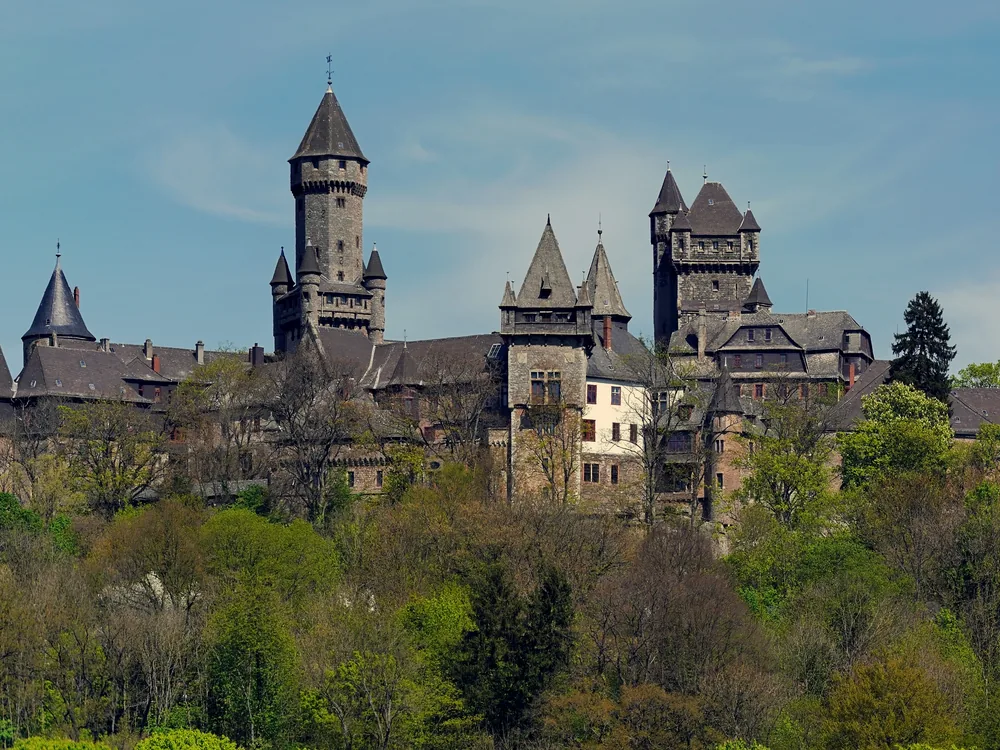
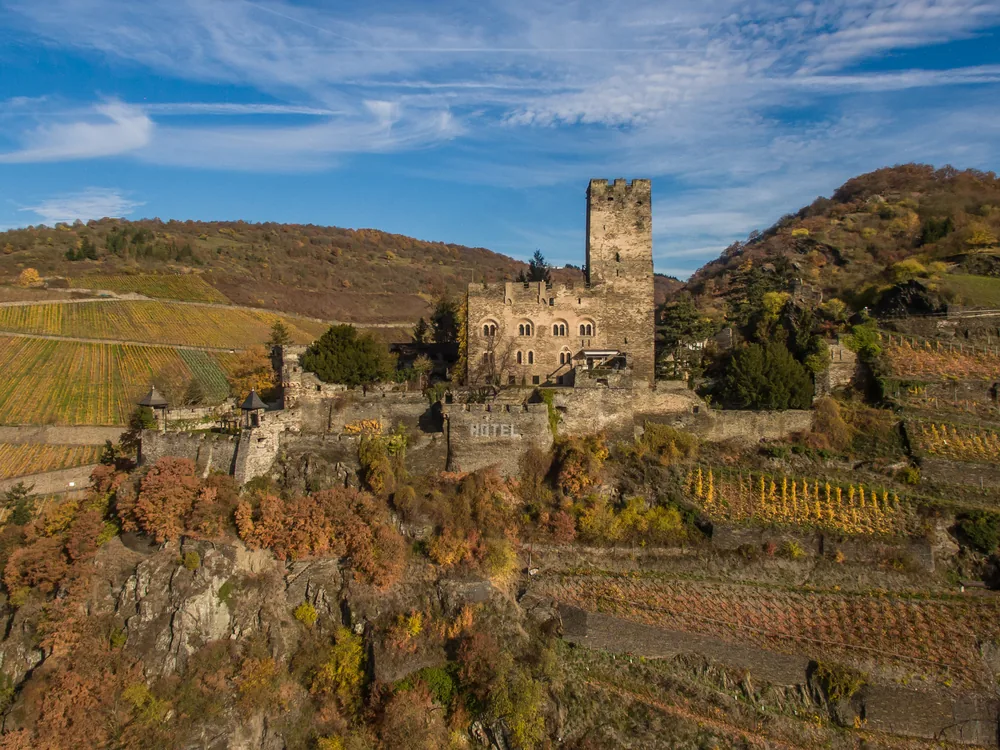
Built 1246 · Medieval castle first documented in 1246, with a distinctive round tower and multiple turrets resulting from 19th-century Romantic-era reconstruction over the earlier medieval core; the castle sits on a prominent hilltop above the half-timbered town of Braunfels and retains its fairy-tale silhouette of clustered towers and steeply pitched roofs characteristic of Rhineland Romantic historicism; still owned and partly inhabited by the Solms-Braunfels princely family, making it one of the few German castles with documented continuous aristocratic ownership; accessible by guided tour only, no independent entry
This page is part of an independent travel guide and is not affiliated with, endorsed by, or operated by Braunfels Castle.
© Castles & Palaces
Quick Facts
- Hours
- Daily 11:00–17:00
- Guided tour from
- €9
- Duration
- 50 minutes (guided tour)
- Best time
- May to October
- Booking
- Required — book 1+ days ahead
- Nearest city
- Braunfels (near Wetzlar)
Featured Tour
Guided Tour of the Fairytale Castle Braunfels
Cancellation available · Instant confirmation
Highlights
- ✦Braunfels Castle is still owned and partly inhabited by the Solms-Braunfels princely family, with documented family connection to the site dating to 1246 — one of the longest continuous aristocratic ownerships of any German castle open to the public, and the reason the interiors retain the character of a working family home rather than a museum
- ✦The castle's fairy-tale silhouette — clustered towers, a distinctive round tower, steeply pitched roofs — is the result of 19th-century Romantic-era reconstruction that overlaid the earlier medieval structure with the fashionable historicist aesthetic of the period; the result is exactly the kind of picturesque castle silhouette that Rhineland Romanticism was designed to produce
- ✦Entry is by guided tour only on a fixed schedule — no independent wandering — which makes Braunfels a different kind of experience from the self-guided castle visit; the tour covers family history, castle architecture, armour and weapons collections, and views over the Lahn valley from the tower
- ✦The town of Braunfels below the castle is one of the best-preserved half-timbered old towns in Hesse — a network of Fachwerk buildings around a historic market square that has resisted the modernisation that erased similar townscapes in neighbouring cities during the 20th century
- ✦The castle is situated in the Wetzlar region of central Hesse, convenient to Frankfurt (1 hour) and forming a natural pairing with Wetzlar's Gothic cathedral and the Goethe connection — the young Goethe spent a formative period in Wetzlar in 1772 that directly inspired The Sorrows of Young Werther
Skip the queue with a guided tour
Skip-the-line tickets & expert guides
The practical fact about Braunfels Castle that any visitor needs to know first is that you cannot simply walk in. Entry is by guided tour on a fixed schedule — typically several times daily during the open season — and the tour lasts approximately 50 minutes. No independent exploration of the interior is permitted. This is not a bureaucratic restriction but a structural fact: the castle is still partly inhabited by the Solms-Braunfels family, which means some areas are private family living spaces, and the visit operates on the family's own terms rather than on those of a museum administration or public heritage body.
The Solms-Braunfels family connection to this particular hilltop in Hesse dates to 1246, when the castle is first documented in written records. The intervening eight centuries of documented history involve the full range of Central European aristocratic experience: marriages and inheritances that extended the family's territorial holdings, divisions of the Solms lands among branch families, the Thirty Years' War (which left very few German castles intact), the reorganisation of German nobility under the Holy Roman Empire and then under Napoleonic and later Wilhelmine administrative changes, and eventually the preservation challenge of maintaining a medieval castle complex through two world wars and into a 21st century where the economic model for private castle ownership is necessarily different from that of the 13th century.
What the continuous family ownership preserved — and this is worth dwelling on — is a quality of habitation that museum-administered castles cannot replicate. A castle that has been in the same family for 780 years and is still partly lived in feels different from a castle that has been transferred to state ownership, emptied of its contents, and refurnished with period pieces for educational purposes. The guided tour at Braunfels covers rooms that contain family portraits, armour and weapons accumulated across generations, furniture in use rather than behind barriers, and a patina of accumulated domestic history that institutional administration tends to homogenise away. This is the specific value of the Braunfels visit, and it is the reason the guided-tour-only format exists: you are walking through someone's home as well as a medieval castle.
The castle's visual character is primarily the product of the 19th century. The medieval core — first documented 1246 — survived the later turbulences in various states of completeness, and the Romantic era's enthusiasm for picturesque Gothic historicism provided both the aesthetic and the funds for a major reconstruction that gave Braunfels its current fairy-tale silhouette. The clustered towers, the distinctive round tower visible from the town below, and the steeply pitched roofs are the product of this 19th-century campaign rather than direct survivals from the medieval period. This is a common story in the Rhineland, where many of the most photogenic castle silhouettes are Victorian-era reconstructions of medieval ruins — Neuschwanstein in Bavaria is the most extreme example of the same phenomenon — and it does not diminish the aesthetic effect, though it bears noting for visitors who want to understand what they are looking at.
The town of Braunfels that the castle commands from its hilltop is independently worth visiting. The half-timbered old town — Fachwerk houses around a market square, largely intact because Braunfels escaped the Allied bombing that destroyed similar medieval urban fabric in Frankfurt, Wetzlar, and other Hessian cities — is one of the better-preserved examples of this architectural tradition in the region. The combination of castle and town can be covered in a comfortable half-day: tour first, then explore the old town below.
Braunfels sits within easy reach of Frankfurt (approximately one hour by car) and forms a natural day-trip combination with Wetzlar, the city 15 kilometres south where Goethe spent a formative period in 1772 that produced his breakthrough novel The Sorrows of Young Werther. Wetzlar's Gothic cathedral, the Goethe sites, and the broader Lahn valley countryside make the Braunfels region more versatile than a single-castle visit might suggest.
The GetYourGuide guided tour covers the 50-minute guided tour of the castle interior. Tour times are fixed; confirm the current schedule at schloss-braunfels.de before visiting, as they vary by season and day of week.
For visitors with an interest in the broader Hessian and Rhineland castle landscape, Braunfels occupies a specific niche. The Lahn valley — which runs through Wetzlar and Marburg before meeting the Rhine at Lahnstein — is its own castle corridor, less crowded and more intimate than the Rhine Gorge proper, and Braunfels is the most visually striking point on that corridor's northern reach. The Rhineland enthusiasm for castle restoration in the 19th century produced a number of silhouettes that look medieval but are substantially Victorian-era reconstructions, and Braunfels is honest about belonging to this category: the towers you see from the town below are largely the product of the Romantic period, not the 13th century, and the guided tour presents the castle's evolution from its medieval foundations to its current form without pretending otherwise.
The guide who leads the tour typically covers the family silver, the 18th-century state rooms reflecting the Solms-Braunfels family's position within the Holy Roman imperial nobility, the armoury with weapons accumulated across centuries of family military service, and views from the tower over the Lahn valley and the Taunus foothills. Tours run in German; English commentary is available on request and worth arranging in advance for international visitors. The 50-minute format is compact but not rushed — enough to cover the main rooms and the architectural narrative without the fatigue that longer castle circuits can produce. Given the guided-only format, it is genuinely different from the self-service castle visit, and the combination of living family residence and historic monument gives it a character that publicly administered castles tend to smooth away.
History
Braunfels Castle is first documented in 1246, when it appears in historical records as the seat of the Solms family in Hesse. The castle passed through various branch families of the Solms dynasty across the medieval and early modern periods. The Thirty Years' War (1618–1648) damaged or destroyed many German castles in the region, but Braunfels survived in usable form. The 19th century saw a major Romantic-era reconstruction that gave the castle its current picturesque silhouette of clustered towers. The Solms-Braunfels family has maintained continuous ownership and remains partly in residence, operating the castle as a guided-tour heritage attraction.
How to Visit
Getting there: Braunfels is 15 km northwest of Wetzlar and ~60 km north of Frankfurt. By car: take the A45 north, exit at Herborn/Ehringshausen, then follow signs to Braunfels (~1 hour from Frankfurt). By public transport: train to Wetzlar (40 min from Frankfurt), then regional bus or taxi to Braunfels; connections are limited, so a car is strongly recommended.
Tickets: Entry costs €9 for adults, €5 for children. The GetYourGuide guided tour covers the 50-minute walk through the castle's state rooms, armoury, and family collections. Tours run at fixed departure times — confirm the current schedule at schloss-braunfels.de before visiting, as times vary by season.
Practical tips: Tours are in German; English commentary can be arranged in advance by contacting the castle directly. Allow extra time after the tour to explore the half-timbered old town below — one of the best-preserved Fachwerk streetscapes in Hesse, largely intact because the town escaped wartime bombing.
Combine with: Wetzlar (15 km south) is the natural pairing — the Gothic cathedral and the Goethe sites where the young Goethe spent his 1772 period that inspired The Sorrows of Young Werther. The broader Lahn valley between Wetzlar and Marburg has its own quieter castle corridor, less crowded than the Rhine Gorge proper, and makes a full Hesse day by car.
Frequently Asked Questions
The castle is still partly inhabited by the Solms-Braunfels family, which means some areas are private living spaces not accessible to visitors. The guided tour format allows the family to control access to the parts of the castle that are open to the public while maintaining their private residence in other sections. This is also what makes the visit distinctive: walking through rooms that are part of a working family home rather than a fully institutionalised museum.
Location
Schlossstraße 2, 35619 Braunfels, Germany
Nearby Castles
Tours & Tickets
Powered by GetYourGuide
From
€9/ person