
Hornberg Castle
Hotel-Restaurant Burg Hornberg
Germany · Baden-Württemberg — Neckarzimmern, Neckar valley · Near Heilbronn
Built 1100 · 11th-century knight's castle above the Neckar valley, home to the knight Götz von Berlichingen from 1517 to 1562, in the ownership of the von Gemmingen family since 1612
This page is part of an independent travel guide and is not affiliated with, endorsed by, or operated by Hornberg Castle.
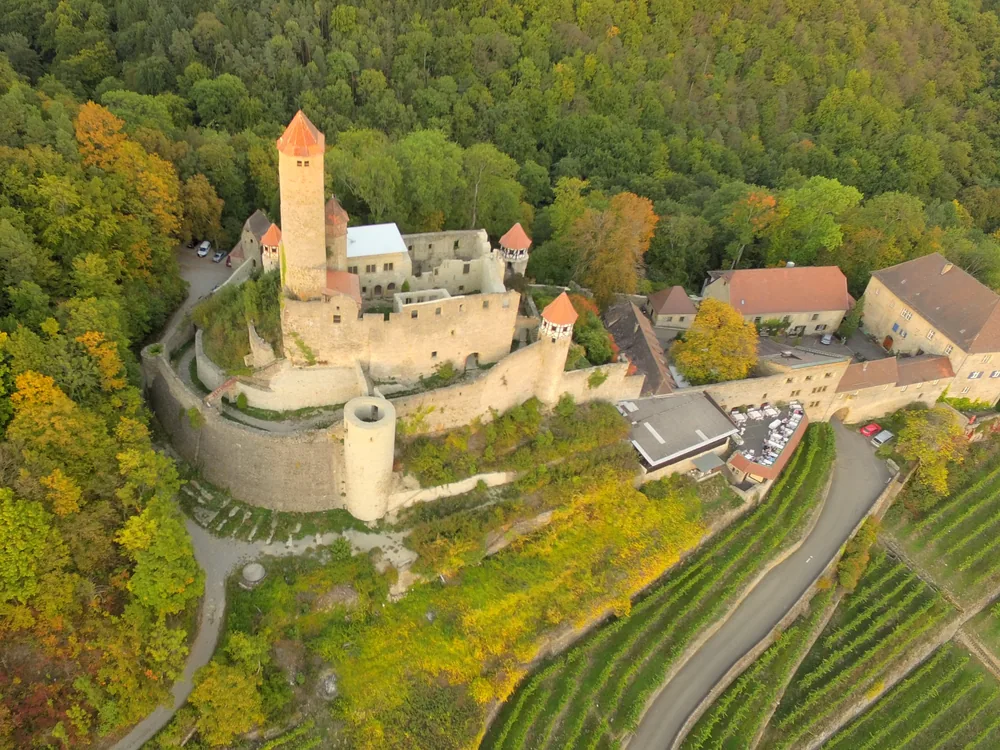
© Castles & Palaces
Quick Facts
- Rooms from
- €79 / night
- Day-visit entry
- €7
- Duration
- Castle and museum: 1–1.5 hours for day visitors; overnight stay separately bookable
- Best time
- April to October, when the castle and museum keep daily hours
- Nearest city
- Heilbronn
Stay Here
Hotel-Restaurant Burg Hornberg
Rooms are split between the historic building and a newer wing
Booked via Booking.com · Free cancellation on most rates
Real ticketed day-visit product: castle + museum open daily April-Oct 10:00-18:00 (Wed-Sun only in Mar/Nov/Dec), €7-11 adult depending on whether a guided tour is included; historic wine cellar also visitable
Highlights
- ✦An 11th-century knight's castle, home to the famous knight-errant Götz von Berlichingen from 1517 until his death in 1562
- ✦Owned by the von Gemmingen family since 1612 — over 400 years in the same family's hands
- ✦Fell into decay after 1738, restored through the first half of the 20th century, opened as a hotel in 1953
- ✦Only some of the 31 rooms are in the main castle building itself; others are in the former sheepfold (Schafstall), a separate building on the grounds
- ✦One of the oldest working wineries in the region (1,500+ years of viticulture), with its own terraced Neckar-valley vineyard and wine cellar tours
Stay in the castle itself
Book a room via Booking.com
Hornberg Castle is an 11th-century knight's castle above the Neckar valley in Baden-Württemberg, best known as the home of Götz von Berlichingen — the real-life 'Knight with the Iron Hand,' a famous late-medieval knight-errant who bought the castle in 1517 and lived here until his death in 1562. Immortalized centuries later in a Goethe drama, Götz remains the castle's defining historical association, and the hotel's museum displays his original armour alongside documentation of the castle's history.
The castle passed to Reinhard 'the Scholar' of Gemmingen in 1612, and it remains in the same family's hands over 400 years later. After falling into decay following 1738, it underwent extensive restoration through the first half of the 20th century before opening as a hotel in 1953. Today's 31 rooms are split between the main castle building — with views over the Neckar valley — and the former Schafstall (sheepfold), a separate building on the grounds now converted into guest rooms with forest-facing balconies; the estate is also one of the region's oldest working wineries, with vines dating back over 1,500 years.
Hornberg operates a genuine, independently ticketed day-visit product: the castle and its museum are open daily from April to October (Wednesday to Sunday only in March, November and December), with admission priced between €7 and €11 for adults depending on whether a guided tour is included. The historic wine cellar can also be visited, giving day visitors a rounded look at both the castle's knightly history and its long winemaking tradition without needing to book an overnight stay.
The Neckar valley between Heilbronn and Heidelberg is dotted with a dense concentration of medieval castles and fortified towns, a legacy of the region's fragmented political landscape during the Holy Roman Empire, when numerous small lordships and knightly estates controlled short stretches of the river and its trade routes. Hornberg's own vineyard, with vines documented to more than 1,500 years of continuous cultivation, places it among the oldest working wine estates in this stretch of Germany, predating the current castle structure itself by many centuries.
Götz von Berlichingen's own colourful reputation extends well beyond his ownership of Hornberg: the historical knight lost his right hand in battle and famously had it replaced with an articulated iron prosthetic, a genuinely remarkable piece of early modern engineering that survives today in a museum collection, and which gave rise to his enduring nickname. His later literary immortalization in Goethe's 1773 drama Götz von Berlichingen cemented his status as one of the more vivid personalities of the German late-medieval period, and the castle's own museum draws directly on this dual historical and literary legacy.
The von Gemmingen family's more-than-four-century ownership of Hornberg places the estate among the longer continuous single-family tenures found anywhere in this collection, a genuinely unbroken thread running from the aftermath of the castle's medieval knightly heyday through the family's own 20th-century restoration and eventual conversion of the property into a working hotel. That continuity gives Hornberg a lived-in, still-cared-for character distinct from castles that have passed through multiple unrelated owners or long periods of institutional or municipal control.
The Baden-Württemberg wine region surrounding Hornberg is one of Germany's less internationally famous but genuinely long-established winemaking areas, with vineyards along the Neckar and its tributaries producing primarily red and white varietals suited to the region's moderate climate. Hornberg's own terraced vineyard, worked continuously for over 1,500 years according to the estate's own documented history, gives visitors a chance to taste wine grown on some of the oldest continuously cultivated vine-growing land in this part of Germany, alongside a tour of the historic cellar where it has traditionally been stored and aged.
History
Hornberg Castle is an 11th-century knight's castle above the Neckar valley in Baden-Württemberg, home to the knight-errant Götz von Berlichingen from 1517 until his death in 1562. The castle passed to Reinhard 'the Scholar' of Gemmingen in 1612 and remains in the same family's hands today. It fell into decay after 1738, was restored through the first half of the 20th century, and opened as a hotel in 1953. The estate is also one of the region's oldest working wineries, with vines dating back over 1,500 years.
How to Stay
Getting there: Neckarzimmern, Baden-Württemberg, in the Neckar valley between Heilbronn and Heidelberg.
Rooms & rates: Of the 31 rooms (26 double, 4 single, 1 junior suite), those in the main castle building overlook the Neckar valley; the remainder are in the former Schafstall (sheepfold), a separate building on the estate, with forest-view balconies. From €79/night.
On-site: Restaurant with valley-view terrace, museum (Götz von Berlichingen's armour), historic wine cellar, working vineyard.
Good to know: Specify a main-castle-building room if sleeping inside the historic knight's castle itself is the priority — the Schafstall rooms are comfortable and genuinely on the estate, but in a converted outbuilding rather than the castle proper.
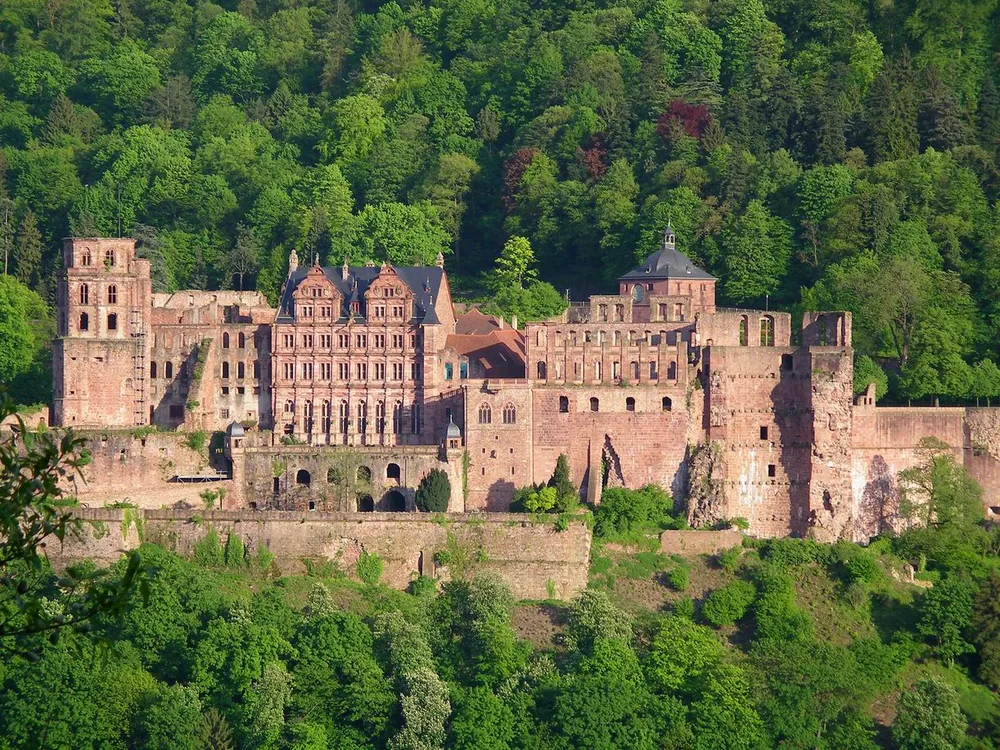
Combine with: Heidelberg Castle, about 30 minutes away, or Bad Wimpfen's medieval old town, closer still.
Frequently Asked Questions
Yes. The castle and museum are open daily April through October, 10:00–18:00 (Wednesday to Sunday only in March, November and December), with adult admission of €7–11 depending on whether a guided tour is included. The historic wine cellar can also be visited.
Location
Burg Hornberg 1, 74821 Neckarzimmern, Germany
Nearby Castles
Rooms from
€79/ night