
Waldburg Castle
Schloss Waldburg
Germany · Upper Swabia, Baden-Württemberg · Near Waldburg, near Ravensburg
Built 1525 · Hilltop castle rebuilt substantially in the early 16th century on the site of an earlier medieval fortress; the House of Waldburg held the property for centuries as their ancestral seat; the castle sits on a prominent hill in Upper Swabia with views extending toward Lake Constance and the Allgäu Alps on clear days; today operated with an 'Adventure Day' visitor format emphasising family-friendly and outdoor activities alongside the historic castle buildings
This page is part of an independent travel guide and is not affiliated with, endorsed by, or operated by Waldburg Castle.
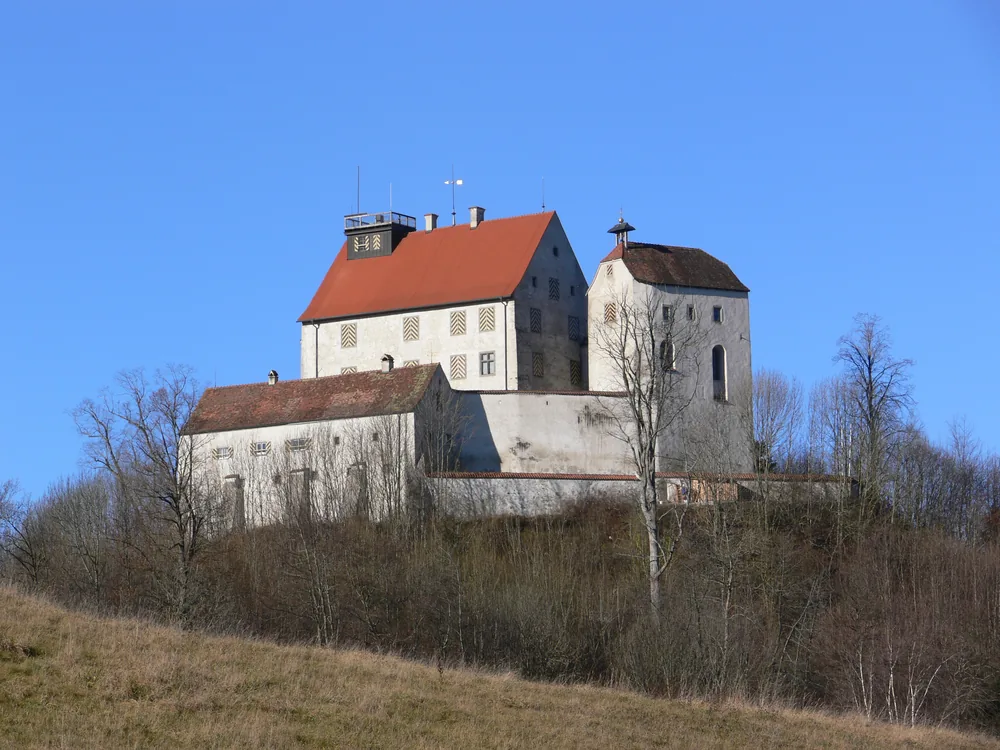
© Castles & Palaces
Quick Facts
- Hours
- Daily 10:00–17:00
- Guided tour from
- €14
- Duration
- Half day to full day
- Best time
- April to October
- Nearest city
- Waldburg, near Ravensburg
Featured Tour
Adventure Day at Waldburg Castle
Cancellation available · Instant confirmation
Highlights
- ✦The House of Waldburg held the hereditary office of Reichserbtruchsess — Hereditary Marshal or Steward of the Holy Roman Empire — one of the court offices at the apex of the imperial ceremonial hierarchy; this was not merely an honorary title but a hereditary position that placed the Waldburg family among the permanent institutional fixtures of the Holy Roman Empire's court structure across many generations
- ✦Waldburg Castle sits on a hill above the rolling Upper Swabia plateau with views toward Lake Constance and the Allgäu Alps on clear days — a setting that summarises Upper Swabia's geographical character as the transitional zone between the German plateau and the Alpine foothills, with the lake and mountains visible from the castle hill as a continuous backdrop to the north and south
- ✦The House of Waldburg reached its greatest extent in the 16th century under Georg III 'the Rich' (d. 1526), who accumulated so much territory in Upper Swabia that the imperial court became nervous about the family's power — a rare instance of a noble house's castle-building and land-acquisition alarming even the emperor whose marshal they were
- ✦The current visitor format is an 'Adventure Day' combining the historic castle buildings with outdoor activities and family-oriented programming — the practical expression of how a privately held historic castle in rural Upper Swabia sustains itself in the modern heritage economy, and a format worth understanding before visiting so expectations match the experience
- ✦Sigmaringen Castle, already on this site and approximately 60 kilometres north of Waldburg, is the other major aristocratic castle of Upper Swabia — the seat of the Hohenzollern-Sigmaringen branch of the dynasty that eventually produced the German emperors; together with Waldburg, it maps the noble house geography of the Upper Swabian plateau
Skip the queue with a guided tour
Skip-the-line tickets & expert guides
The Holy Roman Empire was sustained, among other things, by an elaborate system of hereditary offices that attached specific ceremonial and administrative functions to specific noble families. The Erbämter — hereditary offices — were positions at the imperial court whose holders served as Arch-Chancellor, Arch-Chamberlain, Arch-Marshal, and similar titles, each with defined ceremonial responsibilities at coronations and court assemblies. These were not sinecures: the families who held them gained prestige, income, influence, and a formal constitutional position within the empire's complex institutional structure, and they defended these positions with the same energy they devoted to their territorial landholdings.
The House of Waldburg held the office of Reichserbtruchsess — the Hereditary Marshal or, in some translations, the Hereditary Steward of the Holy Roman Empire. The precise ceremonial function varied across the office's long history, but the essential position is consistent: the Waldburg family was constitutionally embedded in the imperial court structure, with a formal role in the empire's ceremonial life that the castle on the Upper Swabia hill had given its name to and that the family held across many generations of imperial succession. This is an unusual distinction. Most medieval German castles gave names to local lords or regional powers; the Waldburg case is one in which the castle's name ascended to the imperial court and became attached to a position in the highest ceremonial hierarchy of the medieval German world.
The castle that carries this history sits on a prominent hill above the rolling plateau of Upper Swabia, southeast of Ravensburg and approximately 20 kilometres from the Lake Constance shore. The Upper Swabian plateau is the landscape between the Danube to the north and the Alpine foothills to the south — a gently rolling terrain of farms, forests, and small towns that represents the agricultural heartland of southwestern Germany without the dramatic mountain scenery of the Allgäu or the river theatrics of the Rhine and Neckar. On clear days, the view from the Waldburg hill extends south to the Allgäu Alps and the Lake Constance basin, with the lake itself occasionally visible as a reflective band on the horizon. This view explains the castle's position as clearly as any historical account: the hill commands the surrounding plateau, visible from considerable distances in all directions, and the view from its summit covers the territory the family controlled.
The castle's current structure dates largely from a 16th-century rebuild on the site of an earlier medieval fortress. This is the typical pattern for Upper Swabian noble castles: a medieval defensive installation rebuilt in the early modern period when comfort, display, and residential function replaced pure military utility as the governing priorities. The House of Waldburg's 16th-century power — particularly under Georg III 'the Rich,' who died in 1526 with so much Upper Swabian territory under his control that even the Habsburg emperor had concerns about the family's concentration of resources — produced the wealth that funded this reconstruction and gave the castle its current appearance.
The contemporary visitor experience at Waldburg Castle is organised as an 'Adventure Day' — a format that combines access to the historic castle buildings with outdoor activities and family-oriented programming across the castle grounds. This is a specific product offering rather than a traditional castle museum, and it is worth understanding clearly before visiting: the Waldburg adventure day is designed for visitors who want an active, outdoor-inclusive experience rather than a sequence of period rooms with interpretive panels. The GetYourGuide ticket covers the full day's access in this format, making it best suited to families or visitors who appreciate the combination of historical setting and physical activity.
For visitors whose primary interest is the Waldburg family's position in Holy Roman Empire history, the castle's built environment provides a context for that history even where explicit interpretation is limited. The hill, the walls, the views, and the scale of the surviving structures communicate the family's regional authority in spatial terms that no amount of heraldic explanation achieves as immediately. The Reichserbtruchsess title's significance is essentially about position within a hierarchy — who sat where at the imperial coronation, who carried what object in what procession — and a hilltop castle in Upper Swabia is the appropriate setting for thinking through what that position meant in the landscape and territory it controlled.
Practically, Waldburg is most easily reached from Ravensburg, approximately 20 kilometres to the northwest, or from the Lake Constance towns of Friedrichshafen and Ravensburg that serve as the main tourist infrastructure for the region. Sigmaringen Castle — the Hohenzollern-Sigmaringen seat already on this site, approximately 60 kilometres to the north — is the other major aristocratic castle of Upper Swabia and provides a natural comparison point: both are privately held hereditary noble seats on Upper Swabian hills, both with long imperial court connections, but representing different branches of the German noble house geography. Sigmaringen's connection to the Hohenzollern dynasty that produced the German emperors gives it a higher historical profile; Waldburg's Reichserbtruchsess title gives it an older and arguably more specific constitutional position within the imperial structure. Together they map the noble house landscape of the Upper Swabian plateau in a way that either alone cannot.
The Upper Swabia Baroque Route — a cultural heritage trail connecting the region's many 17th and 18th-century pilgrimage churches, monasteries, and aristocratic residences — passes through the area and provides additional context for visitors interested in the region's cultural heritage beyond castle-specific history. Weingarten Abbey, Birnau pilgrimage church on the Lake Constance shore, and the pilgrimage church at Steinhausen are all within 30–45 minutes of Waldburg.
History
The House of Waldburg derived its name from the castle on the Upper Swabia hill, which was an ancestral seat of the family from the medieval period. The family held the hereditary office of Reichserbtruchsess (Hereditary Marshal/Steward of the Holy Roman Empire), embedding them in the imperial court structure across many generations. The castle was substantially rebuilt in the early 16th century during the period of the family's greatest territorial expansion under Georg III 'the Rich.' The Waldburg family maintained the castle as their ancestral seat through subsequent centuries. The site is today operated as a visitor attraction with an 'Adventure Day' format combining historic buildings and outdoor activities.
How to Visit
Getting there: Waldburg is approximately 20 km southeast of Ravensburg in Upper Swabia. By car from Ravensburg: 20–25 minutes on rural roads; from Lake Constance (Friedrichshafen): approximately 30 minutes. Public transport connections to the castle are limited — a car is recommended.
Tickets: Walk-up admission is €12 for adults, €7 for children. The GetYourGuide "Adventure Day at Waldburg Castle" covers full-day access to the historic buildings and outdoor activity programme.
Practical tips: The Adventure Day format suits active visits — half a day is usually enough if you focus on the castle buildings, while families taking part in the full activity programme should plan for most of the day. Clear days reward a visit with views south to the Allgäu Alps and Lake Constance from the hilltop.
Combine with: Sigmaringen Castle, the Hohenzollern-Sigmaringen ancestral seat 60 km north, is the natural Upper Swabia pairing — both are privately held noble houses on regional hills, and together they map the aristocratic landscape of the plateau.
Frequently Asked Questions
The Reichserbtruchsess (Hereditary Marshal or Steward of the Holy Roman Empire) was a hereditary office at the imperial court, held by the House of Waldburg across many generations. The Erbämter (hereditary offices) of the Holy Roman Empire — including the Arch-Chancellor, Arch-Chamberlain, Arch-Marshal, and related titles — were positions with defined ceremonial functions at imperial coronations and court assemblies. Holding such an office gave a noble family a formal constitutional position within the empire's institutional structure, significant prestige, and influence at the imperial court that went beyond their local territorial power.
Location
Waldburg 1, 88289 Waldburg, Germany
Nearby Castles
Tours & Tickets
Powered by GetYourGuide
From
€14/ person