
Sigmaringen Castle
Schloss Sigmaringen
Germany · Baden-Württemberg · Near Sigmaringen
Built 1893 · French Renaissance Revival Historicism castle perched directly above the Danube River in the town of Sigmaringen, substantially rebuilt after a devastating fire in 1893 and completed in 1908 under the direction of Prince Wilhelm of Hohenzollern-Sigmaringen; the rebuilt structure preserves and extends an 11th-century medieval fortress core, with ornate towers, gabled rooflines, and façades that exemplify the historicist ambitions of late-19th-century German aristocratic architecture; contains one of the largest privately held collections of weapons and armour in Europe, with more than 3,000 historical exhibits
This page is part of an independent travel guide and is not affiliated with, endorsed by, or operated by Sigmaringen Castle.
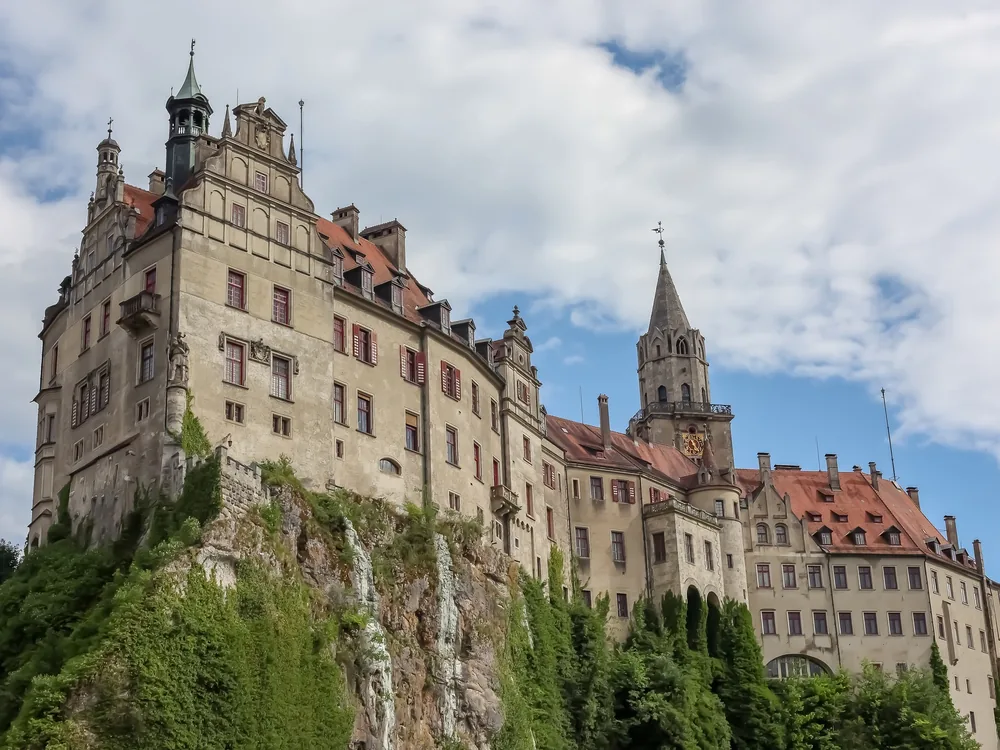
© Castles & Palaces
Quick Facts
- Hours
- Daily 10:00–17:00
- Entry via GetYourGuide
- €15
- Duration
- 1.5 hours
- Best time
- April to October
- Nearest city
- Sigmaringen
Featured Tour
Sigmaringen: Hohenzollern Castle Entry Fee & Audio Guide
Cancellation available · Instant confirmation
Highlights
- ✦A genuinely different site from Burg Hohenzollern near Hechingen — Sigmaringen Castle sits in the town of Sigmaringen on the Danube, roughly 45 km away from its more famous cousin, as the seat of the Hohenzollern-Sigmaringen branch of the dynasty
- ✦Prince Karl of Hohenzollern-Sigmaringen, born and raised in this castle, left to become Carol I — the first King of Romania in 1866 and founder of the Romanian royal dynasty, a striking biographical thread connecting a Danube town in Baden-Württemberg to the modern history of an entire country
- ✦One of the largest privately held weapons and armour collections in Europe: more than 3,000 historical exhibits housed in the castle's armoury halls, spanning centuries of European military hardware in a setting that combines dynastic ambition with serious collecting
- ✦A seven-language audio guide (German, English, French, Italian, Russian, Romanian, Dutch) frames a self-paced walk through the castle's major rooms — the Romanian language option is no coincidence
- ✦The castle is still privately owned and operated by the Hohenzollern family, giving it the particular atmosphere of a working dynastic institution rather than a state-managed heritage site
Skip the queue with a guided tour
Skip-the-line tickets & expert guides
Before anything else, a clarification: Sigmaringen Castle is not Burg Hohenzollern. Both belong to the House of Hohenzollern; both are in Baden-Württemberg; and the GetYourGuide ticket, counterintuitively, carries the title 'Hohenzollern Castle' in its listing. But the two buildings are physically separate sites, approximately 45 kilometres apart, with distinct histories and entirely different characters. Burg Hohenzollern sits on an isolated hilltop near Hechingen, a Victorian neo-Gothic confection rebuilt in the 1840s by King Friedrich Wilhelm IV of Prussia. Sigmaringen Castle rises directly above the Danube River in the town of Sigmaringen itself, historically the seat of the Hohenzollern-Sigmaringen branch of the family — a cadet line that diverged from the main Prussian branch in the 16th century and carved out its own southern German principality. They are worth visiting for different reasons. This article is about Sigmaringen.
The site has been fortified since at least the 11th century, when a medieval stronghold first occupied the basalt rock above the young Danube. For centuries it functioned as the residence and administrative centre of the Princes of Hohenzollern-Sigmaringen, a small but strategically significant Swabian principality that maintained its own courts, army, and diplomatic standing within the Holy Roman Empire and its successor states. The castle passed through fires, sieges, and partial demolitions across the medieval and early modern period before the catastrophic fire of 1893 destroyed much of its interior and roof structure. Prince Wilhelm of Hohenzollern-Sigmaringen ordered a comprehensive reconstruction, completed in 1908, in the French Renaissance Revival style that had become fashionable for aristocratic Historicism across Central Europe: ornate towers, elaborate gabling, pointed spires, and a skyline of pronounced verticality that reads from across the Danube valley as an essentially theatrical act of dynastic self-presentation.
The most historically distinctive thread running through Sigmaringen is the connection to Carol I of Romania. Prince Karl Anton of Hohenzollern-Sigmaringen, whose sons were raised in these rooms, saw one of them — Prince Karl — leave in 1866 to accept the throne of the newly autonomous Romanian Principalities. Navigating Austro-Hungarian hostility, the complex politics of Wallachian and Moldavian unification, and a full-scale war against the Ottoman Empire, Karl became Carol I of Romania in 1881, founding the Romanian branch of the Hohenzollern dynasty that ruled until 1947. The Romanian-language option in the audio guide reflects something real: Sigmaringen Castle is a site of genuine pilgrimage for Romanian visitors tracing the origins of their modern state's founding dynasty. The seven-language guide — German, English, French, Italian, Russian, Romanian, Dutch — is one of the more culturally specific details of any castle visitor experience in Germany.
The castle's weapons and armour collection is the other reason to make the journey. With more than 3,000 historical exhibits — swords, halberds, firearms, full suits of armour, tournament equipment, and arms from the Islamic world and Asia collected through the Hohenzollerns' wide diplomatic networks — it ranks among the largest privately held collections of its kind in Europe. The display covers roughly five centuries of European military hardware and approaches the subject with the seriousness of a specialist museum rather than the decorative casualness of weapons hung on walls as background atmosphere. Visitors spending 1.5 hours inside the castle will cover the major rooms on a self-guided walk with the audio device; the weapons halls reward slower attention.
History
The fortified site at Sigmaringen has 11th-century origins, established on a basalt promontory above the Danube as the seat of the Counts of Sigmaringen. The Hohenzollern family acquired the castle and principality in 1535, making it the seat of the Hohenzollern-Sigmaringen branch — a cadet line of the dynasty distinct from the Brandenburg-Prussian main branch.
The castle was devastated by fire in 1893, destroying much of its interior and roof. Prince Wilhelm of Hohenzollern-Sigmaringen immediately ordered a reconstruction in French Renaissance Revival style, completed in 1908, which is largely what visitors see today. During World War II, the castle served briefly in 1944–45 as the seat of the Vichy French government-in-exile under Marshal Pétain's nominal successor after the liberation of France — an obscure but historically significant episode. The castle remains privately owned by the Hohenzollern family.
How to Visit
Getting there: Sigmaringen is approximately 80 km south of Stuttgart and 120 km northwest of Munich. By rail, take a regional train from Stuttgart Hauptbahnhof (change at Tuttlingen); Sigmaringen station is a 10-minute walk from the castle entrance. By car, follow the B313 along the Danube — limited paid parking is available in the town.
Tickets: Walk-up admission costs €17 for adults; children are free. The price includes a seven-language audio guide (German, English, French, Italian, Russian, Romanian, Dutch) for a self-paced tour. Last admission is at 16:00. The GetYourGuide "Sigmaringen: Hohenzollern Castle Entry Fee & Audio Guide" covers entry and the audio guide and can be booked in advance.
Practical tips: The castle is not suitable for wheelchair users or visitors with significant mobility impairments — historic staircases throughout the interior cannot be bypassed. Allow 1.5 hours for the self-guided tour. The weapons and armour collection of 3,000+ exhibits rewards slow attention; plan to linger in the armoury halls rather than rushing through.
Combine with: Hohenzollern Castle (about 45 km north near Hechingen) makes a logical Hohenzollern dynasty double-header — though note they are entirely separate buildings for different branches of the family, each worth its own half-day. Waldburg Castle is also within easy driving distance in the upper Swabian countryside.
Frequently Asked Questions
No. Both belong to the House of Hohenzollern, but they are different buildings about 45 km apart. Burg Hohenzollern sits on an isolated hilltop near Hechingen and is the ancestral seat of the Prussian branch of the family. Sigmaringen Castle rises above the Danube in the town of Sigmaringen and was historically the seat of the Hohenzollern-Sigmaringen cadet branch. They have different histories, different collections, and different visitor experiences — worth visiting separately.
Location
Schlossgasse 1, 72488 Sigmaringen, Germany
Nearby Castles
Tours & Tickets
Powered by GetYourGuide
From
€15/ person