
Hohenzollern Castle
Burg Hohenzollern
Germany · Swabia · Near Tübingen
Built 1846 · Neo-Gothic
This page is part of an independent travel guide and is not affiliated with, endorsed by, or operated by Hohenzollern Castle.
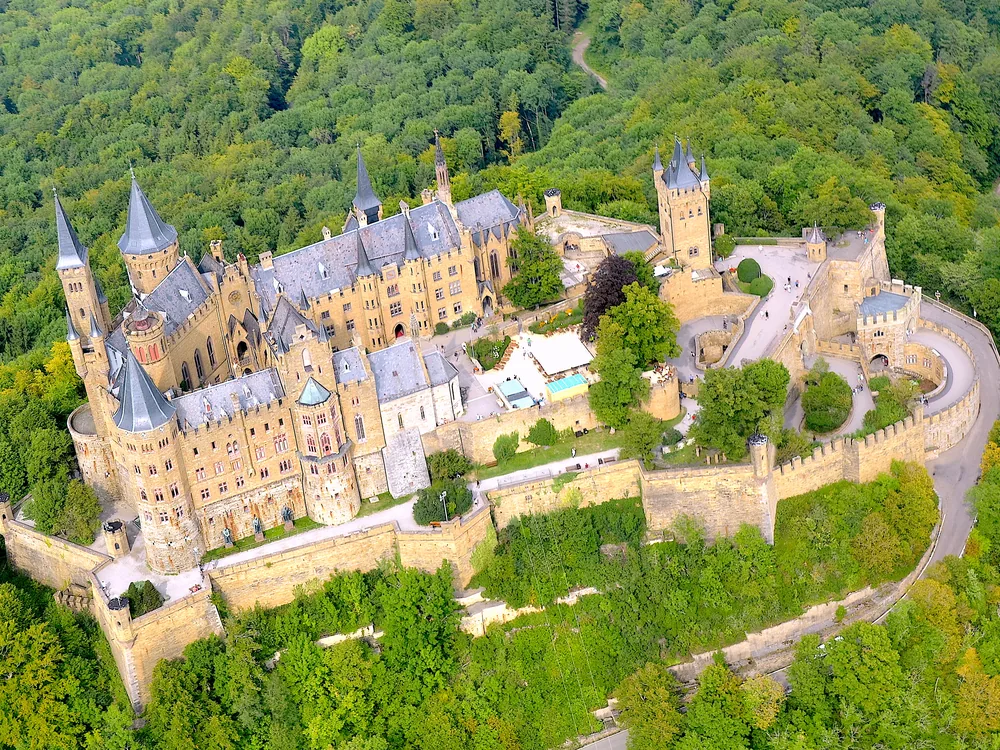
© Unsplash
Quick Facts
- Hours
- Mon–Fri 10:00–17:30. Sat & Sun 09:00–17:30
- Day trip from
- €395
- Duration
- 2–3 hours
- Best time
- May to October
- Nearest city
- Tübingen
Featured Tour
Hohenzollern Castle: Full-Day Tour from Frankfurt
Cancellation available · Instant confirmation
Highlights
- ✦Ancestral seat of the Hohenzollern dynasty — the family that produced the German Kaisers
- ✦Perched on a 855-metre summit with panoramic views of the Swabian Alps on clear days
- ✦The Prussian Crown Jewels — including the Imperial Crown — displayed in the Treasury
- ✦The Chapel of St. Michael contains original medieval stained glass from the 15th century
- ✦The castle is privately owned by Prince Georg Friedrich of Prussia, descended from the last Kaiser
Tickets & tours
Book through GetYourGuide
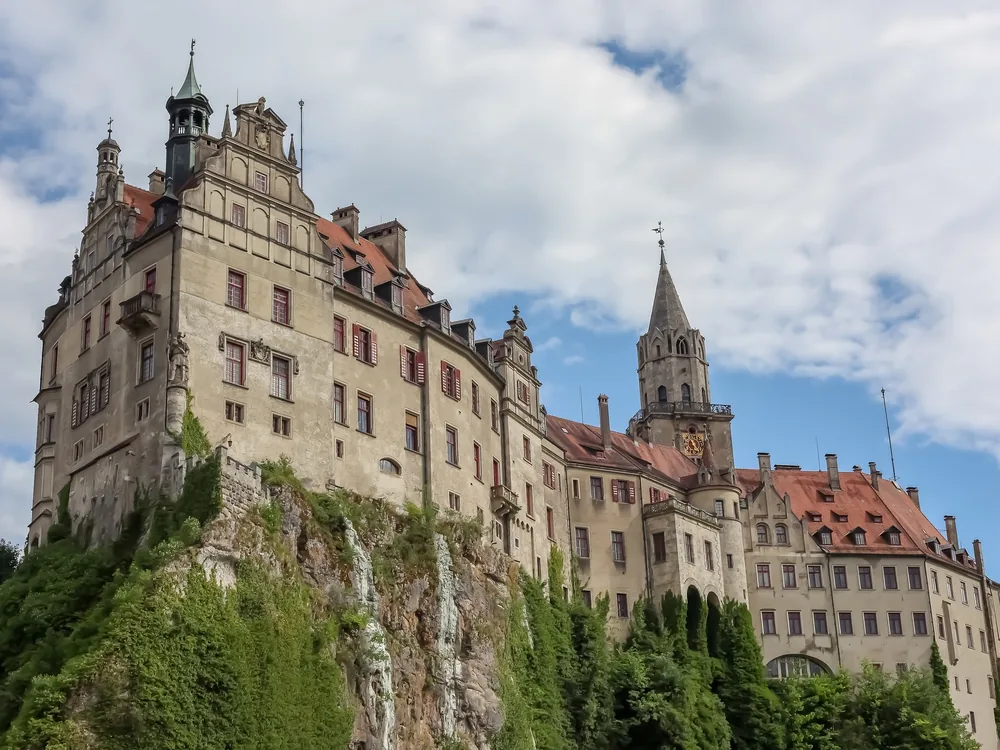
Hohenzollern Castle sits on an isolated 855-metre peak in the Swabian Alps, visible for 30 kilometres across the Swabian plateau — a deliberate statement of dynastic ambition in stone, mortar and Neo-Gothic drama. It is the ancestral home of the Hohenzollern family, who rose from minor Swabian lords in the 11th century to become the Electors of Brandenburg, Kings of Prussia, and eventually the German Kaisers who presided over the most consequential decades of European history.
The castle visible today is the third on the site. The first was destroyed in the 15th century, the second fell into ruin. The current castle was built between 1846 and 1867 under Crown Prince Friedrich Wilhelm (later Kaiser Friedrich III), who commissioned architect Friedrich August Stüler — also responsible for major Berlin museums — to design a suitably imperial ancestor-shrine in the Neo-Gothic style fashionable at the time. The result is more romantic imagination than historical restoration, but it is architecturally extraordinary: all towers, battlements and pointed arches rising from the cloud line.
The interior holds genuine historical treasures alongside 19th-century theatrical furnishings. The Treasury contains the Prussian Crown Jewels, including the Prussian Royal Crown of 1701, the Iron Crown of the Order of the Black Eagle, and a collar reportedly worn by Frederick the Great. In the Chapel of St. Michael, medieval stained glass windows salvaged from the demolished Hohenzollern ancestral church in Nuremberg provide authentic colour against the Neo-Gothic stonework.
The castle is privately owned by Prince Georg Friedrich of Prussia, the great-great-grandson of Kaiser Wilhelm II — a fact that gives it an unusual dual character as both a major tourist attraction and a family estate.
History
The Hohenzollern family's origins lie in the 11th century, when the Burggrave of Nuremberg — a minor official title in the Holy Roman Empire — began accumulating land and influence in the regions around their ancestral mountain in Swabia. Their rise over the following centuries was determined less by military conquest than by careful marriage alliances and bureaucratic competence.
The decisive step came in 1415, when Friedrich VI of Hohenzollern was appointed Elector of Brandenburg by Emperor Sigismund, giving the family a vote in Imperial elections and establishing the Hohenzollern presence in north Germany that would define the next five centuries. The Electors of Brandenburg became Kings of Prussia in 1701 under Friedrich I, and the Prussian crown became the nucleus around which the German Empire was assembled in 1871 — with the Hohenzollern King Wilhelm I proclaimed German Kaiser in the Hall of Mirrors at Versailles.
The second Hohenzollern castle on the ancestral peak fell into ruin in the 18th century. When Crown Prince Friedrich Wilhelm visited the ruins in 1819, he resolved to rebuild them as a monument to dynastic history. Work began in 1846 and continued under the supervision of Stüler until 1867, creating the Neo-Gothic castle that stands today. Kaiser Wilhelm I and Kaiser Friedrich III (who died after only 99 days of reign in 1888) are both buried in a mausoleum in the castle's park.
The last Kaiser, Wilhelm II, abdicated in November 1918 following Germany's defeat in the First World War and fled to the Netherlands, ending the Hohenzollern Empire. The castle was returned to the family after the Second World War and is maintained by the Hohenzollern hereditary foundation today.
How to Visit
Getting there: The nearest train station is Hechingen (6 km), served by regional trains from Tübingen (20 minutes) and Stuttgart (50 minutes with connection). From Hechingen station, a taxi to the castle takes 15 minutes. By car from Stuttgart, take the A81 and exit at Hechingen — about 50 minutes. Parking at the base costs €4; a shuttle bus runs from the car park to the castle gate.
Tickets: Entry costs €14 for adults and €9 for children, available at the gate. The GetYourGuide full-day private tour from Frankfurt covers 10.5 hours with transport and guided access — the best option for visitors without a car based in Frankfurt.
Practical tips: The castle in low cloud or mist — common in autumn and winter — is spectacular, with the towers emerging from a cloud ceiling; this weather is not a reason to skip the visit. For the best exterior photograph, stop at the Zollerblick viewpoint 3 km north for the full mountain-peak silhouette.
Combine with: Sigmaringen Castle is 30 km south on a prominent limestone cliff. Altes Schloss Stuttgart is 50 km north in the state capital, easily paired on the same day by car.
Frequently Asked Questions
The castle is privately owned by Georg Friedrich Prince of Prussia, who is the great-great-grandson of Kaiser Wilhelm II — the last German Emperor who abdicated in 1918. The Hohenzollern hereditary foundation manages the castle as both a family estate and public museum. The family occasionally uses the castle for private functions, but it remains open to visitors throughout the year.
Location
72379 Burg Hohenzollern, Germany
Nearby Castles
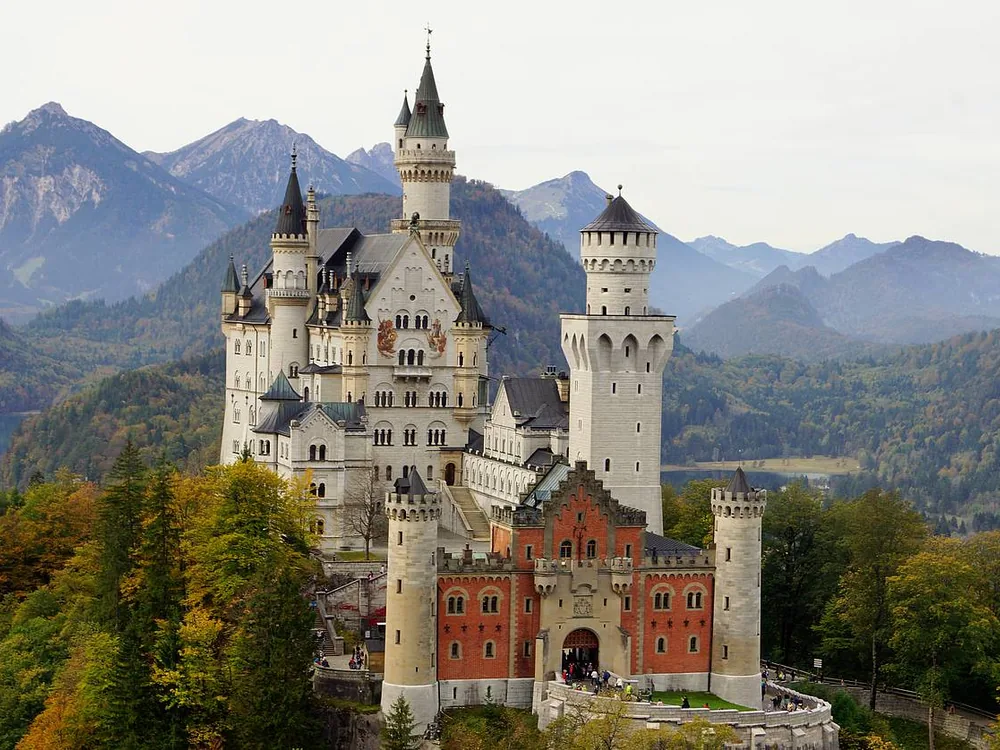
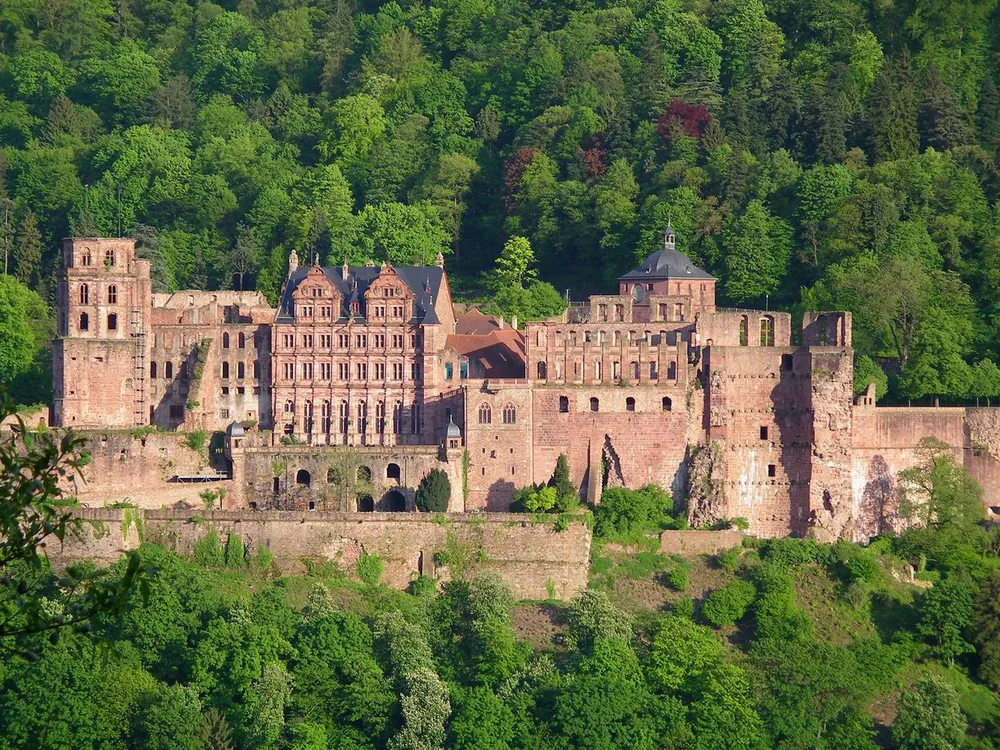
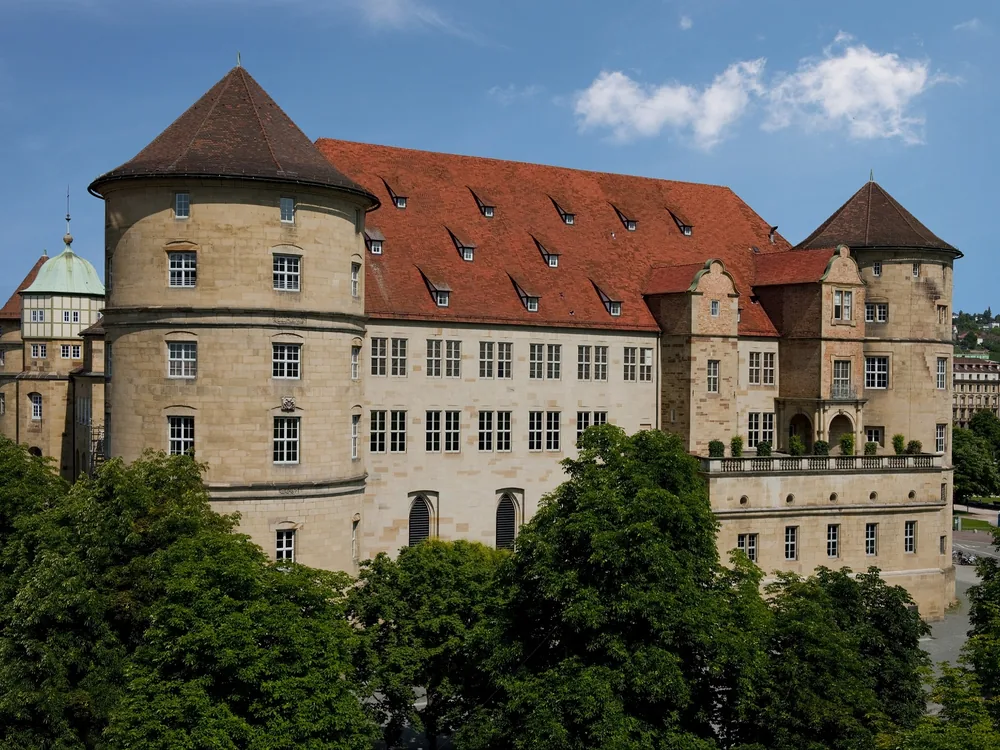
Tours & Tickets
Powered by GetYourGuide
From
€395/ person