
Lahneck Castle
Burg Lahneck
Germany · Rhineland-Palatinate, Rhine Gorge · Near Koblenz
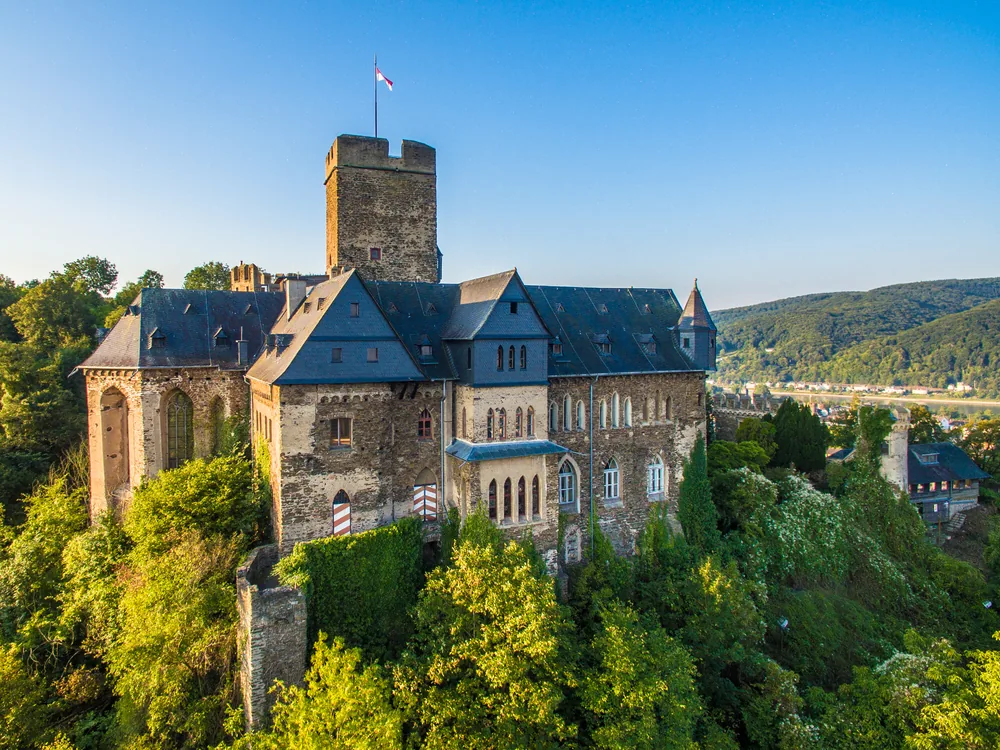
Built 1226 · Medieval Archbishop's fortress on a bluff above the Lahn-Rhine confluence at Lahnstein; built 1226 by the Archbishop of Mainz to guard the Lahn river's strategic junction with the Rhine and a nearby silver mine at Kapellen-Stolzenfels; the original keep (Bergfried) and parts of the wall date to the early 13th century; expanded through the 14th century; the castle was the site where, in 1400, the four Rhenish prince-electors formally deposed King Wenceslaus of Germany for incompetence — one of the few medieval German depositions confirmed in writing; destroyed in the Thirty Years' War and left a ruin for two centuries; the private Sarg family purchased the ruins in 1864 and commissioned a partial Neo-Gothic rebuilding (1864–1908); the same family has owned and occupied the castle continuously since 1907; privately held, managed as a museum with seasonal guided tours
This page is part of an independent travel guide and is not affiliated with, endorsed by, or operated by Lahneck Castle.
© Castles & Palaces
Quick Facts
- Hours
- Sat & Sun 14:00–17:00. Closed Mon–Fri
- Day trip from
- €19
- Duration
- 1 hour (guided tour)
- Best time
- May to September
- Nearest city
- Koblenz
Featured Tour
From Koblenz: Stolzenfels, Marksburg & Lahneck Rhine Valley Boat Tour
Cancellation available · Instant confirmation
Highlights
- ✦In 1400, the four Rhenish prince-electors — the Archbishops of Mainz, Trier, and Cologne, and the Count Palatine of the Rhine — met at nearby Oberlahnstein with delegates hosted at Lahneck Castle to formally depose King Wenceslaus of Germany (Wenzel von Luxemburg) for incompetence and neglect; this was one of the few recorded constitutional depositions in medieval German history, and the castle's proximity to the decisive meeting gives it a specific historical significance beyond its Rhine position
- ✦Lahneck also carries a more dramatic (less historically verified) story: that in 1312, following Pope Clement V's suppression of the Knights Templar, the last twelve Templars in Germany made a final stand here, were besieged, and fought to the last man; the story has the status of historical legend rather than documented fact, but it embedded itself deeply enough in 19th-century Romantic literature that the castle became a literary landmark long before its physical rebuilding
- ✦The Sarg family, who purchased the ruins in 1864 and commissioned a Neo-Gothic rebuilding between 1864 and 1908, have occupied the castle continuously since 1907 — making Lahneck one of the few medieval Rhine fortifications that remains a genuine family residence rather than a state museum; the guided tours (Saturday and Sunday afternoons, May–September) are conducted by family members or their representatives, giving the visit a personal character rare in German heritage tourism
- ✦The castle's position at the exact confluence of the Lahn and the Rhine — guarding the point where the Lahn's silver-mine transport route joined the Rhine's main commercial artery — explains why both the Archbishop of Mainz (who built it) and subsequently every major power controlling the Rhine regarded this bluff as strategically essential; [Stolzenfels Castle](/castles/germany/stolzenfels-castle), built 35 years later by the Archbishop of Trier one kilometre south, faces Lahneck directly across the Rhine-Lahn junction as its episcopal rival
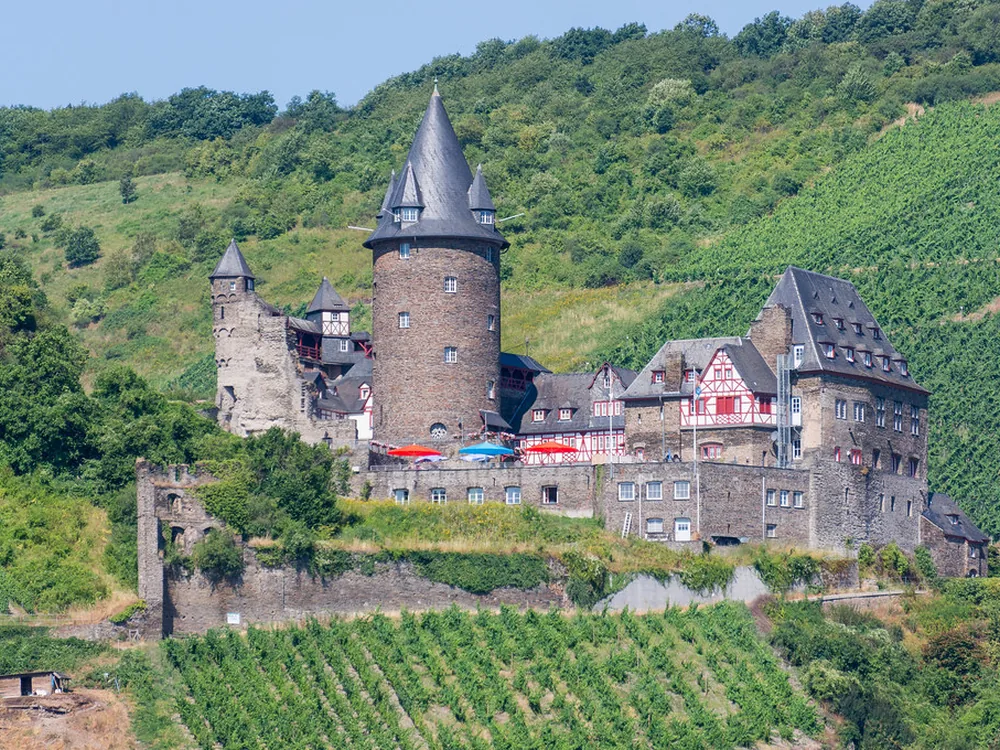
- ✦The GetYourGuide Rhine boat tour passes Lahneck from the river, which gives the best view of the castle's position above the confluence — the relationship between the Lahn mouth, the Rhine current, and the bluff on which the castle sits is only legible from the water, and the sight of Lahneck above the confluence with Stolzenfels visible in the background is one of the Rhine Gorge's defining travel images
Tickets & tours
Book through GetYourGuide
Lahneck Castle stands on a bluff at the point where the Lahn river joins the Rhine, in the town of Lahnstein across the Rhine from Koblenz. The position is one of the most strategically significant on the middle Rhine: the Lahn's mouth controlled access to the river system running inland from the Rhine through the Lahn valley, including the Kapellen-Stolzenfels silver mine that made this stretch of Rhine particularly valuable to its medieval controllers. The Archbishop of Mainz, who built the first castle here in 1226, was securing both the river junction and the mine in a single defensive installation.
The castle was built in the early stages of the great Rhine toll competition — the contest between archbishops, counts, and imperial knights for control of the Rhine's commercial traffic, which generated income through customs duties and passage fees. The Archbishop of Mainz's toll rights on the Rhine were exercised from Lahneck; the Archbishop of Trier's competing rights were exercised from Stolzenfels, one kilometre south across the Lahn mouth. The two episcopal rivals had built their toll castles in direct sight of each other, which was presumably uncomfortable for the river merchants who had to pay both.
The castle's most significant historical moment came in 1400, when delegates of the four Rhenish prince-electors — the Archbishops of Mainz, Trier, and Cologne, and the Count Palatine of the Rhine — gathered at nearby Oberlahnstein to formally depose King Wenceslaus of Germany. Wenceslaus (Wenzel von Luxemburg), King of Germany and Bohemia, had neglected German affairs for years in favour of his Bohemian kingdom and had proved unable to resolve the Great Schism in the Church. The electors invoked their constitutional right of deposition, wrote the formal document at Oberlahnstein, and elected Rupert of the Palatinate as his successor. Lahneck Castle, as the Archbishop of Mainz's local seat, was involved in the logistical management of the meeting — a connection that gives the castle a specific role in one of medieval German history's more constitutionally interesting episodes.
The castle also carries a more theatrical story: that in 1312, following Pope Clement V's suppression of the Knights Templar at the Council of Vienne, the last twelve Templars in Germany held out at Lahneck, were besieged, and died fighting rather than surrender to the force sent to implement the order's dissolution. The story combines the emotionally resonant ingredients of the Romantic era — medieval chivalry, religious persecution, a last stand — in a way that made it irresistible to 19th-century writers and painters. Its historical verifiability is limited; it has the quality of legend rather than documented chronicle. It embedded itself deeply enough in the Romantic imagination that the castle was known as a 'Templar castle' by the mid-19th century, decades before the physical rebuilding.
The Thirty Years' War (1618–1648) destroyed the castle, as it destroyed much of the middle Rhine's medieval fabric. The ruins were abandoned for over two centuries. In 1864, the Sarg family purchased the ruins and commissioned a Neo-Gothic rebuilding that proceeded in stages between 1864 and 1908, motivated by both heritage enthusiasm and the practical desire for a residential Rhine castle. The family has occupied the building continuously since 1907 — through two world wars, the political transformations of the 20th century, and the development of mass tourism on the Rhine — in an unbroken occupancy that makes Lahneck one of the few genuine family residences among the Rhine Gorge's castles.
The consequence for visitors is an access arrangement that reflects this private status: tours run only on Saturday and Sunday afternoons from May to September, conducted by guides connected to the family, and cover the rebuilt Neo-Gothic rooms as well as the surviving original masonry. The number of visitors is modest — thousands per season rather than hundreds of thousands — which gives the tour a personal character that the state-managed Rhine fortifications cannot offer.
The easiest way to see Lahneck is from the river. The GetYourGuide Rhine boat tour from Koblenz passes the castle from the water during a two-hour cruise that also covers [Stolzenfels Castle](/castles/germany/stolzenfels-castle) upstream and [Marksburg Castle](/castles/germany/marksburg-castle) at Braubach. From the boat, the relationship between the Lahn mouth, the Rhine confluence, and the castle bluff is immediately legible — the defensive logic of the site, and the reason two rival archbishops built competing toll castles within sight of each other here, is visible in the landscape in a way it is not from the village below.
History
The Archbishop of Mainz built Lahneck Castle in 1226 to guard the strategically vital confluence where the Lahn river meets the Rhine, and to protect the nearby Kapellen-Stolzenfels silver mine whose revenues were among the most important on the middle Rhine. The castle's position made it a natural venue for political transactions: in 1400, delegates gathered here during the Oberlahnstein meeting at which the four Rhenish electors formally deposed King Wenceslaus of Germany — one of the more dramatic acts of collective electoral will in the history of the Holy Roman Empire. A legendary account, unverified by documentary sources, places twelve surviving Knights Templar at Lahneck making a final stand in 1312 after the order's dissolution.
The castle remained in ecclesiastical hands through the 14th and 15th centuries before passing through successive owners, the Thirty Years' War bringing destruction sufficient to reduce it to ruins by the mid-17th century. The ruins sat exposed for two centuries until the Sarg family purchased them in 1864 and began a neo-Gothic rebuilding that continued in stages through 1908. The result is one of the Rhine valley's more convincing Gothic Revival reconstructions — faithful to the medieval spirit of the site without pretending to be anything other than 19th-century work.
In 1907, the Sarg family began continuous residential occupancy of the rebuilt castle — an arrangement that continues today. The castle is open for guided tours on Saturdays and Sundays from May to September.
How to Visit
Getting there: Lahnstein is directly across the Rhine from Koblenz — a 30-minute walk via the Pfaffendorfer Brücke, or take a bus to Lahnstein. The castle is on the hill above Lahnstein town centre, a 20-minute walk uphill from the town.
Tickets: Entry to the guided interior tour costs €6 for adults and €3 for children. Tours run Saturday and Sunday, 14:00–17:00, May to September only — no advance booking needed, arrive at the castle for the next departure. No independent interior access is permitted. The GetYourGuide Rhine cruise passes Lahneck from the water in a 2-hour cruise from Koblenz — this provides river views of the exterior only and does not include interior access.
Practical tips: Come on a Saturday or Sunday afternoon between May and September — there is no other way to see the interior. Tour guides are often connected to the resident Sarg family, giving the visit a personal character rare among Rhine Gorge castles.
Combine with: Stolzenfels Castle is 1 km south across the Lahn mouth — pair on the same afternoon. Marksburg Castle is upstream at Braubach and Ehrenbreitstein Fortress is across the Rhine at Koblenz.
Frequently Asked Questions
The story of twelve Templars making a final stand at Lahneck in 1312 is a historical legend rather than a documented historical event. It has no solid source in contemporary chronicles and has the character of a Romantic-era narrative that was applied to the castle in the 19th century, when the combination of medieval ruin, suppressed chivalric order, and dramatic last stand was irresistible to writers and painters. The castle's genuine history — Archbishop of Mainz toll fortress, site of the Wenceslaus deposition meeting in 1400, Thirty Years' War ruin, Neo-Gothic rebuilding — is well documented and interesting on its own terms.
Location
Burg Lahneck, 56112 Lahnstein, Germany
Nearby Castles
Tours & Tickets
Powered by GetYourGuide
From
€19/ person