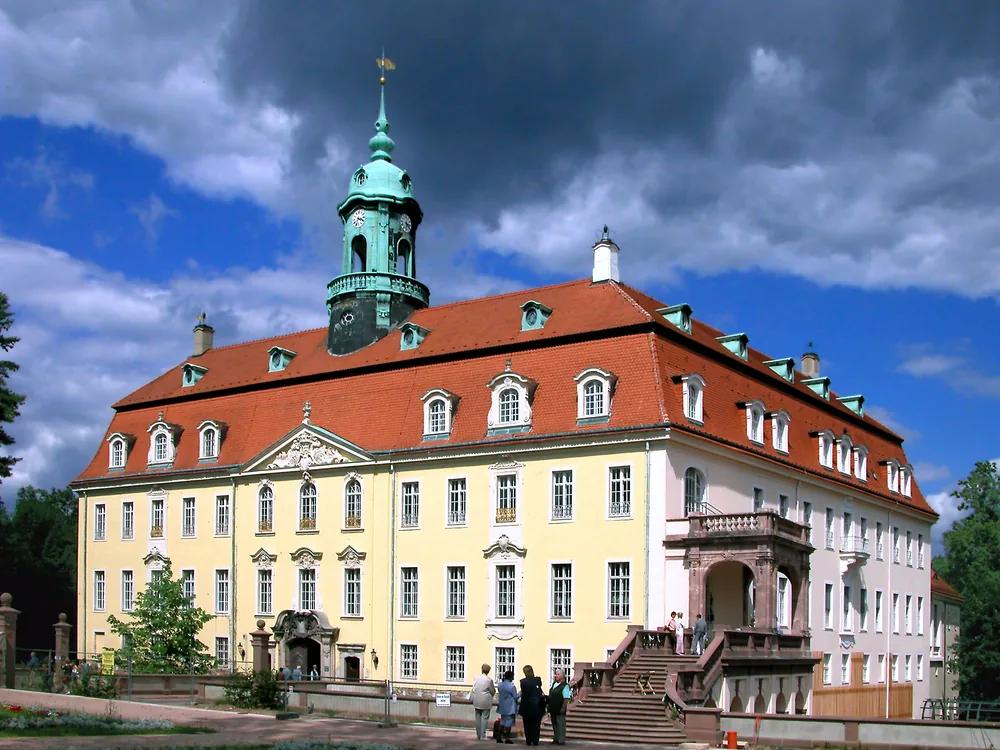
Lichtenwalde Castle
Schloss Lichtenwalde
Germany · Saxony · Near Chemnitz
Built 1722 · Saxon Baroque — three-wing palace with central pavilion and flanking wings; Baroque formal park with cascade fountains, terraced gardens, and a grotto system
This page is part of an independent travel guide and is not affiliated with, endorsed by, or operated by Lichtenwalde Castle.
© Castles & Palaces
Quick Facts
- Hours
- Tue–Sun 10:00–17:00. Closed Mon
- Guided tour from
- €8
- Duration
- 1.5–2 hours
- Best time
- May to September
- Nearest city
- Chemnitz
Featured Tour
Lichtenwalde Castle Guided Tour
Cancellation available · Instant confirmation
Highlights
- ✦The Baroque cascade park — a terraced garden system descending from the palace with fountains, grottos, and water features that rank among the finest Baroque landscape designs in Saxony
- ✦Red Salon and Green Salon — the palace's two principal ceremonial reception rooms with original Baroque stucco ceilings, period furniture, and decorative elements from the 18th-century refurbishment
- ✦Chinese Room — a Chinoiserie cabinet of Asian-inspired lacquered panels and porcelain decoration typical of the Saxon Baroque taste for East Asian aesthetics, influenced by the Dresden court's passion for Meissen porcelain
- ✦Chapel of the castle — a frescoed Baroque chapel integrated into the palace's east wing, with an original Baroque organ still in occasional use
- ✦The Ore Mountains setting — Lichtenwalde sits in the foothills of the Erzgebirge (Ore Mountains) at the edge of the Zschopau valley, with forest views from the park terraces
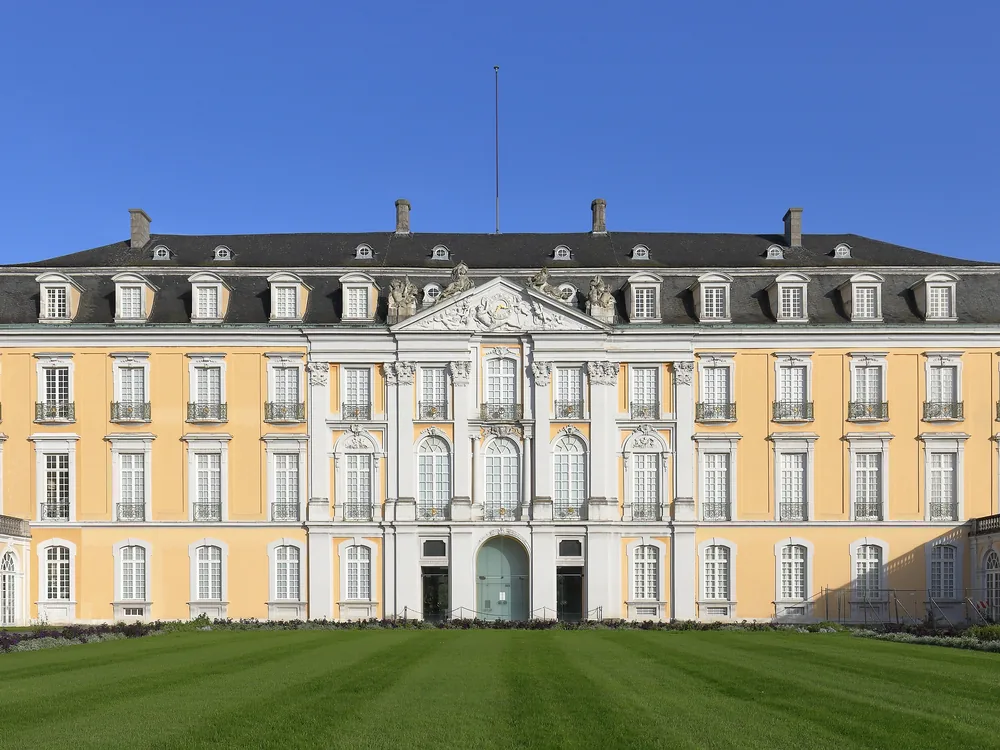
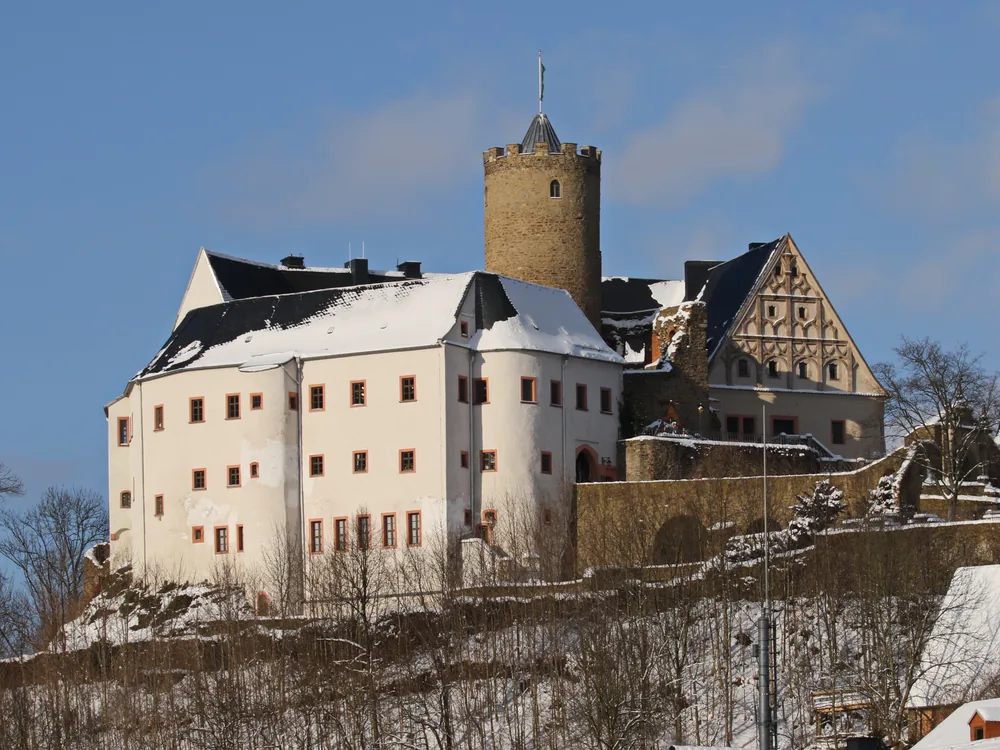
- ✦Sister castle of Augustusburg Palace and Scharfenstein Castle — all three managed by the same regional operator, making a combined Saxony castle circuit a natural itinerary
Skip the queue with a guided tour
Skip-the-line tickets & expert guides
Lichtenwalde Castle is a Saxon Baroque palace in the Zschopau valley foothills of the Ore Mountains, roughly 20 kilometres northwest of Chemnitz in the state of Saxony. It is the least-visited of the three castles managed by the Augustusburg/Scharfenstein/Lichtenwalde Schlossbetriebe gGmbH — a regional heritage organisation that oversees three historically and geographically linked fortifications in the same Ore Mountains/Saxony region — but it has the most distinctive natural setting and the most elaborate surviving Baroque landscape design of the three.
The site on which Lichtenwalde stands had earlier medieval fortifications, but the palace in its current form dates from 1722, when the Saxon nobleman Heinrich von Watzdorf commissioned a new Baroque residence on the promontory above the Zschopau. The three-wing palace plan — a central pavilion with flanking wings arranged around an entrance courtyard — is typical of the Saxon Baroque style that August the Strong's Dresden court had established as the region's architectural language in the early 18th century. Dresden's influence on Saxony's smaller aristocratic residences was profound: the same architects and craftsmen who worked on the Dresden Zwinger, the Japanese Palace, and the Dresden court churches were also employed on the great Saxon Baroque country estates, and Lichtenwalde shows the trickle-down of that court taste into a medium-sized aristocratic commission.
The palace's interior rooms reflect the full range of 18th-century Saxon decorative ambition. The Red Salon and Green Salon — the two principal reception rooms on the piano nobile — preserve their original stucco ceilings with elaborate Rococo plasterwork. The Chinese Room is the most distinctive interior: a Chinoiserie cabinet decorated with Asian-inspired lacquered panels, Chinese motifs, and porcelain display niches that reflects the Dresden court's celebrated passion for East Asian ceramics (August the Strong's Meissen manufactory was founded specifically to replicate Chinese porcelain). The castle chapel, integrated into the east wing, has a frescoed interior and retains its original Baroque organ.
The park, however, is Lichtenwalde's primary distinction. The terraced Baroque garden descending from the palace to the Zschopau valley below is one of the most elaborate surviving examples of 18th-century cascade landscape design in Germany. A system of grottos, water channels, and cascade basins was built into the hillside below the palace terraces, driven by water brought from the surrounding forest. The cascade fountains run on set days during the park season — the effect, when they operate, is one of the most theatrical in German garden history. The park's lower terraces extend into a landscape garden with forest walks and views across the Zschopau valley.
Lichtenwalde's connection to the other castles in the regional cluster strengthens the argument for visiting all three in a single Saxony circuit. Augustusburg Palace — the hilltop hunting castle overlooking the Zschopau valley from the opposite ridge, approximately 15 kilometres southeast — is the most architecturally spectacular of the three and the largest. Scharfenstein Castle, further into the Ore Mountains near the town of Zschopau itself, is the most medieval in character, with a surviving keep, a 36-metre cistern, and the atmosphere of a working fortification rather than a palace. Together the three form a coherent portrait of Saxony's architectural range across several centuries: Scharfenstein (medieval), Augustusburg (Renaissance hunting lodge), Lichtenwalde (Baroque palace). The GetYourGuide guided tour of Lichtenwalde (€8, 1 hour) is conducted in German only — there is no regular English-language guided tour. English-speaking visitors can visit the park independently and use the castle's information materials (available in German and sometimes basic English).
The surrounding landscape — the Ore Mountains (Erzgebirge) region, which straddles the German-Czech border — has its own distinct cultural heritage as a mining region that produced silver from the 12th century until well into the modern period. The miners' communities developed a distinctive folk culture visible in the region's carved wooden decorations, Christmas markets, and the lace-making and instrument-making traditions still active in small towns across the Erzgebirge. Lichtenwalde sits at the northern edge of this region, where the mountains begin their rise from the Chemnitz lowlands.
For visitors based in Chemnitz — the city Karl Marx Stadt was renamed from after German reunification — Lichtenwalde is the closest of the three Ore Mountains castles and the most accessible by car (the B174 road connects Chemnitz to the Zschopau valley). A combined visit to Lichtenwalde in the morning and Augustusburg in the afternoon, with a drive past Scharfenstein, makes a reasonable day circuit from Chemnitz or from the A4 motorway corridor.
History
Medieval fortification on the Zschopau promontory preceded the current building. The Baroque palace was built from 1722 for Heinrich von Watzdorf in the Saxon Baroque style current at the Dresden court. Passed through various aristocratic owners; the park cascade system was extended in the 18th and 19th centuries. Now managed by the Augustusburg/Scharfenstein/Lichtenwalde Schlossbetriebe gGmbH alongside two sister castles in the same Saxony/Ore Mountains region.
How to Visit
Getting there: Lichtenwalde is about 20 km northwest of Chemnitz. By car, take the B174 from Chemnitz toward Frankenberg/Zschopau and turn south at Lichtenwalde. There is no reliable public transport from Chemnitz city centre — a car is effectively required.
Tickets: Entry costs €8 for adults and €4 for children. The GetYourGuide guided tour covers a 1-hour walk through the palace's principal rooms — conducted in German only; there is no regular English-language guided tour.
Practical tips: The cascade fountains run on set operating days during the park season (April–October) — check the schedule at schloss-lichtenwalde.de before visiting if the water features are a priority. The park is open daily in season even when the palace interior is closed (Mondays).
Combine with: Augustusburg Palace is 15 km southeast and Scharfenstein Castle is deeper in the Ore Mountains — all three are managed by the same operator and make a coherent Saxony castle day circuit from Chemnitz.
Frequently Asked Questions
No — the guided tours at Lichtenwalde are currently offered in German only. English-speaking visitors can explore the castle park independently and access the castle rooms on a self-guided basis during opening hours; some information panels have basic English translations. The same applies to Scharfenstein Castle; Augustusburg Palace has more multilingual visitor support.
Location
Schloßstr. 1, 09573 Lichtenwalde, Germany
Nearby Castles
Tours & Tickets
Powered by GetYourGuide
From
€8/ person