Scharfenstein Castle
Burg Scharfenstein
Germany · Saxony · Near Chemnitz
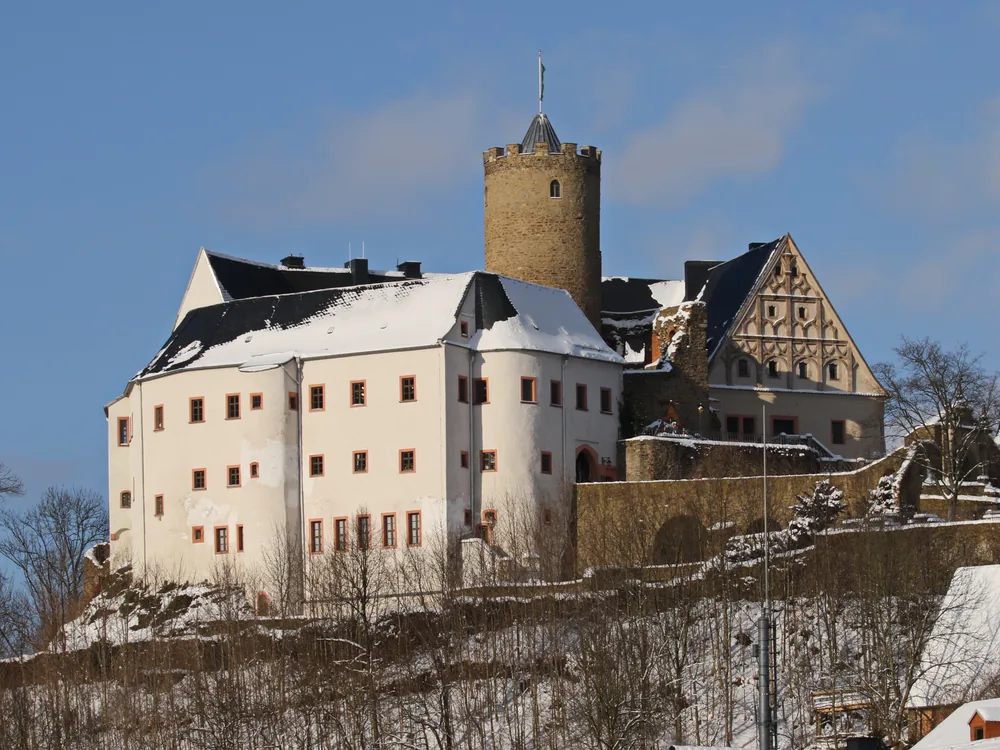
Built 1150 · Medieval hill castle — circular bergfried (keep) with surrounding curtain walls on a rocky spur above the Zschopau valley; relatively unmodified Romanesque and Gothic fabric with 16th-century additions
This page is part of an independent travel guide and is not affiliated with, endorsed by, or operated by Scharfenstein Castle.
© Castles & Palaces
Quick Facts
- Hours
- Tue–Sun 10:00–17:00. Closed Mon
- Guided tour from
- €8
- Duration
- 1–1.5 hours
- Best time
- May to October
- Nearest city
- Chemnitz
Featured Tour
Scharfenstein Castle Guided Tour
Cancellation available · Instant confirmation
Highlights
- ✦Guided tours in historical costume — guides dress in medieval period clothing for the castle tours, the most atmospheric aspect of the Scharfenstein visitor experience
- ✦The 36-metre cistern — a medieval water storage shaft cut 36 metres into the castle rock; one of the deepest medieval cisterns in Saxony and the most dramatic single feature of the castle interior
- ✦The Bergfried (keep) — the circular medieval tower that formed the castle's last refuge and command point, with views across the Zschopau valley and the Ore Mountains forest
- ✦Karl Stülpner legends — the castle is strongly associated with the Ore Mountains folk hero Karl Stülpner (1762–1841), a poacher, smuggler, and conscript-deserter who lived in the surrounding forests and became a symbol of resistance to Napoleonic conscription and Saxon aristocratic power
- ✦The castle museum — a collection of medieval weapons, tools, and artefacts from the castle's excavations, presented in the context of Ore Mountains history
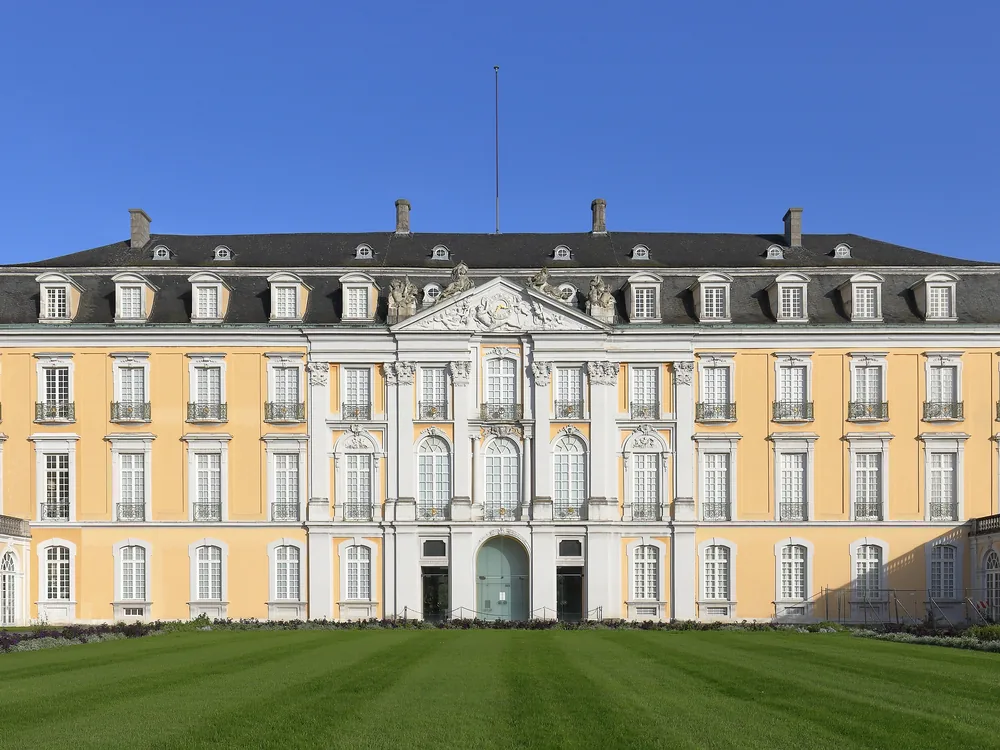
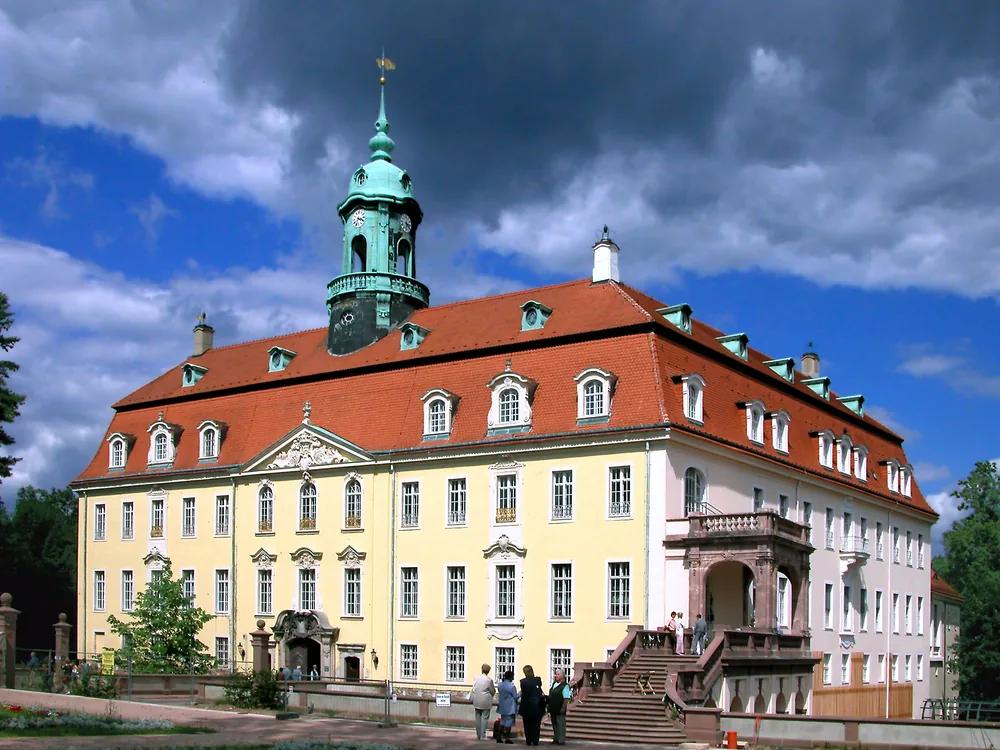
- ✦Sister castle of Augustusburg Palace and Lichtenwalde Castle — all three managed by the same regional operator; a Saxony castle circuit combining all three is possible in one day
Skip the queue with a guided tour
Skip-the-line tickets & expert guides
Scharfenstein Castle is a medieval hill fortification in the Ore Mountains (Erzgebirge) of Saxony, positioned on a rocky spur above the Zschopau valley near the town of Zschopau, roughly 30 kilometres southeast of Chemnitz. Of the three castles managed by the Augustusburg/Scharfenstein/Lichtenwalde Schlossbetriebe gGmbH regional heritage organisation, Scharfenstein is the most genuinely medieval in character — the least modified, the most atmospherically situated, and the most evocative of the hill fortification tradition that the Ore Mountains lords used to control the valley routes through this strategically important mountain corridor.
The first documentary mention of a fortification at Scharfenstein dates from 1150, during the period when the Wettin dynasty — the ruling house of the Saxon margraves, and later electors and kings of Saxony — was consolidating control over the Erzgebirge mining regions. The Ore Mountains were one of the most important silver-mining zones in medieval Europe: the Schneeberg, Annaberg, and Freiberg mines produced wealth that made the Wettin dynasty one of the richest ruling houses in the Holy Roman Empire, and the valley castles like Scharfenstein were the military expression of that wealth — control points on the mountain passes that channelled the movement of silver, trade goods, and people through the Erzgebirge.
The castle's circular bergfried (keep) is the oldest surviving element and the architectural centrepiece. The circular form is characteristic of early medieval German hill castle design — a single cylindrical tower, serving simultaneously as residence, refuge, and observation point, surrounded by a curtain wall enclosing a small inner ward. Unlike later military architecture with its range of towers and elaborate gatehouses, the bergfried plan is relatively austere, and Scharfenstein's relative lack of later modification makes it a clearer example of early medieval defensive logic than the more elaborated castles of the late medieval period.
The 36-metre cistern cut into the castle rock below the inner ward is the most dramatic feature of the site. Cisterns — storage chambers for water supply during siege — were an essential element of hill castle infrastructure, and the one at Scharfenstein is exceptional both in depth (36 metres) and in preservation. Visitors descend into the cistern with the guides; the sound and sight of the shaft, lit from above, is one of the most memorable experiences at any castle in the region.
The guided tours at Scharfenstein are conducted in German only; no regular English-language tour is available. However, the guides dress in historical costume — a practice that makes the castle the most theatrically atmospheric of the three Ore Mountains castles and partially compensates for the language barrier for non-German-speaking visitors. The costume approach is specifically calibrated to the medieval character of the site; it would be less appropriate at the Baroque Lichtenwalde, and indeed is not used there.
Scharfenstein's folklore connection is specific: the castle and its surrounding forest are the primary setting of legends associated with Karl Stülpner (1762–1841), a native of the Ore Mountains who became a celebrated folk figure across Saxony and Bohemia. Stülpner worked variously as a poacher, smuggler, and vagrant; he deserted from the Prussian army and later evaded conscription into Napoleon's Grande Armée, living in the Erzgebirge forests for extended periods. He became a symbol of resistance to aristocratic and imperial authority in the tradition of Robin Hood archetypes — someone who took from the ruling class (mainly game from noble forests) and who the mountain people protected from pursuit. The legends of Stülpner's exploits in and around Scharfenstein are retold in the castle's museum exhibits and form part of the guided tour narrative.
Scharfenstein is the furthest from Chemnitz of the three Ore Mountains castles — about 30 kilometres by road — and the most embedded in the Erzgebirge landscape. The drive from Chemnitz follows the Zschopau valley southeast through a sequence of small industrial and mining towns, past Augustusburg on the ridge to the north, to the Scharfenstein spur above the valley bend. The surrounding forest, which climbs the valley sides above the castle, is mixed conifer and broadleaf with good autumn colour in October.
For visitors planning a Saxony castle circuit, the logical order from Chemnitz is: Lichtenwalde (northwest, most accessible, Baroque) → Augustusburg (southeast, hilltop, largest) → Scharfenstein (further southeast, most medieval, most remote). The GetYourGuide entry ticket for Scharfenstein (€8, 1-hour guided tour in German) is the direct booking route; the castle can also be entered on the day without advance booking.
History
First documented in 1150 during the Wettin dynasty's consolidation of the Erzgebirge silver mining regions. The circular keep is the original medieval core; curtain walls and outbuildings were added through the 13th–16th centuries. Passed from the Wettin margraves to various Saxon noble families; used as a hunting lodge in the 17th–18th centuries. Now managed by the Augustusburg/Scharfenstein/Lichtenwalde Schlossbetriebe gGmbH alongside two sister castles.
How to Visit
Getting there: Scharfenstein lies approximately 30 km southeast of Chemnitz via the B174 and the Zschopau valley roads. No regular direct public transport serves the castle — a car is recommended. The nearest train station is Zschopau (Chemnitz–Cranzahl line), from where the castle is a 30-minute walk or a short taxi ride.
Tickets: Walk-up admission costs €8 for adults and €5 for children; no advance booking required. The GetYourGuide guided tour "Scharfenstein Castle Guided Tour" includes a 1-hour tour by guides in historical costume, conducted in German — no regular English-language option is available.
Practical tips: The guides' historical costumes make the tour engaging even without German. October is an excellent month to visit: the Ore Mountains autumn colour is at its peak and crowds are thin. Bring sturdy footwear for the cobblestone approach and the 36-metre cistern descent.
Combine with: Augustusburg Palace (15 km northwest) and Lichtenwalde Castle (20 km further northwest) — all three managed by the same operator, making a full Saxon castle circuit easy in a single day.
Frequently Asked Questions
Karl Stülpner (1762–1841) was an Ore Mountains poacher, smuggler, and army deserter who became a celebrated folk hero in Saxony — the local equivalent of Robin Hood, known for evading the armies of Frederick the Great and Napoleon alike while living in the Erzgebirge forests. The peasant communities of the Ore Mountains sheltered him; the authorities repeatedly failed to capture him despite a long series of pursuits. The legends associated with Stülpner are particularly concentrated around Scharfenstein Castle and its surrounding forests.
Location
Scharfenstein 1, 09405 Zschopau, Germany
Nearby Castles
Tours & Tickets
Powered by GetYourGuide
From
€8/ person