
Sparrenburg Castle
Sparrenburg
Germany · North Rhine-Westphalia · Near Bielefeld
Built 1250 · Medieval hilltop castle above Bielefeld with roughly 750 years of continuous history, built by the Counts of Ravensberg as the fortification around which the city of Bielefeld grew; famous for its 300-metre underground casemate corridor system with thick stone walls and narrow light shafts, built for the castle's defence; the surviving tower offers panoramic views over Bielefeld and is the city's most recognisable landmark, closely tied to the long-running German internet in-joke that 'Bielefeld doesn't exist'
This page is part of an independent travel guide and is not affiliated with, endorsed by, or operated by Sparrenburg Castle.
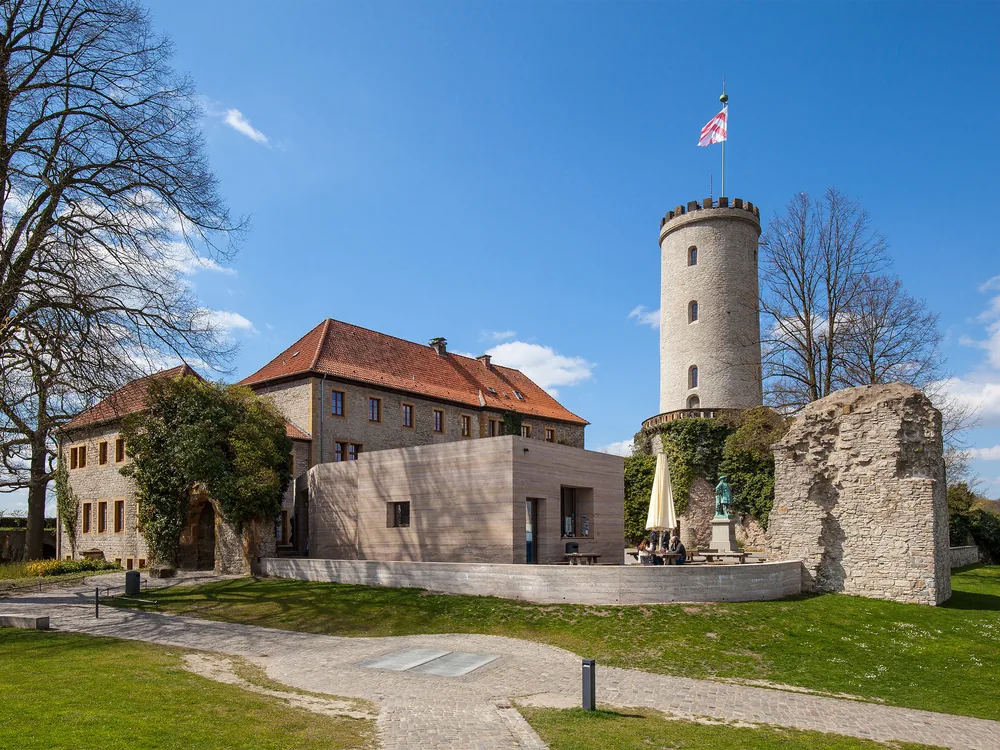
© Castles & Palaces
Quick Facts
- Hours
- Daily 10:00–18:00
- Guided tour from
- €12
- Duration
- 45 minutes
- Best time
- Year-round
- Nearest city
- Bielefeld
Featured Tour
Bielefeld: Sparrenburg Casemate Tour and Tower Climb
Cancellation available · Instant confirmation
Highlights
- ✦A 300-metre network of underground stone casemate corridors built beneath the castle for its defence — one of the most complete surviving medieval underground military systems in Westphalia, accessible on a 45-minute guided tour
- ✦Built by the Counts of Ravensberg in the mid-13th century as the fortified seat around which the city of Bielefeld developed — the castle's protective market rights drew the settlement that eventually became one of Westphalia's principal cities
- ✦The surviving tower offers a panoramic view over Bielefeld and the surrounding Westphalian countryside — the clearest way to understand the castle's original strategic position commanding the town and routes below
- ✦Bielefeld's most recognisable landmark, closely linked to the city's long-running internet 'conspiracy theory' that the city doesn't exist — a joke so persistent the city itself has leaned into it for tourism marketing
- ✦The GetYourGuide casemate tour (45 minutes) is currently capped at 2 participants per booking — book well ahead as this small capacity affects availability
Skip the queue with a guided tour
Skip-the-line tickets & expert guides
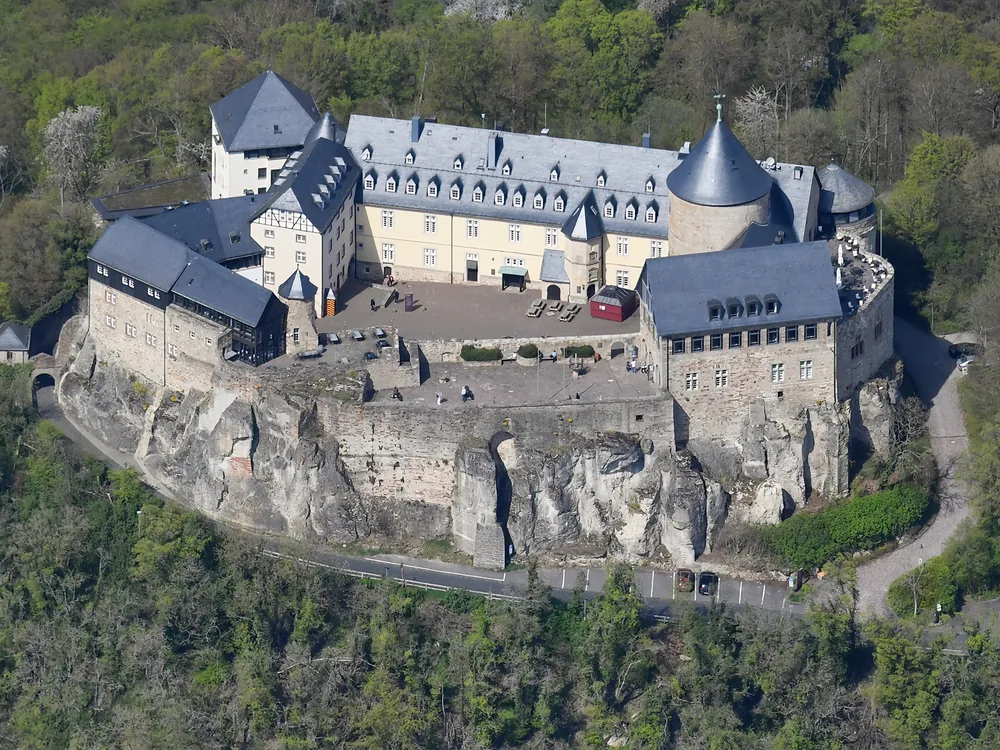
Above the city of Bielefeld, a medieval tower marks the site around which the entire city grew nearly 800 years ago — and beneath it runs a 300-metre network of underground stone corridors that, for centuries, formed one of the castle's principal defensive systems. Sparrenburg is Bielefeld's most recognisable landmark, and its casemates offer one of the more atmospheric underground castle experiences in this part of Germany: narrow light shafts, thick fortification walls, and dungeon spaces that make tangible what medieval castle warfare involved at the level of the soldiers who occupied and defended these structures.
Sparrenburg was built by the Counts of Ravensberg in the mid-13th century as the fortified seat around which the town of Bielefeld developed — a pattern that recurs across medieval northern Europe, where a castle's protective presence, its markets, and the commercial opportunities clustered around its demand for supplies and services drew settlement that eventually outgrew the castle itself and became an independent urban community. Over roughly 750 years the castle has been rebuilt, expanded, partially dismantled, and systematically restored multiple times, reflecting the shifting military, political, and civic priorities of the Westphalian region across the medieval, early modern, and modern periods. What visitors experience today is not a medieval original but a thoughtfully maintained composite — the tower substantially medieval in its fabric, the casemates a combination of original construction and careful restoration, the walls and outer circuit representing several centuries of addition and modification.
The castle's defining feature for contemporary visitors is its underground casemate system — a 300-metre network of stone corridors and chambers built into the hill beneath the castle, designed to allow defenders to move, supply, and mount defensive operations largely out of sight and out of range of besiegers. Casemates — covered passages within or beneath fortification walls, providing protected firing positions and communication routes — became increasingly important in European military architecture from the 15th century onward as siege artillery improved and exposed positions became untenable. The Sparrenburg system, substantial by regional standards, gives visitors direct physical access to a type of medieval military architecture that is usually invisible from the surface of a castle visit: most visits show walls, towers, and courtyards; Sparrenburg shows what lay underneath.
The 45-minute guided tour focuses specifically on this underground system. The corridors are narrow, lit by shafts cut through the rock above, and in places require stooping — the scale communicates the reality of medieval underground military life more effectively than any interpretive panel. Above ground, the surviving tower can be climbed for a panoramic view over Bielefeld and the Westphalian countryside — the payoff after the constriction of the casemates, and the clearest way to understand why this particular hill was worth fortifying in the first place.
No editorial treatment of Sparrenburg is complete without acknowledging Bielefeld's peculiar internet notoriety. Since the early 1990s, a sardonic conspiracy theory has circulated in German-speaking internet culture asserting that Bielefeld does not exist — that the city is a fabrication, its supposed residents unaware they are part of an elaborate fiction. The joke has proven unusually durable, propagating through German social media for three decades; in 2019, the city officially offered a €1 million reward to anyone who could prove Bielefeld doesn't exist (the reward has not been claimed). Sparrenburg, as Bielefeld's most photographed and historically concrete landmark, sits at the centre of the joke's visual vocabulary. It is worth a brief, knowing mention; it should not dominate the visit.
History
The castle was built by the Counts of Ravensberg in the mid-13th century on a hill above the Teutoburg Forest, serving as the central fortification around which the town of Bielefeld developed. The Ravensberg counts controlled the castle and the surrounding territory through the medieval period; the castle subsequently passed through the Duchy of Cleves and the Duchy of Prussia following the extinction of the Ravensberg line.
The underground casemate system was developed across multiple phases of construction and modification, reflecting changing military requirements over several centuries. The castle was damaged and partially dismantled during various conflicts, then substantially restored in the 19th and 20th centuries. Today it functions as Bielefeld's principal heritage site, with the casemates and tower the primary visitor attractions.
How to Visit
Getting there: Sparrenburg sits above central Bielefeld. From Bielefeld Hauptbahnhof, the castle is a 15–20 minute walk uphill through the old town, or take a local bus to the Sparrenburg stop. The route is well signed from the city centre.
Tickets: Walk-up admission costs €13 for adults; children are free. The GetYourGuide "Bielefeld: Sparrenburg Casemate Tour and Tower Climb" runs 45 minutes and covers the full underground casemate corridor tour followed by the tower climb. This tour is currently limited to 2 participants per booking — available slots fill quickly, so book in advance.
Practical tips: The casemates involve narrow corridors, low headroom in places, and stairs. Not recommended for visitors with claustrophobia, mobility limitations, or discomfort in confined underground spaces. Wear closed shoes. The tower climb that follows rewards with a panoramic view over Bielefeld and the Westphalian countryside — the best vantage point for understanding why the Counts of Ravensberg chose this hill in the 13th century.
Combine with: Bielefeld's Altstädter Nicolaikirche and the surrounding Sparrenburgviertel old quarter make a natural afternoon pairing — both are a short walk downhill from the castle. The Kunsthalle Bielefeld (contemporary art, with works by Picasso and Ernst) rounds out a full city day.
Frequently Asked Questions
The casemates are a 300-metre network of underground stone corridors and chambers built beneath Sparrenburg Castle, designed to allow defenders to move, store supplies, and mount defensive operations largely out of sight of besiegers. Built in phases across the castle's history, they represent one of the more complete surviving examples of this type of underground military architecture in Westphalia. The 45-minute guided tour gives visitors direct access to the corridors and chambers — narrow, stone-walled, lit by shafts from above — followed by the tower climb for the panoramic view.
Location
Am Sparrenberg 38a, 33602 Bielefeld, Germany
Nearby Castles
Tours & Tickets
Powered by GetYourGuide
From
€12/ person