
Weyberhöfe Castle
Kurfürstliches Schlosshotel Weyberhöfe
Germany · Bavaria — Sailauf, near Aschaffenburg, Lower Franconia · Near Aschaffenburg
Built 1265 · Built 1265 as a hunting lodge for the Archbishop of Mainz; rebuilt 1557 after a fire; converted to a wellness hotel 1993–1995
This page is part of an independent travel guide and is not affiliated with, endorsed by, or operated by Weyberhöfe Castle.
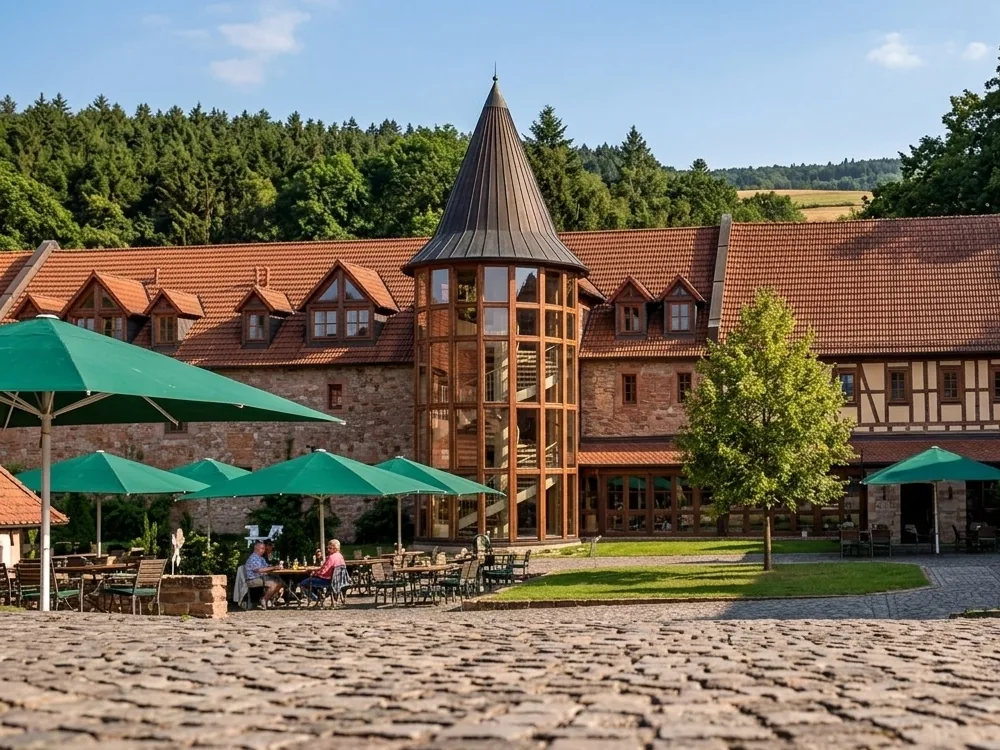
© Castles & Palaces
Quick Facts
- Rooms from
- €209 / night
- Duration
- Overnight stay only
- Best time
- Year-round
- Nearest city
- Aschaffenburg
Stay Here
Kurfürstliches Schlosshotel Weyberhöfe
Rooms are within the historic castle building itself
Booked via Booking.com · Free cancellation on most rates
No confirmed public day-visitor product (museum, tours) was found in research — this is positioned as a wellness and conference hotel rather than a heritage-visit destination. Verify directly with the property before promoting day-visit access.
Highlights
- ✦Built in 1265 by the Archbishop of Mainz, Werner von Eppstein, as a hunting lodge ("castrum vivarium"), rebuilt in 1557 by Elector Daniel Brendel after a fire
- ✦All 40 rooms and suites sit within the historic castle walls, individually furnished, renovated most recently in 2016–2017
- ✦Converted to a wellness hotel from 1993–1995 by merchant Edmund Weber, largely respecting the historic architectural specifications during the transformation
- ✦Set in parkland on the Laufach stream, on the edge of the Spessart nature reserve, between the old Electoral road from Aschaffenburg to Lohr am Main and the Frankfurt–Würzburg rail line
Stay in the castle itself
Book a room via Booking.com
Weyberhöfe Castle began in 1265 as a hunting lodge — recorded as "castrum vivarium" — built for Werner von Eppstein, the Archbishop of Mainz, in the wooded countryside east of Aschaffenburg in Lower Franconia. A fire damaged the original structure, and Elector Daniel Brendel had it substantially rebuilt in 1557, giving the castle much of the form it retains today. For centuries afterward the estate served the electoral court of Mainz, a role reflected in the property's continued use of "Kurfürstliches" (Electoral) in its formal hotel name.
The castle's conversion to hospitality use came relatively late compared to many properties in this collection: merchant Edmund Weber transformed the estate into a wellness hotel between 1993 and 1995, a renovation carried out with considerable attention to the site's historic architectural character. All 40 rooms and suites today sit within the historic castle walls, individually furnished and most recently renovated in 2016–2017, set within parkland on the Laufach stream at the edge of the Spessart nature reserve — a quieter, forest-adjacent setting distinct from the Rhine and Neckar valley castles more commonly featured in this directory.
The Electorate of Mainz, one of the Holy Roman Empire's most powerful ecclesiastical territories, maintained an extensive network of hunting lodges and administrative residences across its lands, of which Weyberhöfe represents a relatively modest but well-preserved example. The "castrum vivarium" designation — literally a fortified game enclosure — reflects the lodge's original function supporting the Archbishop's hunting activities rather than serving as a primary defensive or residential seat.
The 1993–1995 restoration's attention to the historic architectural specifications distinguishes Weyberhöfe from castle-hotel conversions that prioritize contemporary hospitality standards over historical accuracy, giving the property a genuinely more historically grounded interior character than a purely modernized wellness resort might otherwise offer.
The Spessart, the large forested nature reserve bordering the estate, is one of Germany's more significant contiguous woodland areas, historically associated with both hunting (explaining the lodge's original purpose) and, in popular folklore, tales of robbers and forest spirits that have shaped regional storytelling traditions for centuries.
The property's position between the old Electoral road connecting Aschaffenburg to Lohr am Main and the modern Frankfurt–Würzburg rail corridor places Weyberhöfe at the intersection of historic and contemporary transport routes through this part of Bavaria, giving guests reasonably convenient access despite the estate's genuinely rural, forest-edge setting.
Aschaffenburg itself, a short drive away, offers guests staying at Weyberhöfe access to Johannisburg Palace and the city's historic old town, extending a stay at the castle into a broader exploration of Lower Franconia's Electoral Mainz heritage beyond the hunting lodge itself.
The Electorate of Mainz's territorial reach across this part of Lower Franconia, extending well beyond the archbishopric's namesake city on the Rhine, reflects the considerable political and ecclesiastical power wielded by the Mainz electors within the Holy Roman Empire, whose landholdings and hunting rights extended deep into the Spessart forest surrounding what is now Weyberhöfe.
History
Weyberhöfe Castle began in 1265 as a hunting lodge ("castrum vivarium") for Werner von Eppstein, the Archbishop of Mainz, in the wooded countryside east of Aschaffenburg. Elector Daniel Brendel had it substantially rebuilt in 1557 after a fire, and the estate served the electoral court of Mainz for centuries afterward. Merchant Edmund Weber converted the property into a wellness hotel between 1993 and 1995, respecting the site's historic architectural character. All 40 rooms and suites today sit within the historic castle walls, most recently renovated in 2016–2017.
How to Stay
Getting there: In Sailauf, near Aschaffenburg, Lower Franconia, Bavaria; about 45 minutes from Frankfurt and 20 minutes from Aschaffenburg by car. The Frankfurt–Würzburg rail line runs nearby.
Rooms & rates: From approx. €209/night for a standard double, rising to around €350/night for the Schloss Suite (verify against live rate).
On-site: Restaurant, spa and wellness area, gardens and parkland grounds.
Good to know: All 40 rooms are within the historic castle walls — no separate annex identified. Positioned primarily as a wellness and conference retreat rather than a day-visitor heritage site.
Combine with: Aschaffenburg's old town and Johannisburg Palace, and the wooded Spessart nature reserve for hiking.
Frequently Asked Questions
The estate served the electoral court of Mainz for centuries after being built in 1265 as a hunting lodge for the Archbishop of Mainz, and the hotel's formal name retains this historical association.
Location
Weyberhöfe 1, 63877 Sailauf, Germany
Nearby Castles

Rooms from
€209/ night