
Angelokastro
Αγγελόκαστρο
Greece · Ionian Islands, Corfu — northwest coast, near Paleokastritsa · Near Corfu Town
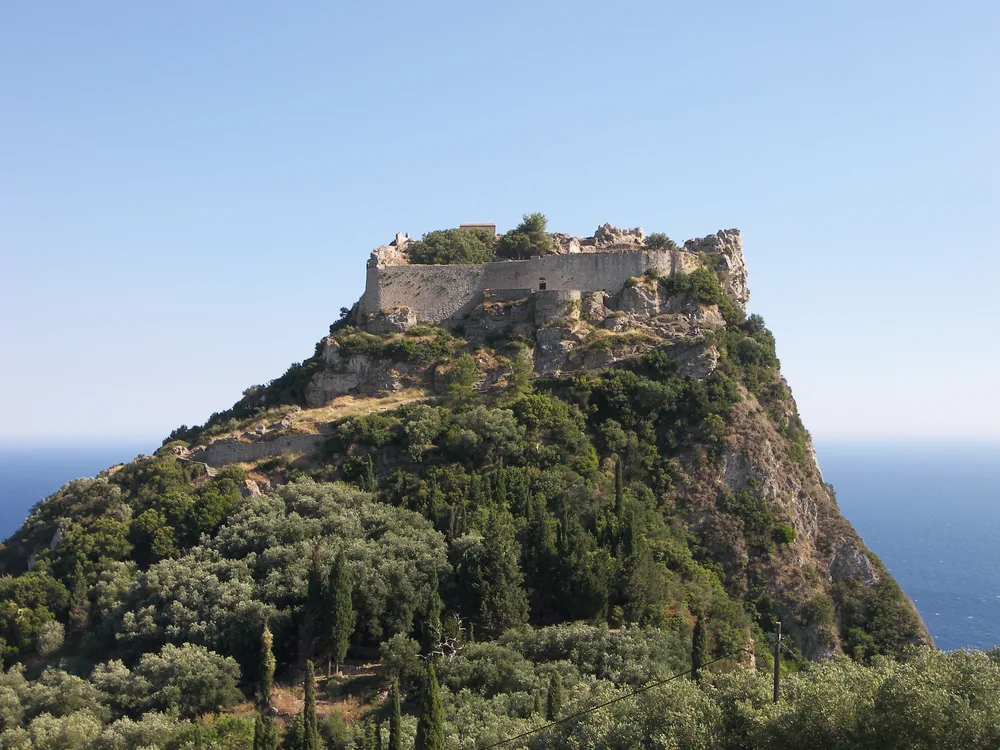
Built 1200 · Byzantine cliff-top fortress with Angevin and Venetian modifications — early Christian remains excavated in 1999 indicate a foundation no later than the 5th–7th centuries AD; the fortress as documented from 1272 is attributed architecturally to the reigns of Byzantine despots Michael I and Michael II Komnenos of Epirus, who held Corfu in the 12th–13th centuries; after 1267 the castle passed to Angevin control under Charles of Anjou, and subsequent Venetian tenure from 1386 added further modifications to the defensive structure; the site sits on a rocky headland at 305 metres above the Ionian Sea, with the sea cliffs forming the natural outer wall on three sides
This page is part of an independent travel guide and is not affiliated with, endorsed by, or operated by Angelokastro.
© Castles & Palaces
Quick Facts
- Hours
- Daily 08:00–20:00
- Guided tour from
- €75
- Duration
- 1–2 hours (castle only); 3 hours (GetYourGuide guided hike with olive-grove trail and sunset)
- Best time
- April to October
- Nearest city
- Corfu Town
Featured Tour
Corfu: Angel Castle Guided Hike and Sunset
Cancellation available · Instant confirmation
Highlights
- ✦Never captured in its documented history — Angelokastro helped repel three major Ottoman sieges of Corfu: 1537 (Hayreddin Barbarossa), 1571 (during the Cyprus War), and 1716 (Great Turkish War); each time the island's population took refuge within its walls; local tradition holds that it was never taken by force
- ✦Byzantine origins confirmed by archaeology — a 1999 excavation uncovered early Christian remains dating the site to the 5th–7th centuries AD, several centuries before the fortress structures visible today; the documented fortress is attributed to Michael I and Michael II Komnenos of Epirus (12th–13th c.)
- ✦Corfu's capital for two centuries — from 1387 until the late 16th century, Angelokastro served as the official administrative seat of Corfu and the residence of the Provveditore Generale del Levante, the Venetian governor responsible for the entire Ionian Islands; the town of Corfu below was a more recent administrative centre
- ✦305 metres above the Ionian Sea — the castle occupies a sheer rocky headland on the island's northwest coast, with sea cliffs forming the natural defensive wall on three sides; the views from the summit extend across the Ionian Sea to Albania and mainland Greece in clear weather
- ✦The western frontier of the Byzantine world — after Byzantium lost southern Italy in 1071, Corfu became the empire's westernmost defensive position; Angelokastro, together with the castles of Gardiki and Kassiopi, formed a three-point defensive triangle guarding the island's south, northwest, and northeast from the sea
- ✦Guided hike with sunset — the GetYourGuide tour (max 10) combines the castle visit with a walk through the olive groves to Krini village and returns for the sunset from the headland, a different approach to the site than the standard entry ticket
Skip the queue with a guided tour
Skip-the-line tickets & expert guides
Angelokastro — the Angel Castle, or more accurately the Castle of the Angel (from the Greek Angelos, the family name of the Byzantine dynasty that briefly held it) — occupies the most dramatic natural defensive position on Corfu: a rocky headland on the island's northwest coast, 305 metres above the Ionian Sea, where the cliffs fall sheer on three sides and the narrow ridge approach from the east constituted the only practical route of attack. For a military architect, the site essentially designs itself; what the various powers who held it added over the centuries was the gate complex, the residential and administrative buildings on the summit, the cisterns, and the church of the Archangel Michael — the patron whose name eventually fused with the castle's identity.
The fortress's foundation is substantially older than its first documentary mention. A 1999 excavation by the Greek Ministry of Culture recovered early Christian remains at the site, establishing occupation no later than the 5th–7th centuries AD — the period of the Byzantine empire's consolidation of the Ionian Islands after Rome's collapse in the west. The structures visible today are attributed to the Byzantine period of the 12th–13th centuries, specifically the reigns of Michael I and Michael II Komnenos of Epirus, the despotate that controlled Corfu and northwestern Greece in the decades before and after the Fourth Crusade's disruption of Byzantine power in 1204. The castle is first mentioned in surviving documents in 1272, at the moment when it transferred from Byzantine to Angevin control under Charles of Anjou, whose dynasty had just expelled Byzantium from Corfu.
The strategic logic of the site is inseparable from Corfu's position as the Byzantine empire's western frontier. When the Normans took Bari in 1071 and completed the elimination of Byzantine Italy, the empire's western exposure shifted entirely to the Ionian Islands. Corfu, the closest island to the Italian coast and the natural landfall for any sea crossing from the Adriatic, became both a target and a gateway. The three-castle defensive system — Angelokastro on the northwest, Kassiopi on the northeast, Gardiki on the south — was the island's response to this exposure, covering the three main approach corridors from the sea.
Angelokastro's most significant period began in 1387, when Venice consolidated control of Corfu and established the castle as the official administrative seat of the island and the headquarters of the Provveditore Generale del Levante — the Venetian governor who administered all the Ionian Islands from this headland. The town of Corfu (today's Corfu Old Town, a UNESCO World Heritage Site) was a later administrative centre; for roughly two centuries, the western capital of Venetian Ionian governance was this fortress perched above the sea. Warehouses, cisterns, a residential complex, and the chapel of the Archangel Michael were all accommodated on the summit during this period.
The military record of the castle is what distinguishes it most sharply from comparable Aegean and Ionian fortresses. Corfu was attacked repeatedly by Ottoman forces through the 16th and early 17th centuries, and Angelokastro was the site of each defence. In 1537 the Ottoman fleet under Hayreddin Barbarossa, the corsair admiral who had already raided Calabria and Capri, landed forces on Corfu and devastated the countryside; the island's population — said to number in the tens of thousands — took refuge within Angelokastro's walls while Barbarossa's forces burned the villages below. The fortress held. A second major attack in 1571, during the Cyprus War that ended with the Battle of Lepanto, was again repelled. The final and most significant test came in 1716, during the Great Turkish War, when Ottoman forces besieged both Corfu and Angelokastro before the Venetian navy under Johann Matthias von der Schulenburg broke the siege. Through all three episodes, Angelokastro was never taken by assault — a record unique among the major fortresses of the Ionian Islands.
After the final Ottoman threat receded in the early 18th century, the fortress's active military function ended. The Venetians maintained it as a symbolic installation; after Napoleon's dissolution of the Venetian Republic in 1797, it passed through French and British control before Greek independence. The castle was substantially consolidated in restoration works begun in 1999 under the Greek Ministry of Culture and the European Union's structural funds, which stabilised the walls, cleared the summit buildings, and revealed the early Christian remains that extended the site's documented history by several centuries.
The approach to Angelokastro on foot — through the olive groves of the northwest coast from Paleokastritsa, following the ridge to the headland — is one of the more distinctive castle approaches in Greece. The GetYourGuide guided hike (max 10, from €75 including the €10 entrance fee) combines the castle visit with the olive-grove trail to Krini village and times the return for the sunset from the headland. On [Corfu Old Fortress](/castles/greece/corfu-old-fortress) in Corfu Town — the island's other major fortification, a Venetian-period sea fortress guarding the town's eastern harbour approaches — you can trace the same Venetian defensive logic that protected Corfu from the sea for five centuries. Together the two castles cover both ends of the island's military history: Angelokastro the western cliff-top fortress of Komnenos and early Venice, the Old Fortress the later Venetian city-fortress that reflected a different kind of urban defensive priority.
History
The headland that would become Angelokastro shows early Christian occupation from the 5th to 7th centuries AD, confirmed by excavations in 1999. The fortress itself is attributed to the Byzantine despots of Epirus — Michael I and Michael II Komnenos — who developed it in the 12th and 13th centuries as the western defensive anchor of Byzantine Corfu. The first documentary record comes in 1272, when Angelokastro passed to Angevin control under Charles of Anjou following the partition of Byzantine territories.
Venice acquired Corfu in 1387 and made Angelokastro its administrative capital — the seat of the Provveditore Generale del Levante, the Venetian governor with authority over the Ionian islands and the eastern Adriatic. This administrative role placed the castle at the centre of a long defensive effort against Ottoman naval power. Hayreddin Barbarossa raided Corfu in 1537; the island's population fled to the fortress, and it held. A second major Ottoman assault during the Cyprus War came in 1571 and was similarly repelled. The administrative functions were eventually transferred to Corfu Town in the late 16th century, but the fortress retained its military value. The final Ottoman siege, during the Great Turkish War of 1716, was lifted by a Venetian fleet under Marshal Schulenburg — and Angelokastro, despite two centuries of Ottoman pressure, was never taken.
The dissolution of the Venetian Republic in 1797 passed Corfu through French and then British administration before Greek sovereignty was established. Restoration under Greece's Ministry of Culture, with EU co-sponsorship, has been active since 1999.
How to Visit
Getting there: Angelokastro is 25 km northwest of Corfu Town via the Paleokastritsa road; approximately 40 minutes by car or taxi. Public buses from Corfu Town run to Paleokastritsa in summer — check KTEL Corfu for current schedules. From Paleokastritsa, the headland is a further 2 km north by car or a walkable road.
Tickets: Walk-up entry is €10, paid at the castle gate. The GetYourGuide guided hike departs from Paleokastritsa, follows a 3-hour route through olive groves via Krini village to the headland, and includes the entrance fee. The group cap is 10 — book at least a week ahead in July and August when it reliably fills.
Practical tips: The GetYourGuide hike is timed to arrive at sunset, which is the most atmospheric approach — the exposed headland with the castle silhouette facing west is genuinely striking at that hour. Independent visitors should arrive at opening (typically 08:30 in summer) before the headland heats up. Sturdy shoes are essential on the rocky path from the car park; no shade on the final approach.
Combine with: Corfu Old Fortress — the Venetian sea fortress guarding Corfu Town's eastern harbour; together the two sites cover Corfu's complete fortification history in one day.
Frequently Asked Questions
No military force is recorded as having taken Angelokastro by assault. The fortress's natural position — a 305-metre headland with sea cliffs on three sides and only a narrow ridge approach from the east — made it exceptionally difficult to assault. The three major Ottoman attacks of 1537, 1571, and 1716 were all repelled, in each case partly by the castle's strength and partly by the fact that the Ottomans lacked the ability to sustain a long siege so far from their supply lines. The 1716 siege was lifted when the Venetian fleet arrived; the 1537 and 1571 attacks appear to have been primarily raids rather than sustained sieges.
Location
Angelokastro, 491 00 Corfu, Greece
Nearby Castles
Tours & Tickets
Powered by GetYourGuide
From
€75/ person