
Visegrád Citadel
Visegrád Fellegvár
Hungary · Danube Bend (Pest County) · Near Visegrád, Danube Bend
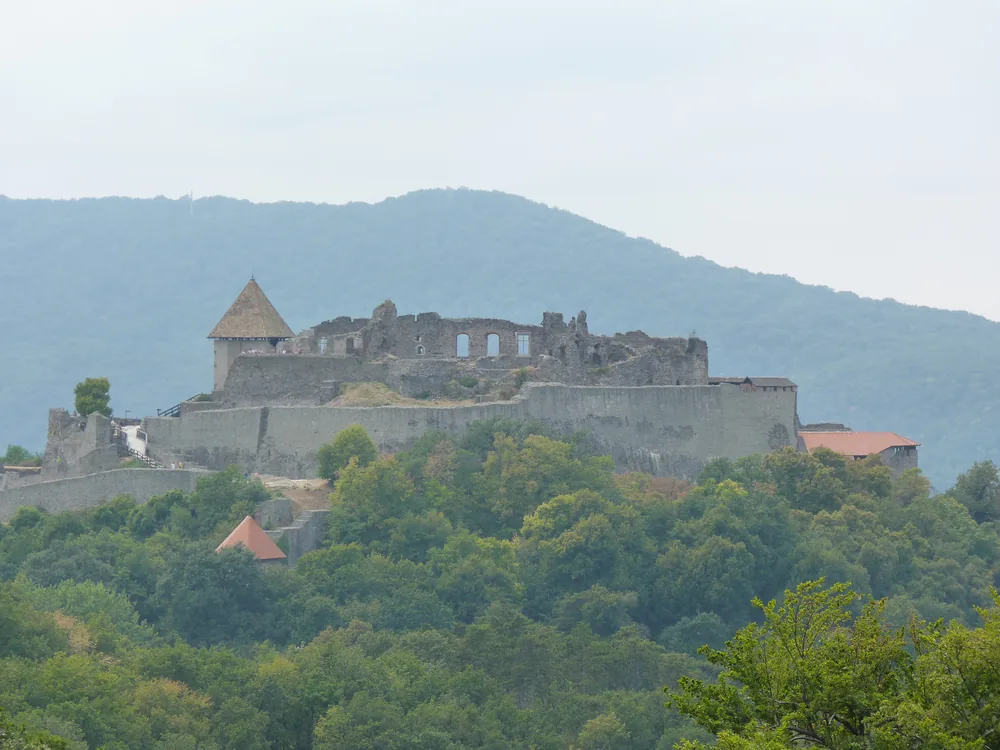
Built 1250 · 13th-century hilltop citadel (Fellegvár, meaning Cloud Castle) built under King Béla IV of Hungary as part of a nationwide stone-fortress programme following the catastrophic 1241–42 Mongol invasion; positioned on the forested ridge above the Danube Bend at Visegrád, commanding panoramic views over the river and the Börzsöny hills; the citadel is a separately ticketed, independently accessible hilltop fortress distinct from the Visegrád Royal Palace ruins (already published at hungary/visegrad-royal-palace), which occupy the valley below approximately 20–30 minutes' walk or drive downhill; the citadel served at various times as a repository for the Hungarian Holy Crown
This page is part of an independent travel guide and is not affiliated with, endorsed by, or operated by Visegrád Citadel.
© Castles & Palaces
Quick Facts
- Hours
- Daily 09:00–17:00
- Guided tour from
- €145
- Duration
- 5-hour guided hike tour from Budapest (including travel time); 1–1.5 hours at the citadel independently
- Best time
- April to October
- Booking
- Required — book 2+ days ahead
- Nearest city
- Visegrád, Danube Bend
Featured Tour
Budapest: Guided Hike to Visegrád Citadel
Cancellation available · Instant confirmation
Highlights
- ✦NOTE: This is the Visegrád hilltop Citadel (Fellegvár, Cloud Castle) — a different site from the Visegrád Royal Palace ruins (hungary/visegrad-royal-palace, already published) in the valley below; the Royal Palace is a flat, easily accessible valley site with Renaissance ruins; the Citadel is an uphill fortress requiring a 20–30-minute climb; both are in the same town and can be combined in a single day
- ✦Built by King Béla IV in the mid-13th century as part of Hungary's post-Mongol-invasion stone-fortress programme — Béla IV is the king who rebuilt Hungary's defences in stone after the Mongols demonstrated in 1241–42 how catastrophically vulnerable the existing wooden fortifications were; the citadel at Visegrád was one of the key new strongholds
- ✦The Hungarian Holy Crown — the Crown of St. Stephen, Hungary's most sacred national symbol — was stored at Fellegvár for safekeeping on multiple occasions during the medieval period, reflecting the citadel's status as one of Hungary's most secure fortresses
- ✦The Danube Bend (Dunakanyar) views from the citadel are among the most photographed in Hungary — the Danube makes a sharp turn here from an eastward flow to a southward one, with the river visible in both directions from the hilltop, framed by the Börzsöny hills on the north bank and the Pilis hills to the south
- ✦The GetYourGuide tour is a 5-hour private guided hike from Budapest to the citadel, priced from €154 per person — this is a premium guided outdoor experience, not a conventional entry ticket; independent visitors can take HÉV rail to Visegrád and walk up the castle trail for a small fraction of the cost
Skip the queue with a guided tour
Skip-the-line tickets & expert guides
Fellegvár: the Hungarian name means Cloud Castle. It is a typically evocative medieval naming convention — the citadel sits high enough on the forested ridge above the Danube Bend that when morning mist fills the river valley, the fortress walls appear to float above it. The views from the summit are the primary reason to make the climb, and they are exceptional: the Danube makes one of its most dramatic bends here, turning from an eastward flow to a southward course, visible in both directions from the citadel walls with the Börzsöny hills on the north bank and the Pilis hills to the south.
Before visiting, a clarification matters: this is not the same site as the Visegrád Royal Palace (published at hungary/visegrad-royal-palace). The Royal Palace ruins occupy the valley below, a flat, easily accessible site with impressive Renaissance stonework from the 14th and 15th centuries. The Citadel is a separate fortress on the hilltop approximately 20–30 minutes' walk above the valley. They are both in Visegrád, they both have entrance fees, and they complement each other perfectly in a single day — but they are different sites with different histories, different ticket points, and different physical characters.
The Citadel was built in the mid-13th century by King Béla IV of Hungary, and its construction belongs to one of the most consequential chapters in Hungarian medieval history. The Mongols crossed the frozen Danube in the winter of 1241–42 and moved through Hungary with a devastating speed, killing perhaps a third to half of the population and demonstrating with brutal clarity that Hungary's existing defences — largely timber-and-earthwork structures — could not resist cavalry-based steppe warfare. When the Mongols withdrew after the death of the Great Khan Ögedei, Béla IV was left with a kingdom that had been catastrophically damaged and a defensive system that had conspicuously failed. His response was a nationwide programme of stone castle construction on hilltop positions that would give defenders the terrain advantage that the flat earthwork fortresses had lacked.
Fellegvár was one of the key fortresses of this programme. Its position on the forested ridge above the Danube Bend was strategic in multiple senses: the citadel commanded the river approach from the north, controlled the forest road along the ridge, and was visible from the valley floor in all directions, making it a genuine centre of territorial authority rather than merely a refuge. As Visegrád grew in the 14th and 15th centuries to become one of Hungary's royal capitals — the period when the Royal Palace was built in the valley — the Citadel's role shifted from frontier stronghold to repository and treasury. The Hungarian Holy Crown — the Crown of St. Stephen, Hungary's most sacred national symbol and the central object of Hungarian constitutional tradition — was stored at Fellegvár for safekeeping on multiple occasions during the medieval period. That a hilltop fortress with difficult terrain access was chosen as the crown's depository reflects both the importance of the object and the confidence placed in the citadel's security.
The GetYourGuide tour frames the visit explicitly as a hike: the route ascends through the forest on the Danube Bend hiking trail, guided, with the citadel as the destination. The tour is a private booking (up to the group size specified) from Budapest, including transport to the starting point, the guided forest hike, time at the citadel, and return. The framing as a hike is accurate — the ascent involves significant elevation gain on uneven forest paths, and the experience is as much about the forest hiking and the river views on the approach as about the citadel walls at the summit. Visitors seeking a conventional castle entry experience without physical effort may prefer to arrange independent transport to the citadel car park near the top, which exists and gives easier access to the walls.
Independent access to Visegrád from Budapest is straightforward. The Mahart ferry (seasonal, April–October) runs on weekends and public holidays along the Danube; the HÉV suburban rail serves nearby Visegrád-Nagymaros (requiring a ferry crossing); the Volánbusz operates regular bus service from Újpest-Városkapu in Budapest to Visegrád directly. From the village, the castle trail is marked and the climb takes approximately 20–30 minutes. The citadel's own admission is payable at the gate.
The Royal Palace below (hungary/visegrad-royal-palace) is the natural pairing for a same-day visit. The Palace ruins document Visegrád's 14th and 15th-century role as a royal residence under the Angevin and later Hunyadi kings — a completely different historical chapter from the Citadel's post-Mongol-invasion origins, with different architectural character (Renaissance rather than Gothic-military) and different visitor experience (open valley excavation rather than hilltop fortress). The recommended Visegrád day: arrive at the Royal Palace in the morning when it opens, spend 1–1.5 hours there, walk or drive up to the Citadel for the afternoon, and descend in time for the return journey to Budapest.
Esztergom Castle (hungary/esztergom-castle), approximately 20 kilometres northwest along the Danube, is the other Danube Bend fortress already on this site, and the combination of Esztergom (royal seat of medieval Hungary's first centuries), Visegrád Royal Palace, and Visegrád Citadel constitutes a comprehensive survey of Hungary's Danube Bend medieval heritage in a single long day.
The Rakoczi period added another chapter to the citadel's history. Ferenc Rakoczi II, leader of the Hungarian independence uprising against Habsburg rule in the early 18th century, used Visegrad and its strategic river position during his campaigns. The Danube Bend's importance in Hungarian military and political geography recurred across each period of contested national sovereignty, and the Citadel's position — commanding the river at its most dramatic bend — made it relevant again and again across six centuries of changing power.
History
Visegrád Citadel (Fellegvár) was built by King Béla IV of Hungary in the mid-13th century as part of the nationwide stone-fortress programme following the catastrophic 1241–42 Mongol invasion. The fortress commanded the Danube Bend from its ridge position and served as a repository for the Hungarian Holy Crown on multiple occasions in the medieval period. As Visegrád developed as a royal capital in the 14th–15th centuries (documented by the Renaissance Royal Palace ruins in the valley below, already published at hungary/visegrad-royal-palace), the Citadel's role shifted to treasury and stronghold. The fortification was used and modified across the medieval and early modern period. Today it is a visited hilltop ruin with restored walls and panoramic Danube views.
How to Visit
Getting there: Volánbusz bus from Budapest Újpest-Városkapu (about 1 hour to Visegrád village); from the village, walk up the castle trail (approximately 20–30 minutes, moderately strenuous). By car, road access from the village leads to a car park near the citadel.
Tickets: Admission is payable at the gate. The GetYourGuide guided tour is a 5-hour private guided hike from Budapest, including forest trail ascent, transport, and time at the citadel summit.
Practical tips: The trail ascent involves significant elevation gain on uneven forest paths — wear hiking footwear and bring water. Visitors wanting easier access can drive to the car park near the top. The Danube Bend views from the summit are exceptional and particularly dramatic in autumn when the forested hills change colour.
Combine with: Visegrád Royal Palace 20–30 minutes downhill — best visited in the morning before the citadel — and Esztergom Castle 20 km northwest for a full Danube Bend circuit.
Frequently Asked Questions
No — these are two separate sites in the same town. The Visegrád Royal Palace (hungary/visegrad-royal-palace) is in the valley, a flat, accessible site with 14th–15th-century Renaissance ruins. The Visegrád Citadel (Fellegvár, this page) is the hilltop fortress above the valley, built in the 13th century after the Mongol invasion, reached by a 20–30-minute uphill walk. Both have separate entry fees. They are an excellent same-day combination: valley palace in the morning, hilltop citadel in the afternoon.
Location
Fellegvár, Mátyás király útja, 2025 Visegrád, Hungary
Nearby Castles
Tours & Tickets
Powered by GetYourGuide
From
€145/ person