
Ardgillan Castle
Ardgillan Castle
Ireland · County Dublin · Near Dublin
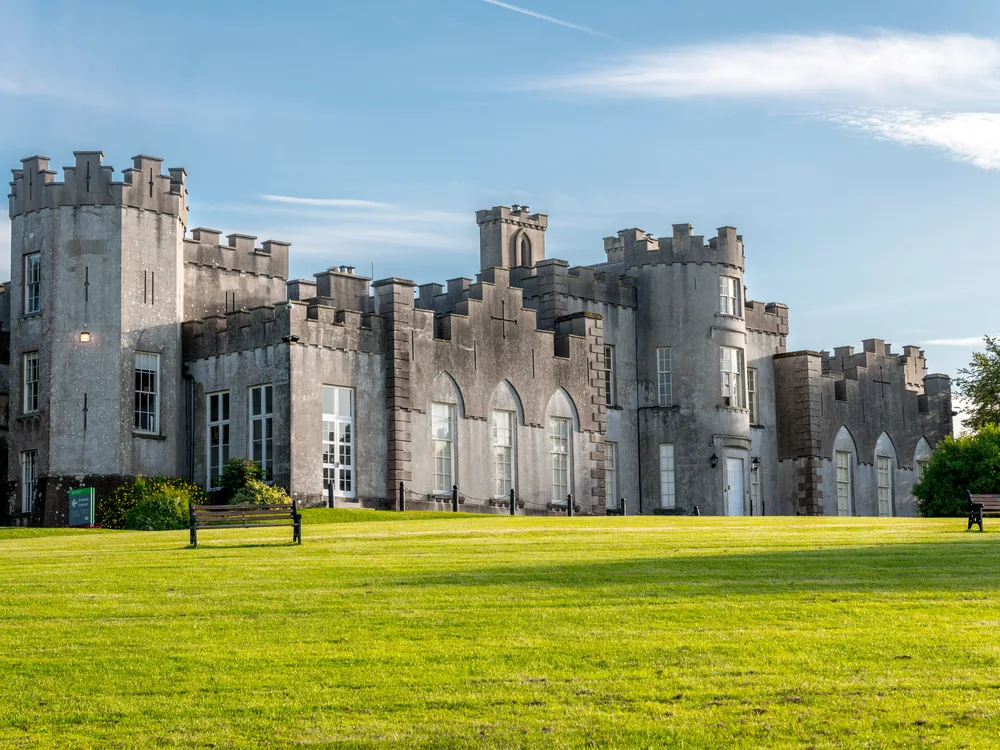
Built 1738 · Georgian country house with later Victorian additions — battlemented roofline and castellated towers in a Gothic Revival style; formal walled gardens, rose garden, kitchen garden, and glasshouses
This page is part of an independent travel guide and is not affiliated with, endorsed by, or operated by Ardgillan Castle.
© Castles & Palaces
Quick Facts
- Hours
- Daily 11:00–16:30
- Entry via GetYourGuide
- €10
- Duration
- 1–2 hours (castle interior); longer with gardens and coastal walk
- Best time
- April to September
- Nearest city
- Dublin
Featured Tour
Dublin: Ardgillan Castle Entry Ticket
Cancellation available · Instant confirmation
Highlights
- ✦The Drawing Room and Dining Room — two of the castle's principal rooms preserved with period furnishings, portraits, and decorative details from the Taylor family era (1738–1962)
- ✦The Library — a well-preserved Victorian library with original fitted shelving, period bindings, and views across the estate grounds toward the sea
- ✦Working kitchens — the Victorian kitchen complex with original ranges, copper utensils, and the domestic infrastructure of a late-19th-century Irish country house
- ✦Walled garden, rose garden, and glasshouses — a structured garden complex of significant horticultural interest; the rose garden in June is one of the most photogenic in north County Dublin
- ✦Fairy Tree Trail — a woodland trail through the demesne that loops around the historic tree collection, incorporating local folk traditions around specific trees in the grounds
- ✦Coastal setting above the Irish Sea — the demesne occupies cliffs above Ardgillan Bay between Rush and Skerries, with views across to the Cooley Mountains and the Mourne Mountains in clear weather
Skip the queue with a guided tour
Skip-the-line tickets & expert guides
Ardgillan Castle stands in a 194-acre coastal demesne on the cliffs above the Irish Sea, roughly 30 kilometres north of Dublin city centre, between the north County Dublin towns of Balbriggan and Skerries. It is a Georgian house built in 1738, subsequently gothicised with battlemented rooflines and castellated towers in the Victorian period, and set in one of the most complete surviving historic demesnes in the greater Dublin area: a Victorian walled garden, rose garden, kitchen garden, and glasshouses, together with woodland trails, coastal cliff walks, and the collection of specimen trees planted across the 19th century.
The house was built by Robert Taylor, a Dublin lawyer and member of a prominent Anglo-Irish family, who chose the cliff site above Ardgillan Bay for its coastal views and proximity to the farming estates he held across north County Dublin. The Taylor family occupied the castle for over two centuries — an unusually stable ownership by the standards of Irish country houses, where the disruptions of the Land League, the Irish War of Independence, and the economic pressures of the 20th century depopulated many great houses before the mid-century. Ardgillan remained in Taylor family ownership until 1962, when the castle and demesne were purchased by Fingal County Council, which has managed the site as a public park and visitor attraction ever since.
The castle's exterior profile is more dramatically 'castle-like' than the Georgian interior would suggest: the battlemented roofline and corner towers added in the 19th century give the house from a distance the silhouette of a fortification rather than a country house, which is precisely what the Victorian Gothic Revival intended. The effect is most pronounced from the coastal approach, where the castle appears above the cliff line against the Irish Sea horizon.
The interior rooms open to visitors — the Drawing Room, Dining Room, Library, and working kitchens — offer a portrait of Anglo-Irish country house life across several periods. The Drawing Room preserves its Victorian furnishings with portraits of the Taylor family and their connections; the Dining Room has its original table and period service; the Library retains its fitted Victorian shelving with period book collections. The kitchen complex downstairs is one of the more complete surviving examples of a 19th-century Irish country house kitchen — the original ranges, copper batterie de cuisine, and the logistical organisation of a working household below stairs are well-preserved and well-presented.
The demesne grounds are as significant as the castle interior, and for many visitors the reason to come. The walled garden complex — divided into the formal rose garden, a kitchen garden with productive beds, and a series of glasshouses — is a working horticultural estate as well as a historical artefact. The rose garden is at its most photographed in late June, when the climbing and standard roses are in full bloom. The glasshouses preserve species that the Victorian Taylor family collected; the kitchen garden demonstrates period growing methods and supplies the castle tearoom.
The Fairy Tree Trail through the demesne woodland is a route that incorporates the significant specimen trees on the estate with local folk traditions around fairy trees — the hawthorns, ash trees, and elder trees that carry supernatural associations in Irish folk belief. The trail is accessible and clearly marked; it is particularly popular with families. The coastal cliff walk that follows the eastern edge of the demesne above Ardgillan Bay provides views across to Lambay Island (a private island with a castle designed by Edwin Lutyens), the Mourne Mountains in County Down to the north on clear days, and the Cooley Peninsula.
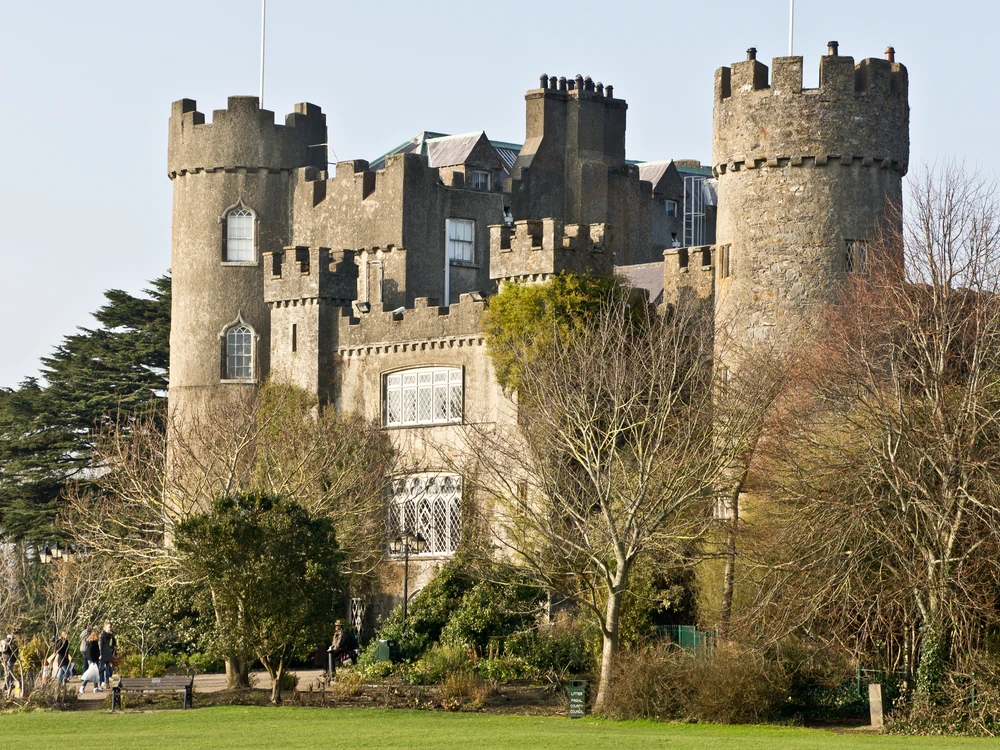
Ardgillan is approximately 30 kilometres north of Malahide Castle — the other major coastal estate in north County Dublin. The two castles are sufficiently different in character — Ardgillan a working Victorian demesne with the castle house as a component of a larger landscape; Malahide a medieval tower house with an extensive later residential addition and formal gardens — that a combined visit makes sense for visitors with a particular interest in Irish country house and demesne culture. The north Dublin coastal landscape between Malahide and Balbriggan has a density of historic demesnes unusual even by Irish standards.
For visitors based in Dublin city centre, Ardgillan is accessible by bus (Dublin Bus route 33 to Balbriggan, then a walk or taxi to the demesne entrance) or by commuter rail to Balbriggan station (Dublin to Balbriggan, approximately 45 minutes on the Northern Line, then a 20-minute walk or short taxi to the demesne). The GetYourGuide self-guided entry ticket (€10, 30 minutes for the house rooms) is the direct booking route for the castle interior; the demesne park and coastal walk are free to access at any time during daylight hours.
History
Robert Taylor, a Dublin lawyer, built Ardgillan in 1738 as a Georgian country house on the coastal cliffs of north County Dublin — a practical landowner's residence on a working estate, without the pretensions to grandeur that would come later. The Victorian period brought the castellated transformation: battlemented towers and gothicised rooflines reframed the Georgian house in the Romantic idiom that was by then the preferred visual language of the Irish landed gentry, producing the turreted silhouette the house presents today.
The Taylor family occupied Ardgillan for over two centuries — one of the more durable Anglo-Irish country house ownerships in the region — until 1962, when Fingal County Council purchased the estate. The change of ownership converted a private demesne into a public amenity: the 194-acre grounds, with their walled garden, coastal walks, and views across the Irish Sea toward the Mountains of Mourne, are now managed as a public park.
How to Visit
Getting there: By rail: Dublin to Balbriggan on the Northern Commuter Line (about 45 minutes, €5.50 single), then taxi or 20-minute walk to the demesne. By bus: Dublin Bus route 33 to Balbriggan. By car: M1 north from Dublin, exit at Balbriggan; the demesne entrance is signed from the R132.
Tickets: Castle interior entry costs €11 (children €6). The GetYourGuide entry ticket covers the castle house rooms. The demesne park, gardens, and coastal walks are free to access at all times during daylight hours — the Fairy Tree Trail and cliff walk require no castle ticket.
Practical tips: Visitors with limited mobility should use the tearooms entrance on the east side rather than the main seaside entrance — the ground floor is accessible from here. The rose garden is at its most photogenic in late June when climbing and standard roses are in full bloom.
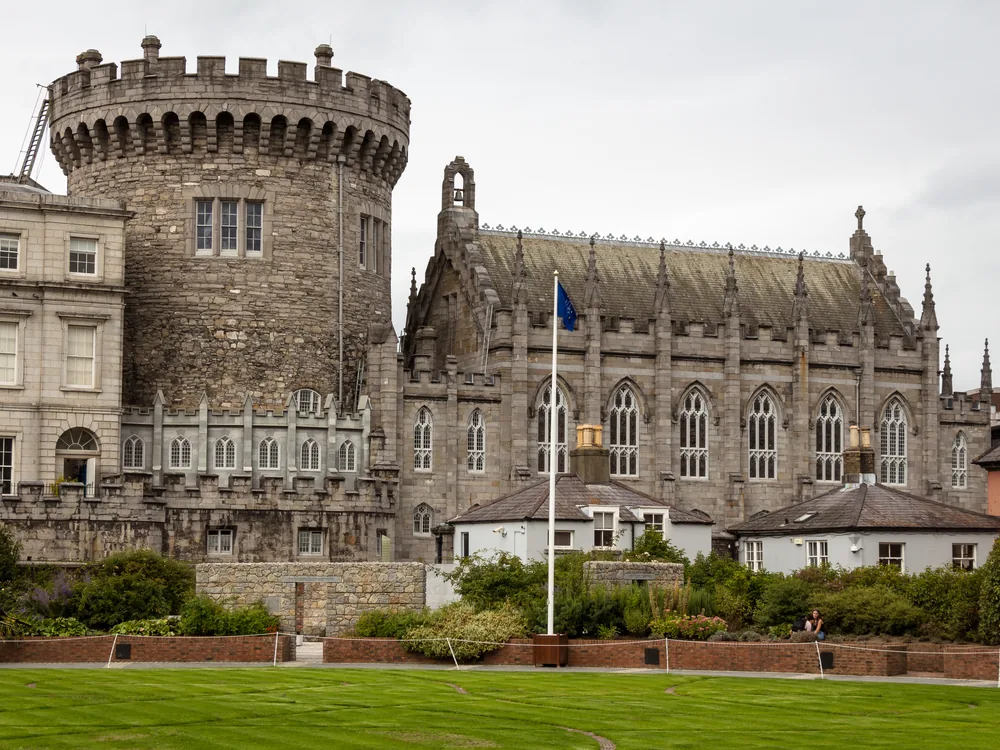
Combine with: Malahide Castle 30 km south or Dublin Castle in the city centre for a north Dublin coastal day.
Frequently Asked Questions
Malahide Castle is a medieval tower house with a long residential history (the Talbot family occupied it for nearly 800 years) and formal gardens. Ardgillan is a Georgian country house gothicised in the Victorian period, set in a more extensive demesne with a kitchen garden, glasshouses, and coastal cliff walks. Malahide is 30km south; Ardgillan is more rural and quieter. Both are worthwhile north Dublin coastal castle visits but with distinct characters.
Location
Ardgillan Demesne, Balbriggan, Co. Dublin, K32 X593, Ireland
Nearby Castles
Tours & Tickets
Powered by GetYourGuide
From
€10/ person