
Malahide Castle
Caisleán Mhullach Íde
Ireland · County Dublin · Near Dublin
Built 1185 · Medieval with 18th-century additions
This page is part of an independent travel guide and is not affiliated with, endorsed by, or operated by Malahide Castle.
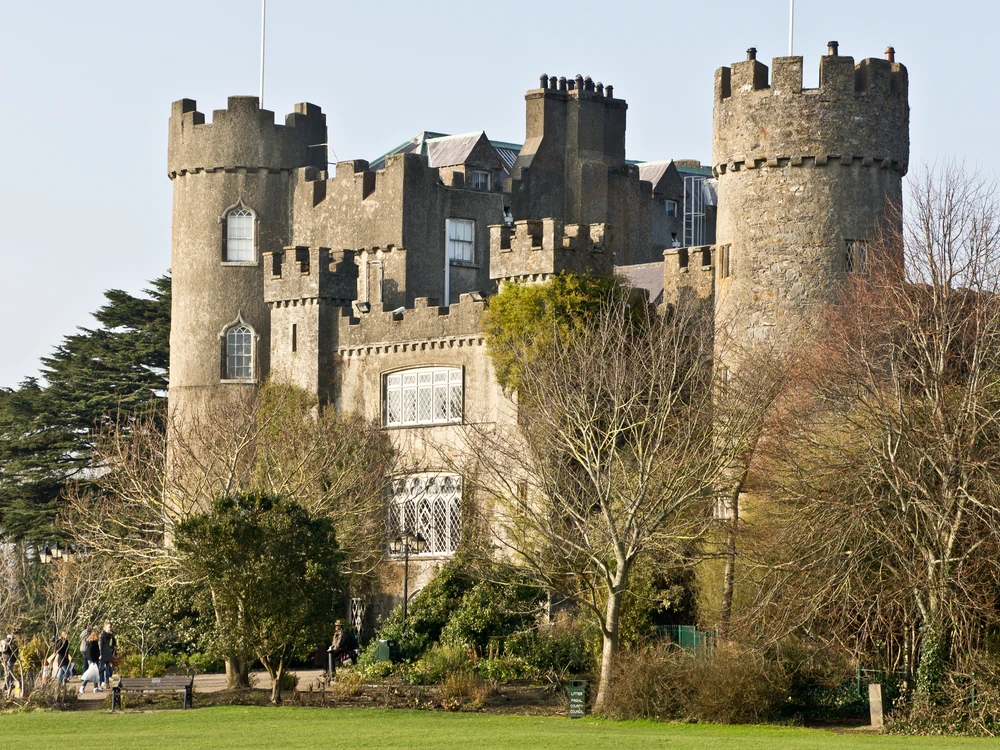
© Unsplash
Quick Facts
- Hours
- Daily 09:30–17:30
- Day trip from
- €335
- Duration
- 1.5–2.5 hours
- Best time
- Year-round
- Nearest city
- Dublin
Featured Tour
Dublin to Malahide Castle & Gardens Half-Day Trip by Car
Cancellation available · Instant confirmation
Highlights
- ✦The same family — the Talbots — lived here for 791 unbroken years from 1185 to 1976
- ✦Reputedly the most haunted castle in Ireland, with five documented resident ghosts
- ✦The great hall portrait gallery displays the largest collection of portraits from the Irish Georgian Society
- ✦Set in 260 acres of parkland and gardens 15 minutes from Dublin by DART train
- ✦The walled garden contains a butterfly house with tropical species
Skip the queue with a guided tour
Skip-the-line tickets & expert guides
The Talbot family arrived in Ireland with the Norman conquest and settled at Malahide in 1185. They stayed for 791 years — through the Black Death, the Wars of the Roses, the Reformation, Cromwell's campaign, the Jacobite wars, the Famine, independence, and two world wars — until the last surviving Talbot, Rose, sold the castle to Dublin County Council in 1976. That unbroken continuity of occupation, longer than almost any other castle in Europe, gives Malahide a layered, lived-in quality that purpose-built attractions cannot manufacture.
The castle that stands today reflects those accumulated centuries honestly. The original 12th-century tower house is embedded within later additions — a great hall added in the 14th century, residential wings added in the 17th and 18th centuries, Victorian gothic flourishes applied in the 19th. The overall effect is not grand in the palace sense but deeply domestic: a house that happens to have medieval towers. Inside, the portrait gallery in the great hall displays a remarkable collection of Irish Georgian paintings, many of them recording the generations of Talbots who looked out from these walls across their demesne.
Malahide's other distinction is its ghosts — five of them, by documented tradition. The most frequently reported is Puck, a court jester said to haunt the great hall; he appears in a portrait above the fireplace. Whether or not you believe the stories, the castle's long history and atmospheric rooms generate an excellent atmosphere for ghost-hunting of the imaginative variety.
History
Richard Talbot received the lands at Malahide from Henry II following the Norman invasion of Ireland, and construction of the first castle began around 1185. The Talbots were loyal servants of the English crown throughout the medieval period — a loyalty that cost them when Oliver Cromwell confiscated their estates in the 1650s and gave the castle to Miles Corbet, a regicide judge. When Charles II was restored, the Talbots reclaimed their home in 1660.
The castle's most dramatic moment of historical loss came on the morning of the Battle of the Boyne in 1690. Fourteen members of the Talbot family breakfasted together in the great hall before riding out to fight for the Jacobite cause. By nightfall all fourteen were dead on the battlefield. The castle passed to a cousin, and the family line continued — but the memory of that morning is embedded in Malahide's identity.
The 20th century brought gradual decline. The estate taxes required by Irish independence proved difficult to sustain on the income from farming alone. In 1976, Rose Talbot sold the castle and grounds to Dublin County Council. Fenella Fielding and David Niven were reportedly guests at the last party held by the Talbots before the sale. The books and furniture were auctioned; much of the portrait collection was acquired by the National Gallery of Ireland. Today the castle operates as a heritage attraction managed by Fingal County Council.
How to Visit
Getting there: Take the DART commuter rail from Dublin city centre (Connolly, Tara Street, or Pearse stations) to Malahide station — approximately 25 minutes, trains every 15–30 minutes. The castle is a 15-minute walk from the station through Malahide village. This is far easier than driving. By car from Dublin, Malahide is about 15 km north via the M1 or Coast Road.
Tickets: €13 adult / €8 child for the castle interior (guided tours run regularly from 09:30, last tour at 16:30); gardens open separately from 09:00. Buy at the gate or at malahidecastleandgardens.ie. The GetYourGuide half-day private car trip from Dublin includes transport and a 4–4.5 hour visit.
Practical tips: The guided tour of the castle interior is the best way to understand the Talbot family's 791 years of occupation — the great hall portrait gallery and the ghost stories (five documented spirits, including Puck the jester above the fireplace) are explained in detail on the tour. After the castle, Malahide village seafront is a 10-minute walk for lunch or coffee.
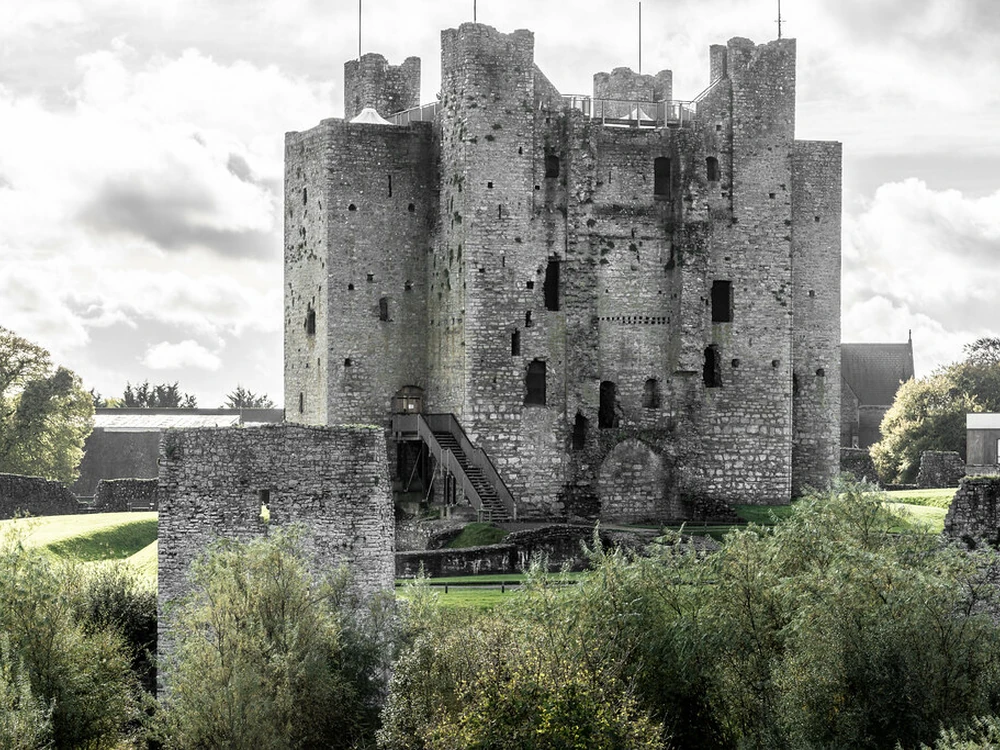
Combine with: Trim Castle in County Meath, 45 km west, is Ireland's largest Anglo-Norman castle and works well as a second stop on a Dublin day trip by car. Russborough House in County Wicklow is the finest Palladian country house in Ireland for a contrasting Dublin-area day out.
Frequently Asked Questions
The DART suburban rail runs from central Dublin (Connolly, Tara Street, Pearse stations) directly to Malahide in about 25 minutes. The castle is a 15-minute walk from Malahide station. DART trains run every 15–30 minutes throughout the day. This is the most convenient option — far easier than driving. The return ticket costs about €5–7.
Location
Malahide Demesne, Malahide, Co. Dublin, Ireland
Nearby Castles
Tours & Tickets
Powered by GetYourGuide
From
€335/ person