
Dublin Castle
Caisleán Bhaile Átha Cliath
Ireland · County Dublin · Near Dublin
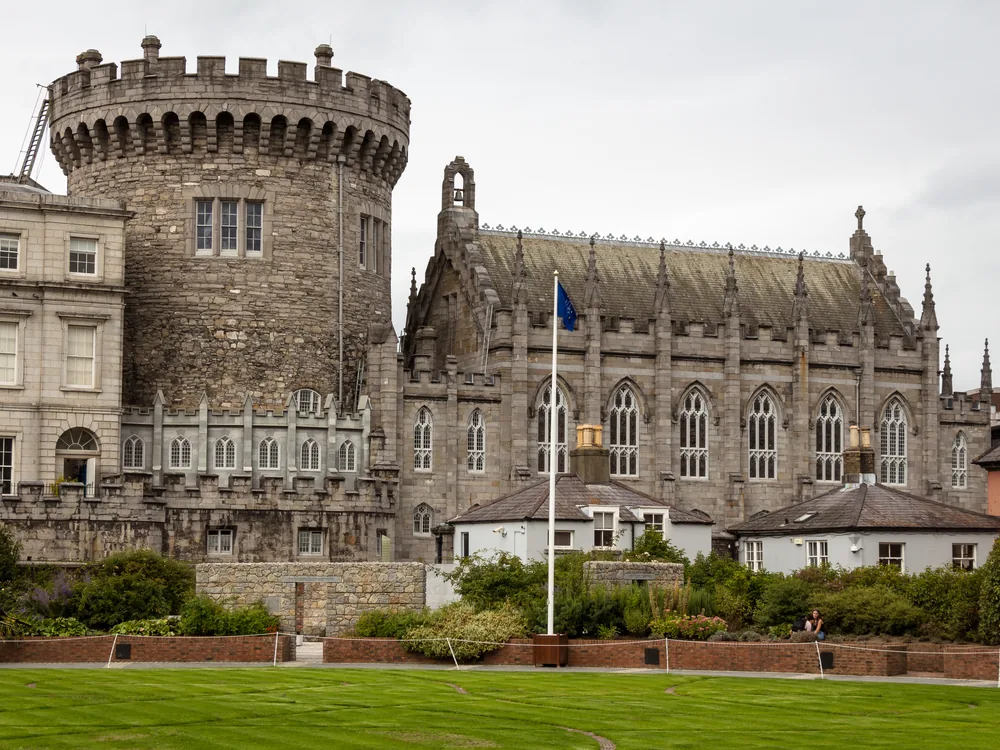
Built 1204 · A complex of buildings spanning 800 years — the 13th-century Record Tower (the only surviving medieval structure), 18th-century State Apartments in the Georgian Neoclassical style, and the 19th-century Chapel Royal in the Gothic Revival style, set within a courtyard on the site of a Viking longphort and later a Norman stronghold
This page is part of an independent travel guide and is not affiliated with, endorsed by, or operated by Dublin Castle.
© Castles & Palaces
Quick Facts
- Hours
- Mon–Sat 09:45–17:45. Sun 12:00–17:45
- Guided tour from
- €107
- Duration
- 1–1.5 hours (state apartments); the exterior and courtyard are free to enter
- Best time
- Year-round
- Nearest city
- Dublin
Featured Tour
Medieval Dublin Castle, Book of Kells & Trinity Library Walking Tour
Cancellation available · Instant confirmation
Highlights
- ✦The 1922 handover ceremony — on 16 January 1922, British officials handed over Dublin Castle to Michael Collins and the Provisional Government of Ireland; Collins reportedly said he was 'seven minutes late' and a British official replied that the Irish had been waiting 700 years so seven minutes was not too long; the formal end of British administration in Ireland took place in this courtyard
- ✦The Record Tower — the sole surviving medieval tower from the original 1204 castle, with walls 5 metres thick at the base, built by King John of England as the central strongpoint of the Norman stronghold; the tower was used as a prison, a record repository, and latterly as the Garda Museum
- ✦The State Apartments — a Georgian suite of rooms built in the 1740s–1760s as the viceregal palace of the Lord Lieutenant of Ireland; the Throne Room, St Patrick's Hall, and the Figure of Justice above the main gate define Dublin Castle's public identity
- ✦The Chapel Royal (now the Church of the Most Holy Trinity) — a Gothic Revival chapel by Francis Johnston (1814), the interior decorated with over 90 carved oak heads of Irish historical figures and saints, and a painted ceiling; one of the finest Gothic Revival interiors in Ireland
- ✦The Chester Beatty Library — a world-class collection of manuscripts, prints, and decorative arts from across Asia, the Middle East, and Europe, housed in a purpose-built building in Dublin Castle's garden and entirely free to visit
- ✦The Viking/Norman underground excavation — beneath the Upper Yard, archaeologists have exposed the remains of the Viking longphort walls and the Norman moat and tower bases; accessible as part of the guided tour
Skip the queue with a guided tour
Skip-the-line tickets & expert guides
Dublin Castle is the most politically loaded building in Ireland. Every significant act of British administration in Ireland from the 13th to the 20th century passed through or was ordered from this complex of buildings on Dame Street — the arrest warrants, the state trials, the proclamations, the relief measures, the suppressions. And the building's final great political moment — the January 1922 ceremony in which Michael Collins received the keys and the British flag came down — was entirely in keeping with everything that had preceded it. The castle was always the instrument of power over Ireland; in January 1922 that fact became, for the first time, a reason to celebrate.
The site's history begins before the English arrived. A Viking longphort (a fortified harbour encampment) was established at the Dubh Linn pool at the confluence of the Poddle and Liffey rivers in the 841; the longphort became the nucleus of the Viking settlement that is the origin of the modern city. The Norman invasion of Ireland, led by Strongbow in 1169–70 and consolidated by King Henry II in 1171, swept away the Viking political structures, and in 1204 King John of England ordered the construction of a royal castle at Dubh Linn — 'speedily, if possible,' the order said — on the foundations of the Viking settlement. The castle John built was a quadrilateral with four towers at the corners, a drawbridge across the Poddle, and the Liffey-side moat fed by a diversion of the river. Only one element of that 13th-century structure survives above ground: the Record Tower, on the southeast corner, with its walls 5 metres thick at the base and its original arrow loops.
For 700 years, Dublin Castle was the seat of English and then British rule in Ireland. The Lord Lieutenant — the Crown's representative in Ireland — lived in the State Apartments and conducted the ceremonies of viceregal administration from the castle's formal rooms. The State Apartments as they exist today are an 18th-century creation: after a fire in 1684 destroyed most of the medieval residential buildings, a new suite of Georgian rooms was built in the 1740s and 1750s to designs associated with architects including William Robinson. St Patrick's Hall, the largest and most formal room, was the setting for the installation of Knights of the Order of St Patrick from 1783 — the ceiling, painted by Vincenzo Valdre in the 1780s, depicts St Patrick and King George III's heraldic imagery in a composition designed to make the castle's institutional claims inescapable. The Throne Room, with its throne installed for George IV's 1821 visit to Ireland (the first British monarch to visit in 150 years), occupies the room above the main gate.
The Figure of Justice above the main gate — the statue of a woman holding scales, facing inward toward the castle courtyard rather than outward toward the city — was a standard source of Irish nationalist political commentary. The British administered justice that faced toward the castle rather than toward the people, the argument ran; and structurally, the statue's bronze scales are drilled with holes to prevent them filling with rainwater and tilting. The symbolism was too good for nationalist writers to leave alone.
The 1916 Rising began three kilometres away at the General Post Office, but the castle was its intended first target: a Citizen Army unit was to seize it on Easter Monday. The plan failed when the unit's commander was killed at the castle gate and the assault was abandoned. Four days later, James Connolly lay wounded in the Red Cross station in the castle grounds as the Rising was suppressed. The castle remained in British hands.
The handover in January 1922 was quiet: a short ceremony, a brief exchange between outgoing and incoming officials, the Irish tricolour replacing the Union Jack. Michael Collins, arriving to formally accept the transfer of power, was indeed reported to have been seven minutes late. The castle has been in Irish government hands ever since, serving as a conference centre, a state reception venue, and a tourist attraction — a building that has been performing the function of political stage for 800 years and has not entirely stopped.
The GetYourGuide-listed tour (2.5 hours) is primarily a Trinity College/Book of Kells walking tour — 1.75 of the 2.5 hours are spent at Trinity — with Dublin Castle included as a **1-hour exterior stop** in Dame Street's courtyard. The tour explicitly visits the 'medieval Dublin Castle exterior,' and at least one reviewer confirms the state apartments were closed on their visit date without affecting the outdoor courtyard stop. This booking does not include access to the State Apartments or the Chester Beatty Library. Visitors wanting the full interior experience should book directly at dublincastle.ie for the guided State Apartments and underground excavation tour, or visit the Chester Beatty Library (free, in the castle garden) independently.
History
Viking longphort established at Dubh Linn, 841. Norman castle ordered by King John, 1204. The quadrilateral fortress with four towers served as the seat of English/British administration in Ireland continuously from 1204. Fire of 1684 destroyed most medieval buildings; current State Apartments built in the Georgian period (1740s–1760s). Chapel Royal (Gothic Revival, Francis Johnston) completed 1814. The castle resisted capture during the 1916 Easter Rising. Handover to the Irish Provisional Government, 16 January 1922. Now used for Irish state functions and as a tourist attraction; Chester Beatty Library in the garden (free) is one of Dublin's finest cultural institutions.
How to Visit
Getting there: Dublin Castle is in the city centre on Dame Street, a 5-minute walk from Temple Bar. All public transport in Dublin connects to this area; the exterior courtyard is free to enter at all times.
Tickets: State Apartments, Chapel Royal, and underground Viking/Norman excavation cost €8 (children €4); book directly at dublincastle.ie with guided tours running throughout the day. The GetYourGuide guided tour is a 2.5-hour Trinity College and Book of Kells walking tour that includes a 1-hour exterior stop at Dublin Castle — the State Apartments are not included in this tour.
Practical tips: The Chester Beatty Library in the castle's Clock Tower Garden is free to visit — manuscripts, prints, and decorative arts from Asia, the Middle East, and Europe, consistently rated one of Dublin's finest cultural attractions. Some areas may close unexpectedly for state functions; confirm at dublincastle.ie before visiting.
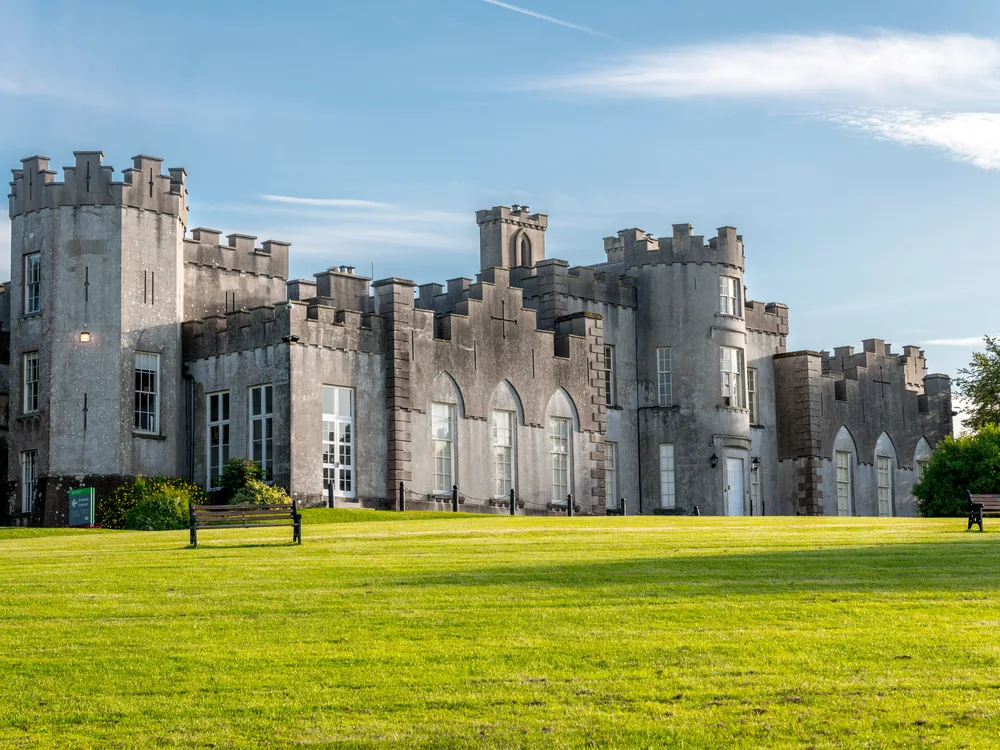
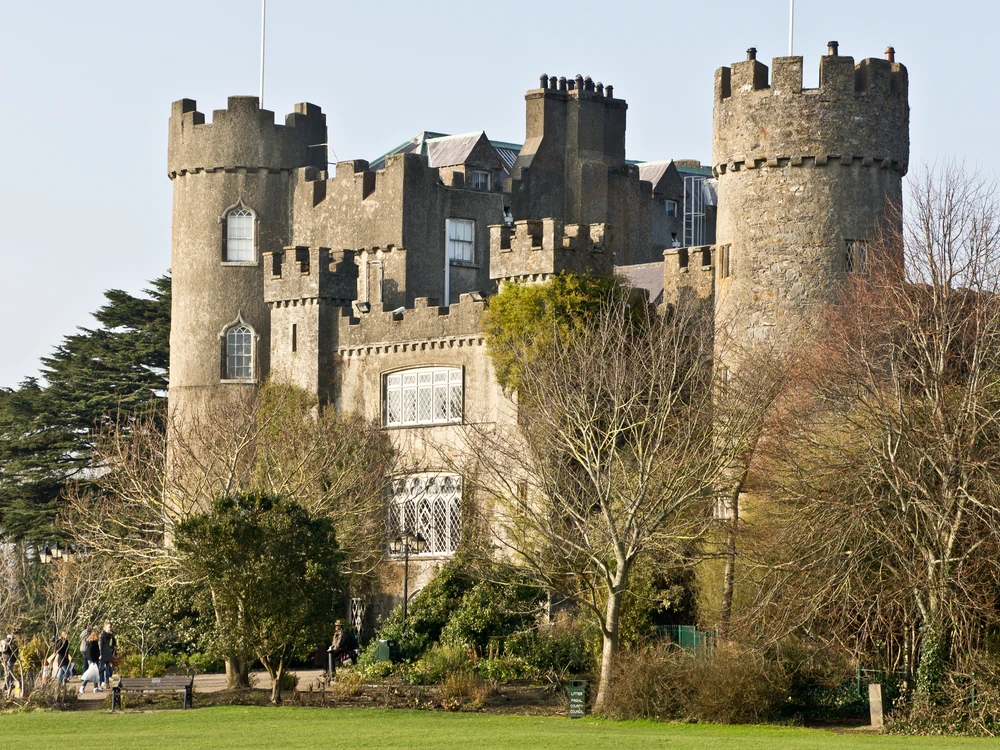
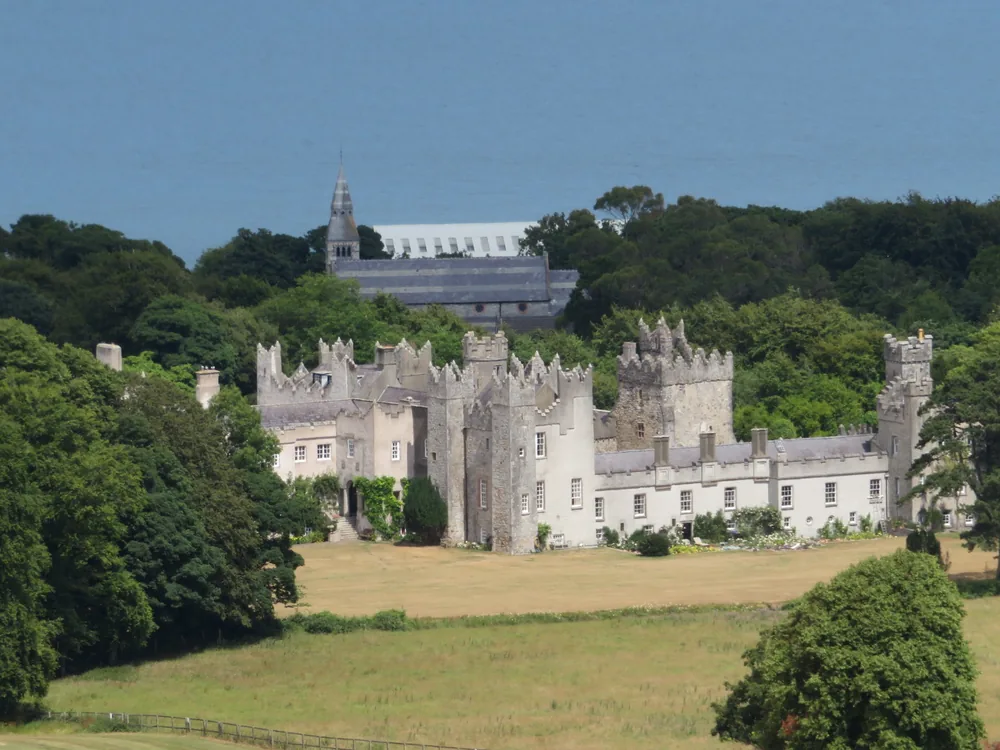
Combine with: Malahide Castle, Ardgillan Castle, or Howth Castle for north Dublin coastal estates, all easily reached by DART from the city centre.
Frequently Asked Questions
Dublin Castle is used for Irish state functions and diplomatic events — EU Council Presidencies have traditionally been chaired from the castle, and it hosts major state receptions — but the Irish government meets in Leinster House (the Oireachtas). The castle's role in Irish national life is primarily ceremonial and historic rather than day-to-day governmental.
Location
Dame Street, Dublin 2, D02 HK23, Ireland
Nearby Castles
Tours & Tickets
Powered by GetYourGuide
From
€107/ person