Blarney Castle
Caisleán na Blarnan
Ireland · County Cork · Near Cork
Built 1446 · Late medieval tower house
This page is part of an independent travel guide and is not affiliated with, endorsed by, or operated by Blarney Castle.
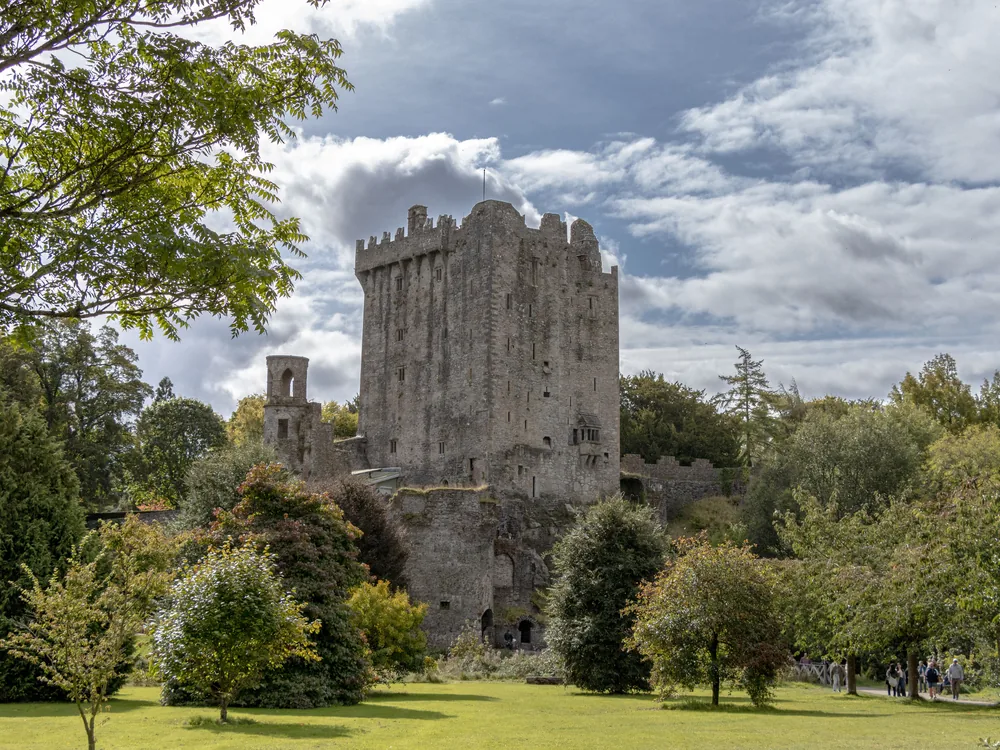
© Unsplash
Quick Facts
- Hours
- Daily 09:00–18:00
- Guided tour from
- €66
- Duration
- 2–3 hours
- Best time
- Shoulder season
- Nearest city
- Cork
Featured Tour
Easy Access - The Blarney Stone & Castle Gardens Tour
Cancellation available · Instant confirmation
Highlights
- ✦The Blarney Stone — set in the battlements of a 15th-century tower keep, kissed by millions for the legendary gift of eloquence
- ✦One of Ireland's best-preserved late medieval tower houses, built by Cormac Laidir MacCarthy in 1446
- ✦The Rock Close — an extraordinary garden of ancient standing stones, dolmens, and a druidic stone circle below the castle
- ✦The Wishing Steps, Witch's Kitchen, and Fairy Glen — a landscape of moss-covered boulders and ancient trees
- ✦Blarney House and its gardens — a Scottish baronial mansion built in 1874 beside the castle
Skip the queue with a guided tour
Skip-the-line tickets & expert guides
Blarney Castle has been telling people what they want to hear for centuries. The legend says that kissing the Blarney Stone — a block of Carboniferous limestone set in the battlements of the keep's parapet — bestows the gift of eloquence, charm, and persuasive speech. Millions of visitors have contorted themselves backwards over the castle's edge to press their lips to it. Whether it works is debatable; that the ritual has made Blarney one of the most visited sites in Ireland is not.
Beyond the Stone, Blarney Castle is a substantial and atmospheric late medieval tower house, built in 1446 by Cormac Laidir MacCarthy, the powerful Lord of Muskerry. The keep stands 26 metres high with walls nearly four metres thick, and its interior — stone chambers, spiral staircases, the great hall and the battlements — tells the story of Irish tower house architecture at its peak. The castle was besieged by Cromwell's forces in 1646 and the outer walls were blown up after the Williamite Wars in 1690, leaving the distinctive ruined shell that surrounds the intact tower.
The grounds are the castle's second great asset. The Rock Close below the keep contains ancient limestone outcrops, a Druid circle, a witch's kitchen, and a wishing well of genuine antiquity, all set in a garden of extraordinary atmospheric quality. The Wishing Steps — 'descend backwards with eyes closed and your wish will be granted' — and the Fairy Glen continue the tradition of turning landscape into legend that makes Irish castle visits unlike any other in Europe.
History
The site of Blarney has been inhabited and fortified since the earliest medieval period. The first castle on the rock was reputedly built by Cormac MacCarthy around 1210, but the substantial tower that survives today was constructed in 1446 by Cormac Laidir ('the Strong') MacCarthy, Lord of Muskerry and one of the most powerful chiefs of Munster. The MacCarthy clan held the castle for generations, and it was during this period that the Blarney Stone legend most likely developed — though its precise origins are unclear.
The most famous Blarney story concerns Queen Elizabeth I and Dermot McCarthy. The Queen, exasperated by McCarthy's eloquent but entirely hollow promises of submission to the Crown, reportedly declared his correspondence 'all Blarney' — giving the English language a word for pleasant, plausible nonsense. Whether true or not, the story captures the spirit of the place: a castle whose greatest weapon was always words.
Blarney passed through several owners after the Williamite Wars, including the Jefferyes family who built the current Blarney House in 1874 in Scottish baronial style. The castle and grounds have been managed as a tourist attraction since the 19th century, when romantic tourists including Sir Walter Scott visited. The Colthurst family, descendants of the Jefferyes, still own and manage the estate today.
How to Visit
Getting there: Blarney is 8 km northwest of Cork city. Bus Éireann runs direct services from Cork Bus Station (Parnell Place) every 30 minutes; the castle is a 10-minute walk from the bus stop.
Tickets: Entry costs €18 (children €8). The GetYourGuide guided tour covers the Blarney Stone and castle gardens in 2.5 hours with a guide and entry included.
Practical tips: Arrive at opening (09:00) or after 16:00 in July–August to avoid 60–90-minute queues at the Blarney Stone. After the keep, allow at least an hour in the Rock Close, Wishing Steps, and Fairy Glen — they are among the most atmospheric castle grounds in Ireland.
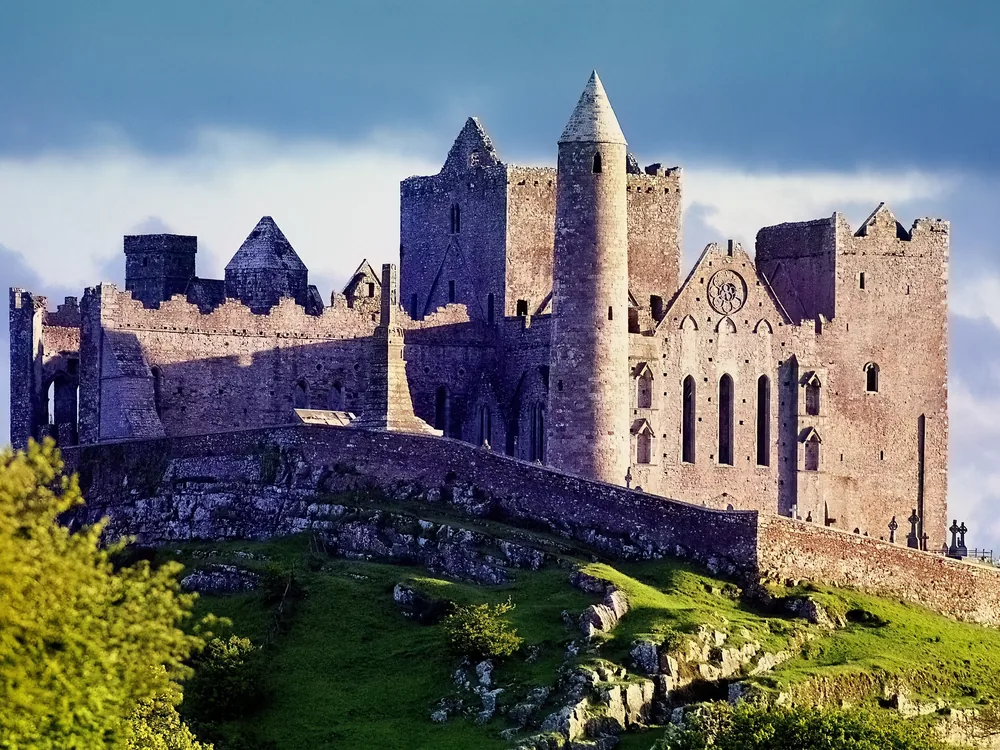
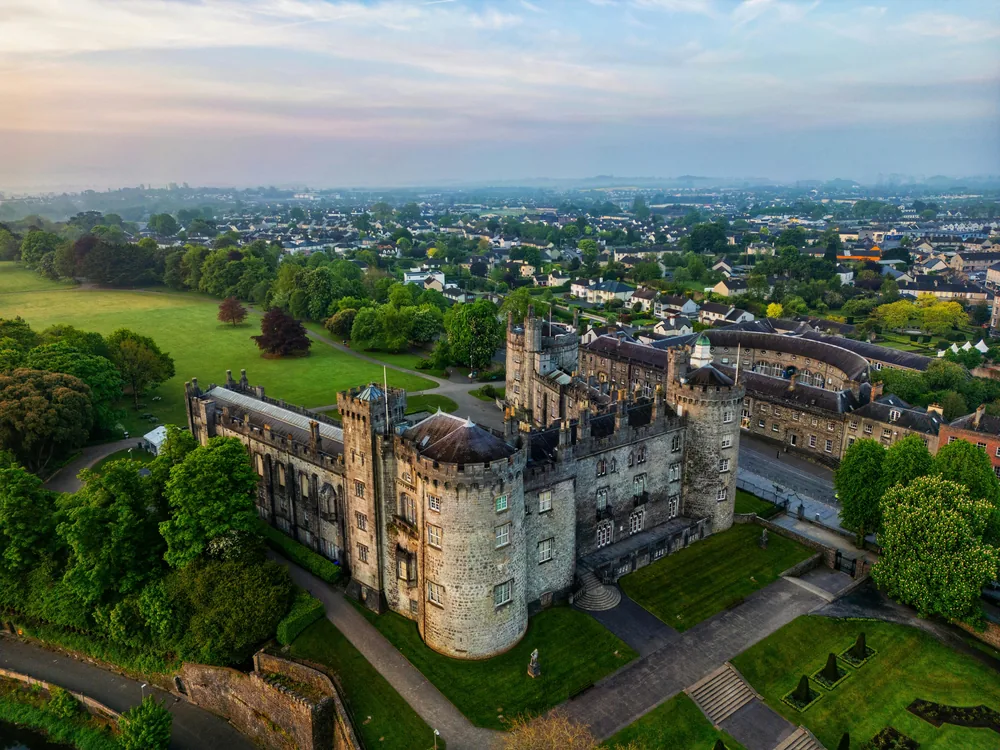
Combine with: Rock of Cashel 2 hours east or Kilkenny Castle for a Munster and Leinster castle circuit.
Frequently Asked Questions
The legend that kissing the Blarney Stone bestows the gift of eloquence dates to at least the 18th century, though its exact origins are uncertain. Various origin stories exist — a gift from Robert the Bruce, a stone from the Biblical Holy Land, a pagan ritual stone. The most historically plausible version connects it to the diplomatic eloquence of the MacCarthy lords. Whether it works or not, over 400,000 people a year kiss it.
Location
Blarney, Co. Cork, Ireland
Nearby Castles
Tours & Tickets
Powered by GetYourGuide
From
€66/ person