Glenveagh Castle
Caisleán Ghleann Bheatha
Ireland · County Donegal · Near Letterkenny
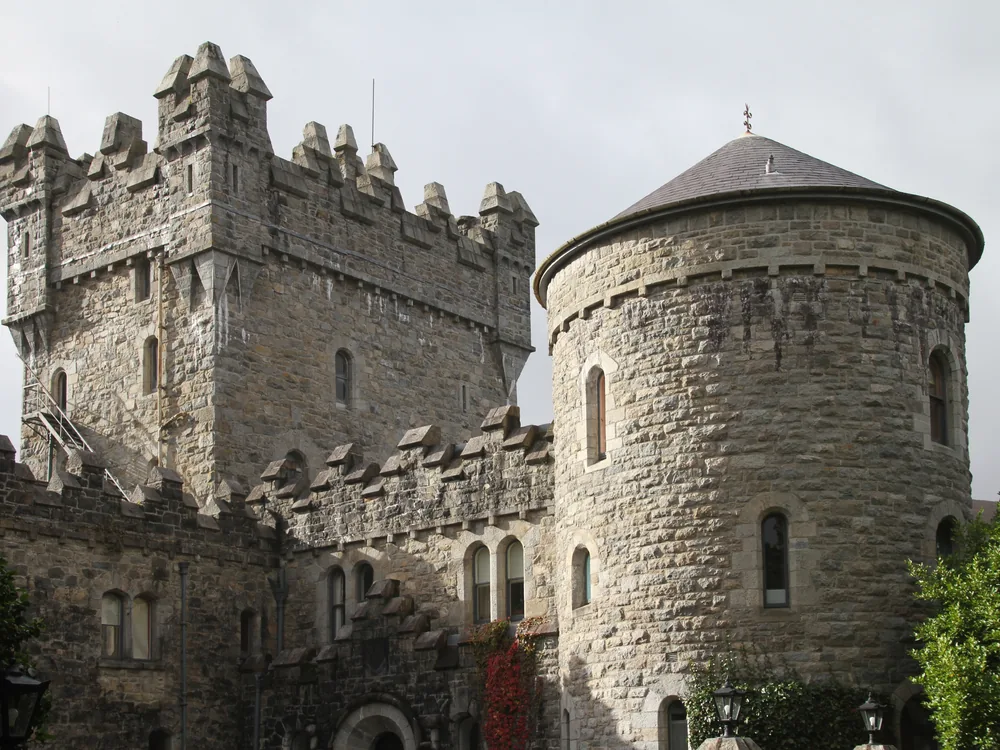
Built 1870 · Scottish Baronial — built 1870–1873 by John George Adair, a compact tower house with battlemented parapet, round tower, and lakeside terraces; deliberately modelled on the turreted Baronial Revival style fashionable in Victorian Scotland and popularised by Balmoral; the subsequent owners added gardens in Italian, French, and walled traditions, making the total composition one of the most landscaped settings in Ireland
This page is part of an independent travel guide and is not affiliated with, endorsed by, or operated by Glenveagh Castle.
© Castles & Palaces
Quick Facts
- Hours
- Daily 09:00–18:00
- Guided tour from
- €143
- Duration
- 2–3 hours (park and castle exterior); an additional 30–45 minutes for castle interior (seasonal, separate ticket)
- Best time
- May to September
- Booking
- Required — book 7+ days ahead
- Nearest city
- Letterkenny
Featured Tour
Glenveagh National Park & Castle Private Guided Tour (Exterior & Gardens)
Cancellation available · Instant confirmation
Highlights
- ✦Lough Veagh setting — the castle sits directly on the shore of Lough Veagh, a glacial lake 9km long enclosed by the Derryveagh Mountains; the combination of deep water, steep quartzite ridges, and Victorian tower is one of Ireland's most photographed landscapes and is genuinely remote — only accessible by park shuttle or foot from the visitor centre
- ✦Henry McIlhenny's gardens — the Philadelphia Museum of Art board member and Tabasco-family heir who owned the castle from 1937 to 1983 created a sequence of gardens (Italian, Belgian terraced, walled kitchen, and pleasure gardens) that are among the finest private gardens in Ireland; the rhododendrons and azaleas in May are exceptional, as are the kitchen garden and the Eucalyptus grove
- ✦John George Adair and the Derryveagh Evictions — the castle's builder is one of the most controversial figures in 19th-century Irish history; in April 1861, Adair evicted 244 tenants from his Donegal estates in mid-winter to make way for deer stalking and sheep farming, clearing 28,000 acres; the Derryveagh Evictions remain one of the most notorious episodes of post-Famine Irish landlordism
- ✦Arthur Kingsley Porter — the Harvard medieval art historian who bought the castle in 1929 and disappeared from nearby Gola Island in 1933; his body was never found; theories range from accidental drowning to staged disappearance to an IRA killing; the mystery of Porter's fate has become part of the castle's accumulated legend
- ✦The GetYourGuide private guided walk (1.5 hours, max private group) — covers the national park's peatland, woodland, and gardens, ending at the castle exterior; **castle interior access is NOT included** — a separate ticket at the castle reception is required for interior visits, which are available seasonally (April–October)
- ✦First Donegal / northwest Ireland entry on this site — all 12 other Irish castle pages on this site are in Dublin, Kilkenny, Cork/Killarney, Cashel, or Trim; Glenveagh opens the northwest Ireland portfolio
Skip the queue with a guided tour
Skip-the-line tickets & expert guides
Glenveagh Castle is in the wrong place for everything it represents. It is too beautiful for the man who built it, too remote for the American aristocrat who perfected its gardens, and too Irish-nationalist in its eventual history for the British Ascendancy context in which it was constructed. The castle sits on the shore of Lough Veagh — a long, cold, glacial lake enclosed by the quartzite ridges of the Derryveagh Mountains in the heart of County Donegal — and it has been accumulating a complicated identity ever since John George Adair began building it in 1870.
Adair was a County Laois-born land speculator who had acquired large tracts of Donegal in the 1850s and 1860s. In April 1861, nine years before the first stone of Glenveagh Castle was laid, he evicted 244 tenants from his estates in the Derryveagh area — men, women, and children, including the very infirm and the very young — in a single operation carried out in mid-winter, ostensibly in response to the murder of his Scottish factor James Murray, though no tenant was ever convicted of the killing. The 244 people were cleared from 28,000 acres of Donegal to make way for deer and sheep. Most emigrated to Australia, where Adair's Cornelia was American-born and organized emigrant assistance. The Derryveagh Evictions were reported extensively in the nationalist press; they became one of the formative episodes of the Land League agitation that would, twenty years later, transform the legal relationship between landlord and tenant in Ireland. And on the land thus cleared, Adair built himself a Scottish Baronial castle.
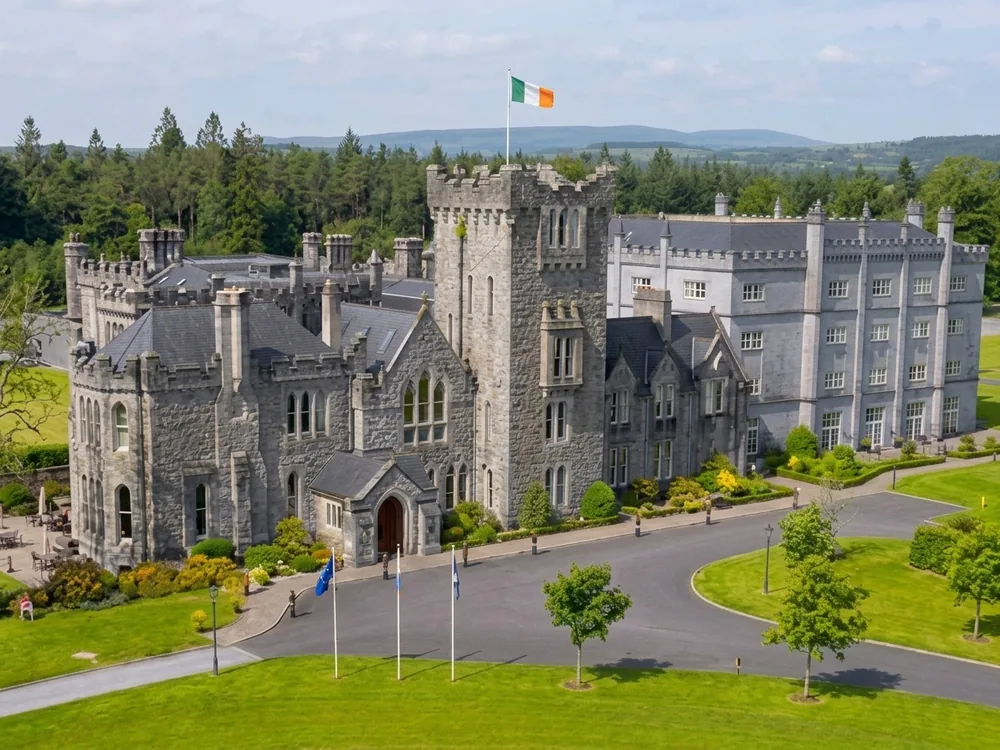
The castle he built (1870–1873) is, whatever else it is, very beautiful. The Scottish Baronial style — turreted, battlemented, asymmetric, dramatic in silhouette — was the fashionable idiom for Victorian aristocratic construction in the British Isles since Prince Albert had applied it to Balmoral in the 1850s. Adair's castle is a compact version: a rectangular tower house with a round tower at one corner, battlemented parapet, lakeside terraces, and a position on the water's edge that maximises the reflection on Lough Veagh. The Derryveagh Mountains rise steeply on both sides. The approach by the park's winding estate road, through oak and birch woodland beside the lake, is one of the finest approaches to any castle in Ireland.
Adair died in 1885; his American wife Cornelia, born Cornelia Ritchie of New York, continued to manage the estate and made it a destination for Ascendancy summer visitors. In 1929, the castle was purchased by Arthur Kingsley Porter, a Harvard professor of medieval art history whose work on Romanesque sculpture had made him one of the most influential art historians in the world. Porter and his wife Lucy used the castle as a summer retreat and were popular figures in local Irish life. In July 1933, Porter went for a walk on nearby Gola Island and was never seen again. His body was never recovered. The circumstances of his disappearance have generated speculation ever since — accidental drowning in the island's rocky coastline is the most likely explanation, but the combination of the lonely setting, the mysterious outcome, and the subsequent theories (deliberate staged disappearance to escape scandal, an IRA killing, a cover-up) has made Porter's fate one of the unexplained questions attached to Glenveagh's history.
The castle's definitive owner was Henry Plumer McIlhenny, who bought the estate in 1937. McIlhenny was the grandson of Bernard McIlhenny, the man who had patented the Tabasco sauce bottle opener and made the family's Philadelphia fortune; he was a board member of the Philadelphia Museum of Art, a connoisseur of extraordinary sophistication, and a host whose weekends at Glenveagh attracted figures including Grace Kelly, Greta Garbo, and Derek Hill. What McIlhenny added to the castle was the gardens — a sequence of Italian, Belgian terraced, pleasure, and walled kitchen gardens on the lakeshore terraces below the castle tower, planted with rhododendrons, azaleas, ferns, and specimen trees from around the world. The gardens McIlhenny created over four decades are among the finest private gardens in Ireland.
In 1981, McIlhenny gave the castle and 16,000 acres to the Irish state; the transfer was completed in 1983. The Irish government added surrounding land to create Glenveagh National Park, now covering approximately 16,540 hectares — Ireland's fourth largest national park and the largest stretch of wild land in the country. The castle and its gardens are the park's centrepiece and its principal visitor attraction.
The GetYourGuide-listed private guided walk (1.5 hours, English-language guide, Northwest Sherpa Tours) covers the national park's peatland, bog woodland, and garden terraces on a private circuit ending at the castle exterior — the castle interior is not included on this tour. Visitors who want to go inside the castle (the state apartments and kitchen preserved from McIlhenny's occupation, open seasonally) should purchase a separate entry ticket at the castle reception (€5 per adult, approximately), available April to October. In winter, only the park and exterior are accessible.
History
Site chosen by John George Adair in 1870, nine years after the Derryveagh Evictions of 244 tenants from the same estate. Castle built 1870–1873 in Scottish Baronial style. Adair died 1885; estate managed by his wife Cornelia. Purchased by Harvard medieval art historian Arthur Kingsley Porter in 1929; Porter disappeared from Gola Island 1933 (body never found). Purchased by Henry McIlhenny (Philadelphia Museum of Art board member) in 1937; he created the present gardens. Given to the Irish state 1981–1983. Now the centrepiece of Glenveagh National Park (16,540 hectares).
How to Visit
Getting there: Glenveagh National Park is approximately 25 km northwest of Letterkenny via the R251. There is no public bus service directly to the park — a car is essential. Shuttle buses run within the park from the visitor centre to the castle and are included in park entry.
Tickets: Park entry and the shuttle bus within the park are free. Castle interior tickets cost approximately €5 per adult, purchased at the castle reception; available seasonally April–October only. The GetYourGuide private guided tour covers the national park and castle exterior in 1.5 hours — castle interior access is not included and requires a separate ticket at the castle reception.
Practical tips: Weather in northwest Donegal can change rapidly; bring layers regardless of the forecast. The gardens are at their most spectacular in May when rhododendrons and azaleas are in full bloom; October brings exceptional autumn colour on the woodland around Lough Veagh. Allow half a day minimum — the park is remote and the drive from Letterkenny takes time.
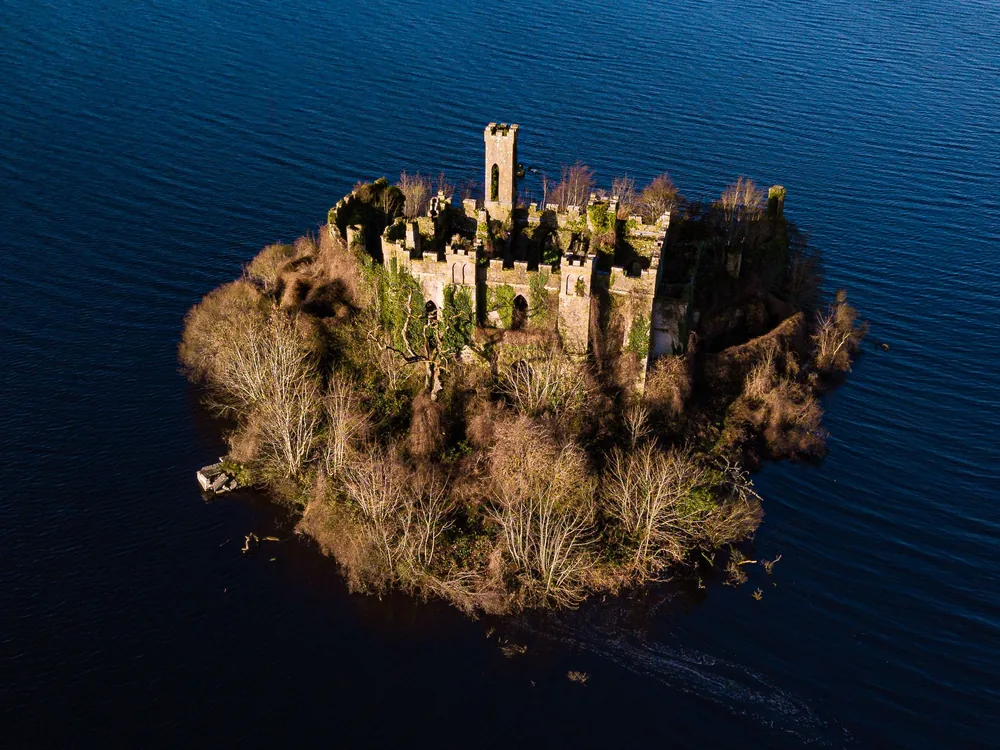
Combine with: Kylemore Abbey in Connemara, County Galway, is the other great Victorian lakeside castle-and-gardens in the west of Ireland — about 2.5 hours south by car but the most natural companion for a western Ireland circuit. McDermott's Castle on Lough Key in County Roscommon pairs Glenveagh's remote island-lake atmosphere with a different chapter of Irish history.
Frequently Asked Questions
No — the GetYourGuide private guided walk covers the national park and castle exterior only; the castle interior tour is not included. Interior access requires a separate ticket (approximately €5 per adult), purchased at the castle reception. Interior visits are available seasonally, approximately April to October; in winter, only the exterior and park are accessible.
Location
Glenveagh National Park, Church Hill, Co. Donegal, F92 F668, Ireland
Nearby Castles
Tours & Tickets
Powered by GetYourGuide
From
€143/ person