
Waterford Castle
Caisleán Phort Láirge
Ireland · Little Island, County Waterford · Near Waterford
Built 1895 · Gothic Revival house built in 1895, incorporating an earlier 16th-century fortified tower and older estate fabric, on an island previously fortified by the Vikings
This page is part of an independent travel guide and is not affiliated with, endorsed by, or operated by Waterford Castle.
© Castles & Palaces
Quick Facts
- Rooms from
- €200 / night
- Hotel rating
- 4-Star Hotel
- Duration
- Overnight stay only — accessible solely by the resort's private ferry
- Best time
- Year-round
- Nearest city
- Waterford
Stay Here
Waterford Castle Hotel & Golf Resort
4-Star HotelBooked via Booking.com · Free cancellation on most rates
Open to day visitors without booking a room — see How to Visit below.
Highlights
- ✦Located on its own private island in the River Suir, Little Island — during the Viking era (9th–11th centuries), the Vikings themselves built two defensive fortifications on the same site
- ✦The FitzGeralds, cousins of Strongbow, received the island following the 1170 Norman invasion and held it for eight centuries — governing it as a manorial retreat through the 15th and 16th centuries, with an original 16th-century fortified tower still incorporated into the current structure
- ✦The present Gothic building dates to 1895, commissioned by Gerald Purcell-Fitzgerald, incorporating fabric from an earlier house and parts of the medieval tower
- ✦The FitzGerald family sold the island in 1958, closing eight centuries of continuous possession
- ✦Today a golf resort accessible only by the resort's private ferry from the mainland — a distinctive practical detail for any visitor planning a stay
Stay in the castle itself
Book a room via Booking.com
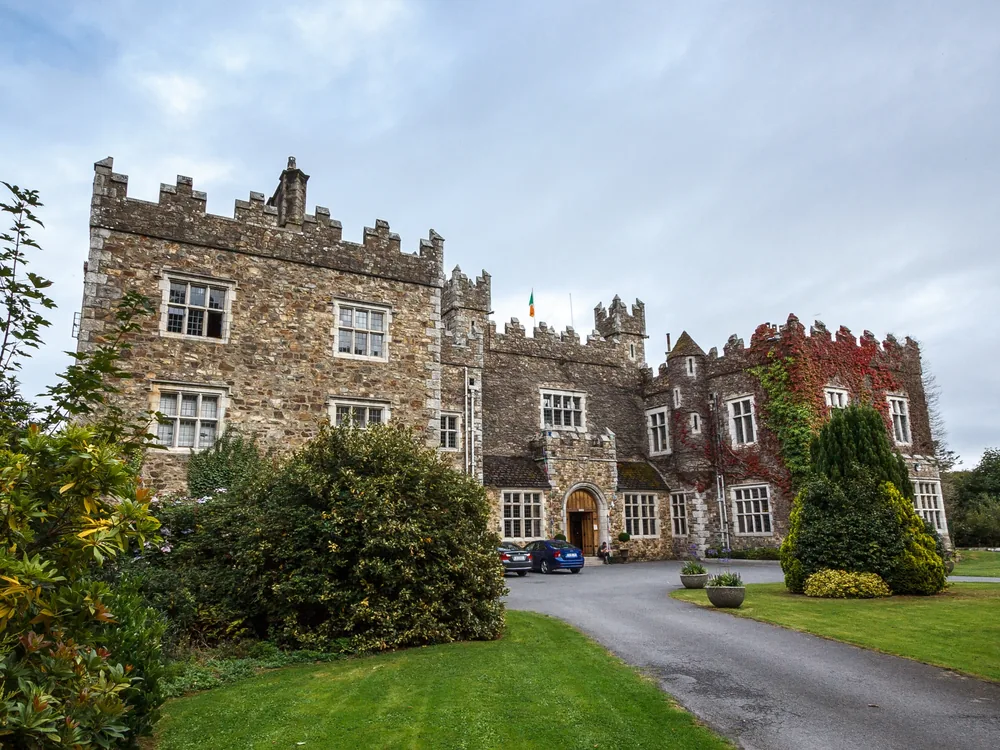
Waterford Castle occupies its own private island, known as Little Island, set in the River Suir close to Waterford city in Ireland's southeast. The island's fortified history reaches back to the Viking era, between the 9th and 11th centuries, when Viking raiders and settlers themselves recognised the strategic and defensive value of this river island and built two separate fortifications here — a genuinely rare case of a site's military significance being established by the Vikings directly, before any Norman or later English involvement, reflecting the Vikings' own well-documented history of establishing riverine strongholds throughout Ireland's southeastern waterways.
The island's next major chapter began with the Norman invasion of Ireland in 1170, when the FitzGerald family, cousins of the celebrated Norman knight Strongbow, received Little Island as part of the wider distribution of conquered Irish territory among the invasion's leading participants. What followed was an extraordinarily long single-family tenure: the FitzGeralds controlled the island for eight centuries, governing it through the 15th and 16th centuries as a manorial retreat — a private, semi-secluded estate rather than a heavily fortified frontier stronghold, reflecting the relative security the island's natural water boundary provided compared to more exposed mainland estates. An original 16th-century fortified tower from this period survives and remains incorporated into the castle's current structure, giving the present building a genuine physical link back through more than five centuries of continuous FitzGerald occupation.
The Gothic building that gives Waterford Castle its present appearance dates to 1895, commissioned by Gerald Purcell-Fitzgerald as the family's residence took on its most architecturally ambitious form. Rather than demolishing what came before, the 1895 construction incorporated fabric from an earlier house on the site along with sections of the medieval 16th-century tower, meaning today's castle is genuinely a layered building — Victorian Gothic Revival grandeur wrapped around and integrated with considerably older FitzGerald-era stonework, rather than a purely 19th-century construction built from scratch.
The FitzGerald family's remarkable eight-century tenure on Little Island finally came to an end in 1958, when the family sold the island — closing one of the longest single-family landholding records found anywhere in this collection, a continuous possession stretching from the immediate aftermath of the Norman invasion through to the mid-20th century. Following the sale, the island and its castle eventually developed into their current identity as a golf resort, drawing on the island's naturally secluded and self-contained setting to create a genuinely distinctive resort experience built around privacy and separation from the mainland.
That sense of separation remains a defining, practical feature of a visit to Waterford Castle today: the resort is accessible only by the property's own private ferry, connecting the island to the mainland across the River Suir. This is not merely a historical curiosity carried over from the island's defensive origins but a genuinely active logistical reality for anyone planning to stay — visitors should factor the ferry crossing into their arrival plans, and the island setting gives Waterford Castle a level of physical seclusion from everyday traffic and mainland bustle that few hotels, castle or otherwise, can genuinely offer.
For visitors exploring Ireland's southeast, a region built around Waterford city's status as Ireland's oldest city, founded by the Vikings in the 10th century, Waterford Castle offers a particularly direct extension of that same Viking-era riverine history — a private island fortified first by Vikings, then held for eight centuries by one of Ireland's leading Norman families, and today reachable, as it always effectively has been, only by crossing the water that has defined the island's identity since before the Normans ever arrived.
Beyond the castle itself, the wider island today includes a golf course laid out across its parkland and shoreline, along with a scattering of contemporary lodges and self-catering cottages built for guests who prefer a more independent style of stay than the castle's own hotel rooms. This combination of a historic castle core, a modern golf resort, and self-catering accommodation spread across a genuinely private island gives Waterford Castle a distinctly varied guest experience compared to many single-building castle hotels elsewhere in this collection, while the island setting itself remains the property's single most defining and unifying feature throughout.
History
Waterford Castle sits on Little Island in the River Suir, fortified during the Viking era (9th–11th centuries) with two defensive structures built by the Vikings themselves. Following the Norman invasion of 1170, the FitzGerald family, cousins of Strongbow, received the island and held it for eight centuries, governing it as a manorial retreat through the 15th and 16th centuries; an original 16th-century fortified tower from this period survives within the current building. The present Gothic house dates to 1895, commissioned by Gerald Purcell-Fitzgerald, incorporating earlier house fabric and parts of the medieval tower. The FitzGerald family sold the island in 1958, and it later developed into a golf resort accessible only by private ferry.
Frequently Asked Questions
Waterford Castle sits on its own private island, Little Island, in the River Suir, and is accessible only by the resort's private ferry from the mainland — visitors should factor this crossing into their arrival plans when booking a stay.
Location
The Island, Ballinakill, Co. Waterford, X91 K537, Ireland
Nearby Castles
Rooms from
€200/ night