
Peel Castle
Cashtal Purt ny h-Inshey
Isle of-man · Peel, Isle of Man · Near Peel
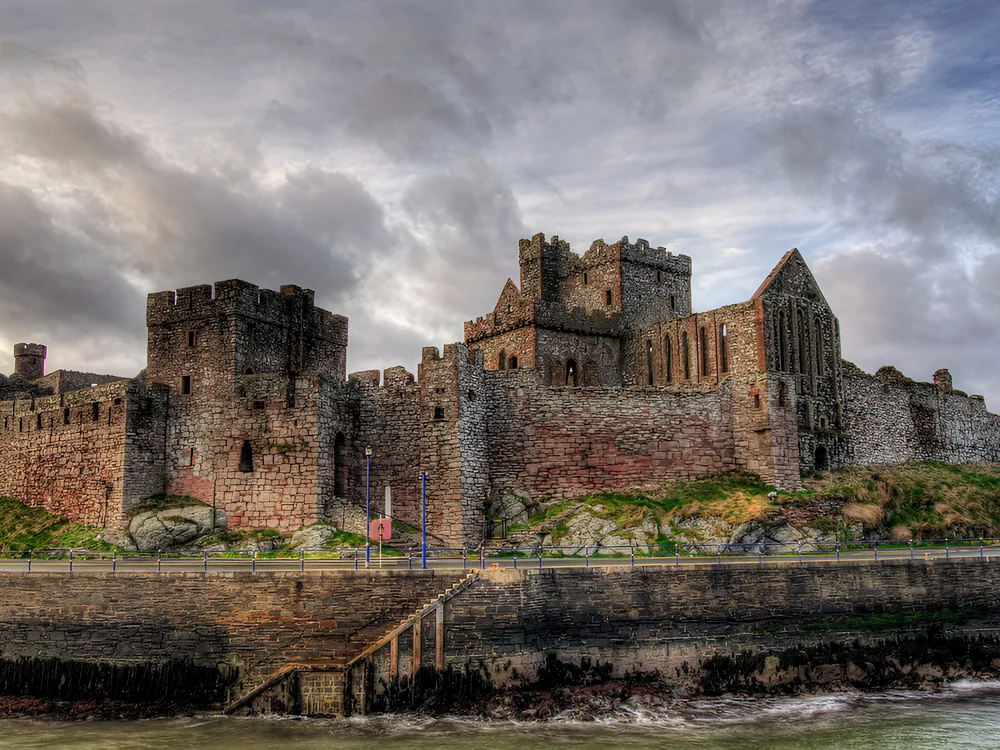
Built 1392 · Late 14th-century curtain-wall castle on St Patrick's Isle, a tidal causeway island in Peel Harbour; the site has been occupied since the early medieval period — a monastery existed here from at least the 6th century — and Viking fortification from c. 800 CE; the current outer curtain walls, gatehouse, and towers date primarily from the late 14th century under William le Scrope, 1st Earl of Wiltshire; the Cathedral of St German (partly 13th century, partly medieval ruins) stands within the walls alongside the Round Tower, a Viking-age structure; the red sandstone construction gives the castle a distinctive warm tone at sunset unusual among British castle sites
This page is part of an independent travel guide and is not affiliated with, endorsed by, or operated by Peel Castle.
© Castles & Palaces
Quick Facts
- Hours
- Daily 10:00–17:00
- Guided tour from
- €86
- Duration
- 1–1.5 hours self-guided; 5 hours on the GetYourGuide Viking shore excursion
- Best time
- May to September
- Nearest city
- Peel
Featured Tour
Isle of Man: Viking Highlights and Castles Shore Excursion
Cancellation available · Instant confirmation
Highlights
- ✦St Patrick's Isle — the causeway island that Peel Castle occupies is one of the most historically layered sites in the Isle of Man; a monastery associated with St Patrick is documented from at least the 6th century CE, the Norse built a fortified settlement here from around 800 CE, and the round tower that still stands within the walls is a classic Viking-age ecclesiastical feature; the combination of early Christian, Viking, and medieval building in one walled enclosure is unusual even by the standards of the Irish Sea heritage zone
- ✦The ruined Cathedral of St German — within the castle's curtain walls stands the partly ruined Cathedral of St German, the historic seat of the Bishop of Sodor and Man; the cathedral was built from the 13th century on earlier ecclesiastical foundations and was the centre of ecclesiastical authority over the Manx people through the medieval period; the roofless nave and standing walls, with the red sandstone weathering to orange and ochre in the evening light, are among the most atmospheric ecclesiastical ruins in the British Isles
- ✦The Norse Round Tower — the Viking-age Round Tower within the castle enclosure is one of a type characteristic of 9th–11th century Irish and Irish Sea ecclesiastical sites; built as a bell tower and refuge in the period when Viking raids threatened monastic communities, it predates the current castle curtain walls and represents the Norse presence on the Isle of Man before the formal fortification of the island; the Isle of Man was under Norse rule from around 800 CE through 1265 CE, when it was ceded to Scotland by the Treaty of Perth
- ✦Viking Highlights shore excursion with admission included — the GetYourGuide 5-hour small-group tour (Viking heritage circuit) includes Peel Castle admission; the tour is designed for cruise ship passengers arriving at Douglas and covers the Isle of Man's Viking-period heritage across multiple sites: Braddan Old Church, The Braaid, Tynwald Hill, the House of Manannan, and Peel Castle; not a Peel-exclusive tour but the most practical way for visitors arriving by ship to reach the castle
- ✦The Moddey Dhoo legend — Peel Castle is associated with the Manx legend of the Moddey Dhoo (Manx Gaelic for 'Black Dog'), a spectral black spaniel said to haunt the castle's dark passageways and guardroom; the legend is attested in a 1726 account by George Waldron and was later used by Sir Walter Scott in his poem 'Marmion' (1808); the castle after dark — during Manx National Heritage's occasional evening events — gives the legend more weight than the daylit tourist visit
Skip the queue with a guided tour
Skip-the-line tickets & expert guides
Peel Castle occupies St Patrick's Isle, a small tidal island connected to the Manx town of Peel by a causeway across the harbour. The red sandstone curtain walls, Round Tower, and ruined Cathedral of St German enclosed within them represent over a thousand years of continuous occupation — from the 6th-century monastery associated with St Patrick, through the Viking-age Norse settlement of the 9th century, to the late 14th-century castle built by William le Scrope.
The Norse dimension is what gives Peel Castle its distinctive character within British castle heritage. The Isle of Man was under Norse rule from approximately 800 CE — when the first Norse settlers established themselves across the island — through 1265 CE, when the Treaty of Perth transferred sovereignty to Scotland. During those four centuries, the Manx people developed the Tynwald, one of the world's oldest continuous parliaments, and the Norse Kings of Man and the Isles built St Patrick's Isle into the spiritual and administrative centre of their island kingdom. The Round Tower within the castle walls is a physical remnant of that Norse-Christian period, built in the style characteristic of 9th–11th century Irish Sea ecclesiastical communities.
The Cathedral of St German, built from the 13th century on earlier foundations, was the seat of the Bishop of Sodor and Man — the diocese that once covered the Hebrides as well as the Isle of Man, with 'Sodor' derived from the Norse Suðreyjar ('Southern Isles'). The cathedral's roofless nave and standing walls, in the same warm red sandstone as the surrounding castle curtain walls, create an interior ruin of unusual atmosphere: open to the sky, surrounded by the harbour's tidal wind, and layered with the history of both Norse and medieval Christianity on the island.
The GetYourGuide Viking Highlights shore excursion is designed for cruise ship passengers arriving at Douglas — it is a 5-hour small-group circuit of the Isle of Man's Viking-period heritage, with Peel Castle admission included alongside stops at Braddan Old Church, The Braaid, Tynwald Hill, and the House of Manannan. A separate full-day private tour (€466/group) covers both Peel Castle and Castle Rushen (the other major Manx castle, in Castletown) with both entry fees included.
History
An ecclesiastical site on St Patrick's Isle is attested from the 6th century CE. Norse occupation of the island began around 800 CE and the site was incorporated into the Norse Kingdom of Man and the Isles. The Round Tower dates from the Viking-age ecclesiastical period (9th–11th century). The Cathedral of St German was begun in the 13th century under the Bishops of Sodor and Man. The current curtain walls and gatehouse were built primarily under William le Scrope, 1st Earl of Wiltshire, in the 1390s. The castle served as a residence for the Bishops of Man and as a prison; Mary, Queen of Scots' secretary William Douglas was imprisoned here after the murder of Rizzio. The Isle of Man was formally purchased by the British Crown from the Duke of Atholl in 1765 (the Revestment). Peel Castle passed to Manx National Heritage and has been open to visitors since the late 20th century.
How to Visit
Getting there: Peel is on the west coast of the Isle of Man, approximately 13 km from Douglas (the island's capital) via the A1. Buses run from Douglas to Peel regularly. The castle is on St Patrick's Isle, reached by a short causeway walk from the Peel harbour waterfront. By ferry from the mainland UK: the Isle of Man Steam Packet Company runs services from Liverpool, Heysham, and Dublin to Douglas.
Tickets: Walk-up entry approximately £8 adults, £4 children (Manx National Heritage). The GetYourGuide Viking Highlights shore excursion includes Peel Castle admission and picks up at the Douglas cruise terminal — practical for visitors arriving by cruise ship who want a guided circuit without arranging their own transport. The full-day private Peel Castle + Castle Rushen tour (€466/group) covers both Manx castles with both entries included.
Practical tips: Evening visits (when available via Manx National Heritage events) give the most atmospheric experience of the castle's ruined cathedral and the harbour light on the red sandstone. The causeway is passable on foot at all tidal states. St Patrick's Isle is small enough that the full castle site can be covered in about an hour; combine with a walk along Peel's harbour waterfront and a visit to the House of Manannan (Viking-heritage museum in the town) for a full half-day in Peel.
Combine with: Castle Rushen (Castletown, 30 km south — one of the best-preserved medieval castles in Europe, built on Norse foundations in the island's ancient capital; the two castles are the Isle of Man's principal heritage sites and together cover the full arc of Manx medieval history from the Viking age through the English Lords of Mann).
Frequently Asked Questions
The Moddey Dhoo (Manx Gaelic for 'Black Dog') is a legendary spectral black spaniel said to have haunted Peel Castle's guardroom and passageways. The legend is first attested in a detailed 1726 account by George Waldron in 'A Description of the Isle of Man,' in which a black dog appeared nightly in the guardroom and the soldiers would not dare walk the castle passages alone after dark. A soldier who reportedly challenged the dog alone died three days later. Sir Walter Scott used the legend in his poem 'Marmion' (1808), and it has influenced several subsequent phantom dog legends in British folklore. Manx National Heritage occasionally runs evening events at the castle that play on the atmospheric potential of the ruined interior at night.
Location
St Patrick's Isle, Peel IM5 1TB, Isle of Man
Nearby Castles
Tours & Tickets
Powered by GetYourGuide
From
€86/ person