
Boncompagni Castle
Castello Boncompagni
Italy · Lazio — Isola del Liri, Frosinone Province, Ciociaria · Near Frosinone
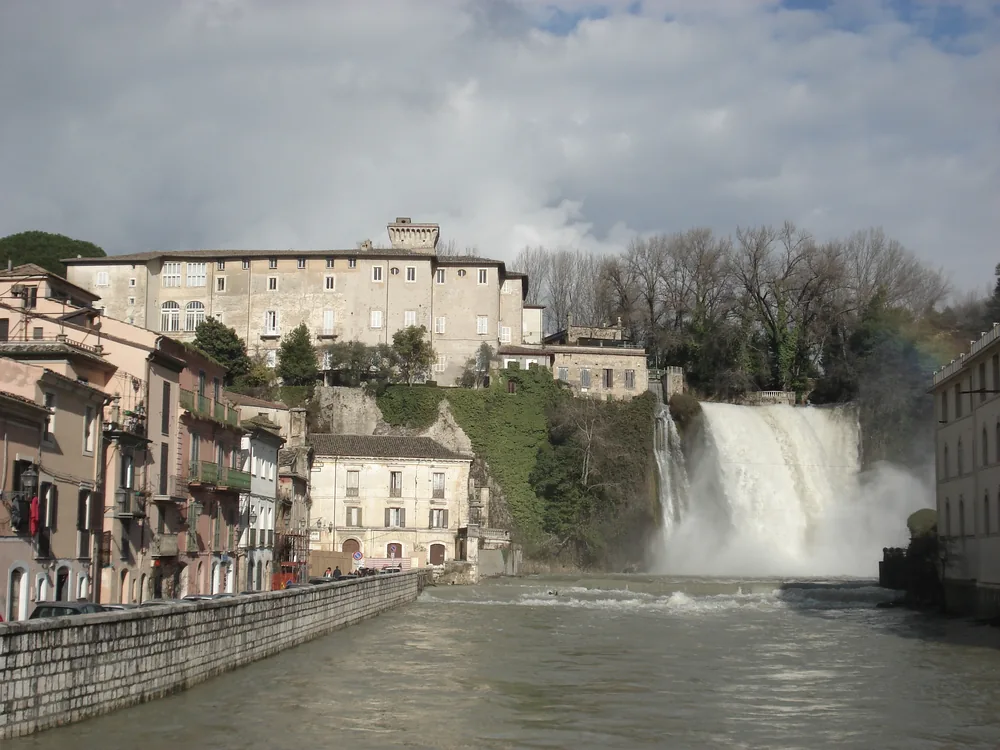
15th century · 15th-century medieval castle on a travertine rock formation at the centre of an urban waterfall — the castle was built by the Boncompagni family on the travertine rock outcrop that divides the Liri River into two branches, creating the 27-metre urban waterfall (Cascata Grande) that falls directly below and around the castle foundations; the castle and the waterfall are inseparable as a single architectural-natural phenomenon: the castle is positioned to use the rock split and the hydraulic power of the Liri as both a defensive element and an industrial resource (the waterfalls powered wool-working mills from medieval times); the structure is a national monument managed by the Italian Ministry of Culture and is typically viewed from the surrounding bridges, paths, and the waterfall viewpoints rather than entered for interior visits
This page is part of an independent travel guide and is not affiliated with, endorsed by, or operated by Boncompagni Castle.
© Castles & Palaces
Quick Facts
- Hours
- Mon–Sun Always accessible externally
- Guided tour from
- €340
- Duration
- 1–1.5 hours (exterior circuit: castle on the travertine rock + Cascata Grande viewing points + Cascata del Valcatoio walk)
- Best time
- Year-round
- Nearest city
- Frosinone
Featured Tour
Isola del Liri: Private Guided Walking Tour — Boncompagni Castle & Cascata Grande (up to 25 people, exterior only)
Cancellation available · Instant confirmation
Highlights
- ✦Cascata Grande (27 metres, urban) — the main waterfall of Isola del Liri falls 27 metres from the travertine rock split at the centre of the town, directly below and around the castle foundations; this is one of the only waterfalls in Europe that falls within a populated urban centre, making the combination of medieval castle, travertine geology, and working waterfall in a town centre an entirely unusual landscape
- ✦Castle on the travertine rock — the castle was built on the travertine rock formation that creates the Liri River's island and waterfall; the castle walls and towers are positioned on the rock edge above the waterfall, making the structure and the natural phenomenon visually inseparable from any approach angle
- ✦The Liri River island — 'Isola del Liri' (Island of the Liri) takes its name from the river island created by the travertine rock that splits the Liri into two branches, each carrying one half of the river flow before rejoining below; the town has developed around and on this island formation, with the castle at the upstream apex of the split
- ✦Cascata del Valcatoio — a second, smaller waterfall of the Liri River accessible from a walking path near the town; the GetYourGuide guided tour covers both waterfalls in the same excursion, providing a complete picture of the Liri waterfall geography
- ✦Boncompagni family and the Papal connection — the castle's name comes from the Boncompagni family, who controlled the Isola del Liri estate in the early modern period; Pope Gregory XIII (1502–1585, the pope who introduced the Gregorian calendar) was Ugo Boncompagni before his election — a Boncompagni family connection that links the castle to one of the most consequential Papal administrative acts of the early modern period
- ✦Ciociaria region — Isola del Liri is in the Ciociaria, the informal name for the Frosinone Province and the Liri/Sacco river valleys south of Rome; a rural region of traditional Lazio culture, fewer tourist services than Rome's immediate orbit, and landscapes of limestone hills and river valleys that reward visitors who have exhausted the main Roman day-trip circuits
Skip the queue with a guided tour
Skip-the-line tickets & expert guides
Isola del Liri — the Island of the Liri — is a small town in the Frosinone Province of Lazio, approximately 100 kilometres southeast of Rome. The town takes its name from the geological accident at its centre: a travertine rock outcrop divides the Liri River into two branches, creating a natural island around which the town has developed, and generating the 27-metre waterfall — the Cascata Grande — that falls directly below the walls of Boncompagni Castle on the upstream apex of the rock. This combination of a working medieval castle, a 27-metre urban waterfall falling within the built area of the town, and the travertine rock geology that links both is found nowhere else in Europe in quite this form.
The castle on the travertine rock was built by the Boncompagni family in the 15th century, utilising the defensive and hydraulic advantages of the rock position — control of the waterfall meant control of the water power that drove the wool-working mills that made the Isola del Liri an industrial centre in the medieval and early-modern periods. The Boncompagni family's name connects the castle to one of the more obscure Papal coincidences: Ugo Boncompagni, elected Pope Gregory XIII in 1572, was responsible for the 1582 calendar reform that introduced the Gregorian calendar — the calendar system currently used by most of the world. The family's association with the castle predates the election, and the castle itself has no direct role in the calendar reform, but the Boncompagni name connects the site to a historical moment of genuine global consequence.
Boncompagni Castle is classified as a national monument (monumento nazionale) and is typically experienced as an exterior site. The GetYourGuide guided walking tour (from approximately €340 per group for up to 25 people) covers the castle exterior from the surrounding bridges and viewpoints, the Cascata Grande viewing platforms, and a walk to the Cascata del Valcatoio — the second Liri waterfall, smaller than the main cascade but significant as a complementary element of the river's waterfall geography. The per-group pricing makes the guided tour cost-effective for larger groups; the castle exterior and waterfall viewpoints are freely accessible to independent visitors without a guide.
The Cascata Grande is particularly dramatic after significant rainfall (November through March, when the Liri is running high) and in summer evenings when the waterfall is illuminated. The viewpoints from the bridges flanking the rock — upstream and downstream of the falls — provide the classic image of the castle above the water. The travertine rock surface is exposed on the flanks of the island where the river has worn it smooth.
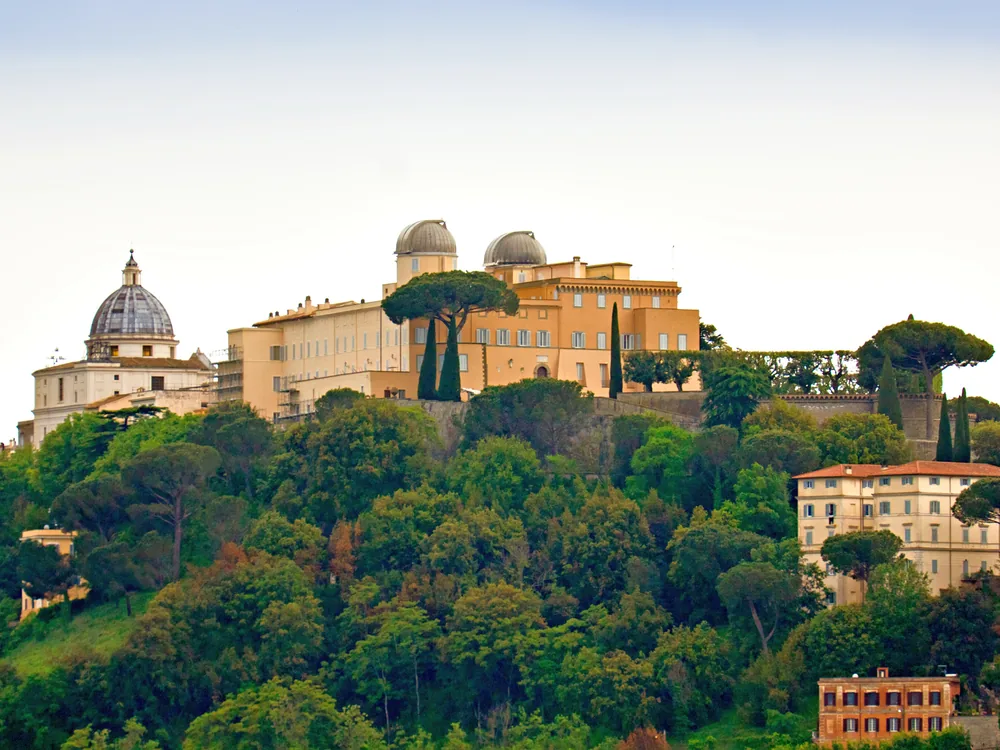
Isola del Liri is accessible by car from Rome (~1.5 hours southeast via A1/SS6), from Naples (~1.5 hours north via A1), or by train to Ceprano (20 minutes by car) or Sora. The nearest castle covered on this site is [Castel Gandolfo](/castles/italy/castel-gandolfo) — the Papal summer residence on Lake Albano, approximately 80 kilometres north.
History
Travertine rock formation divides the Liri River at the Isola del Liri from the geological period; the waterfall and island are pre-human. Medieval period: the rock and waterfall position exploited for water-powered wool mills. 15th century: Boncompagni Castle constructed on the travertine rock by the Boncompagni family, utilising the rock's defensive and hydraulic advantages. Early modern period: Boncompagni family connection to Pope Gregory XIII (elected 1572; Ugo Boncompagni before election); family association with the castle predates the election. Post-medieval: various ownership and administrative changes; the wool industry declines but the waterfall and castle remain. 20th century: castle designated a national monument. Current period: exterior monument, accessible for exterior visits and waterfall viewing; interior not regularly open.
How to Visit
Getting there: Isola del Liri is approximately 100km southeast of Rome by car (around 1.5 hours via A1/A24/SS6). By train: Rome Termini to Ceprano or Sora (~1.5 hours), then taxi about 20 minutes to the town centre.
Tickets: Entry is free. The castle exterior and the Cascata Grande waterfall viewpoints are freely accessible from the public bridges year-round with no booking required. The GetYourGuide private guided walking tour (from €340 per group of up to 25 people) covers the castle exterior, the Cascata Grande viewpoints, and the Cascata del Valcatoio walk with a private guide — roughly €14 per person for a full group.
Practical tips: The Cascata Grande is most dramatic after heavy rainfall (November–March) when the Liri runs high; in summer evenings the waterfall is illuminated. For most visitors, walking the bridges flanking the travertine rock gives the full experience without any booking.
Combine with: Castel Gandolfo — the Papal summer palace on Lake Albano, about 80km north — for a rewarding Lazio day trip.
Frequently Asked Questions
No — the Cascata Grande waterfall and the castle exterior are freely accessible from the public bridges and riverside paths. There is no entry ticket for the exterior visit. The GetYourGuide guided group tour (€340 per group) adds a private guide for the same exterior experience; for independent visitors, there is nothing to book or pay for the standard exterior visit.
Location
Via Boncompagni, 03036 Isola del Liri FR, Italy
Nearby Castles
Tours & Tickets
Powered by GetYourGuide
From
€340/ group