
Boniface VIII Palace
Palazzo Bonifacio VIII
Italy · Lazio · Near Anagni
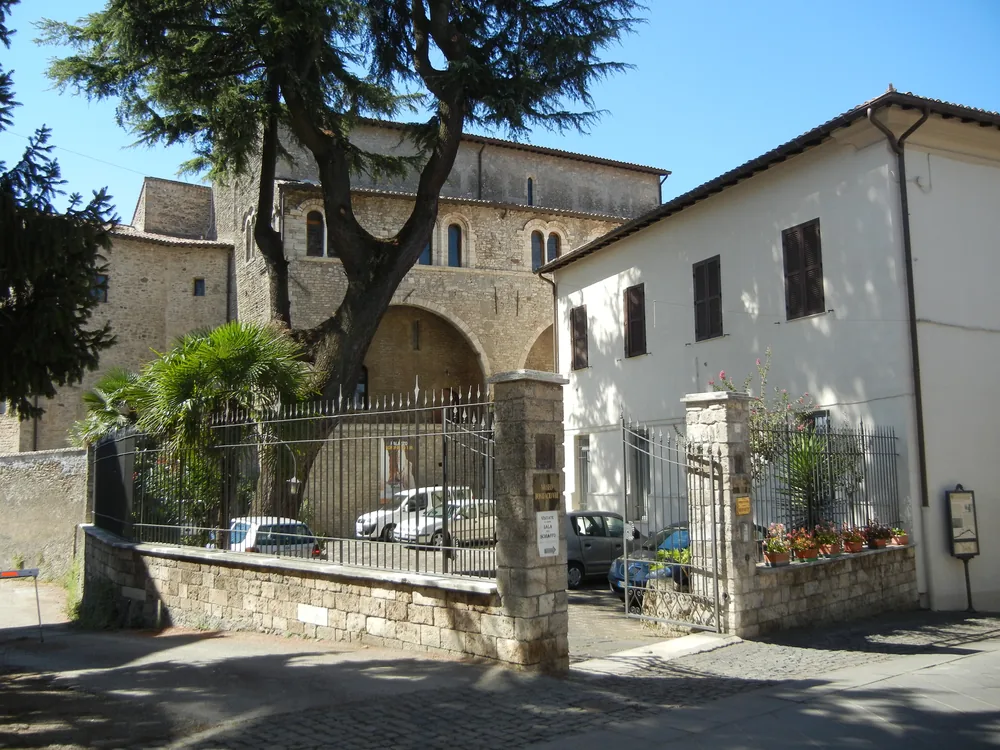
Built 1296 · Late medieval Italian Gothic palace built for the Caetani family, the dynastic house of Pope Boniface VIII, during his pontificate in the 1290s; the building occupies a prominent position in Anagni's historic centre, with pointed-arch windows and heavy stone construction typical of Lazio noble family palaces of the period; Anagni produced four medieval popes — Innocent III, Gregory IX, Alexander IV, and Boniface VIII — and the town's cathedral houses a celebrated cycle of 13th-century Romanesque crypt frescoes separate from the palace; the site is associated with the Anagni Outrage of 1303, when Guillaume de Nogaret and Sciarra Colonna seized Boniface VIII in the palace and held him captive for three days, an event that precipitated the pope's death weeks later and the Avignon papacy's 68-year transfer of the papal court to France
This page is part of an independent travel guide and is not affiliated with, endorsed by, or operated by Boniface VIII Palace.
© Castles & Palaces
Quick Facts
- Hours
- Mon 09:00–13:00. Tue–Sun 09:00–13:00 / 15:00–18:00
- Entry via GetYourGuide
- €9
- Duration
- 1–1.5 hours
- Best time
- March to October
- Nearest city
- Anagni
Featured Tour
Anagni: Entrance to the Palazzo Bonifacio VIII
Cancellation available · Instant confirmation
Highlights
- ✦Anagni is the birthplace of four medieval popes — Innocent III, Gregory IX, Alexander IV, and Boniface VIII — and this palace was built by Boniface's family, the Caetani, during his pontificate; visiting it means standing in the specific building where the most audacious assault on a sitting pope in the entire medieval period took place
- ✦The Anagni Outrage of September 1303 — when Guillaume de Nogaret and Sciarra Colonna led an armed force into the palace and seized Boniface VIII, holding him captive for three days — is the event that ended Boniface's pontificate, precipitated his death weeks later, and began the 68-year Avignon papacy, during which the papal court resided in French territory under what contemporaries called 'the Babylonian captivity of the church'
- ✦Boniface VIII issued Unam Sanctam in 1302 — the most extreme statement of papal supremacy in the medieval period, declaring that all kings and secular rulers are subject to the pope's authority for their salvation — and Philip IV of France sent Nogaret to Anagni the following year as a direct response; the palace is the place where the conflict between papal universal authority and royal sovereignty reached its most violent resolution
- ✦The Gothic palace rooms preserve the physical environment of the 1303 events: pointed-arch windows, heavy Lazio stone construction, and the compact scale of a provincial noble family's palace that makes the gap between Boniface's claims to universal authority and the reality of his seizure in a regional hilltop building immediately visible
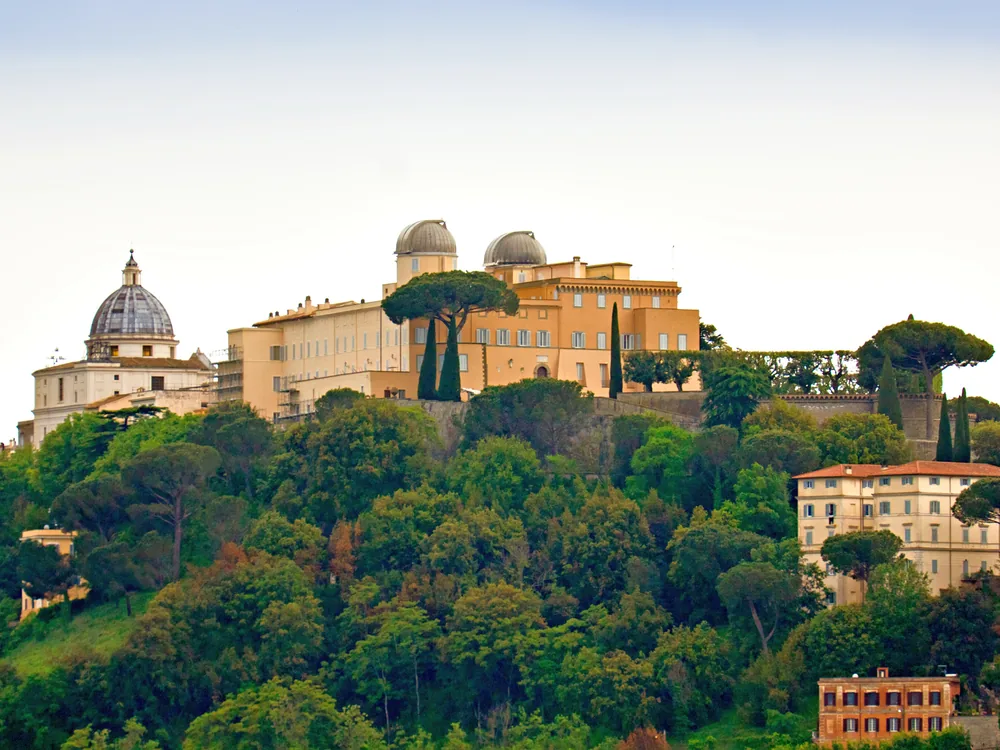
- ✦Castel Gandolfo, the later papal summer residence approximately 50 km northwest in the Alban Hills, is the natural geographical pairing — the baroque papal dignity of the post-Avignon settlement contrasting with the Gothic provincial scale of Anagni's Caetani palace and the crisis that made the Avignon period necessary
Skip the queue with a guided tour
Skip-the-line tickets & expert guides
Anagni sits on a rocky plateau above the Sacco valley, approximately 65 kilometres southeast of Rome, and the town's nickname — Città dei Papi, City of Popes — is not the kind of local promotional inflection that most Italian hilltop towns apply to themselves. It is, in this case, a checkable demographic claim: four medieval popes were born in Anagni. Innocent III, born around 1160 and elected in 1198, was the most institutionally ambitious pope of the medieval period: he organised the Fourth Crusade, asserted authority over the disputed German imperial succession, and convened the Fourth Lateran Council of 1215. Gregory IX, born circa 1167 and elected 1227, codified canon law in the Liber Extra and established the Papal Inquisition. Alexander IV, born circa 1199 and elected 1254, was less historically prominent but born here nonetheless. And Benedetto Caetani, born in Anagni around 1230, who became Pope Boniface VIII in 1294 and whose pontificate ended here in September 1303 in the most violent assault on a sitting pope in the entire medieval period.
The palace that Boniface VIII built in Anagni was constructed for his family, the Caetani, during his pontificate, with the main building datable to around 1296. It stands in the town's historic centre, a short walk from the cathedral whose 13th-century Romanesque crypt frescoes are a separate attraction of some significance. The building is Gothic in character — pointed-arch windows, heavy stone construction, the compact solidity that Lazio noble family palaces favoured in this period — and its scale is that of a powerful provincial family's urban residence, not a palace in the sense that the word implies ceremonial grandeur. The Caetani were wealthy and influential, and Boniface used both their wealth and his papal office to advance the family's interests in a way that was characteristic of medieval popes but which his contemporaries found unusually aggressive.
The conflict that brought armed men to Anagni in September 1303 began with a straightforward dispute over money. Philip IV of France, known as Philip the Fair, wanted to tax the French clergy to fund his wars against England and Flanders. Boniface, in the bull Clericis laicos of 1296, forbade secular rulers from taxing the clergy without papal consent. Philip responded by banning the export of gold and silver from France, cutting a significant source of papal revenue. The dispute escalated across the following years, with each side deploying increasingly absolute statements of their authority. In 1302 Boniface issued Unam Sanctam — the single most assertive declaration of papal supremacy ever published by a medieval pope, whose closing statement made explicit that subjection to the Roman pontiff is necessary for salvation. Read literally, the bull claimed that every secular ruler in Christendom was ultimately subject to papal authority. Philip IV found the claim unacceptable.
Guillaume de Nogaret was Philip's minister — a lawyer and political operative from the south of France, educated in canon law, and possessed of a personal grievance against the papacy that combined professional conviction with family history (his parents or grandparents had been condemned as Cathars). He organised the response with the efficiency of a man who understood legal procedures and their limits. In the autumn of 1303 Nogaret, in alliance with Sciarra Colonna — a member of the Roman noble family whose long feud with the Caetani gave him personal motivation — led an armed force to Anagni where Boniface was resident at the family palace. They seized the pope and held him captive for approximately three days.
The event entered history under the name Schiaffo di Anagni — the Slap of Anagni — from an account that Sciarra Colonna struck Boniface in the face during the confrontation. The historicity of the specific slap is disputed; the confrontation and captivity are documented. What is clear is that Boniface was physically seized in his family palace by agents of the French crown, that he was held there for several days, and that the townspeople of Anagni eventually drove Nogaret and Colonna out, freeing the pope. Boniface returned to Rome shortly after. He died in October 1303, approximately a month after the events in Anagni; the cause was given as illness, and the popular interpretation among contemporaries and subsequent historians has consistently been that he died of the shock and humiliation of the outrage.
The consequences were structural and long-lasting. Clement V, elected in 1305, moved the papal court to Avignon in 1309. The Avignon papacy lasted until 1377 — 68 years during which the popes resided in territory that, while nominally not French royal land, was under pervasive French political influence. Dante Alighieri, writing in the Divine Comedy in the years immediately following these events, placed Boniface VIII in Hell for simony and described the Avignon papacy as the Babylonian captivity of the church — a biblical analogy comparing the popes' residence in Avignon to the exile of the Jews in Babylon, which has been the dominant metaphor for the Avignon period ever since. The Great Schism that followed, in which multiple simultaneous claimants held different papal courts from 1378 to 1417, was the further consequence. The arc from Anagni in 1303 to the Council of Constance in 1417 that finally resolved the Schism is one of the defining crises of medieval church history, and the palace in Anagni's hilltop centre is where the arc began.
The GetYourGuide entry ticket provides access to the palace interior, which preserves Gothic rooms and documentation of the Caetani family and the 1303 events. Anagni is reached from Rome by regional train to Anagni station (approximately one hour), with a 15-minute walk or local bus connection into the historic centre. The cathedral's frescoed crypt is a separate visit but within easy walking distance and worth combining in the same morning. Castel Gandolfo, already on this site, is the most natural companion destination — the baroque papal summer residence in the Alban Hills representing what the papacy's relationship with the Roman countryside looked like after the Avignon crisis had been resolved.
History
The Caetani family palace at Anagni was built during the pontificate of Benedetto Caetani — Pope Boniface VIII — in the 1290s, on a hilltop site where the Caetani family had long-established roots. In September 1303 Guillaume de Nogaret and Sciarra Colonna, acting on behalf of Philip IV of France, seized Boniface VIII at the palace and held him captive for three days in the event known as the Schiaffo di Anagni (Anagni Outrage). Boniface died weeks later, and his successor Clement V moved the papal court to Avignon in 1309, beginning the 68-year Avignon papacy. Anagni is also the birthplace of three earlier medieval popes: Innocent III, Gregory IX, and Alexander IV. The palace's Gothic rooms and the documentation of the 1303 events are the principal content of the current visitor experience.
How to Visit
Getting there: Regional train from Roma Termini to Anagni station (approximately 1 hour), then bus or taxi (15 minutes) to the historic centre. By car from Rome: approximately 65km via the A1/E45 to the Anagni exit, then SP14 to the town centre. Parking is available outside the historic centre walls.
Tickets: Entry costs €8 for adults (children €4); walk-up tickets are available at the door with no booking required. The GetYourGuide entry ticket can be booked in advance for a self-guided visit to the Gothic palace interior.
Practical tips: Allow 1–1.5 hours for the palace interior. Anagni Cathedral is a 5-minute walk and its 13th-century Romanesque crypt frescoes are a major site in their own right — plan a half-day to see both together.
Combine with: Castel Gandolfo in the Alban Hills for the contrast between the compact Gothic scale of Anagni and the baroque papal summer residence — both sites make a natural papal Lazio itinerary.
Frequently Asked Questions
In September 1303 Guillaume de Nogaret, minister of Philip IV of France, led an armed force to Anagni and seized Pope Boniface VIII in his family palace, holding him captive for three days in response to Boniface's assertion of papal supremacy over secular rulers (the 1302 bull Unam Sanctam). Boniface died weeks later from the shock. The event directly triggered the Avignon papacy — 68 years in which the popes resided in French-dominated territory — and the subsequent Great Schism. The Anagni events mark the moment when the medieval papacy's claim to universal authority over secular rulers was decisively challenged by force.
Location
Via Vittorio Emanuele, 03012 Anagni FR, Italy
Nearby Castles
Tours & Tickets
Powered by GetYourGuide
From
€9/ person