
Chigi Palace
Palazzo Chigi (Ariccia)
Italy · Lazio · Near Ariccia
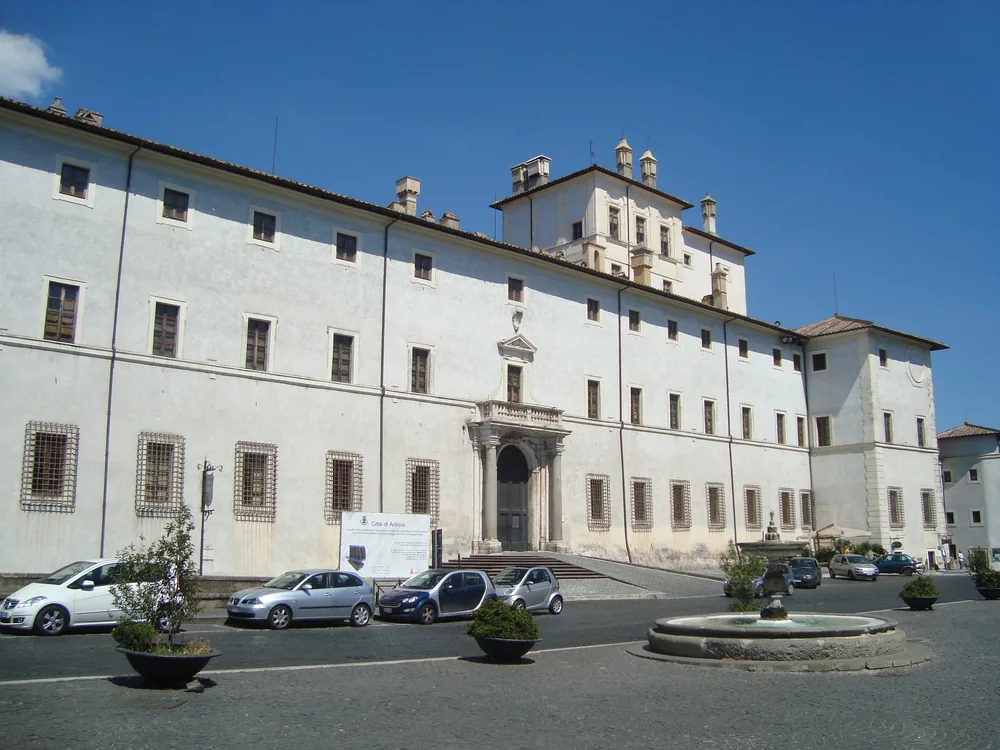
Built 1664 · Baroque palace commissioned by the Chigi family following Pope Alexander VII's (Fabio Chigi) instruction to Gian Lorenzo Bernini to redesign both the palace and the town of Ariccia as a showcase project in the mid-17th century; the palace occupies one side of a Bernini-designed oval piazza together with the church of Santa Maria dell'Assunzione, forming one of the most coherent examples of urban Baroque design in the Castelli Romani area; the interior is widely considered one of the best-preserved 17th-century Baroque palace interiors in Italy, with original furnishings, tapestries, and decorative schemes largely intact across multiple centuries of continuous Chigi family ownership
This page is part of an independent travel guide and is not affiliated with, endorsed by, or operated by Chigi Palace.
© Castles & Palaces
Quick Facts
- Hours
- Tue–Sun 10:00–13:00, 15:00–18:00. Closed Mon
- Entry via GetYourGuide
- €18
- Duration
- 1–1.5 hours
- Best time
- April to October
- Nearest city
- Ariccia
Featured Tour
Ariccia: Entry ticket to Chigi Palace
Cancellation available · Instant confirmation
Highlights
- ✦Widely regarded as one of the best-preserved 17th-century Baroque palace interiors in Italy — a genuine time capsule where rooms retain original furnishings, tapestries, and decorative schemes largely as they were when the Chigi family commissioned them, rather than having been redecorated or restaged for museum presentation
- ✦Redesigned by Gian Lorenzo Bernini under instructions from Pope Alexander VII (born Fabio Chigi) in the 1660s — Bernini's remit extended to both the palace and the entire layout of Ariccia's historic centre, making the piazza and church of Santa Maria dell'Assunzione opposite the palace one of the most coherent examples of Baroque urban design in Lazio
- ✦Centuries of continuous Chigi family ownership are the primary reason the interiors survived unaltered — a palace in the same family's hands for generations is not subject to the kind of institutional redecoration that strips away original furnishings and replaces them with later-period pieces
- ✦A film location for productions seeking an authentic 17th–19th century Italian noble interior — the palace's unrestored quality gives it an authenticity that purpose-built period sets cannot replicate
- ✦Natural day-trip companion to Castel Gandolfo (3 km away in the same Castelli Romani area) — two genuinely distinctive sites within easy driving distance, both in the Lazio hills above Rome
Skip the queue with a guided tour
Skip-the-line tickets & expert guides
Among the many Baroque palaces in Lazio, the Chigi Palace in Ariccia holds a specific distinction: its interiors look largely as they did when they were completed in the 1660s. This is rarer than it sounds. Most Italian historic palaces have been redecorated, restaged, or institutionally transformed — furniture moved, tapestries replaced, rooms repainted — at some point over the last three and a half centuries. The Chigi Palace's rooms retain original furnishings, tapestries, painted ceilings, and decorative schemes across multiple rooms, making the experience of walking through them genuinely different from most palace museum visits, where the setting is authentic but the contents are either later-period substitutes or have been rearranged for interpretive flow. At Ariccia, the arrangement of objects in rooms reflects something close to the original inhabitation.
The reason is the Chigi family's continuous ownership across those centuries. A palace that remains in the same family does not undergo the institutional redecoration that accompanies changes of ownership — there is no new family bringing its own furniture, no state takeover imposing a museum layout, no 19th-century restoration stripping 17th-century interiors in favour of something more fashionable. The Chigis held the palace, and the palace held what the Chigis put in it.
The family connection to its construction is direct. Fabio Chigi, born in Siena into one of Rome's most powerful papal-adjacent dynasties, was elected Pope in 1655 and took the name Alexander VII. In the 1660s he commissioned Gian Lorenzo Bernini — the architect, sculptor, and designer who was, at that moment, the dominant creative force in Rome — to redesign both his family's Ariccia palace and the town centre immediately around it. The result is one of the most coherent examples of Baroque urban design in Lazio: the palace on one side of a Bernini-designed oval piazza, the church of Santa Maria dell'Assunzione on the other, with the surrounding streetscape arranged to create the visual relationship between the two that Bernini specified. The church dome and the palace façade respond to each other across the space of the piazza in a way that makes the whole ensemble read as a single composition.
Bernini's relationship with the Chigi family was long-standing and personal. He had served Fabio Chigi before his election as Pope — Chigi was his patron even as a cardinal — and the Ariccia project was an opportunity to apply the kind of comprehensive urban design thinking that Bernini had developed in his work on the Piazza San Pietro and various Roman church projects to a smaller, more controlled setting. The result is intimate in scale relative to the Vatican projects but unified in a way that those larger commissions, constrained by existing urban fabric, could not be.
The palace interior is accessible by self-guided entry — visitors purchase tickets and explore the rooms at their own pace without a timed slot or a mandatory guided group. This format works well for the Chigi Palace's character: the rooms are not large or numerous enough to require hours, and the self-guided approach allows the kind of slow looking that period furnishings and painted ceilings reward. Visit length is typically 1 to 1.5 hours.
Note on the GetYourGuide ticket: the booking is non-refundable once confirmed. The GetYourGuide listing shows a provider rating rather than a verified customer review count, which means no star rating is displayed here — we follow a policy of showing only ratings based on a meaningful number of verified reviews.
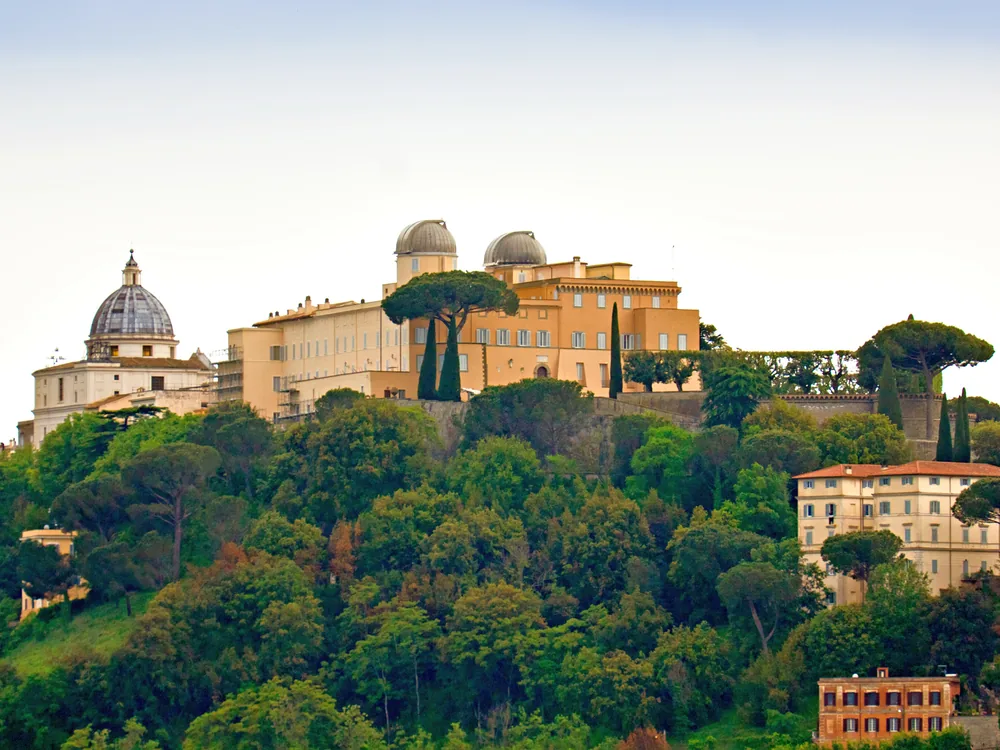
For visitors planning a day in the Castelli Romani, the Chigi Palace pairs naturally with Castel Gandolfo — the former papal summer residence opened to public visits by Pope Francis in 2016, approximately 3 kilometres away. The two sites are different enough in character (intimate Baroque noble interior vs. papal garden and apartments) that visiting both on the same day gives a representative sample of what the Castelli Romani area offers beyond its volcanic lake scenery and local wine.
History
The Chigi family acquired Ariccia and its castle in the 17th century. Pope Alexander VII (Fabio Chigi, elected 1655) instructed Gian Lorenzo Bernini to redesign the family palace and the town centre in the 1660s, resulting in the Baroque ensemble of palace, oval piazza, and church of Santa Maria dell'Assunzione that survives largely intact today.
The palace remained in continuous Chigi family ownership for centuries following its construction — a key reason its interiors retained original 17th-century furnishings and decorative schemes that were stripped from or replaced in most comparable Italian palaces during later periods of ownership change or institutional transformation. The palace now operates as a museum, with the family's collections largely in place.
How to Visit
Getting there: Ariccia is approximately 26km southeast of Rome in the Castelli Romani hills, accessible by COTRAL bus from Rome Termini or Anagnina metro station (approximately 45 minutes) or by car via Via Appia Nuova (SS7). The palace is on the main piazza of historic Ariccia, immediately identifiable by Bernini's oval square.
Tickets: €21 for adults. The GetYourGuide entry ticket (non-refundable) provides the same self-guided access — no timed slot or guided group required. Visit 1–1.5 hours at your own pace.
Practical tips: The palace is closed on Mondays. Ariccia is the original home of porchetta — whole-roasted pork with herbs — and the town's main street is lined with specialist shops; allow time to explore the piazza and surrounding lanes after the palace visit.
Combine with: Castel Gandolfo (3km away, 5 minutes by car) — the former papal summer residence opened to public visits in 2016, with the Apostolic Palace, papal gardens, and views over Lake Albano. Advance booking required for Castel Gandolfo.
Frequently Asked Questions
Most Italian historic palaces have been redecorated or institutionally rearranged at some point over the centuries — furniture replaced, rooms repainted, collections redistributed. The Chigi Palace's long continuous ownership by the Chigi family meant this process largely didn't happen: the rooms retain original 17th-century furnishings, tapestries, painted ceilings, and decorative schemes in arrangements that reflect the original inhabitation rather than a museum's later reorganisation. The result is a palace interior that feels inhabited rather than curated, which is the meaning of 'time capsule' in this context.
Location
Piazza di Corte, 00072 Ariccia RM, Italy
Nearby Castles
Tours & Tickets
Powered by GetYourGuide
From
€18/ person