
Ducal Palace of Mantua
Palazzo Ducale di Mantova
Italy · Lombardy, Mantua — city centre, overlooking Lago di Mezzo · Near Mantua
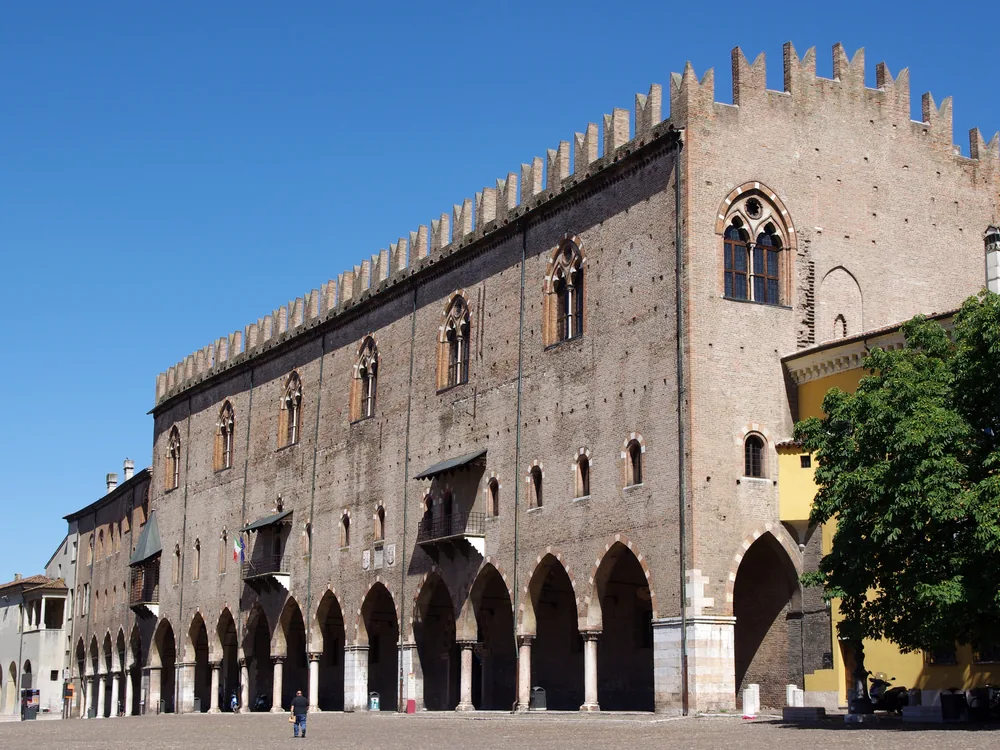
Built 1308 · Vast palace complex of successive Gonzaga additions spanning Gothic, Renaissance, and early Baroque styles — the Castello di San Giorgio (a fortified tower completed 1406 by Bartolino da Novara) anchors the complex's northeastern corner; the Corte Vecchia (Old Court) contains the oldest fabric of the Bonacolsi-period buildings; the Corte Nuova (New Court) was added by Giulio Romano in the 1530s under Federico II Gonzaga; the Camera degli Sposi (Painted Chamber) occupies the north tower of the Castello di San Giorgio and was frescoed by Andrea Mantegna 1465–1474; the complex exceeds 35,000 square metres, comprises approximately 500 rooms, 7 courtyards, and 8 gardens, and is frequently described as a city-palace rather than a single building — successive Gonzaga rulers added wings, courts, and gardens over five centuries without a single unifying architectural plan
This page is part of an independent travel guide and is not affiliated with, endorsed by, or operated by Ducal Palace of Mantua.
© Castles & Palaces
Quick Facts
- Hours
- Tue–Sun 09:00–19:30. Closed Mon
- Guided tour from
- €15
- Duration
- 2–3 hours (full complex); 1 hour for the GetYourGuide guided tour focused on the Camera degli Sposi
- Best time
- March to October
- Nearest city
- Mantua
Featured Tour
Mantua at the Court of the Gonzaga: Guided Visit of the Ducal Palace and Camera Picta
Cancellation available · Instant confirmation
Highlights
- ✦Camera degli Sposi (Painted Chamber) — Andrea Mantegna's 1465–1474 fresco cycle in the north tower of the Castello di San Giorgio; the first fully illusionistic architectural painting in Western art, featuring a trompe l'oeil oculus in the ceiling through which putti and ladies peer down at the viewer; group portraits of Marquis Ludovico III Gonzaga, his wife Barbara of Brandenburg, their children, and the family dog Rubino are painted as if present in the same room as the viewer
- ✦The largest palace complex in Italy after the Vatican — more than 35,000 square metres, approximately 500 rooms, 8 courtyards, and 7 gardens; successive Gonzaga rulers added buildings over five centuries without an overarching plan, creating a labyrinthine complex that functions more as a city within a city than a unified building
- ✦UNESCO World Heritage Site — Mantua and Sabbioneta were jointly inscribed in 2008 as 'outstanding examples of urban Renaissance planning'; the Ducal Palace is the core of Mantua's UNESCO nomination
- ✦Castello di San Giorgio — the fortified tower completed in 1406 by Bartolino da Novara, which contains the Camera degli Sposi; visible from the lake approach to Mantua and historically the most defensible part of the complex
- ✦The Gonzaga dynasty's 380-year court — the Gonzagas ruled Mantua from 1328 to 1708, a run of roughly 380 years that made the court one of the most stable and culturally ambitious in Renaissance Italy; the palace's successive building phases document every major phase of that rule
- ✦Distinct from Palazzo Te — [Palazzo Te](/castles/italy/palazzo-te), the Gonzaga pleasure villa designed by Giulio Romano outside the city walls (1524–1534), is a separate building on this site; the Ducal Palace is the dynasty's seat of power inside the city, Palazzo Te the retreat designed for pleasure and entertainment
Skip the queue with a guided tour
Skip-the-line tickets & expert guides
The Ducal Palace of Mantua is one of the largest and most complex palace buildings in Europe — a fact that is better grasped from a plan than from any single view, because the building has no single view that contains it. More than 35,000 square metres of floor space, approximately 500 rooms across dozens of interconnected wings and towers, eight courtyards, and seven gardens spread across the northeastern corner of Mantua's historic centre, from Piazza Sordello south and east toward the lakes. The complex was never built to a single plan; it accumulated over five centuries of Gonzaga rule, each generation adding a wing, a courtyard, a chapel, or a garden to what their predecessors had left, producing a labyrinthine monument to dynastic continuity that historians consistently describe as a city-palace — a palace complex so large it functions as an urban district rather than a building.
The Gonzaga family's presence in this location begins in 1328, when Luigi Gonzaga overthrew the Bonacolsi family that had previously ruled Mantua, and established his dynasty's residence in the buildings the Bonacolsi had occupied. The oldest surviving fabric of the complex — the Corte Vecchia — dates from this Bonacolsi and early Gonzaga period. The dynasty's hold on Mantua lasted until 1708, when the last Gonzaga duke died without a male heir and the duchy passed to the Austrian Habsburgs: a tenure of 380 years, long enough to see the family through the full arc from medieval signoria to Renaissance marquisate to Renaissance dukedom to Baroque decline.
The complex's physical extent reached its maximum under the marquises of the 15th and early 16th centuries. The Castello di San Giorgio — the fortified tower that anchors the complex's northeastern corner, completed in 1406 by the military architect Bartolino da Novara — was the most defensible part of the palace and is historically the most significant: its north tower contains the Camera degli Sposi, the room for which the Ducal Palace is primarily famous. Giulio Romano, the Roman architect who came to Mantua in 1524 at Federico II Gonzaga's invitation, added the Corte Nuova in the 1530s, bringing the idiom of Roman Mannerism to a court that had already been defined by Mantegna's Northern Italian perspective.
The Camera degli Sposi is the room that draws most visitors and rewards most careful attention. Mantegna — appointed court artist by Marquis Ludovico III Gonzaga in 1460, after earlier service to the Gonzaga and the Este courts — worked on the fresco decoration of this room from 1465 to 1474, a period of nine years that produced one of the founding works of Italian Renaissance painting. The commission's explicit purpose was cultural competition: Mantua's rival courts at Ferrara (the Este) and Milan (the Visconti and later the Sforza) were investing in painted chambers of their own, and Ludovico needed a room that would demonstrate his court's equal ambition. What Mantegna produced exceeded the brief.
The painted programme on the room's walls presents the Gonzaga family as if gathered in the same space as the viewer: Marquis Ludovico III in discussion with a secretary, his wife Barbara of Brandenburg seated with her ladies and children, courtiers and attendants rendered with individual portraiture precision. The family dog Rubino — a specific, named animal, not a generic heraldic hound — lies at Ludovico's feet. These scenes are not set in an allegorical or mythological space but in a simulated architectural setting that extends the real room into a painted fiction of depth and volume. The ceiling is the programme's most audacious element: a painted oculus opens to a sky through which putti balance precariously on a ledge, ladies peer down with amused expressions, and a pot of plants threatens to tip over the edge. The trompe l'oeil illusion — the painted architectural frame, the foreshortened figures, the fictive sky — is the first fully illusionistic architectural ceiling in Western painting, the direct ancestor of the entire tradition of Baroque ceiling decoration that would follow over the next two centuries.
After the Gonzaga line ended in 1708 and Austria took the duchy, the palace passed through a long period of administrative use and partial neglect. Napoleon's forces removed significant quantities of objects and artworks during the Italian campaign. The Italian state began systematic restoration in the 20th century; the complex is now managed as a national museum under the Italian Ministry of Culture, with ongoing restoration work across multiple sections of the building — some areas are periodically closed for conservation.
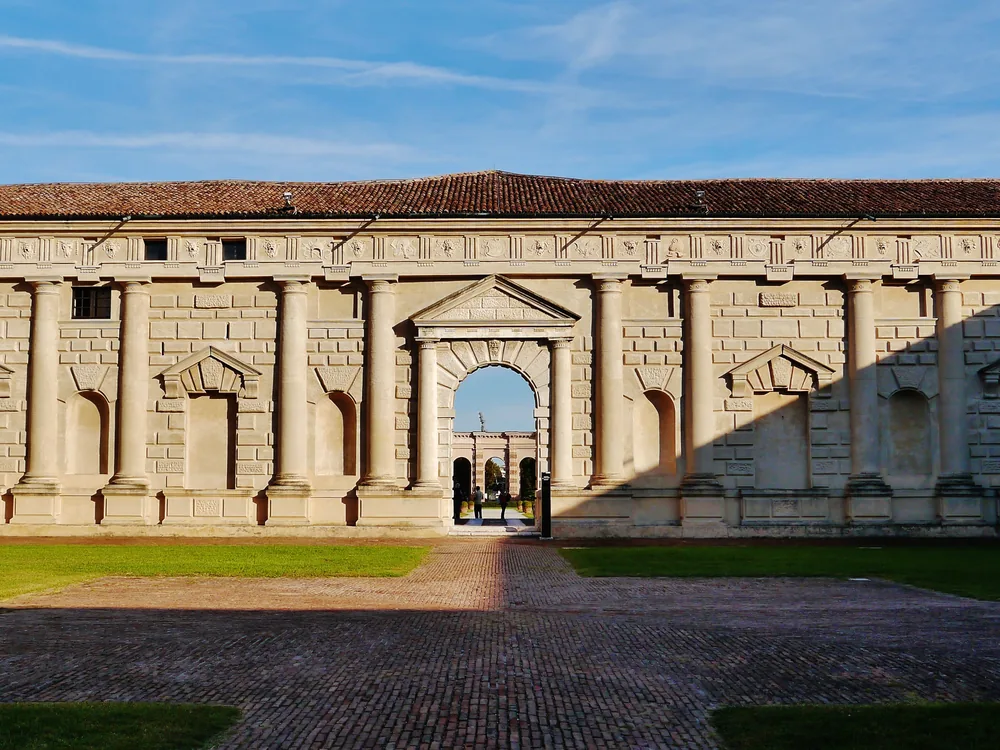
For visitors to Mantua: the Ducal Palace and [Palazzo Te](/castles/italy/palazzo-te) are the two primary Gonzaga sites in the city and together constitute one of the most concentrated encounters with Renaissance patronage and architecture available in Italy. Palazzo Te, designed by Giulio Romano between 1524 and 1534 for Federico II Gonzaga as a pleasure villa outside the city walls, has a very different character from the Ducal Palace — focused, single-building, theatrically Mannerist in its decoration — where the Ducal Palace is dispersed, labyrinthine, and historically stratified. The two buildings are 15 minutes' walk apart; both deserve at least two hours each.
History
Luigi Gonzaga seized Mantua from the rival Bonacolsi family in a Visconti-backed coup in 1328, beginning a Gonzaga rule that would last nearly four centuries and produce one of the most extraordinary palace complexes in Italy. The Castello di San Giorgio, the fortified northeastern tower that anchors the complex, was completed by the architect Bartolino da Novara in 1406. The decisive cultural moment came in 1460, when Marquis Ludovico III Gonzaga appointed Andrea Mantegna as court artist; between 1465 and 1474, Mantegna painted the Camera degli Sposi in the north tower of the Castello — the first fully illusionistic interior space in European art, its painted ceiling opening in a trompe-l'œil oculus onto a painted sky.
Federico II Gonzaga brought Giulio Romano to Mantua in 1524, setting in motion a second great period of architectural expansion. Romano added the Corte Nuova to the palace in the 1530s and built the Palazzo Te — a separate pleasure villa on the edge of the city — for the duke, who was elevated from marquis to Duke by Holy Roman Emperor Charles V in 1536. The sack of Mantua by Imperial troops during the War of the Mantuan Succession in 1628–30 destroyed much of the collection that had made the palace famous across Europe; the last Gonzaga duke died without heirs in 1708, and Austria absorbed the duchy. Napoleon's Italian campaigns removed further artworks in the 19th century.
The Italian state undertook systematic restoration throughout the 20th century and opened the complex as a national museum. The Camera degli Sposi has been protected as a fragile masterwork requiring conservation conditions.
How to Visit
Getting there: Mantua is on the Verona–Mantua–Modena rail line; direct trains from Verona (approximately 40 minutes). The Ducal Palace is in the city centre at Piazza Sordello 40, a 15-minute walk from Mantua train station. The historic centre is compact and walkable once you arrive.
Tickets: Walk-up entry €15 adult, €2 child. The GetYourGuide tour covers a 1-hour guided visit of the Ducal Palace and the Camera degli Sposi (Camera Picta) — a worthwhile option if you want expert context on Mantegna's frescoes and prefer not to wait for timed entry — book in advance.
Practical tips: Allow 2–3 hours for the full complex. At peak periods (summer, Easter) the wait for the timed-entry Camera degli Sposi can reach 30–60 minutes after entering — arrive at opening (09:00 Tuesday–Sunday) to minimise queuing. Spring (March–May) and early autumn offer the most comfortable conditions and smaller crowds. Some sections of the palace may be closed for restoration; check mantovaducale.beniculturali.it for current room access.
Combine with: Palazzo Te — the Gonzaga pleasure villa designed by Giulio Romano, 15 minutes' walk south of the Ducal Palace and together the essential Gonzaga architecture pairing in Mantua.
Frequently Asked Questions
The Camera degli Sposi (also called Camera Picta, or Painted Chamber) is a room in the Castello di San Giorgio tower of the Ducal Palace, frescoed by Andrea Mantegna between 1465 and 1474. Its significance lies in its ceiling: Mantegna painted a trompe l'oeil oculus through which putti and ladies appear to look down from the sky, the first fully illusionistic architectural ceiling in Western painting. The room's walls depict the Gonzaga family and their court as if present in the same space as the viewer, combining individual portraiture with architectural illusion in a way that influenced illusionistic ceiling painting for the next two centuries. It is the primary reason most art historians visit the Ducal Palace.
Location
Piazza Sordello 40, 46100 Mantova, Italy
Nearby Castles
Tours & Tickets
Powered by GetYourGuide
From
€15/ person