
Rocca of Gradara
Rocca di Gradara
Italy · Marche · Near Pesaro
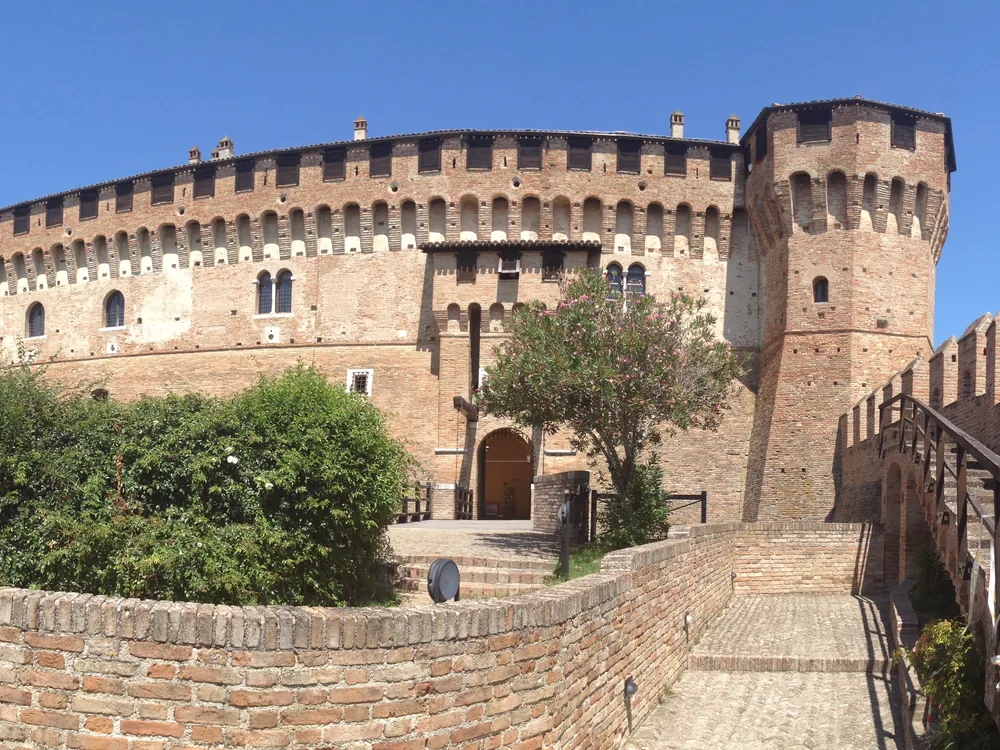
Built 1150 · Malatesta fortress in a fully intact walled hilltop village in the Marche; built c.1150 and expanded by the Malatesta family of Rimini in the 13th–14th century; classic Italian rocca — a combined military and residential tower within encircling walls; traditionally identified as the setting of the Dante episode of Paolo and Francesca (Inferno, Canto V), based on the killing of Gianciotto Malatesta's wife Francesca da Rimini and his brother Paolo c.1285; the surrounding borgo (walled village) is one of the best-preserved medieval settlements in the Marche
This page is part of an independent travel guide and is not affiliated with, endorsed by, or operated by Rocca of Gradara.
© Castles & Palaces
Quick Facts
- Hours
- Mon 09:00–14:00. Tue–Fri 09:00–18:30. Sat & Sun 09:00–19:30
- Entry via GetYourGuide
- €15
- Duration
- 2 hours
- Best time
- April to October
- Nearest city
- Pesaro
Featured Tour
Gradara: Entry Ticket to Rocca with Audio Guide App
Cancellation available · Instant confirmation
Highlights
- ✦Traditionally identified as the castle where Gianciotto Malatesta killed his wife Francesca and his own brother Paolo around 1285 — the killing that inspired the most celebrated episode in Dante's Inferno (Canto V)
- ✦A classic Italian rocca in a state of exceptional preservation, its rectangular mastio and encircling walls substantially intact since the Malatesta expansions of the 13th–14th century
- ✦The surrounding borgo of Gradara is one of the most completely preserved walled medieval villages in the Marche — the same circuit of walls, towers and medieval streets that existed in the 15th century
- ✦The Malatesta of Rimini, who built and expanded this fortress, were also the patrons who commissioned Leon Battista Alberti's Tempio Malatestiano — the first secular building of the Italian Renaissance
- ✦Located between Pesaro and Rimini on the Adriatic coast, in a region of the Marche characterised by an exceptional density of intact hilltop fortress towns
Skip the queue with a guided tour
Skip-the-line tickets & expert guides
In the fifth canto of the Inferno, Dante meets two souls blown eternally on a dark wind through the second circle of Hell — the punishment for the lustful. The woman is Francesca; the man is Paolo. Francesca speaks, and in the most lyrical passage of the entire Commedia, she tells Dante how it began: they were reading the story of Lancelot and Guinevere together, and at a certain moment Paolo kissed her. 'That day we read no further,' she says. The man who killed them — Gianciotto Malatesta, Francesca's husband and Paolo's own brother — is placed by Dante in the deepest circle of Hell, among the treacherous. The castle where the killing is said to have taken place, sometime around 1285, is the Rocca di Gradara — a Malatesta fortress on a hill in the Marche, now one of the best-preserved medieval castle complexes in central Italy.
The Malatesta were the dominant signori of Rimini from the 13th to the 15th century, one of the most powerful of the Italian Renaissance dynasties and patrons of extraordinary scope — the same family that later commissioned Leon Battista Alberti's Tempio Malatestiano in Rimini, widely considered the first secular building of the Italian Renaissance. The Rocca di Gradara was built by the Mosca and Malatesta families in the 12th and 13th centuries as a defensive stronghold controlling the coastal road between Romagna and the Marche. The core structure — a rectangular residential tower (mastio) surrounded by walls and towers — is a classic example of an Italian rocca: a form that served both military and signorial residential functions, and which Gradara exemplifies in an unusually intact state.
The historical Paolo and Francesca are documented. Francesca da Polenta married Gianciotto Malatesta (Giovanni Malatesta, the 'Lame') around 1275 as part of a political alliance between Polenta and Malatesta families; Gianciotto's more physically attractive brother Paolo served as a military commander and civil administrator in Rimini. The killing is referenced in contemporary sources. Whether it took place at Gradara specifically is a matter of historical debate — the Malatesta held multiple properties and no contemporary source definitively names the location. Gradara has been identified as the setting since the 19th century by a combination of local tradition, literary tourism, and straightforward commercial logic. The identification has no particular claim to historical authority, but it has given Gradara's rocca a specific cultural significance that more verifiably documented fortresses lack. The castle's fame is inseparable from Dante's telling; what the poem makes of the story — the tenderness, the grief, the refusal to condemn — is what most visitors come to feel in the rooms.
Gradara is not simply a castle — it is a complete fortified medieval settlement. The walls of the borgo enclose a village of medieval houses, towers and streets that has changed relatively little since the 15th century. Walking the circuit of the village walls, then entering the rocca through its gate tower, through the courtyard and into the mastio, produces a layered sense of medieval space that is increasingly rare. The rocca's rooms are decorated in a late medieval style aimed at evoking the period of Francesca's life; the tower offers views over the rolling Marche hills toward the Adriatic. The downloadable audio guide app (in English and Italian, included with the GetYourGuide entry ticket at €15) provides context for both the castle rooms and the borgo circuit. Note: reviews of the GetYourGuide audio guide app have been mixed — the castle itself is consistently rated as worth visiting for its architecture and the Dante connection.
The surrounding Marche region is one of the most rewarding in Italy for this kind of medieval heritage, and one of the least internationally known. Gradara is 20 km north of Pesaro and 40 km south of Rimini, in a landscape of rolling hills that descend to the Adriatic coast. The wider region contains an unusual density of well-preserved hilltop settlements — Urbino, with its extraordinary Palazzo Ducale (a Unesco World Heritage Site), is 35 km inland; Mondavio, Sassocorvaro, Corinaldo and the Sforza fortresses of Francesco di Giorgio Martini form a circuit of 15th-century defensive architecture that has no equivalent in Tuscany or Lombardy. Gradara works well as a single stop from Rimini or Pesaro, or as the first point on a longer Marche itinerary.
History
The hill of Gradara was fortified from at least the 12th century, when the Mosca family held the site. Control passed to the Malatesta family of Rimini in the 13th century, who expanded the castle into the characteristic rocca form that survives today — a rectangular mastio surrounded by walls, towers and a gatehouse, with a borgo of dependent settlement within the outer walls.
The event that gave Gradara its lasting fame occurred around 1285: Gianciotto Malatesta (Giovanni, the 'Lame') killed his wife Francesca da Polenta and his younger brother Paolo after discovering them together. The killing was recorded in contemporary sources and Dante, who probably met members of the Malatesta family, placed Francesca and Paolo in the second circle of Hell in the Inferno, written in the early 14th century. The fifth canto — Francesca's account of how it began, with a book and a kiss — is among the most read passages in Italian literature.
The Malatesta held Gradara until the early 16th century, when it passed to the Sforza and subsequently to the Papacy. The borgo and rocca remained largely intact through the following centuries, preserving one of the most complete examples of a walled medieval hilltop settlement in the Marche.
How to Visit
Getting there: Gradara is 20 km north of Pesaro and approximately 40 km south of Rimini. Public transport connections to the village are limited; most visitors arrive by car (parking available outside the borgo walls) or on organised day trips from Rimini or Pesaro. By car from Pesaro: approximately 30 minutes north on the SS16; Gradara is signed from the main coastal road.
Tickets: Direct castle admission is approximately €8. The GetYourGuide entry ticket includes admission and a downloadable audio guide app in English and Italian — free cancellation up to 24 hours in advance. Note: visitor reviews of the audio guide app itself have been mixed; the castle and borgo are consistently well rated for their architecture and atmosphere.
The borgo circuit: Allow time to walk the full circuit of the borgo walls before or after the rocca visit. The medieval village within the walls retains its original street plan and character almost entirely — a circuit that takes 30–45 minutes and gives the rocca visit its full context.
Practical tips: April to October.
Combine with: Urbino (35 km inland) — the Palazzo Ducale and the Raphael birthplace make a natural full-day extension. Rimini (40 km north) has the Tempio Malatestiano, commissioned by the same Malatesta dynasty that built Gradara, providing a direct architectural counterpoint.
Frequently Asked Questions
Partially. The historical figures of Francesca da Polenta and Paolo Malatesta (Gianciotto's brother) are documented, as is the fact that Gianciotto killed them both around 1285. Dante, who appears to have known members of the Malatesta family, placed them in the second circle of Hell in the Inferno — the most celebrated account of the story. Whether the killing took place at Gradara specifically is debated; no contemporary source names the location. Gradara has been associated with the story since the 19th century by local tradition rather than documentary evidence. The castle's significance is largely literary rather than strictly historical.
Location
Piazza dei Priori 1, 61012 Gradara, PU, Italy
Nearby Castles
Tours & Tickets
Powered by GetYourGuide
From
€15/ person