
Lateran Palace
Palazzo del Laterano
Italy · Rome, Lazio — Lateran district, adjacent to the Basilica of San Giovanni in Laterano · Near Rome
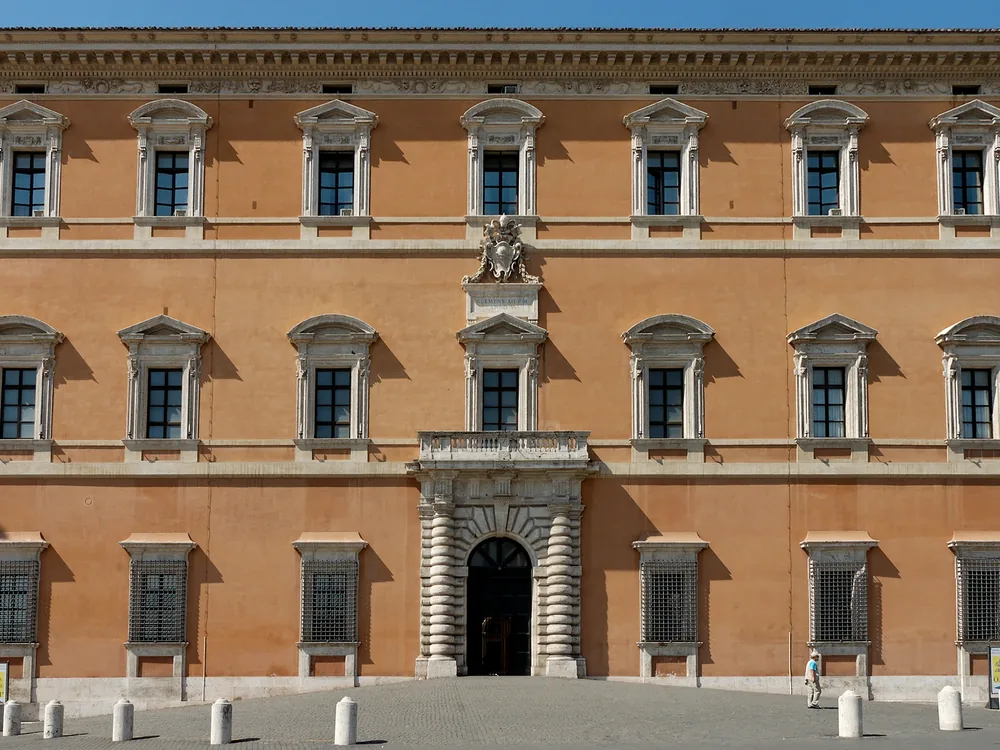
Built 1586 · Late Renaissance papal palace by Domenico Fontana — Pope Sixtus V commissioned the complete reconstruction of the medieval Lateran Palace between 1586 and 1589; the architect Domenico Fontana, who also designed the Sistine Library in the Vatican, built the current severe, blocky structure in the sober late-Renaissance manner characteristic of Counter-Reformation papal patronage; the building replaced the ruined medieval palace on the same site and incorporates a range of later interior decorations including 16th–19th century frescoes and baroque tapestries; the complex is extraterritorial property of the Holy See under the terms of the 1929 Lateran Treaty and technically outside Italian jurisdiction, like an embassy
This page is part of an independent travel guide and is not affiliated with, endorsed by, or operated by Lateran Palace.
© Castles & Palaces
Quick Facts
- Hours
- Daily 08:00–18:00
- Entry via GYG
- €14
- Duration
- 45 minutes–1 hour (audioguide circuit of 10 rooms); add 30–45 minutes for the adjoining Basilica of San Giovanni in Laterano (free entry, separate from the palace ticket)
- Best time
- Year-round
- Nearest city
- Rome
Featured Tour
The Lateran Palace with audioguide: Residence of the Popes
Cancellation available · Instant confirmation
Highlights
- ✦Nearly 1,000 years as the principal papal residence — from Constantine's donation of the property to Pope Miltiades in 313 CE until the Avignon Papacy forced the popes to France in 1309, the Lateran was the primary seat of the Bishop of Rome and the administrative centre of the Western Church — a tenure longer than the Vatican's has been
- ✦Sixtus V and Domenico Fontana's 1586–1589 reconstruction — when the popes returned to Rome from Avignon in 1377 and settled at the Vatican (since the Lateran lay in ruins after decades of neglect), the old palace became a memory; Pope Sixtus V demolished the ruins and commissioned Domenico Fontana to build the current structure from scratch in three years — one of the fastest large-scale building projects in Counter-Reformation Rome
- ✦A museum of 16th–19th century papal interiors — the audioguide circuit covers approximately 10 rooms and roughly 3,000 m² of gallery space decorated with frescoes and baroque tapestries from across three centuries; the rooms include formal reception halls, private apartments, and a loggia overlooking the piazza in front of the Basilica
- ✦San Giovanni in Laterano — Rome's actual cathedral — the Basilica of San Giovanni in Laterano adjoins the palace and is, technically, the Pope's cathedral as Bishop of Rome (not St. Peter's, which belongs to the Vatican); the Lateran baptistery beside it is one of the oldest Christian baptisteries in existence, dating to the 4th century
- ✦An extraterritorial enclave in Rome — under the 1929 Lateran Treaty between the Italian state and the Holy See, the Lateran Palace complex is extraterritorial property of the Holy See, legally outside Italian jurisdiction; the same treaty created Vatican City State and established the legal basis for the Church's territorial sovereignty in central Rome
Skip the queue with a guided tour
Skip-the-line tickets & expert guides
Before the Vatican was the centre of the Catholic world, there was the Lateran. For nearly a thousand years — from the moment Emperor Constantine donated the property to Pope Miltiades in 313 CE following the Edict of Milan, until the Avignon Papacy began in 1309 — the Lateran Palace was the primary residence of the popes and the administrative seat of the Western Church. The Vatican's rise to prominence as the centre of papal power came later, and largely by accident: when the popes returned from their seventy-year exile in Avignon and found the Lateran in ruins, they settled instead at the Vatican, and the centre of gravity of the papacy never moved back.
The original property belonged to the Laterani family — an old Roman aristocratic family whose most prominent member, Gaius Plautius Lateranus, was executed in 65 CE for involvement in a plot against Nero. The property subsequently came into imperial possession, and from there into Constantine's hands. His donation of it to the new pope in 313 was a transformative act: it established the Bishop of Rome as a possessor of real estate and administrative capacity in the imperial capital, a foundation for the institutional development of the papacy over the following centuries. The first major basilica on the Lateran site — the Basilica of San Giovanni in Laterano — was built immediately after Constantine's donation and remains Rome's oldest major basilica, predating St. Peter's by the better part of a century.
Over the following millennium, the Lateran complex grew into the seat of papal government: synods were held here, councils assembled, papal elections conducted, and the administrative machinery of the medieval Church operated from these buildings. Thirteen Ecumenical Councils were convened at the Lateran between 649 and 1517 — the Lateran Councils rank among the most consequential ecclesiastical assemblies of the medieval period, their decisions shaping canon law, church discipline, and the relationship between the papacy and the secular powers of Europe.
The medieval palace was damaged repeatedly — by fire, by earthquake, and by the extended neglect of the Avignon period, when no pope resided in Rome for roughly seventy years. When Pope Gregory XI returned from Avignon to Rome in 1377, the Lateran was in such poor condition that the papal court settled instead at the Vatican, where the popes had maintained a secondary residence near the tomb of St. Peter. The Lateran's formal role diminished accordingly, though it retained its symbolic significance as the seat of the Bishop of Rome and the location of his cathedral.
The decisive structural intervention came under Pope Sixtus V, whose brief but intensely productive pontificate (1585–1590) reshaped large sections of Rome. In 1586, Sixtus ordered the complete demolition of what remained of the medieval palace and commissioned his preferred architect, Domenico Fontana, to build an entirely new structure on the same footprint. Fontana — who had recently moved the massive Egyptian obelisk from the Circus Maximus to the piazza in front of the Basilica and was simultaneously building the Sistine Library in the Vatican — completed the new Lateran Palace in three years, an extraordinary pace for a building of its scale. The result was a severe, four-storey block in the sober late-Renaissance style characteristic of Counter-Reformation patronage: functional, imposing, unornamented on the exterior, and decorated on the interior with the frescoes and tapestries that now form the museum circuit.
The building's administrative and ceremonial function evolved across the following centuries. The 1929 Lateran Treaty, signed between the Italian state under Mussolini and the Holy See, established Vatican City as a sovereign state and simultaneously confirmed the extraterritorial status of the Lateran Palace — it remains, technically, the property of the Holy See and outside Italian jurisdiction, as if it were a large embassy in the middle of Rome.
Today the palace functions as the residence and administrative seat connected to the Bishop of Rome role — the Pope's position as the specific bishop of the Diocese of Rome, distinct from his role as head of the universal Church — and as a museum circuit accessible to the public via audioguide. The visit covers approximately ten rooms on the main floor, totalling roughly 3,000 square metres: formal reception halls with baroque tapestries, painted galleries with 16th–19th century frescoes, and a loggia overlooking the piazza and the obelisk in front of the Basilica. The pace is unhurried and the crowds minimal compared to the Vatican Museums, which absorb the vast majority of tourists interested in papal history and art.
The Basilica of San Giovanni in Laterano — Rome's actual cathedral, as the cathedral of the Bishop of Rome — is free to enter and adjoins the palace on the same piazza. The Lateran baptistery beside it dates to the 4th century and is among the oldest surviving Christian baptisteries in the world.
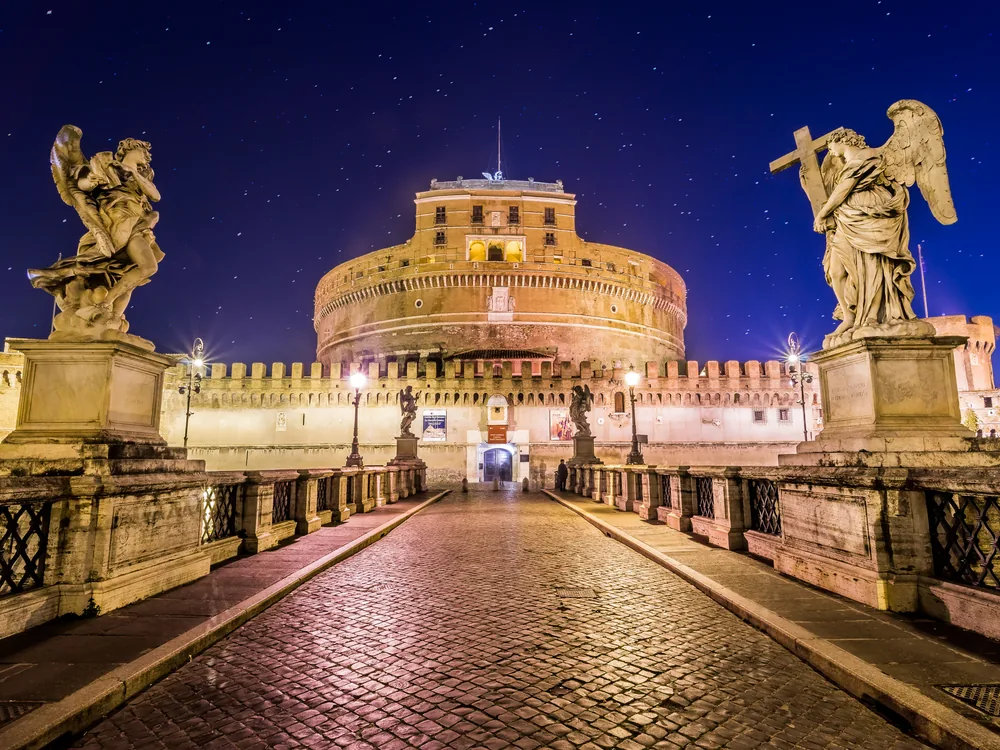
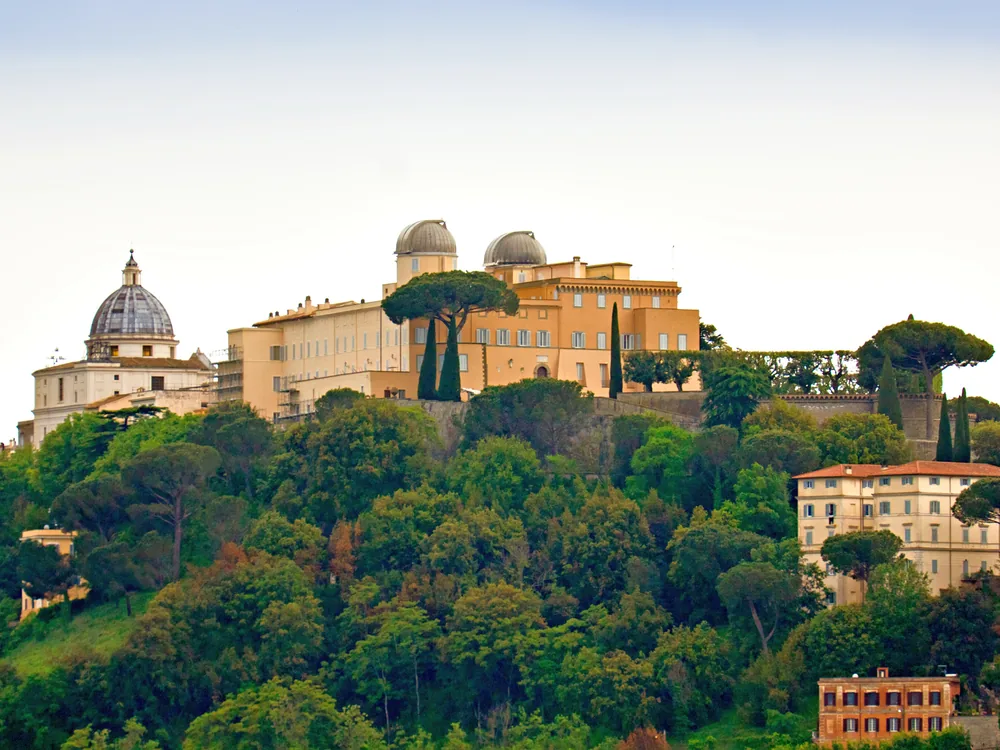
[Castel Sant'Angelo](/castles/italy/castel-santangelo), the former mausoleum of Emperor Hadrian converted into a papal fortress and later a museum, is approximately 4km northwest across Rome — the other indispensable monument of papal military architecture in the city. [Castel Gandolfo](/castles/italy/castel-gandolfo), the papal summer residence in the Alban Hills, is approximately 25km southeast.
History
Emperor Constantine donated the Lateran property to Pope Miltiades in 313 CE following the Edict of Milan, and the Lateran Palace became the primary residence of the popes and the seat of the Church in Rome for nearly a thousand years. The Basilica of San Giovanni in Laterano and the Lateran baptistery were built on the same complex in the 4th century. Between 649 and 1517, thirteen Lateran Councils were convened at the palace, shaping medieval canon law and Church governance across eight centuries.
The Avignon Papacy (1305–1377), during which the popes resided in France, allowed the Lateran Palace to fall into serious disrepair. Pope Gregory XI's return to Rome in 1377 did not restore the Lateran: he settled at the Vatican instead, ending the palace's function as the primary papal residence. A fire in 1308 had already damaged the Lateran Basilica and adjoining structures. By the late 16th century the medieval palace was a ruin, and Pope Sixtus V ordered its complete demolition in 1586; Domenico Fontana constructed the current building in three years, one of the fastest major building projects of the Counter-Reformation papacy.
The Lateran Treaty of 1929, which established the Holy See's sovereignty over Vatican City and normalised relations with the Italian state, confirmed the Lateran Palace's extraterritorial status. The museum circuit is open to visitors via audioguide; residence and administrative functions continue within the complex.
How to Visit
Getting there: The palace is at Piazza di San Giovanni in Laterano, adjacent to the Basilica of San Giovanni. Take Metro Line A to San Giovanni station (5-minute walk). Multiple bus lines also serve Piazza San Giovanni. The site is approximately 3km southeast of the Colosseum.
Tickets: Walk-up admission is €15 per adult (children free). The GYG audioguide ticket (t594120, from €14, 4.7★/3 reviews) covers the palace museum circuit of approximately 10 rooms with audioguide; an optional add-on for a guided visit to the Basilica, Cloister, and Sancta Sanctorum is available when booking.
Practical tips: Combine the palace visit with the adjoining Basilica of San Giovanni in Laterano (Rome's actual cathedral — free entry) and the 4th-century Lateran baptistery next door. Together the complex takes about 1.5 hours and is far less crowded than the Vatican Museums.
Combine with: [Castel Sant'Angelo](/castles/italy/castel-santangelo) and [Castel Gandolfo](/castles/italy/castel-gandolfo).
Frequently Asked Questions
The Lateran became the papal seat in 313 CE when Emperor Constantine donated it to Pope Miltiades — nearly a thousand years before the popes settled at the Vatican as their primary residence. The Vatican's rise came when the popes returned from their Avignon exile in 1377 and found the Lateran in ruins; they moved to the Vatican instead, and never returned to the Lateran as their main home. St. Peter's and the Vatican Museums are therefore the residence of the medieval and modern papacy, while the Lateran preserves the first thousand years of papal Roman history.
Location
Piazza di San Giovanni in Laterano, 4, 00184 Rome, Italy
Nearby Castles
Tours & Tickets
Powered by GetYourGuide
From
€14/ person