
Palazzo delle Papesse
Palazzo delle Papesse
Italy · Tuscany, Siena — historic centre, Via di Città · Near Siena
Built 1460 · 15th-century Sienese Renaissance palace — designed by Bernardo Rossellino for the Piccolomini family in the 1460s, during the pontificate of Pope Pius II (a Piccolomini); the building follows the Florentine Renaissance palace model (three-storey ashlar facade, rectangular windows with molded surrounds, internal courtyard loggia) adapted to Sienese urban conditions; the name 'Papesse' (female popes or papal women) refers to the female relatives of Popes Pius II and Pius III who occupied the palace; it was previously used as the home of the Centro d'Arte Contemporanea (CCC) Siena from 1998 to 2011 and has since been returned to more intimate cultural and wine-event use
This page is part of an independent travel guide and is not affiliated with, endorsed by, or operated by Palazzo delle Papesse.
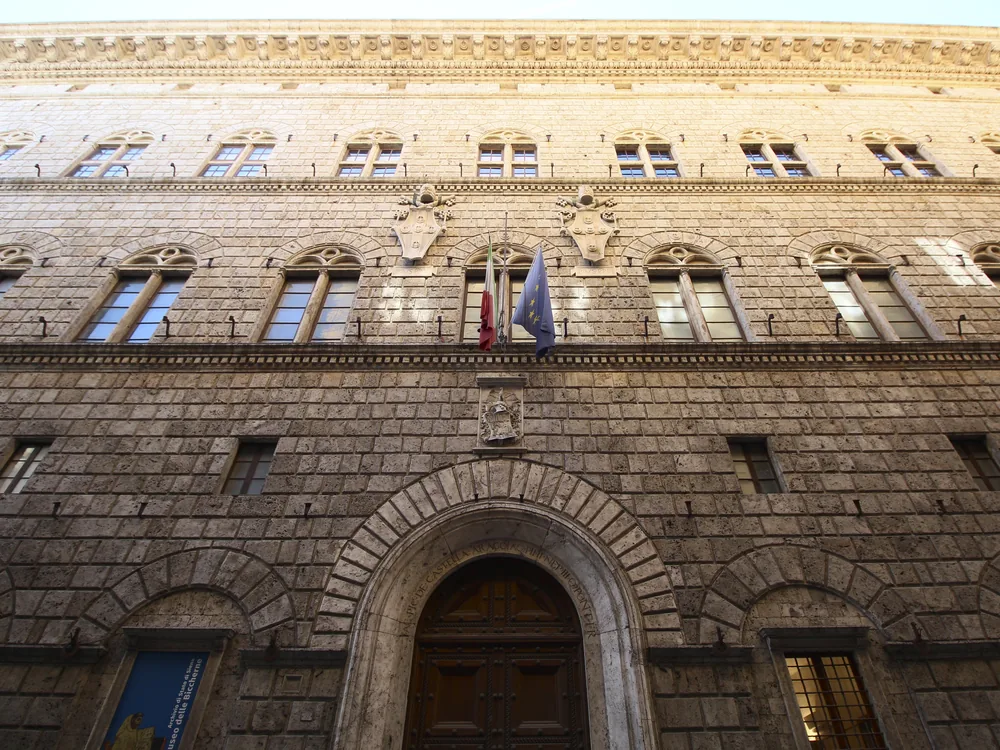
© Castles & Palaces
Quick Facts
- Hours
- Tue–Sun 11:00–18:00. Closed Mon
- Guided tour from
- €25
- Duration
- 1 hour (wine tasting in courtyard + panoramic terrace access)
- Best time
- May to October
- Booking
- Required — book 1+ days ahead
- Nearest city
- Siena
Featured Tour
Siena: Palazzo delle Papesse Wine Tasting in the Courtyard + Panoramic Terrace
Cancellation available · Instant confirmation
Highlights
- ✦The 'Papesse' — the palazzo's name refers to the female relatives (daughters, sisters, nieces) of the Piccolomini popes — Pius II (Enea Silvio Piccolomini, elected 1458) and Pius III (Francesco Todeschini Piccolomini, elected 1503) — who occupied the palace; the term 'Papessa' combines 'Papa' (pope) with the feminine suffix, creating the nickname for these powerful women of the papal family
- ✦Panoramic rooftop terrace — access to a terrace with views over Siena's UNESCO World Heritage historic centre: the Torre del Mangia, the Duomo's striped marble facade, the Campo below, and the Tuscan hillscape extending toward Monteriggioni and Chianti to the north
- ✦Courtyard wine tasting — Tuscan wines served in the Renaissance loggia courtyard of the palazzo; the setting combines architectural quality (15th-century Sienese Renaissance stonework) with a working wine experience in a space rarely accessible to the public
- ✦Bernardo Rossellino's design — the palazzo was commissioned by the Piccolomini family during the pontificate of Pius II, the great humanist pope who also commissioned the Piccolomini Library in the Siena Cathedral and the planned Renaissance city of Pienza; the Palazzo delle Papesse is his family's Siena residence from the same cultural moment
- ✦Via di Città position — the palazzo sits on Siena's principal historic street, 50 metres from the Campo; its street facade is one of the finest Renaissance residential buildings in the city, often overlooked by visitors rushing between the Piazza del Campo and the Duomo
- ✦18+ only experience — the GetYourGuide wine tasting is explicitly for adult visitors (18+); not suitable for children or pregnant visitors; a small-group, appointment-based visit with a more intimate character than the city's main monument visits
Skip the queue with a guided tour
Skip-the-line tickets & expert guides
The Palazzo delle Papesse stands on Via di Città — the main street connecting Siena's Piazza del Campo to the Piazza del Duomo — a few metres above the descent toward the Campo's curve. The building's Renaissance ashlar facade, its three storeys of molded windows and its distinctive Piccolomini arms above the entrance, is one of the most distinguished on a street of distinguished buildings; it is, consistently, the one that most tourists photograph without knowing what it is.
The name requires explanation. 'Papesse' — 'female popes' or 'papal women' — is the nickname given to the palazzo because it was built for and occupied by the female relatives of two Piccolomini popes. Pius II (Enea Silvio Piccolomini, 1405–1464) was the great humanist pope of the 15th century: a poet, a diplomat, a geographer, and the pope who commissioned the Piccolomini Library in the Siena Cathedral, whose walls are frescoed with scenes from his life by Pinturicchio. His family, one of the most powerful in Siena, also commissioned this palazzo — built by Bernardo Rossellino, the Florentine architect who was Pius II's primary building executor and who also designed the planned Renaissance city of Pienza, 55 kilometres south. Pius III (Francesco Todeschini Piccolomini, 1439–1503) was his nephew, elected pope in 1503 and dead after 26 days in office — a reign so brief that almost no historical record connects to it, but whose Piccolomini family continued to occupy the Via di Città palace.
The palazzo was used from 1998 to 2011 as the Centro d'Arte Contemporanea CCC Siena — a contemporary art centre that used the Renaissance rooms and the courtyard for modern and contemporary exhibitions. Since the CCC's closure, the building has returned to more intimate cultural use. The GetYourGuide experience accesses two elements that are not available on ordinary walk-in visits: the internal loggia courtyard and the panoramic rooftop terrace.
The courtyard wine tasting takes place in the Renaissance loggia — the colonnaded ground-floor gallery that faces inward to the palazzo's private garden and creates the characteristic light-and-shadow architecture of the Italian palazzo courtyard tradition. Tuscan wines are served here; the exact selection varies by session. The setting combines the quality of Sienese 15th-century stonework with a working wine experience in a space that the street facade gives no indication of existing behind it — a classic interior-concealing Sienese palace reveal.
The panoramic terrace, accessible as part of the same experience, offers views that are difficult to replicate elsewhere in Siena at this height and this proximity to the Campo. The Torre del Mangia — the 14th-century civic tower, 102 metres, the second-tallest medieval tower in Italy — is directly visible. The Duomo's striped marble facade and the Gothic campanie close the view to the north. The Tuscan countryside — the Crete Senesi's clay badlands to the southeast, the Chianti hills to the north, the ridge of Monteriggioni to the northwest — fills the far distances on clear days.
The 18+ requirement (explicitly stated in the GetYourGuide listing, which also notes it is not suitable for pregnant visitors) reflects the wine-tasting format and the intimate, adult-oriented atmosphere of the experience. This is not a family monument visit but a small-group cultural wine experience in an extraordinary space. The non-refundable booking policy should be noted before committing — as GetYourGuide describes it, the product is non-refundable regardless of weather or other circumstances.
Siena's UNESCO World Heritage historic centre (inscribed 1995) is the wider context for the palazzo visit. The city is one of the best-preserved medieval Italian cities — the Campo (the world's finest piazza, arguably), the Duomo, the network of medieval contrade (neighbourhood associations, each with their own church and museum), and the street pattern that 20th-century development barely touched are all within walking distance. The Palazzo delle Papesse visit is most naturally combined with a full Siena day: the Campo in the morning, the Duomo and Piccolomini Library mid-morning, Via di Città and the palazzo wine experience in the late afternoon.
History
Piccolomini family commissions the palazzo c.1460–1465, during the pontificate of Pope Pius II; architect Bernardo Rossellino. Built for the female relatives of the Piccolomini popes (Pius II and Pius III), giving it the 'Papesse' nickname. Palace remains in Piccolomini family use through the early modern period. 19th–20th century: various institutional and private uses. 1998: converted to Centro d'Arte Contemporanea CCC Siena — a contemporary art centre. 2011: CCC Siena closes. Current use: cultural and wine-event venue, with courtyard and terrace access via appointment.
How to Visit
Getting there: Via di Città 126, a 2-minute walk from the Piazza del Campo. From Siena's main bus terminal (Piazza Gramsci): 10 minutes on foot through the historic centre. Siena is accessible by bus from Florence (approximately 1.5 hours, Tiemme/Flixbus) and by train from Florence via Empoli (approximately 1.5 hours). No cars are permitted inside the historic centre.
Tickets: Walk-up entry €10 adult, free child. The GetYourGuide experience is an appointment-based 1-hour session including Tuscan wine tasting in the Renaissance courtyard loggia plus access to the panoramic rooftop terrace — 18+ only (not suitable for children or pregnant visitors), non-refundable — book in advance, as this is not a walk-in visit.
Practical tips: Open Tuesday–Sunday 11:00–18:00; closed Monday. The wine tasting experience is the primary reason to visit; the palazzo's interior is not a conventional museum but a heritage space used for cultural events and by-appointment experiences. The courtyard and terrace are at their best in warm weather (May–October). The palazzo sits on Via di Città 50 metres above the Campo — factor it into a Siena day that also includes the Campo and Duomo, ideally in the afternoon when the terrace light is best.
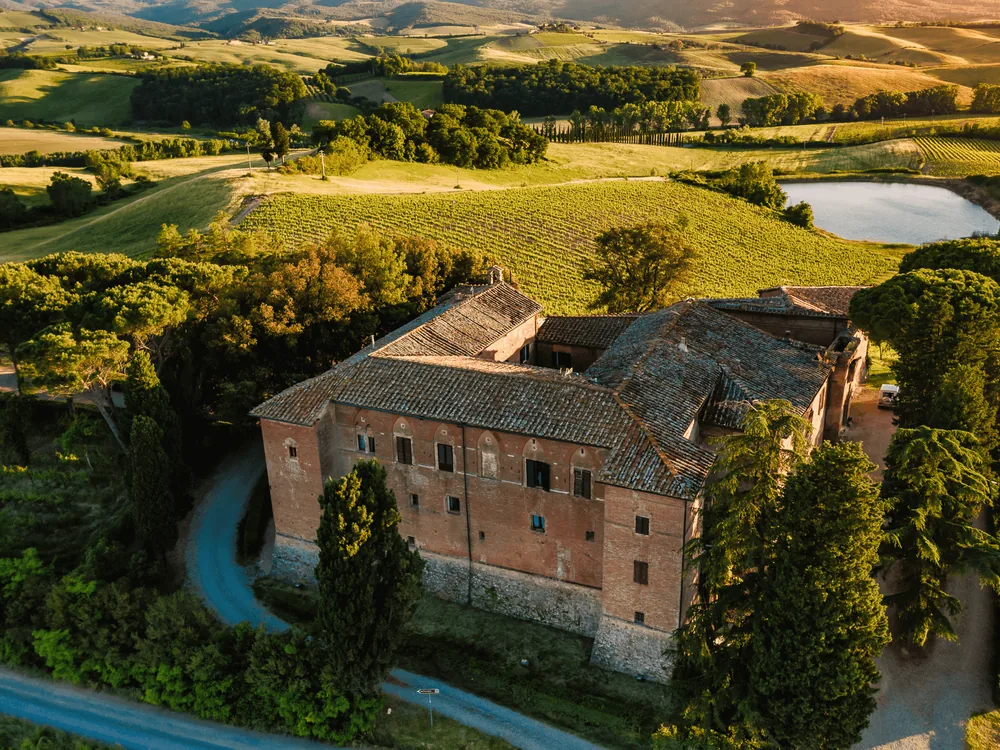
Combine with: Castello Tricerchi — a Sienese-area castle in the Maremma hills southwest of Siena, pairable as part of a wider Tuscany itinerary.
Frequently Asked Questions
The nickname 'Papesse' (roughly 'female popes' or 'papal women') refers to the female relatives of the Piccolomini popes — Pius II and his nephew Pius III — who occupied the palazzo after its construction. The term combines the Italian 'Papa' (pope) with the feminine suffix, creating a word for the pope's female family members. The historical association with two popes and their family makes this one of the more unusual palace nicknames in Tuscany.
Location
Via di Città 126, 53100 Siena, Italy
Nearby Castles
Tours & Tickets
Powered by GetYourGuide
From
€25/ person