
Palazzo Imperiale
Palazzo Imperiale
Italy · Liguria — Via Garibaldi (Strada Nuova), historic centre of Genoa · Near Genoa
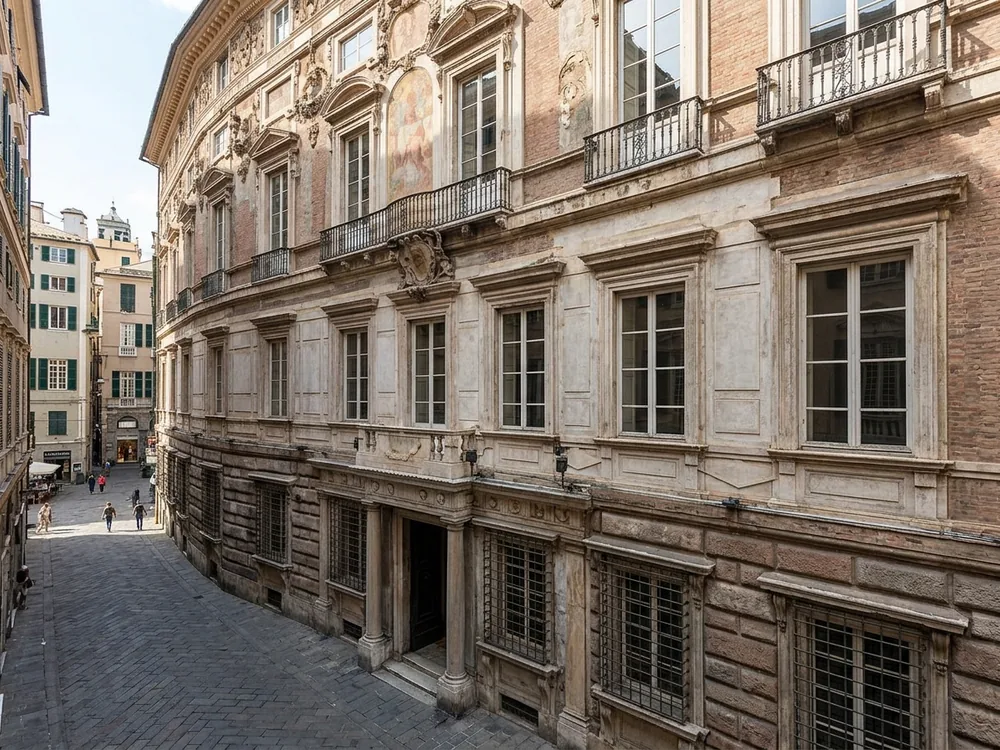
Built 1560 · Late Renaissance palace by Giovanni Battista Castello ("il Bergamasco"); frescoes by Luca Cambiaso; part of the UNESCO Rolli system; still privately owned by the Imperiale family
This page is part of an independent travel guide and is not affiliated with, endorsed by, or operated by Palazzo Imperiale.
© Castles & Palaces
Quick Facts
- Hours
- Mon–Sun Guided tour only — check availability
- Guided tour from
- €15
- Duration
- 2.5 hours (combined tour covering all four Rolli palaces)
- Best time
- Year-round
- Booking
- Required — book 1+ days ahead
- Nearest city
- Genoa
Featured Tour
Guided Tour of Rolli Palaces UNESCO Site, Genoa
Cancellation available · Instant confirmation
Highlights
- ✦Built around 1560 by Giovanni Battista Castello ("il Bergamasco") for Gio Vincenzo Imperiale — one of three palaces in this Rolli tour designed by the same architect within a decade, a remarkable concentration of one master's work on a single street
- ✦Decorated with frescoes by Luca Cambiaso, one of the most important painters of the Genoese Renaissance, whose work helped define the visual character of the Republic's 16th-century Golden Century interiors
- ✦Registered in the Rolli — the Republic of Genoa's official Senate-decreed list of private residences fit to house visiting heads of state — from 1576 to 1664, across nearly nine decades of the system's operation
- ✦Sits at the end of Via Garibaldi, the "Strada Nuova" that gives the UNESCO World Heritage inscription its full name — a street that was itself a planned aristocratic showcase, laid out from scratch in the 1550s to house the Republic's elite
- ✦Still privately owned by the Imperiale family, the only one of the four palaces in this Rolli tour to have remained in its founding family's hands since the 16th century
Skip the queue with a guided tour
Skip-the-line tickets & expert guides
In the mid-16th century, the Republic of Genoa faced a problem that no other major Italian power had: it was one of the wealthiest commercial and financial forces in Europe, yet it had no royal court, no resident prince, and no single public palace capable of housing the visiting heads of state who sought its banking connections and naval resources. The Genoese solution was characteristically republican and bureaucratic — a Senate decree in 1576 creating the Palazzi dei Rolli, an official list of private noble residences judged worthy of hosting visiting dignitaries. When a state guest arrived, lots were drawn to determine which Rolli-registered family would receive them. Palazzo Imperiale was one of those houses — built some sixteen years before the decree itself, as if Gio Vincenzo Imperiale had anticipated the need.
The palace was constructed around 1560 by Giovanni Battista Castello, the architect known as "il Bergamasco" — the same master responsible for Palazzo Lomellino and Palazzo Tobia Pallavicino on the same street, all three built within a single decade on what was then a newly laid-out aristocratic showcase: the Via Garibaldi, then called the Strada Nuova. Castello's design follows the controlled language of Genoese Late Renaissance architecture — a restrained exterior that opens inward to frescoed rooms whose decoration carries the visual weight of the building.
That decorative programme was entrusted to Luca Cambiaso, the most important Genoese painter of the 16th century. Where Perin del Vaga, working at Villa del Principe for Andrea Doria a generation earlier, had brought the Roman High Renaissance to Genoa, Cambiaso developed a distinctly Ligurian visual character — a handling of light and form that eventually earned him a commission from Philip II of Spain for the El Escorial chapel ceiling. His frescoes at Palazzo Imperiale represent the defining expression of the Genoese Golden Century interior: technically sophisticated, tonally distinctive, and inseparable from the building's claim to represent the Republic at its zenith.
What makes Palazzo Imperiale singular among the four palaces on this Rolli tour is the thread of ownership that has never been cut. While Palazzo Rosso was bequeathed to the city, and the other Rolli palaces changed hands through marriage, inheritance, and institutional transfer, Palazzo Imperiale remains the property of the Imperiale family — the only one of the four to have stayed in its founding family's possession continuously since the 16th century. The guided tour enters a building that is simultaneously a historic monument and a working private property: a distinction that no amount of restoration can manufacture.
History
The Republic of Genoa reached the peak of its commercial and financial influence in the second half of the 16th century — a period its historians would call the "Golden Century" — as Genoese banking houses financed the Spanish Crown and merchants controlled much of the silver trade from the Americas. The Via Garibaldi, then known as the Strada Nuova, was planned from scratch in the 1550s as an aristocratic showcase for the republic's elite, its palaces designed by the best architects the city could commission. Gio Vincenzo Imperiale engaged Giovanni Battista Castello — "il Bergamasco" — to build his residence around 1560, then commissioned Luca Cambiaso to fresco the interior rooms in the years that followed. When the Republic's Senate created the Palazzi dei Rolli system in 1576, Palazzo Imperiale was registered in the official list, remaining there for nearly nine decades until 1664. The palace remained in Imperiale family hands through every subsequent upheaval — Genoese independence, French occupation, absorption into the Kingdom of Sardinia — and passed intact into the modern era. The UNESCO inscription of 2006, recognising the Rolli system as a whole, added an international designation to a building that had already accumulated five centuries of unbroken private history.
How to Visit
Getting there: Palazzo Imperiale is on Via Garibaldi (also known as Strada Nuova) in central Genoa — a UNESCO World Heritage street walkable from Piazza Fontane Marose, Piazza Corvetto, and Genoa's main shopping streets. The nearest metro station is De Ferrari (~5 minutes' walk). The guided tour meets at a designated Via Garibaldi meeting point — confirm the exact address when booking.
Tickets: There is no independent walk-up access. The shared Rolli Palaces guided tour — a 2.5-hour bilingual Italian/English tour covering all four palaces on this ticket: Palazzo Imperiale, Palazzo Rosso, Palazzo Lomellino, and Palazzo Tobia Pallavicino — is the only way to visit the interior. Book in advance; tour slots can fill on weekends and during Genoa's spring and autumn high seasons.
Practical tips: The tour runs for 2.5 hours and covers four palaces — the pacing is efficient but fairly dense. The bilingual Italian/English format means some explanations may feel slightly longer if you're only following one language. The street itself — Via Garibaldi — is worth walking slowly before or after the tour to appreciate the complete ensemble of Renaissance facades that earned the UNESCO inscription.
Combine with: Villa del Principe (Andrea Doria's nearby waterfront palace — the only other Genoese palace currently on the site, built slightly earlier than the Via Garibaldi cluster for the Admiral who made Genoa a Hapsburg ally) and Palazzo Lomellino and Palazzo Tobia Pallavicino — the other two Bergamasco-designed palaces on the same tour, both also on Via Garibaldi.
Frequently Asked Questions
Gio Vincenzo Imperiale commissioned the palace around 1560, engaging the architect Giovanni Battista Castello — known as "il Bergamasco" — as designer. Castello was simultaneously at work on Palazzo Lomellino and Palazzo Tobia Pallavicino on the same street, making Palazzo Imperiale one of three Via Garibaldi palaces by the same architect built within a single decade. The frescoes inside were painted by Luca Cambiaso, the most important Genoese painter of the 16th century.
Location
Via Garibaldi, 16121 Genoa, Liguria, Italy
Nearby Castles
Tours & Tickets
Powered by GetYourGuide
From
€15/ person