
Palazzo Tobia Pallavicino
Palazzo Carrega-Cataldi
Italy · Liguria — Via Garibaldi (Strada Nuova), historic centre of Genoa · Near Genoa
Built 1561 · Late Renaissance palace by Giovanni Battista Castello ("il Bergamasco"), 1558–1561; Rococo Golden Gallery (Galleria Dorata) added 1704 by the Carrega family; now owned by the Genoa Chamber of Commerce; also known as Palazzo Carrega-Cataldi
This page is part of an independent travel guide and is not affiliated with, endorsed by, or operated by Palazzo Tobia Pallavicino.
© Castles & Palaces
Quick Facts
- Hours
- Mon–Sun By guided tour only — check schedule
- Guided tour from
- €15
- Duration
- 2.5 hours (combined tour covering all four Rolli palaces)
- Best time
- Year-round
- Booking
- Required — book 1+ days ahead
- Nearest city
- Genoa
Featured Tour
Guided Tour of Rolli Palaces UNESCO Site, Genoa
Cancellation available · Instant confirmation
Highlights
- ✦The earliest of the three Bergamasco-designed palaces on Via Garibaldi, built 1558–1561 for Tobia Pallavicino — a founding commission on what became the most architecturally consistent Renaissance street in Italy
- ✦The ground-floor and main-floor vestibules are lined with late-Renaissance stucco grotesque ornament and painted panels — the original decorative programme intact beneath the 18th-century additions
- ✦The Galleria Dorata (Golden Gallery), added in 1704 by the Carrega family, is one of the finest Rococo interiors in Genoa — every surface in gilded stucco, carved wood, mirrors, and frescoes by Lorenzo De Ferrari
- ✦A four-act ownership chain: Tobia Pallavicino builds it (1558), the Carrega family adds the Golden Gallery (1704), the Cataldi barons acquire it (1830), and the Genoa Chamber of Commerce purchases it (1922) and maintains it today
- ✦Chamber of Commerce ownership since 1922 has kept the palace undivided and in continuous institutional use — preventing subdivision, funding restoration, and making the Rolli guided tour access possible
Skip the queue with a guided tour
Skip-the-line tickets & expert guides
The Galleria Dorata — the Golden Gallery — is the visual centrepiece of Palazzo Tobia Pallavicino and the single most spectacular room among the four palaces on the Rolli guided tour. Added by the Carrega family in 1704, a full century and a half after the original palace was completed, it covers every surface — walls, vaulted ceiling, furnishings, and mirrors — in gilded stucco, carved wood, and frescoes by Lorenzo De Ferrari, the leading Genoese painter of the early 18th century. The Galleria Dorata is a textbook example of how a Renaissance palace becomes a Rococo palace without demolishing its structure: the Carrega family did not rebuild Giovanni Battista Castello's original shell; they layered an interior that expressed their own period's taste with unrestrained confidence across a late-Renaissance building, giving the palace two distinct architectural identities that coexist today.
The palace's four chapters of ownership are embedded in its names. Built in 1558–1561 for Tobia Pallavicino — making it the earliest of the three Bergamasco-designed palaces on Via Garibaldi — it passed to the Carrega family in 1704, who commissioned the Golden Gallery and gave the building its architectural signature. The Cataldi barons acquired it in 1830, and the composite name Palazzo Carrega-Cataldi has persisted since; it is the name used by the Genoa Chamber of Commerce, which purchased the building in 1922. That institutional acquisition was consequential: Chamber of Commerce ownership prevented the palace from being subdivided, funded successive restoration campaigns, and is the direct reason the building stands intact and accessible to visitors through the Rolli guided tour today.
The original 16th-century decorative programme is most legible in the vestibules — the ground-floor and main-floor entrance spaces where Bergamasco's late-Renaissance stucco in grotesque ornament and painted panels survive largely intact beneath the Rococo overlay. First-time visitors often move through these rooms quickly on the way to the Galleria Dorata; returning attention to them rewards the effort, since they represent the palace's founding aesthetic before the Carrega transformation and demonstrate the specific decorative vocabulary that Bergamasco deployed across all three of his Via Garibaldi commissions.
Access to Palazzo Tobia Pallavicino is through the guided Rolli Palaces tour, a 2.5-hour bilingual Italian/English circuit covering all four Via Garibaldi Rolli palaces. The guide's commentary in the Galleria Dorata — explaining the De Ferrari fresco programme, the specific Rococo ornamental vocabulary, and the logic of the Carrega family's transformation of a Bergamasco shell — is the key that makes the room fully legible to first-time visitors.
History
Via Garibaldi took shape in the 1550s as Genoa's most ambitious planned residential street. Tobia Pallavicino was among the first to build on it, commissioning Giovanni Battista Castello — "il Bergamasco" — to design a late-Renaissance palace completed by 1561, the earliest of the Bergamasco trio on the street. The building's original stucco vestibules decorated with grotesque ornament established the architectural vocabulary Bergamasco would develop across two further Via Garibaldi commissions within the decade. For more than a century the palace served within the Rolli system — one of the noble residences placed by Senate decree at the disposal of visiting state dignitaries. In 1704 the Carrega family acquired the property and commissioned Lorenzo De Ferrari to add the Galleria Dorata: a Rococo showpiece covering every surface in gilded stucco, carved wood, and fresco. The Cataldi barons purchased the palace in 1830, lending it the composite name Palazzo Carrega-Cataldi still used today. The Genoa Chamber of Commerce acquired the building in 1922, keeping it undivided and funding the restoration campaigns that preserved its architectural fabric through the following century. The palace entered the UNESCO World Heritage System in 2006 as part of the Rolli inscription.
How to Visit
Getting there: Palazzo Tobia Pallavicino is at Via Garibaldi 4, at the lower end of the street as you approach from Piazza Fontane Marose — the first of the four palaces you'd encounter walking up Via Garibaldi from the eastern entrance. The nearest metro station is De Ferrari (~5 minutes' walk). The guided tour starting point will be confirmed when booking.
Tickets: Access is via the guided Rolli Palaces tour — a 2.5-hour bilingual Italian/English tour including Palazzo Tobia Pallavicino alongside Palazzo Imperiale, Palazzo Rosso, and Palazzo Lomellino. The Golden Gallery is the centrepiece of this stop; confirm it is included in the tour's current itinerary when booking.
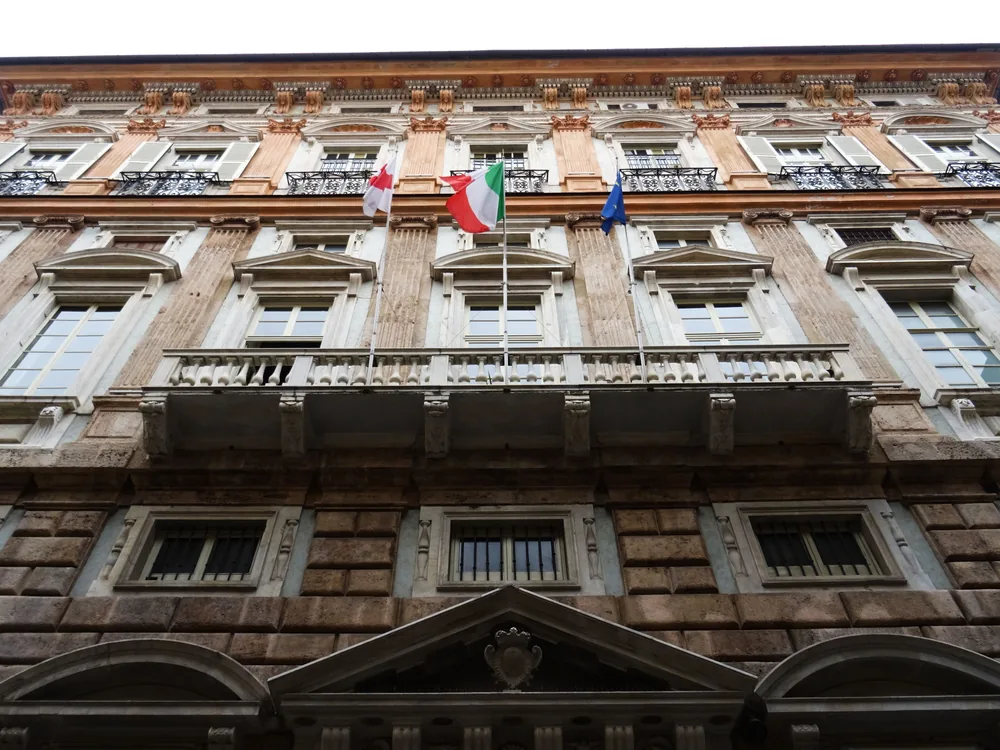
Practical tips: The Golden Gallery is easy to underestimate from the exterior — the palace's street facade is relatively understated. Insist on seeing the Galleria Dorata specifically, and take time inside it. The stucco vestibules on the ground and main floors are also impressive once you know to look for them — the original Renaissance decoration programme under the Rococo overlay. The tour's bilingual Italian/English format covers all four palaces; the guide's commentary in the Galleria Dorata is particularly valuable for understanding the De Ferrari frescoes.
Combine with: Palazzo Lomellino (one of the three Bergamasco-designed palaces on the same tour — the Strozzi-frescoed palace with coral-trade origins and the only Rolli palace with hanging gardens) and Palazzo Imperiale (the third of the Bergamasco trio, still owned by the Imperiale family for which it was built in c.1560).
Frequently Asked Questions
Built for Tobia Pallavicino in 1558, the palace was acquired by the Carrega family in 1704 — who added the Galleria Dorata — and then by the Cataldi barons in 1830, who added their name alongside the Carrega's. The resulting composite Palazzo Carrega-Cataldi is the name the Genoa Chamber of Commerce (owners since 1922) continues to use today. On the GetYourGuide Rolli tour, the palace is listed under its original founding name, Palazzo Tobia Pallavicino.
Location
Via Garibaldi 4, 16121 Genoa, Liguria, Italy
Nearby Castles
Tours & Tickets
Powered by GetYourGuide
From
€15/ person