
Palazzo Pubblico
Palazzo Pubblico di Siena
Italy · Tuscany · Near Siena
Built 1297 · Sienese Gothic
This page is part of an independent travel guide and is not affiliated with, endorsed by, or operated by Palazzo Pubblico.
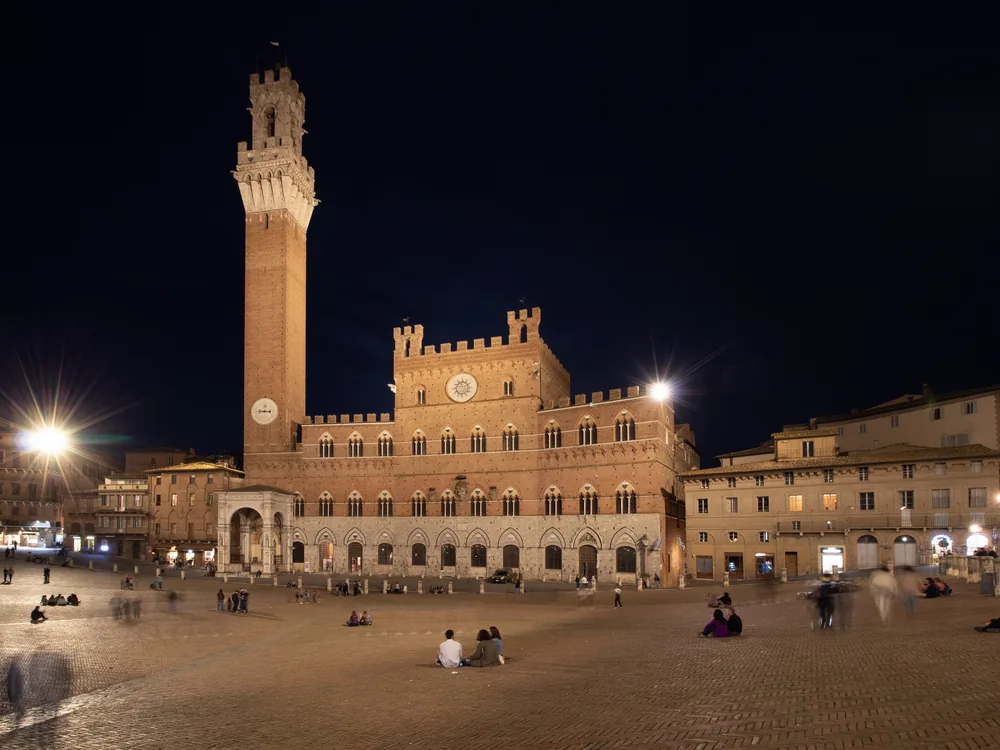
© Castles & Palaces
Quick Facts
- Hours
- Daily 10:00–19:00
- Guided tour from
- €15
- Duration
- 1.5–2 hours
- Best time
- April to June, September to October
- Booking
- Required — book 1+ days ahead
- Nearest city
- Siena
Featured Tour
Palazzo Pubblico Siena — Museo Civico Guided Tour
Cancellation available · Instant confirmation
Highlights
- ✦Ambrogio Lorenzetti's 'Allegory of Good and Bad Government' (1338–1340) — among the oldest secular paintings in Western art
- ✦Simone Martini's 'Maestà' (1315) in the Sala del Mappamondo
- ✦Sienese Gothic façade of black-and-white marble on the shell-shaped Piazza del Campo
- ✦Functioning town hall since 1310 — still Siena's civic centre after seven centuries
- ✦UNESCO World Heritage Site as part of the Historic Centre of Siena
Skip the queue with a guided tour
Skip-the-line tickets & expert guides
On the floor of Siena's extraordinary shell-shaped Piazza del Campo stands a building that has governed this city for more than seven hundred years. The Palazzo Pubblico, begun in 1297 and substantially complete by 1310, was built to house the Republic of Siena's Council of Nine — a rotating panel of merchants and bankers who administered one of medieval Europe's most prosperous communes — and it remains Siena's functioning civic centre today, though the Museo Civico occupies its most historically significant rooms.
The building's exterior is a masterwork of Sienese Gothic: black-and-white Sienese marble striped across the lower storey, dark brick rising to battlemented upper floors, and the slender Torre del Mangia (1325–1344) climbing to 97 metres above the piazza. The façade curves gently to follow the contour of the Campo, and the whole complex reads as a single designed composition with the piazza — one of the great set-pieces of medieval urban planning.
Inside, the Museo Civico contains some of the most consequential paintings in Western art history. The Sala del Mappamondo holds Simone Martini's monumental 'Maestà' (1315, revised 1321) — a throned Virgin with Child attended by angels and saints rendered in vivid tempera, one of the defining images of early Sienese painting. Across the same room, the 'Guidoriccio da Fogliano' fresco (disputed attribution) depicts a Sienese military commander on horseback against a landscape of castles.
The adjoining Sala della Pace contains Ambrogio Lorenzetti's 'Allegory of Good and Bad Government' (1338–1340), a cycle of frescoes that is among the most important secular paintings anywhere in the medieval West. Commissioned by the Nine, the cycle illustrates in extraordinary detail what a well-governed city and countryside look like — craftsmen working, merchants trading, dancers in the streets, farms producing in an ordered landscape — and what tyranny produces in their place. As a representation of a functioning medieval city, it is without equal.
Note: The Torre del Mangia, visible from the piazza and climbable for panoramic views, requires a separate ticket from the Museo Civico and has its own timed entry. The GetYourGuide guided tour focuses on the museum interiors and does not include the tower.
History
Construction of the Palazzo Pubblico began in 1297 under the Republic of Siena's Council of Nine, the oligarchic body of merchants who governed the city at the height of its medieval power. The building grew in phases over the following decades: the central section was complete by around 1310, the side wings and battlemented upper floors added through the mid-fourteenth century, and the soaring Torre del Mangia completed in 1344. The great fresco commissions followed: Simone Martini's 'Maestà' in 1315, Lorenzetti's allegories between 1338 and 1340. The Nine fell from power in 1355, but their building survived them — successive Sienese governments continued to use the palazzo, and after Siena's absorption into the Grand Duchy of Tuscany in 1555, it retained its civic function. The UNESCO designation for Siena's Historic Centre, awarded in 1995, recognised the extraordinary preservation of the medieval cityscape, of which the Palazzo Pubblico and the Campo are the central element.
How to Visit
Getting there: The Palazzo Pubblico is on Piazza del Campo in the heart of Siena's historic centre. Siena is not on the main Italian rail network; the nearest mainline station is at Empoli (Florence–Siena branch) or Chiusi-Chianciano Terme. Frequent SENA/FlixBus coaches run from Florence's Santa Maria Novella station to Siena Piazza Gramsci (~1.5 hours); from Rome, coaches depart from Tiburtina (~2.5 hours). By car, park at Parcheggio Il Campo (outside the ZTL zone) and walk the short descent into the Campo.
Tickets: Museum entry costs approximately €15 for adults and €9 for children (Museo Civico only). The Torre del Mangia is a separate ticket (~€10) with its own timed entry slots — buy both at the palazzo ticket desk or online in advance. A GetYourGuide guided tour of the Museo Civico (from approximately €15) provides expert context for the Lorenzetti and Martini frescoes; it is a new listing with no published reviews yet. The Torre del Mangia is not included in the GetYourGuide tour.
Practical tips: The Lorenzetti frescoes in the Sala della Pace are the reason most visitors come — allow extra time here and read the cycle from right (Good Government) to left (Bad Government) to follow the narrative logic. Photography is permitted without flash. The Campo itself is at its most dramatic early morning or early evening; the museum is generally less crowded on weekday mornings. Avoid the Palio dates (2 July and 16 August) unless attending the race — the Campo is blocked and the city is overwhelmed.
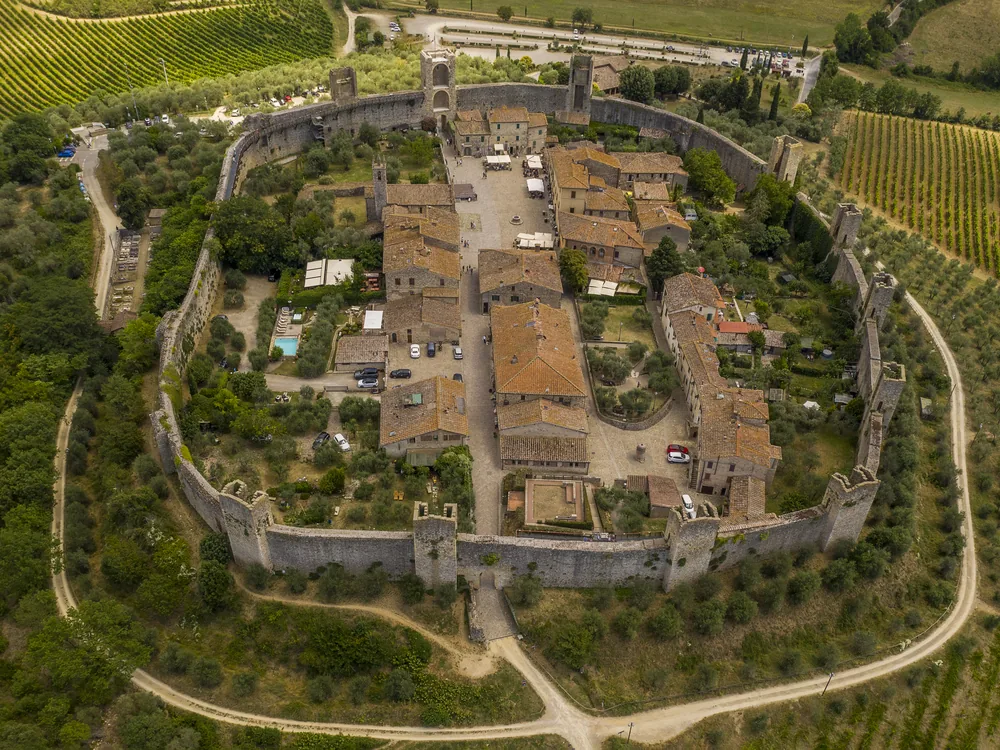
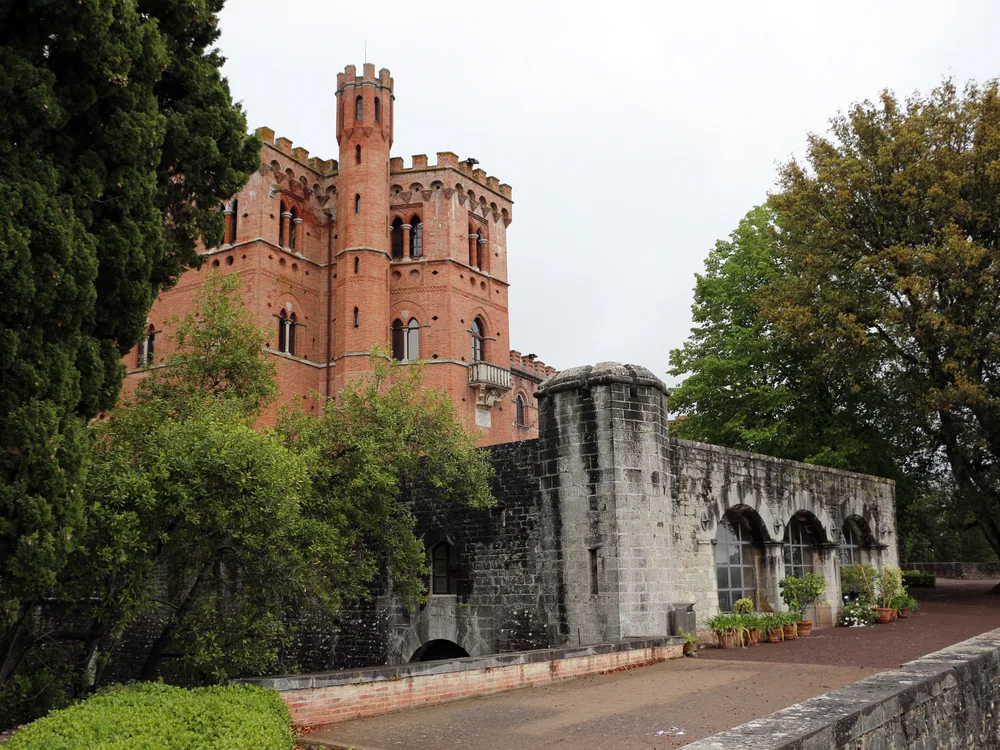
Combine with: Monteriggioni (~15 km north — a perfectly preserved circular medieval walled town on a hilltop, mentioned by Dante in the Inferno and visible from several Tuscan hilltops; one of the best-preserved examples of thirteenth-century military architecture in Italy) or Brolio Castle (~20 km southeast in the Chianti hills — the ancestral seat of the Ricasoli family, the producers of the original Chianti Classico recipe, with a wine estate open for tastings beneath the medieval walls).
Frequently Asked Questions
No — they are separate tickets. The Museo Civico (which contains the Lorenzetti and Martini frescoes) and the Torre del Mangia (the 97-metre tower climbable for panoramic views over the Campo and surrounding hills) each require their own ticket and have separate timed entry systems. Both are purchased at the palazzo ticket desk or online. The GetYourGuide guided tour covers only the museum interiors, not the tower.
Location
Piazza del Campo 1, 53100 Siena, Tuscany, Italy
Nearby Castles
Tours & Tickets
Powered by GetYourGuide
From
€15/ person