
Palazzo Rosso
Palazzo Rosso
Italy · Liguria — Via Garibaldi (Strada Nuova), historic centre of Genoa · Near Genoa
Built 1677 · Late Baroque palace built 1671–1677 for the Brignole Sale family; named for the red-ochre facade; bequeathed to the city 1874; now a public museum (Musei di Strada Nuova) with Old Master paintings; UNESCO Rolli palace
This page is part of an independent travel guide and is not affiliated with, endorsed by, or operated by Palazzo Rosso.
© Castles & Palaces
Quick Facts
- Hours
- Tue–Sun Verify at museidigenova.it. Closed Mon
- Guided tour from
- €15
- Duration
- 1–2 hours standalone museum visit; part of the 2.5-hour combined Rolli tour
- Best time
- Year-round
- Nearest city
- Genoa
Featured Tour
Guided Tour of Rolli Palaces UNESCO Site, Genoa
Cancellation available · Instant confirmation
Highlights
- ✦Built 1671–1677 for brothers Francesco and Ridolfo Brignole Sale, one of the Republic of Genoa's wealthiest and most powerful families — the palace's very construction signals the continued aristocratic ambition of the city's oligarchic class in the post-Golden-Century generation
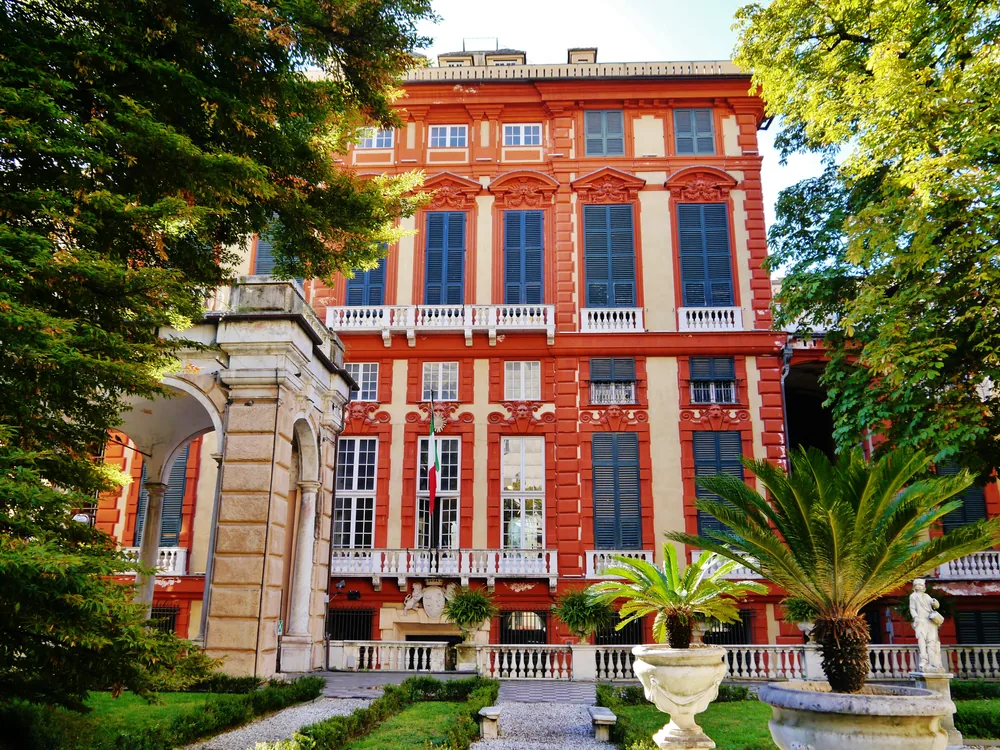
- ✦Named for the red-ochre color of its facade plaster, making it one of the most visually distinctive buildings on an already-remarkable street of Renaissance and Baroque noble palaces
- ✦Houses genuine Old Master paintings including works by Anthony van Dyck, Albrecht Dürer, Paolo Veronese, and Guercino — a collection assembled by the Brignole Sale family over generations, now one of Genoa's most important public art holdings
- ✦Bequeathed to the city of Genoa in 1874 by Maria Brignole Sale, Duchess of Galliera — converting two centuries of private family residence into a public museum, one of the most significant 19th-century acts of Genoese cultural philanthropy
- ✦The first of the three Strada Nuova Museums (Musei di Strada Nuova), alongside Palazzo Bianco and Palazzo Doria-Tursi — three interconnected house-museums that share a ticketing system and together form one of Italy's most cohesive civic museum ensembles
Skip the queue with a guided tour
Skip-the-line tickets & expert guides
When Francesco and Ridolfo Brignole Sale broke ground on their new Via Garibaldi palace in 1671, the street's prestige was already a century old. The Strada Nuova had been laid out in the 1550s as Genoa's aristocratic showcase, and the families who built on it in the late 17th century were staking their wealth against the original Rolli-era palaces of the generation before them. The Brignole Sale were one of the republic's most powerful dynasties — oligarchs who had accumulated wealth through banking, trade, and strategic marriage — and their choice of Via Garibaldi was a deliberate act of positioning. The palace they built over six years (1671–1677) took its nickname from the most visible thing about it: the red-ochre plaster of its facade, distinguishing it immediately on a street of otherwise restrained Renaissance fronts.
The collection that accumulated inside over two centuries of Brignole Sale ownership is one of Genoa's most significant, and its most celebrated component is the group of works by Anthony van Dyck. Van Dyck's relationship with Genoa's aristocracy was formative — the Flemish painter spent his early career in the city, developing the elongated, psychologically acute portrait style that would later make him the court painter of Charles I of England. Genoa's nobility was his primary patronage network before his rise to English fame, and the Brignole Sale portraits at Palazzo Rosso are part of that history. The collection also includes works by Albrecht Dürer, Paolo Veronese, and Guercino — a trans-European range assembled over generations. A second historical layer was added in the mid-20th century when architect Franco Albini redesigned the museum's installation — rethinking the relationship between rooms, furnishings, and paintings in a way that is now considered a landmark of Italian museum design in its own right.
The decisive moment in Palazzo Rosso's history came in 1874, when Maria Brignole Sale, Duchess of Galliera, bequeathed the palace to the city of Genoa. Maria was one of the last of the Brignole Sale line and one of the most consequential philanthropists in Genoese history — she funded the reconstruction of the city's port infrastructure as well as this conversion of the family's residence into a public institution. Her decision to give Palazzo Rosso to the city rather than sell it preserved not only the building but the collection in situ, in the rooms where the Brignole Sale had displayed it for two hundred years.
Palazzo Rosso is now the first and most visited of the three Strada Nuova Museums (Musei di Strada Nuova), sharing a combined ticketing system with Palazzo Bianco and Palazzo Doria-Tursi on the same street. Unlike the other three palaces in this Rolli tour, it is fully accessible to independent visitors with its own museum tickets: no advance booking required, and the collection can be explored at whatever pace the visitor chooses.
History
The Brignole Sale were among the most prominent families of late Republican Genoa — bankers and merchants who had diversified into landed wealth and political influence across two centuries of careful accumulation. In 1671, brothers Francesco and Ridolfo Brignole Sale began construction of a new palace on Via Garibaldi, the Republic's principal aristocratic street, completing it in 1677. The building immediately took the name it still carries: Palazzo Rosso, for the distinctive red-ochre color of its facade plaster. For two centuries, the palace served as the family's primary Genoese residence, its collection growing through purchase, commission, and inheritance to include the Van Dyck portraits, northern European paintings, and the furniture and decorative arts that survive today. In 1874, Maria Brignole Sale, Duchess of Galliera, bequeathed the palace to the city of Genoa — one of the most significant acts of cultural philanthropy in 19th-century Italian civic history. The transition from private residence to public museum was gradual, eventually bringing in architect Franco Albini in the mid-20th century for a museological redesign that is now considered a landmark of Italian museum installation. The UNESCO inscription of 2006 recognised Palazzo Rosso as part of the Rolli system — the sole Rolli palace covered here to have become a full public institution.
How to Visit
Getting there: Palazzo Rosso is at Via Garibaldi 18 in central Genoa. The same directions apply as for all four Rolli palaces: De Ferrari metro station is the closest (~5 minutes' walk), and Via Garibaldi is walkable from Genoa's main squares, the old port (Porto Antico), and the historic centre.
Tickets: For independent visits, Palazzo Rosso sells its own museum tickets — verify current pricing and opening hours at museidigenova.it (typically Tuesday–Sunday, closed Monday). A combined Musei di Strada Nuova ticket covering Palazzo Rosso, Palazzo Bianco, and Palazzo Doria-Tursi is also available for visitors planning to visit multiple Strada Nuova Museums. The GetYourGuide Rolli Palaces guided tour — a 2.5-hour bilingual Italian/English tour including Palazzo Rosso alongside Palazzo Imperiale, Palazzo Lomellino, and Palazzo Tobia Pallavicino — offers the most context-rich way to experience all four palaces at once.
Practical tips: If visiting Palazzo Rosso independently, allow 1–2 hours rather than rushing through the collection. Van Dyck's Genoese portrait commissions are among the museum's highlights and deserve time; the artist's relationship with Genoa's aristocracy is one of the defining stories of 17th-century European portraiture. The Franco Albini museological installation — a mid-20th-century rethinking of how the rooms and works relate — is itself a landmark of Italian museum design and worth noticing as a layer of the visit.
Combine with: Villa del Principe (Andrea Doria's waterfront palace — Genoa's other entry on this site, predating the Via Garibaldi cluster by two decades and housing a separate collection including Perino del Vaga tapestries) and Palazzo Imperiale (on the same guided tour — the Luca Cambiaso-frescoed palace still owned by its founding family, one block away on Via Garibaldi).
Frequently Asked Questions
The name comes from the red-ochre color of the facade plaster — a practical nickname that has stuck for more than 350 years. On Via Garibaldi, where the Renaissance and Baroque palaces around it tend toward restrained pale and cream-colored facades, the saturated red ochre of Palazzo Rosso is immediately recognizable and was presumably distinctive from the day the plaster was first applied in the 1670s.
Location
Via Garibaldi 18, 16121 Genoa, Liguria, Italy
Nearby Castles
Tours & Tickets
Powered by GetYourGuide
From
€15/ person