
Turin Royal Palace
Palazzo Reale di Torino
Italy · Piedmont · Near Turin
Built 1563 · Baroque royal palace established as the primary seat of the House of Savoy after Duke Emanuele Filiberto moved the Savoy capital from Chambéry to Turin in 1563; the facade and principal interior were designed and rebuilt in the mid-17th century by Amedeo di Castellamonte for Duke Carlo Emanuele II; part of the UNESCO-listed 'Residences of the Royal House of Savoy' serial site (inscribed 1997), which covers Turin's royal residences alongside Venaria Reale, Palazzo Reale di Moncalieri, and other Piedmont royal buildings; the Royal Museums complex houses the palace state apartments, the Royal Armoury (one of the most important in Europe), the Royal Library (including original Leonardo da Vinci drawings), and the Subalpine Museum
This page is part of an independent travel guide and is not affiliated with, endorsed by, or operated by Turin Royal Palace.
© Castles & Palaces
Quick Facts
- Hours
- Tue–Sun 09:00–19:00. Closed Mon
- Guided tour from
- €35
- Duration
- 2–3 hours
- Best time
- Year-round
- Nearest city
- Turin
Featured Tour
Official Royal Palace & Royal Museum Visit
Cancellation available · Instant confirmation
Highlights
- ✦The Turin Royal Palace was the primary seat of the House of Savoy from 1563 until 1865, when the Italian capital moved to Florence; it was in Turin that Vittorio Emanuele II was proclaimed first king of united Italy in 1861, making this palace the site where the Risorgimento's ultimate act took place — not Garibaldi's battlefield, but a Baroque throne room in Piedmont
- ✦The palace is part of the UNESCO 'Residences of the Royal House of Savoy' serial inscription (1997), which covers a network of Savoy residences across Piedmont — including the spectacular Venaria Reale (the Piedmontese Versailles) and the hunting lodges at Stupinigi and Moncalieri — as a unified expression of dynastic architectural ambition across four centuries
- ✦The Royal Armoury (Armeria Reale) housed in the palace complex is one of the most important collections of arms and armour in Europe, with pieces spanning from the medieval period through the 19th century, including ceremonial armour of the Savoy dukes and an East Asian weapons collection assembled through diplomatic gifts — a collection of military material culture comparable to the Tower of London or the Vienna Hofburg
- ✦The Royal Library holds a collection of original Leonardo da Vinci drawings, including the famous 'Self-Portrait' and the 'Portrait of a Young Man' — drawings that the Savoy court accumulated as part of their systematic collection of Renaissance material; the library is accessible to visitors as part of the Royal Museums complex
- ✦Villa della Regina (the Queen's Villa), already on this site across the Po river from the city centre, is the intimate Savoy counterpart to the Royal Palace — the 17th-century villa built for Christine of France where the Savoy royal women retreated from court ceremony, and the essential pairing for anyone covering the Savoy royal residences of Turin
Skip the queue with a guided tour
Skip-the-line tickets & expert guides
The House of Savoy is unusual among the major European dynastic families in that it achieved its greatest historical moment last. For most European royal houses, the peak came in the medieval or early modern period — the Habsburgs at the height of the Holy Roman Empire, the Bourbons at Versailles under Louis XIV, the Valois during the Italian Wars. The Savoys, by contrast, reached the apex of their dynastic story in 1861, when a count of Savoy who was also king of Sardinia became the first king of a unified Italian state, converting a regional dynasty into the ruling house of one of Europe's great nations at the very moment in the 19th century when European national states were crystallising into the form they would hold through the 20th century. This is an unusual trajectory, and the Royal Palace of Turin is where the relevant portion of that trajectory was staged.
The dynasty's move to Turin is the starting point. When Duke Emanuele Filiberto moved the Savoy capital from Chambéry, in what is now southeastern France, to Turin in 1563, he was making a strategic calculation: the French crown was consolidating control over the Savoy territories in the Alps, and the dynasty's future lay with its Italian rather than its French possessions. Turin — a Roman grid city on the Po plain, surrounded by the Alps and Apennines — was more defensible, more centrally positioned in the Italian peninsula's political geography, and more capable of supporting the kind of court and administrative apparatus that a territorial state required. The capital move inaugurated the Italian phase of Savoy history and set in motion the four-century process that ended with Italian unification.
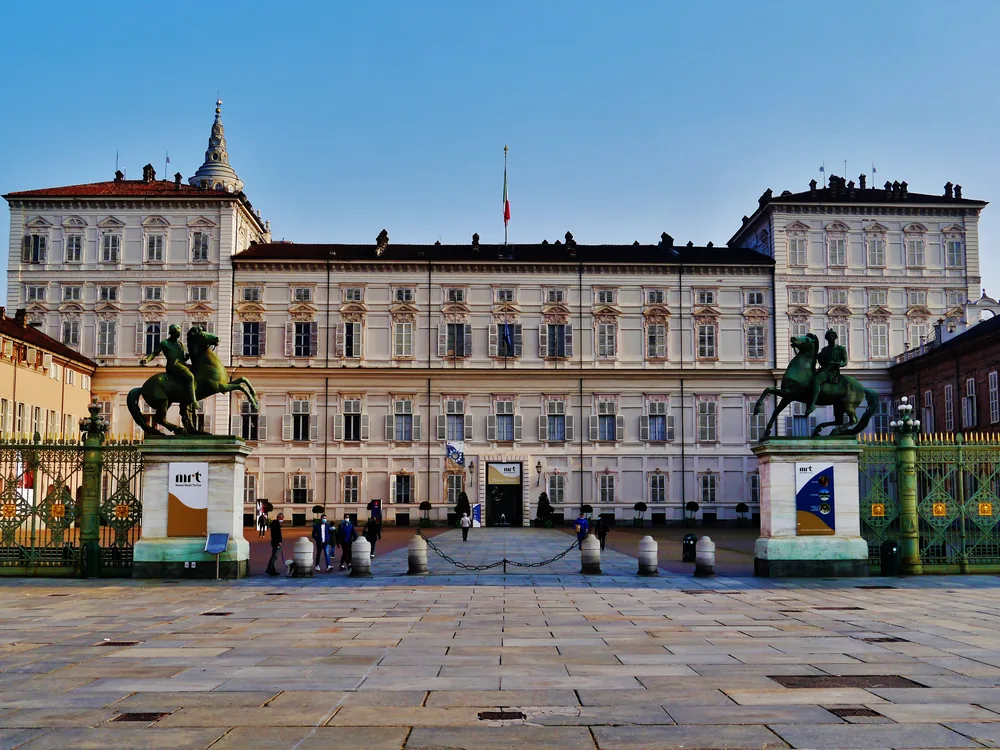
The Royal Palace as visitors see it today was substantially built or rebuilt under Duke Carlo Emanuele II in the mid-17th century, to designs by the court architect Amedeo di Castellamonte. The facade on Piazzetta Reale — cream-coloured, with a restrained Baroque articulation that conveys authority without theatrical excess — reflects the Savoy court's particular relationship to Baroque architectural culture: ambitious enough to commission major works, but operating in a Piedmontese architectural tradition that was more measured than the more exuberant Roman or Neapolitan Baroque of the same period. The interior state apartments follow a more internationally representative Baroque programme — painted ceilings, gilded ornament, silk-hung walls, the succession of progressively more private rooms that the Baroque palace interior typically displays.
The UNESCO 'Residences of the Royal House of Savoy' designation, inscribed in 1997, covers the Turin Royal Palace as the centrepiece of a serial site that includes Venaria Reale, the Castello del Valentino, the hunting lodge at Stupinigi, and several other Piedmontese royal buildings. This serial designation is important for understanding the Royal Palace's position in the Savoy architectural legacy: the palace is the official formal residence, the institutional seat of power, the place where court ceremony and state functions were conducted. The other Savoy residences served different purposes — Venaria Reale for hunting and entertainment on a Versailles-like scale, Stupinigi for the autumn hunt, the Queen's Villa (Villa della Regina) across the river for the women of the court — and together they form a royal geography of Turin and its surroundings that the UNESCO serial inscription attempts to capture as a unified expression.
The Royal Museums complex that encompasses the palace includes several distinct collections housed in the palace buildings. The Royal Armoury is the most significant in European terms: a collection of arms and armour spanning from the medieval period through the 19th century, with ceremonial armour of the Savoy dukes alongside tournament equipment, firearms, and a notable East Asian collection assembled through diplomatic gifts. The collection is comparable in scope and quality to the armouries at the Tower of London and the Hofburg in Vienna, and like them it documents military material culture across many centuries of the house's history in physical objects that carry information about craft, technology, and ceremony simultaneously. The Royal Library, in a separate area of the complex, holds among its holdings original Leonardo da Vinci drawings — including the 'Self-Portrait' in red chalk that is reproduced in virtually every survey of Leonardo's graphic work — accumulated by the Savoy court as part of their Renaissance collection building.
The GetYourGuide guided tour covers the Royal Palace and Royal Museums in English on a 2-hour circuit. The tour is the recommended entry point for visitors who want the historical context that the Savoy dynasty and its role in Italian history requires — the state apartments make more sense when you know that Vittorio Emanuele II was here, that the unification parliament met in this city, and that this was the seat of the government that Cavour ran from the 1850s until unification in 1861. Without that context, the rooms are handsome but formally generic; with it, they carry the weight of specific historical causation.
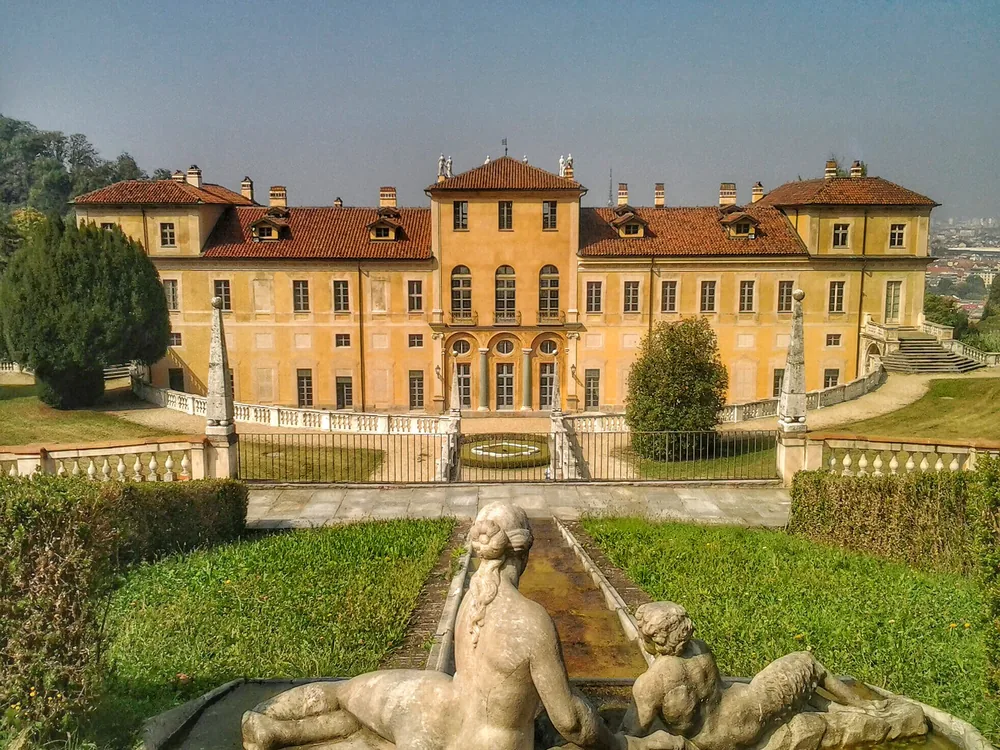
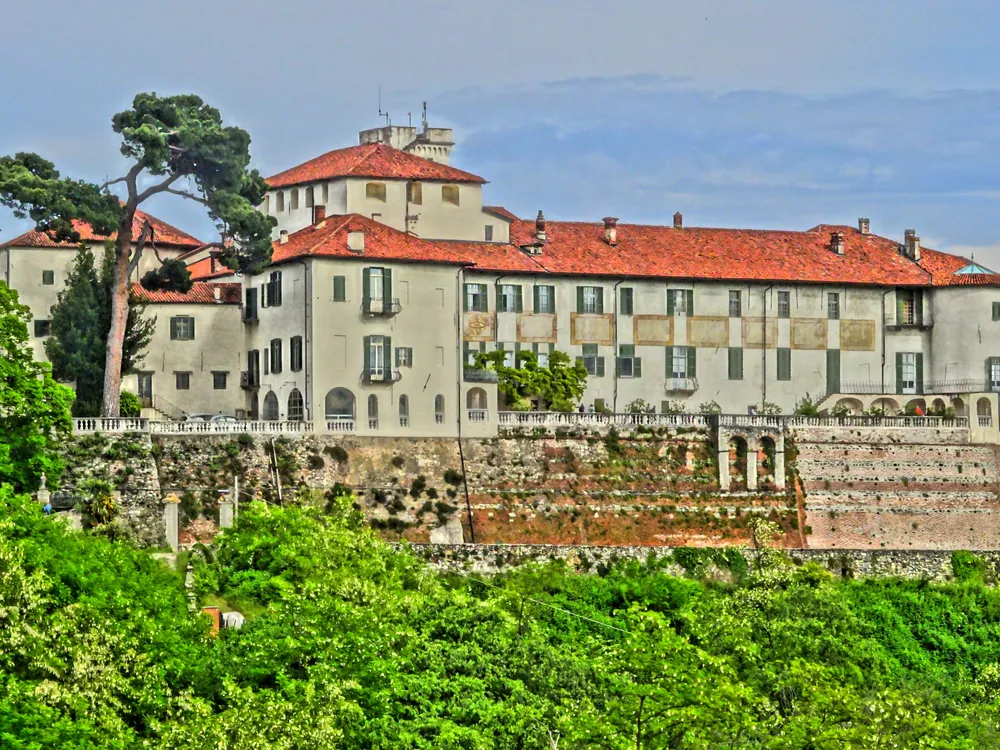
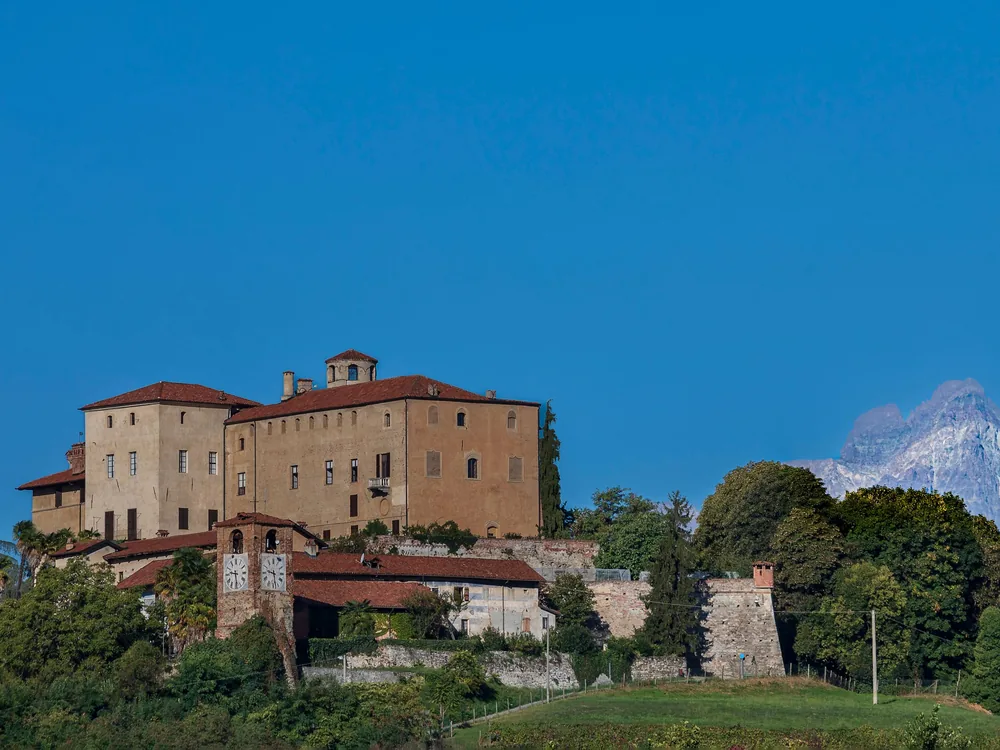
Villa della Regina, the other Savoy Turin residence on this site, sits across the Po river on the hill of the Gran Madre di Dio and is directly connected by a road axis to the main Turin royal complex. The two sites together cover the formal and informal dimensions of Savoy court life in the same city — the official state palace and the women's retreat — and both are accessible on a single Turin day. Castello di Masino, approximately 40 kilometres north in the Canavese, and Castello di Manta, approximately 60 kilometres south in the Cuneo province, are the regional Piedmont Savoy and noble estate counterparts, worth including in a broader Piedmont cultural itinerary.
History
The House of Savoy moved its capital from Chambéry to Turin in 1563 under Emanuele Filiberto, establishing the Royal Palace as their primary residence. The palace was substantially rebuilt in the mid-17th century under Carlo Emanuele II to designs by Amedeo di Castellamonte. The palace served as the Savoy seat until 1865, when the Italian capital moved first to Florence and then to Rome. It was in Turin in 1861 that Vittorio Emanuele II was proclaimed first king of united Italy. The palace and its associated collections were inscribed as part of the UNESCO 'Residences of the Royal House of Savoy' serial site in 1997. Today the site is administered as the Royal Museums (Musei Reali di Torino).
How to Visit
Getting there: The Royal Palace is on Piazzetta Reale in central Turin, a 5-minute walk from Turin Porta Nuova station and adjacent to the Turin Cathedral (Shroud of Turin). Turin is connected to Milan by high-speed train (55 minutes) and to Rome (4–5 hours). The palace is entirely walkable from the city centre.
Tickets: GetYourGuide guided tour covers the palace and Royal Museums in English, 2 hours. Walk-up entry also available for self-guided visits.
Visit length: 2–3 hours for the full palace and museums circuit.
Practical tips: Allow 2–3 hours for the visit.
Combine with: Villa della Regina (across the Po, 20 min walk) is the essential Turin Savoy pairing. The Turin Cathedral and Shroud of Turin exhibition is adjacent. Venaria Reale (15 km north) is the grandest of the Savoy palaces and merits a separate half-day visit.
Frequently Asked Questions
The UNESCO World Heritage 'Residences of the Royal House of Savoy' is a serial inscription (1997) covering a network of Savoy royal residences in and around Turin: the Royal Palace, Venaria Reale, Stupinigi hunting lodge, Castello del Valentino, Villa della Regina, and several others. The inscription recognises the residences as a unified expression of dynastic architectural ambition across four centuries, from the 16th to the 20th century. Visiting the Royal Palace puts you within the UNESCO-inscribed network; Venaria Reale and Villa della Regina are the other most accessible sites in the same designation.
Location
Piazzetta Reale, 1, 10122 Torino TO, Italy
Nearby Castles
Tours & Tickets
Powered by GetYourGuide
From
€35/ person