
Jaunpils Castle
Jaunpils pils
Latvia · Tukums District · Near Tukums
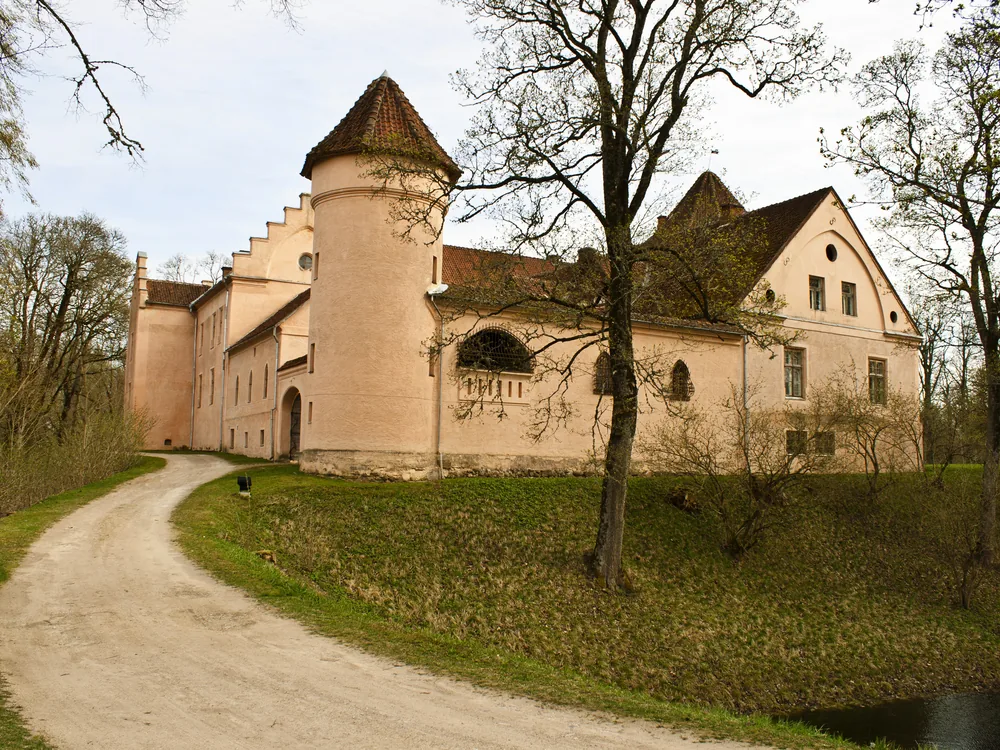
Built 1301 · Late medieval Livonian Order tower house in Courland; built in 1301 as a small frontier tower castle by the Livonian Order for administrative control of the Courland (Kurzeme) region; the structure consists of a square residential tower with corner turrets and a surrounding wall enclosing a small courtyard — a compact fortification suited to a regional Order outpost rather than a major castle; one of the few Livonian Order tower houses in the Courland region to survive in substantially intact condition rather than as a ruin; the building passed to German Baltic aristocratic families after the Order's dissolution in 1562, including the von der Recke family who used it as a manor residence for three centuries; the interior was renovated in the 19th century in historicist style; the building is now managed as a small museum and hotel — one of a small number of medieval Latvian castles that functions as a genuine guesthouse within the surviving medieval structure
This page is part of an independent travel guide and is not affiliated with, endorsed by, or operated by Jaunpils Castle.
© Castles & Palaces
Quick Facts
- Hours
- Daily 10:00–17:00
- Day trip from
- €90
- Duration
- 1–1.5 hours
- Best time
- May to September
- Nearest city
- Tukums
Featured Tour
From Riga: Nearby Manors & Castles of Courland Tour
Cancellation available · Instant confirmation
Highlights
- ✦Jaunpils Castle is one of the very few medieval tower castles in Latvia where overnight accommodation is available within the surviving medieval structure — not a modern hotel built near a castle, but rooms within the original 1301 tower house, making Jaunpils one of the most immersive castle-hotel experiences in the Baltic states
- ✦The compact fortification — a square residential tower with corner turrets and a surrounding wall — is the standard type of Livonian Order frontier outpost, but Jaunpils is unusually complete; most comparable Order tower houses in the Courland region are either ruined or heavily altered; the survival of Jaunpils in substantially intact form is primarily because it remained in continuous use as an aristocratic manor through the 17th–19th centuries, which motivated successive owners to maintain rather than demolish
- ✦The von der Recke family, who held Jaunpils for approximately three centuries after the Livonian Order's dissolution in 1562, were one of the principal German Baltic noble families of Courland — a class of aristocratic families who administered the territory under the Dukes of Courland and later under Russian imperial rule until 1918; the castle's 19th-century historicist interior renovation reflects their late-period engagement with the Romantic idealization of medieval ancestry
- ✦The Courland (Kurzeme) region around Jaunpils — low-lying, forested, with a coastline on the Baltic Sea to the west — contains several manor houses and minor fortifications that are visited only by specialist heritage travellers; Jaunpils is the most historically significant of these, as a genuine medieval Order castle rather than a later manor house
- ✦The combination of museum visit and potential overnight stay makes Jaunpils the most individual castle experience in western Latvia — a contrast to the more visited Turaida-Sigulda-Cēsis cluster of the Gauja valley, which draws significantly larger numbers but lacks the overnight immersion option
Skip the queue with a guided tour
Skip-the-line tickets & expert guides
Jaunpils Castle stands in the Tukums district of the Courland (Kurzeme) region in western Latvia, approximately 70 kilometres southwest of Riga in a forested landscape that transitions between the low Courland plains and the approaches to the Baltic Sea coast. The castle was built in 1301 by the Livonian Order — one of the earliest documented fortifications in the Courland region and, unlike most of its contemporaries, one that survived without being reduced to ruins.
The building is a tower house in the compact Livonian Order frontier style: a square residential tower with corner turrets, surrounded by a wall enclosing a small courtyard. This was the standard Order outpost type for administrative presence in agricultural regions — not a major military fortress with extensive outworks, but a defensible residence from which a small Order garrison could govern the surrounding territory, collect tithes, and maintain the Order's administrative presence. The position in the Courland lowlands reflects the Order's need to control territory between the major river systems, in an area where the terrain offered no obvious natural defensive advantages.
The Livonian Order's dissolution in 1562 transformed the political structure of the Baltic territory and converted the Order's castles from active military-administrative installations to aristocratic manor properties. Jaunpils was no exception: after 1562, it passed to German Baltic noble families who used it as a Courland manor house rather than a military outpost. The von der Recke family, who held it for approximately three centuries, were typical of the German Baltic nobility that administered Courland under the Kettler dukes and later under Russian imperial rule — landed families of German origin who had arrived with or shortly after the crusaders and whose social and cultural world remained German even as the political authority above them changed.
The von der Recke period is responsible for the castle's survival: because it remained in continuous use as an aristocratic residence, it was maintained rather than abandoned, and its fabric accumulated the additions and modifications that mark a building that was lived in rather than militarily occupied. The 19th-century historicist renovation — rooms decorated in a neo-Gothic or romantic medieval style, presumably by a family member who shared the era's enthusiasm for medievalising interior design — is typical of the period and gives the interior a Victorian-era quality that sits slightly incongruously over the genuine 14th-century structure.
The castle is currently managed as both a museum and a hotel, which makes it one of the most unusual heritage experiences in Latvia. The museum covers the castle's history and displays relating to the Livonian Order and Courland aristocracy. The hotel offers rooms within the medieval tower — not a modern annexe or a converted outbuilding, but accommodation within the original 1301 structure. The experience of staying in a 14th-century tower house in the Latvian countryside is genuinely distinctive and draws a small but dedicated visitor base that most larger Latvian heritage sites do not attract.
The Courland region around Jaunpils is quiet heritage territory: the Tukums district and the surrounding Kurzeme countryside contain numerous Baltic German manor houses, Lutheran churches, and minor archaeological sites that are visited almost exclusively by Latvian heritage enthusiasts and occasional specialist travellers. Jaunpils is the most significant medieval site in this landscape precisely because it is a genuine Order castle rather than a later manor, and because its survival in substantially intact form allows visitors to understand the spatial logic of the Order's frontier outpost — the tower, the courtyard, the surrounding wall — in physical rather than theoretical terms.
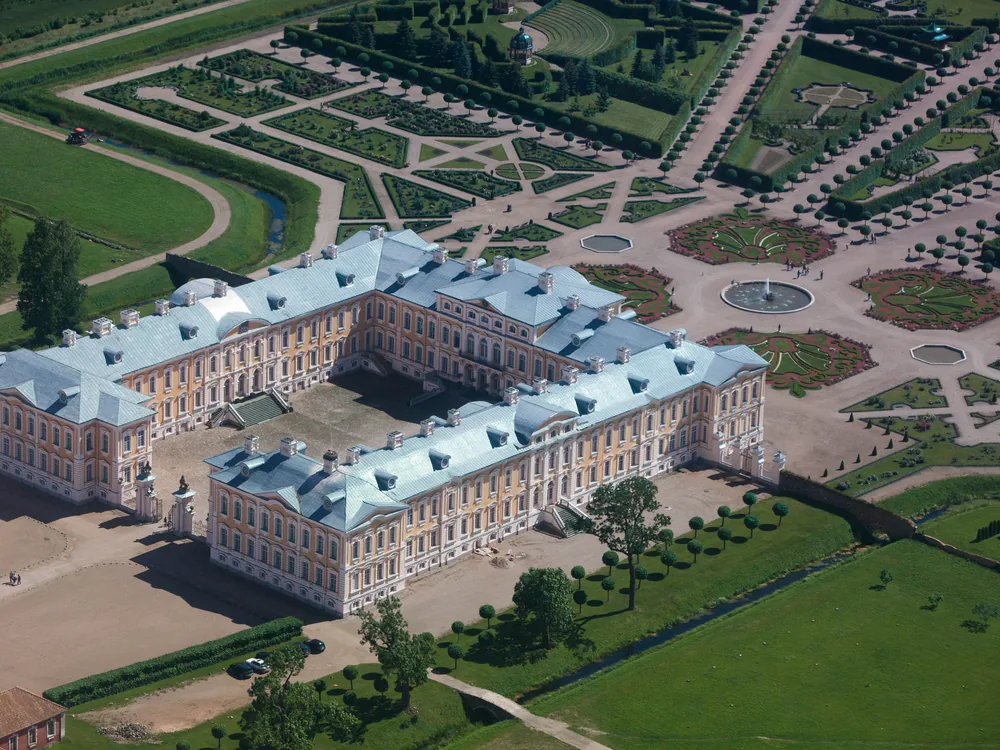
The GetYourGuide day tour from Riga visits Jaunpils as part of a Courland manors and castles circuit — the most efficient way to see several heritage sites in a single day from Riga given the distance and the relative absence of public transport connections in the western Latvian countryside. [Rundale Palace](/castles/latvia/rundale-palace) is the most significant Baroque-era heritage site in Latvia, south of Riga, and represents the other major strand of Courland architectural history — the aristocratic palatial architecture of the ducal and imperial periods that succeeded the medieval Order fortifications.
History
The Livonian Order built Jaunpils Castle in 1301 as a frontier tower house for Courland regional administration — a compact, single-tower fortification suited to the administrative requirements of the Order's western Baltic territories rather than to major military operations. Through the 14th and 15th centuries it served as an Order outpost and garrison residence in the Courland forest landscape.
The dissolution of the Livonian Order in 1562 transferred the castle to German Baltic aristocratic ownership. The von der Recke family held it through the 16th to 19th centuries, using it as a Courland manor house and noble residence — the kind of long, stable aristocratic ownership that preserved many Baltic medieval structures through periods that destroyed others. A historicist renovation in the 19th century redecorated the interior in a Romantic medieval style, adding a layer of 19th-century interpretation to the genuine medieval fabric.
Latvian independence in 1918 brought land reform that redistributed aristocratic estates, and the castle changed ownership. Various uses through the Soviet period were followed by restoration after Latvian independence was restored in 1991. Jaunpils is now open as a combined museum and hotel, with overnight accommodation available within the castle.
How to Visit
Getting there: Jaunpils is approximately 70 km southwest of Riga in the Tukums district — about 1 hour by car on the A9 highway toward Liepāja. Public transport options are limited; a taxi from Tukums is the most reliable approach without a car. The GetYourGuide Courland manors and castles day tour departs from Riga and covers Jaunpils and other Courland heritage sites on an 8-hour circuit — the most efficient way to visit without a car.
Tickets: Approximately €8 adult / €4 child for the museum; buy at the castle entrance. For overnight hotel stays within the medieval tower, book well in advance at jaunpilspils.lv — capacity is limited.
Practical tips: If staying overnight, the experience of sleeping in a 14th-century Livonian Order tower house in the Courland countryside is the castle's most distinctive offer; book 4–6 weeks ahead in summer. For day visitors, the combination of the tower interiors (compact, original medieval fabric) and the courtyard gives a clear physical understanding of how a frontier Order outpost worked at this small scale.
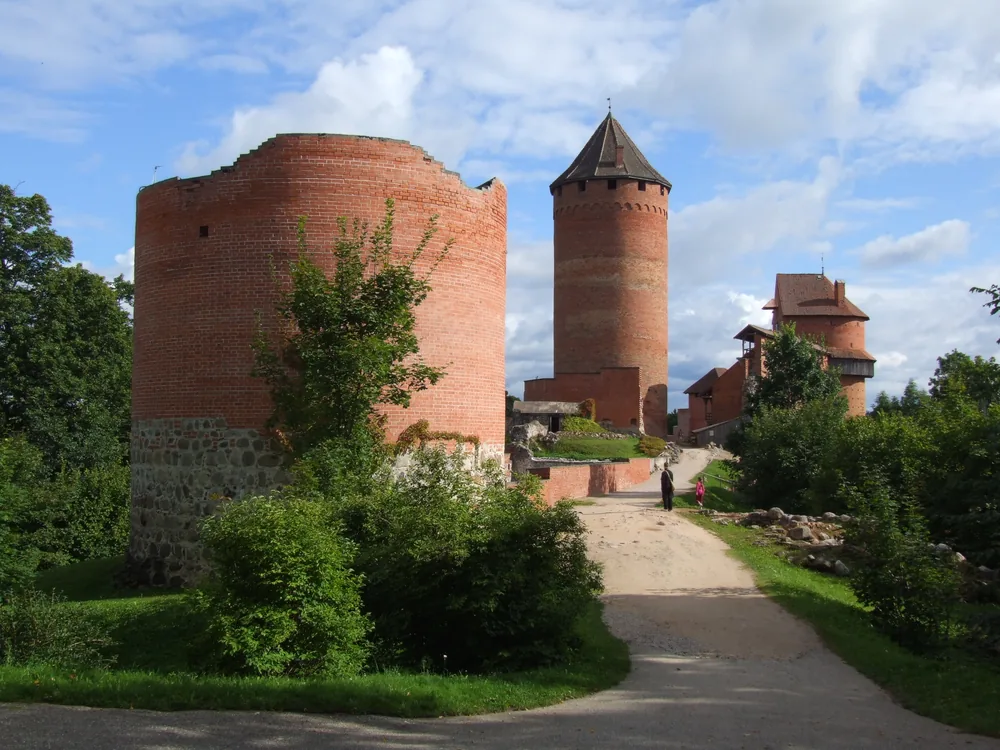
Combine with: Rundale Palace southeast via Bauska — Latvia's most significant Baroque palace, the architectural endpoint of Courland's aristocratic history. Turaida Castle in the Gauja Valley is the most complete Livonian Order castle in Latvia for a direct architectural comparison with Jaunpils.
Frequently Asked Questions
Yes. Jaunpils Castle operates as a hotel within the original medieval tower house — not a modern annexe but rooms within the 1301 structure. This makes it one of very few genuinely medieval accommodation options in Latvia. Capacity is limited; book well in advance through the castle's own website (jaunpilspils.lv). The overnight experience — a 14th-century Livonian Order tower house in the Courland countryside — is unlike anything else available in western Latvia.
Location
Pils iela 9, Jaunpils, LV-3145, Latvia
Nearby Castles
Tours & Tickets
Powered by GetYourGuide
From
€90/ person