
Rundāle Palace
Rundāles pils
Latvia · Zemgale · Near Bauska
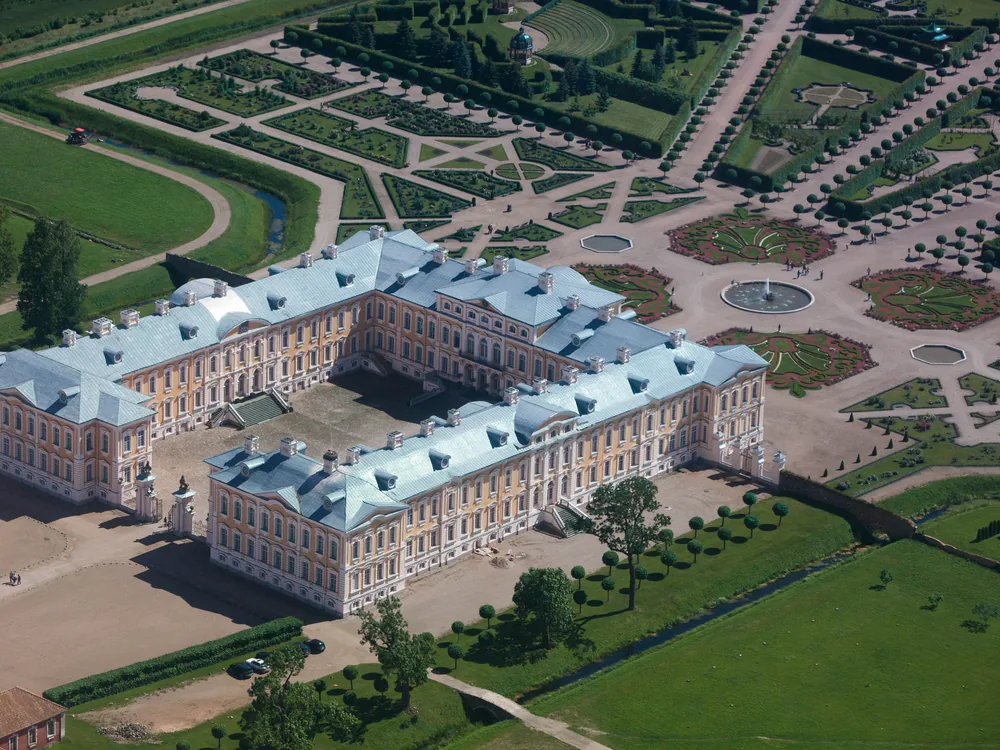
Built 1736 · Baroque and Rococo palace designed by Bartolomeo Francesco Rastrelli and built in two phases: 1736–1740 (main structure) and 1764–1768 (Rococo interior interiors for Duke Ernst Johann von Biron of Courland); one of the most complete examples of 18th-century Baroque palace architecture in the Baltic states, with 138 restored rooms, grand staterooms decorated with gilded stucco and painted ceilings, and formal French-style parterre gardens modeled on Versailles
This page is part of an independent travel guide and is not affiliated with, endorsed by, or operated by Rundāle Palace.
© Castles & Palaces
Quick Facts
- Hours
- Daily 10:00–18:00
- Day trip from
- €149
- Duration
- 2–3 hours
- Best time
- May to September
- Nearest city
- Bauska
Featured Tour
Rundale Palace, Bauska Castle & Hill of Crosses Tour
Cancellation available · Instant confirmation
Highlights
- ✦Rundāle Palace was designed by Bartolomeo Rastrelli — the Italian-trained architect who built St. Petersburg's Winter Palace (for Empress Elizabeth) and the Catherine Palace at Tsarskoye Selo (for Catherine the Great) — making Rundāle a direct stylistic sibling of two of Russia's most celebrated imperial buildings, built for a Baltic duke at the height of 18th-century Russian court culture
- ✦Ernst Johann von Biron, Duke of Courland, for whom the palace was built, was one of the most extraordinary figures of the 18th-century Russian court: a Baltic German of modest origins who became the all-powerful favourite of Empress Anna, effectively governing Russia during her reign (1730–1740), then arrested, exiled to Siberia, eventually rehabilitated, and living long enough to see the palace completed in his Rococo second phase at the age of 80
- ✦The formal French-style gardens, restored in the 1980s and 1990s, cover 10 hectares and include a rose garden with approximately 2,300 roses arranged in parterre patterns — one of the finest examples of restored Baroque garden design in the Baltic region, modeled on the Versailles parterre tradition that Rastrelli would have known from French pattern books and Russian imperial commissions
- ✦The palace's Soviet-era history is a recovery story that gives the restoration added meaning: after World War II it was used as a granary and later as a school, with original plasterwork, painted ceilings, and parquet floors surviving beneath damage and functional repurposing; the restoration began in 1972 under architect Imants Lancmanis and continued for over four decades, replacing lost stucco by hand using 18th-century techniques
- ✦The GetYourGuide day trip from Riga combines Rundāle with Bauska Castle — the ruined medieval fortress just 12 km away — and the Hill of Crosses near Šiauliai, 120 km north of Riga, on a single 7–9 hour circuit that covers three of Latvia and Lithuania's most compelling heritage sites in one long day
Skip the queue with a guided tour
Skip-the-line tickets & expert guides
The standard reference point for Bartolomeo Rastrelli is St. Petersburg: the Winter Palace on the Neva embankment, the Catherine Palace at Tsarskoye Selo, the Smolny Cathedral. These are the buildings that established his reputation as the definitive architect of 18th-century Russian Baroque, the designer who gave the imperial city its characteristic silhouette of pastel facades, white columns, gilded domes, and elaborately decorated interiors. Rundāle Palace, in rural Latvia approximately 75 kilometres south of Riga, belongs to the same creative output — designed by the same architect for the same patron culture, built in two phases between 1736 and 1768 — and it contains in one building the entire arc of Rastrelli's mature style, from his Baroque structural phase to the lighter Rococo decorative idiom he developed in his final major commissions.
The patron was Ernst Johann von Biron, and understanding the palace requires understanding its owner. Biron was a Baltic German of modest provincial origins who rose, through personal proximity to the Empress Anna of Russia, to become the most powerful man in the Russian Empire during her reign from 1730 to 1740. His influence was comprehensive enough that the period was later called the Bironovshchina — Biron's time — by Russian historians who viewed his decade of dominance as a foreign imposition on Russian affairs. When Anna died in 1740, Biron served briefly as regent for the infant Ivan VI before being arrested, tried, and exiled to Siberia in a palace coup. The palace he had commissioned at Rundāle, begun in 1736, was left half-finished.
The story doesn't end there. Biron was eventually rehabilitated under Catherine the Great, restored to his Duchy of Courland, and at the age of approximately 80 commissioned Rastrelli to complete the palace interior he had been forced to abandon four decades earlier. The result is the building visitors see today: a structural shell built in the earlier Baroque phase, filled with Rococo decorative interiors executed in the 1760s by Rastrelli and a team of craftsmen that included the German stucco artist Johann Michael Graff. The combination of the two phases — structural Baroque wrapped around Rococo interior ornament — is visible throughout, and it gives Rundāle a layered quality that neither pure Baroque nor pure Rococo palaces possess.
The 138 restored rooms include staterooms of genuine quality. The Gold Hall, the principal ceremonial room, has a painted ceiling and gilded stucco ornament in the full Rococo tradition — the scrolling acanthus, the asymmetrical cartouches, the soft palette of white, gold, and grey that distinguishes Rococo from the heavier polychrome of the Baroque. The White Hall, the ballroom, is arguably the finest room in the palace: two storeys of white stucco relief with no gilding, relying entirely on the modelling of the surface to create depth and movement in a way that photographs consistently undersell. The Duke's bedroom, the Grand Gallery, and the formal reception rooms complete the principal circuit and collectively represent the most complete survival of 18th-century high-court interior design in the Baltic states.
The formal gardens occupy 10 hectares to the south of the palace. Laid out on French parterre principles — geometric beds, clipped hedges, gravel paths radiating from central axial views — they were restored from the 1970s onward as part of the same restoration programme that reclaimed the palace itself. The rose garden, planted with approximately 2,300 roses in parterre patterns, is the gardens' most visited element and is at its best in June and early July. The restoration of the gardens, like the restoration of the palace interiors, involved reconstructing from historical drawings and written records what the Soviet era had eliminated through neglect and agricultural repurposing.
The palace's history between its completion and its restoration is a story worth telling because it illuminates how close the building came to being lost entirely. After Biron's death in 1772 and the absorption of Courland into the Russian Empire in 1795, the palace passed through various owners and deteriorated steadily. The Second World War brought damage and looting. Soviet collectivisation converted the palace into a granary — grain was stored in the staterooms, machinery operated where Rococo stucco survived on the walls and ceilings — and subsequently into a school. The restoration, begun in 1972 under architect Imants Lancmanis and continuing for over four decades, replaced damaged and missing stucco by hand using 18th-century lime-based techniques, matching surviving fragments to establish the original patterns. The work was completed to the current state only in the 2010s. Rundāle today is considered the best-preserved Baroque palace in the Baltic states, and the restoration is itself regarded as one of the landmark conservation achievements of post-Soviet Eastern Europe.
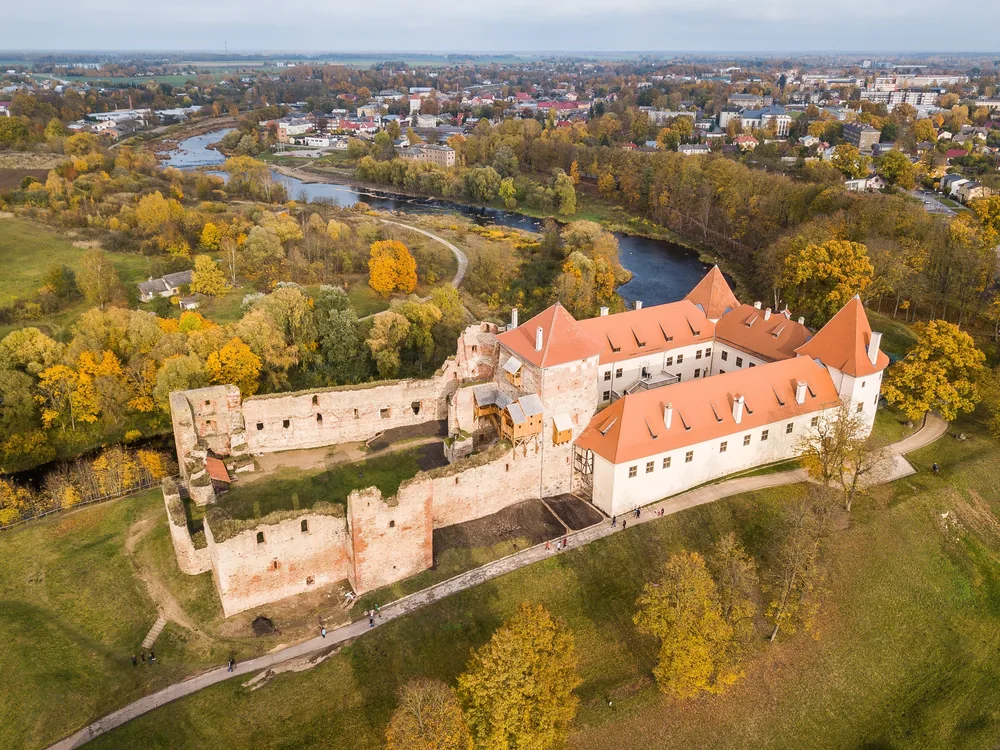
For visitors from Riga, the most efficient approach is the GetYourGuide day trip, which bundles Rundāle with Bauska Castle — a ruined medieval fortress 12 kilometres away, at the confluence of the Mūsa and Mēmele rivers — and the Hill of Crosses near Šiauliai in northern Lithuania, a UNESCO-recognised pilgrimage site where hundreds of thousands of crosses of all sizes have been planted over generations of Catholic devotion and national resistance, most recently during the Soviet occupation. The 7–9 hour itinerary is efficient: Bauska is an easy half-hour walk and a natural appetite-opener before the more demanding palace visit, and the Hill of Crosses is both visually extraordinary and emotionally weighted in a way that provides counterpoint to Rundāle's aristocratic splendour.
For visitors who prefer to drive, Baudras and Rundāle are 75 kilometres from Riga on the A7 motorway — a drive of just over an hour in normal traffic. Bauska is the natural lunch stop; the town has cafés and a good relationship with tourists who have come for the palace. The palace itself is open year-round, with longer summer hours.
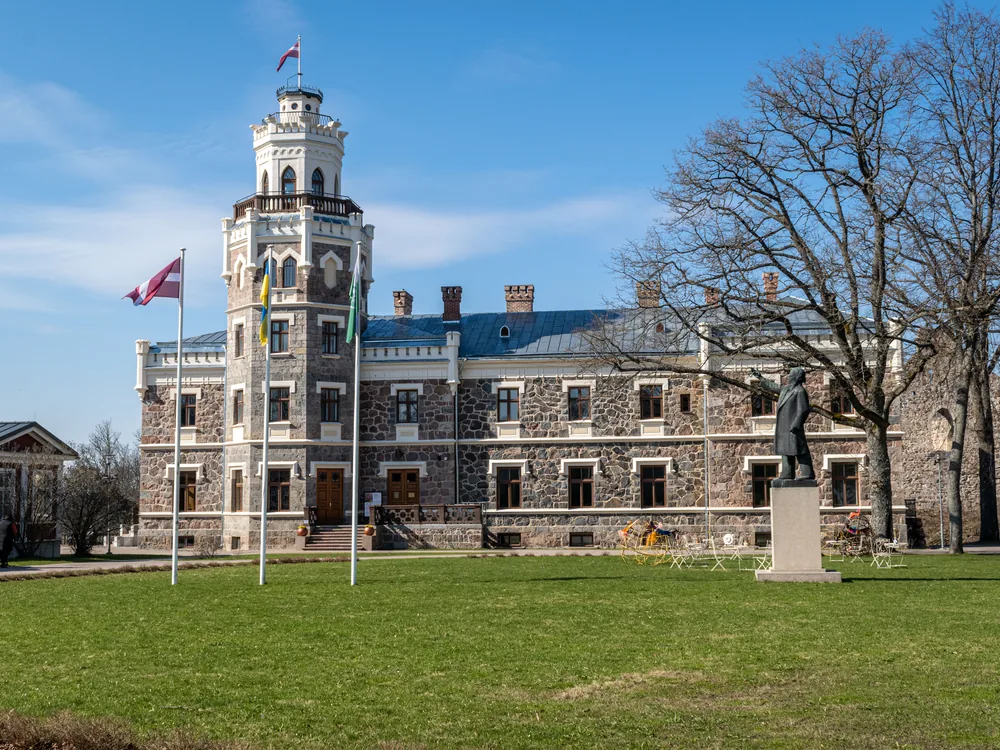
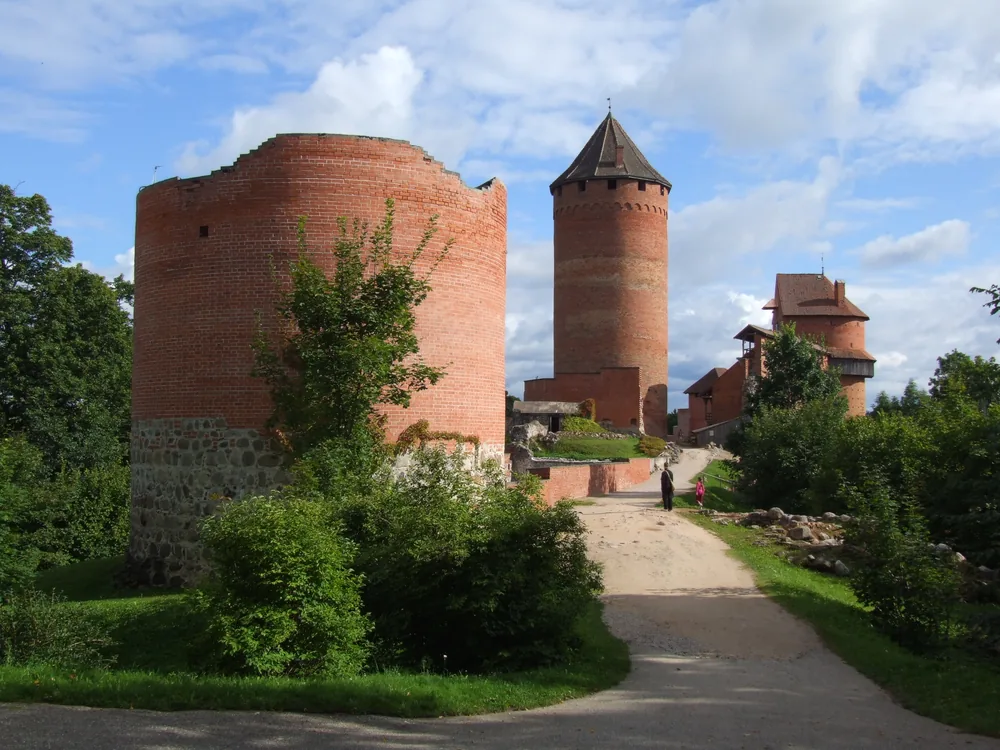
Sigulda Castle and Turaida Castle, both already on this site, represent Latvia's other essential castle circuit — but they sit northeast of Riga in the Gauja National Park valley, roughly the opposite direction from Rundāle. The two areas are not realistic same-day pairings from Riga; they are better understood as separate itinerary choices covering different facets of Latvian heritage: medieval fortifications in the Gauja valley versus the 18th-century Baroque court culture of the Zemgale plains.
History
The site of Rundāle was granted to Ernst Johann von Biron, Duke of Courland, by Empress Anna of Russia in the 1730s. Bartolomeo Rastrelli was commissioned to design the palace, with construction of the main structure proceeding from 1736 to 1740. Biron's political fall in 1740 halted the project; he was exiled to Siberia, and the unfinished palace stood in disuse. Rehabilitated by Catherine the Great in 1763, Biron returned to Courland and commissioned Rastrelli to complete the interiors in the Rococo style then fashionable, a project executed in 1764–1768. After Biron's death in 1772 and the incorporation of Courland into Russia in 1795, the palace's condition declined. The Soviet era saw it used as a granary and school. Restoration began in 1972 under Imants Lancmanis and continued for over four decades, with the principal restoration phases concluding in the 2010s.
How to Visit
Getting there: Rundāle is approximately 75 km south of Riga on the A7 motorway — about 1.5 hours by car. There is no direct public transport; the GetYourGuide day trip from Riga bundles Rundāle Palace, Bauska Castle, and the Hill of Crosses in Lithuania on a 7–9 hour circuit, and is the most convenient option without a car.
Tickets: Approximately €15 adult / €8 child, purchased at the palace entrance or at rundale.net. The GetYourGuide tour includes entry to all three sites. The formal gardens are included in the standard admission.
Practical tips: Allow 2–3 hours for the staterooms and gardens — the 138 restored rooms are extensive. Prioritise the White Hall (ballroom) and the Gold Hall (principal ceremonial room); the rose garden in the formal parterre is at its best in June–early July. Visit on a weekday to avoid weekend tour groups from Riga; the palace is significantly quieter Tuesday–Thursday.
Combine with: Bauska Castle, 12 km away at the Mūsa-Mēmele confluence, is the essential half-day pairing — medieval fortress ruins contrasting with Baroque palace splendour in a single landscape. Jaunpils Castle in Courland extends the circuit west for a Livonian Order tower house in the opposite direction.
Frequently Asked Questions
Biron was a Baltic German who became the most powerful man in Russia as the favourite of Empress Anna during her reign (1730–1740). He commissioned Rundāle and the Winter Palace in Jelgava from Rastrelli. When Anna died he was arrested, tried, and exiled to Siberia. Rehabilitated by Catherine the Great in 1763, he returned and at approximately 80 years old commissioned Rastrelli to complete the palace in the fashionable Rococo style — which is why Rundāle has Baroque structure and Rococo interiors.
Location
Pilsrundāles pils 1, Pilsrundāle, LV-3921, Latvia
Nearby Castles
Tours & Tickets
Powered by GetYourGuide
From
€149/ person