
Koknese Castle
Kokneses pils
Latvia · Aizkraukle District · Near Koknese
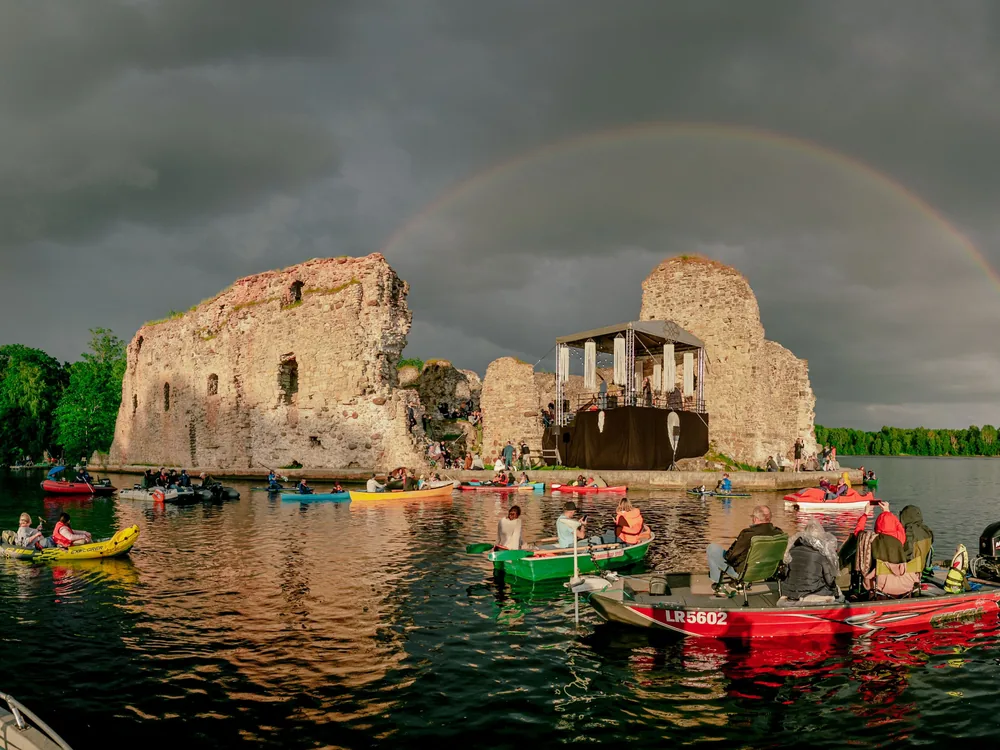
Built 1209 · Ruined medieval bishop's castle on the Daugava River; one of the earliest stone fortifications in Latvia, built by the Bishop of Riga between 1209 and 1226 on a promontory above the Daugava — the main river route into the eastern Baltic interior; the site had been a Livian tribal stronghold before the German crusader arrival; the castle was held alternately by the Archbishop of Riga and the Livonian Order through the medieval period, a contested seat that reflected the political rivalry between the two main power structures of medieval Livonia; partially destroyed in the Northern Wars of the 17th century and subsequently left as a ruin; the site is now partly submerged following the construction of the Pļaviņas hydroelectric dam (1966), which raised the Daugava's water level; the ruins stand partly in shallow water on the northern shore of the resulting reservoir, creating an atmospheric flooded-ruin landscape unique in Latvia
This page is part of an independent travel guide and is not affiliated with, endorsed by, or operated by Koknese Castle.
© Castles & Palaces
Quick Facts
- Hours
- Mon–Sun Open
- Day trip from
- €99
- Duration
- 1 hour
- Best time
- May to October
- Nearest city
- Koknese
Featured Tour
From Riga: Lielvārde & Koknese Medieval Legends & Tales Tour
Cancellation available · Instant confirmation
Highlights
- ✦Koknese Castle is partially submerged — the construction of the Pļaviņas hydroelectric dam in 1966 raised the Daugava's water level, leaving the southern parts of the medieval ruin standing in the reservoir's shallow margins; this Soviet-era flooding created an atmospheric landscape found nowhere else in Latvia: ruins emerging from still water with the Daugava visible beyond
- ✦Built between 1209 and 1226 by the Bishop of Riga — making it one of the earliest stone fortifications in Latvia, constructed within living memory of the German crusader arrival in the Baltic — the castle marks the point where medieval ecclesiastical colonisation was converting a tribal stronghold into a stone power-centre along the Daugava, the river highway connecting Riga with the interior
- ✦The political contest between the Archbishop of Riga and the Livonian Order for control of Koknese lasted through the entire medieval period, making this one of the most fought-over administrative seats in Livonian history — both powers understood that whoever held the Daugava corridor held the commercial artery of the whole territory
- ✦The Koknese site includes Liktendārzs (Garden of Fate), a large open-air sculpture garden created as a national memorial park — a contemporary cultural landscape immediately adjacent to the medieval ruins that gives the visit an unusual double identity: medieval castle and 21st-century memorial
- ✦Access is free and open year-round — Koknese is one of the few major Latvian castle sites with no entry fee, a consequence of its open-air ruin status rather than active management as a ticketed heritage attraction; the lack of infrastructure makes the site more atmospheric and more dependent on prior knowledge for full appreciation
Tickets & tours
Book through GetYourGuide
Koknese Castle stands on a promontory above the Daugava River, approximately 100 kilometres southeast of Riga, at a site that has been a focal point for settlement and control since before the medieval period. The Daugava is the main river route into the eastern Baltic interior — the waterway along which trade goods, missionaries, soldiers, and colonists moved both directions for centuries — and the promontory at Koknese commands a view of the river in both directions. Before the German crusaders arrived in the early 13th century, a Livian tribal stronghold occupied the site. After they arrived, the Bishop of Riga replaced it with stone.
The dating of the original castle — 1209 to 1226 — places its construction within the first decades of the German crusading presence in Latvia, when the basic infrastructure of ecclesiastical control was still being established. The Bishop of Riga, who commissioned the castle, was one of the two primary powers in medieval Livonia (the other being the Livonian Order), and the competition between these two authorities for control of key strategic points along the Daugava was a persistent theme of Livonian politics through the 13th and 14th centuries. Koknese was among the most contested: the Archbishop of Riga and the Livonian Order both held it at different times, and the documentary record of the castle's ownership through the medieval period is a compressed account of that rivalry.
The castle's strategic importance lay in its Daugava position. Control of the river at Koknese meant control of the major commercial artery between Riga and the interior — a position that generated tolls, facilitated the movement of troops, and gave its holder early warning of anything moving along the river in either direction. The castle is not large by European standards, but its position explains why both the Archbishop and the Order regarded it as worth fighting over.
The Northern Wars of the 17th century — particularly the Swedish-Russian conflict that restructured the Baltic political order — brought military damage to Koknese as to almost every other fortification in Latvia. The castle was partially destroyed and subsequently left to deteriorate, entering the long period of becoming a ruin that most medieval buildings in the Daugava corridor underwent between the 17th and 20th centuries.
The most unusual chapter in Koknese's history came in 1966, when the Pļaviņas hydroelectric dam on the Daugava was completed and the reservoir behind it raised the river's water level in the Koknese area. The southern parts of the medieval ruin — already at low elevation on the river bank — were partially submerged. The result is the landscape that visitors encounter today: medieval stone walls standing in the margins of the reservoir, some courses of masonry above the waterline, some below, with the open Daugava visible beyond. The flooding was not intentional heritage planning — it was an unintended consequence of Soviet hydroelectric infrastructure — but it created an atmospheric visual that is genuinely unique in Latvia and makes Koknese one of the more memorable castle ruin visits in the country despite the limited surviving fabric.
The site is open-access and free, which means there is no ticket booth, no interpretation centre, and no guided trail. What the site does have, immediately adjacent to the ruins, is Liktendārzs — the Garden of Fate — a large open-air sculpture garden and national memorial park created in the 1990s as a commemoration of Latvian national suffering under Soviet occupation. The sculptures, the memorial landscape, and the adjacent medieval ruins form an unusual composite site that mixes the 13th century and the 21st in close proximity.
The GetYourGuide day tour from Riga visits the Lielvārde Fort area and Koknese in a full-day programme focused on Latvian medieval legends and tales — the narrative approach gives the ruins historical context that the open-access site itself doesn't provide through on-site interpretation. [Turaida Castle](/castles/latvia/turaida-castle), [Sigulda Castle](/castles/latvia/sigulda-castle), and [Cēsis Castle](/castles/latvia/cesis-castle) represent the more complete surviving Livonian Order castle architecture in Latvia, located in the Gauja River valley to the north.
History
A Livian tribal stronghold occupied the Daugava River promontory at Koknese before the stone castle that succeeded it. The Bishop of Riga constructed that stone castle between 1209 and 1226, making Koknese one of the earliest stone fortifications in Latvia and an instrument of control over the Daugava — the main river route into the eastern Baltic interior. Through the 13th and 14th centuries the castle was contested between the Archbishop of Riga and the Livonian Order, held alternately by both powers as they competed for authority over the region.
The dissolution of the Livonian Order in 1562 passed Koknese to Polish-Lithuanian control as the Order's territories were redistributed. The Northern Wars of the 17th century brought damage that was not repaired: the castle was partially destroyed and subsequently abandoned, beginning a long decline into the ruin that survives today. The main walls were still standing when the Pļaviņas hydroelectric dam was completed in 1966, but the rising Daugava water level partially submerged the southern sections of the ruin — a 20th-century engineering project that permanently altered a medieval site.
Following Latvian independence in 1991, the Liktendārzs memorial garden was created adjacent to the ruins. The site is open to visitors year-round and free to access.
How to Visit
Getting there: Koknese is approximately 100 km southeast of Riga on the A6 highway (Riga–Daugavpils) — about 1.5 hours by car. Regional bus services from Riga to Koknese take approximately 2 hours. The castle ruins are a short walk from Koknese town centre.
Tickets: Free and open year-round with no booking required. The GetYourGuide Lielvārde & Koknese Medieval Legends Tour from Riga is a 9-hour circuit covering the Lielvārde Fort area and Koknese with historical narrative context — useful given the site has no on-site interpretation.
Practical tips: Come in spring (April–May) when water levels in the Daugava reservoir are highest and the partially submerged medieval walls are most dramatically surrounded by water — the flooded-ruin landscape is Koknese's defining visual. The Liktendārzs memorial sculpture garden adjacent to the ruins is a separate cultural site worth 30 minutes alongside the castle walk.
Combine with: Cēsis Castle, Sigulda Castle, and Turaida Castle in the Gauja Valley, 60 km north, are the more architecturally complete Livonian Order castle sites in Latvia — Koknese pairs well with them for a full Latvian medieval circuit, though the distances require a car.
Frequently Asked Questions
In 1966, the Soviet-era Pļaviņas hydroelectric dam was completed on the Daugava River downstream from Koknese. The reservoir created behind the dam raised the water level in the Koknese area, partially submerging the southern sections of the medieval castle ruin. The flooding was not planned as a heritage feature — it was an unintended consequence of Soviet infrastructure construction — but it created the distinctive submerged-ruin landscape that makes Koknese visually unique among Latvian medieval sites.
Location
Pils iela 1, Koknese, LV-5113, Latvia
Nearby Castles
Tours & Tickets
Powered by GetYourGuide
From
€99/ person