
Palace of the Grand Dukes of Lithuania
Lietuvos Didžiosios Kunigaikštystės valdovų rūmai
Lithuania · Vilnius Old Town, Vilnius, Lithuania · Near Vilnius
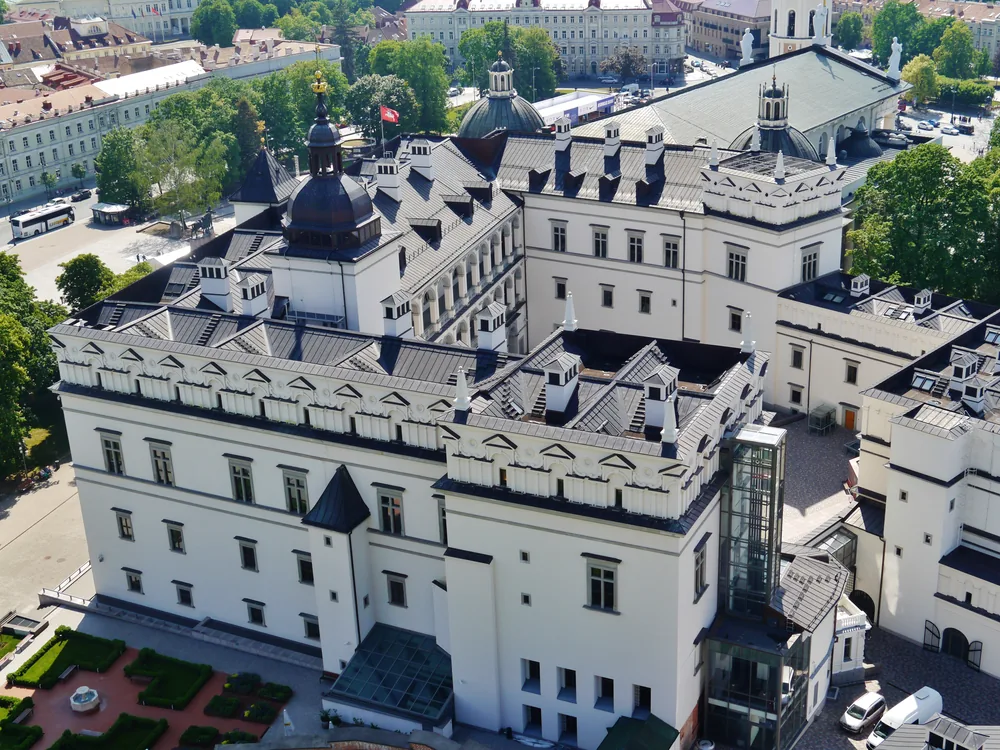
Built 1500 · Reconstructed Renaissance and Baroque royal palace on medieval foundations; the current building replicates the 16th–17th century palace that served as the Grand Duchy's primary seat, built over documented archaeological foundations from the 14th–16th centuries; ceremonial halls, royal apartments, and three-storey Renaissance courtyard reflect the palace's role as the court of one of medieval Europe's largest states
This page is part of an independent travel guide and is not affiliated with, endorsed by, or operated by Palace of the Grand Dukes of Lithuania.
© Castles & Palaces
Quick Facts
- Hours
- Tue–Sun 10:00–18:00. Closed Mon
- Guided tour from
- €44.1
- Duration
- 1.5–2 hours on the GetYourGuide guided tour; 2–3 hours self-guided with both routes
- Best time
- May to September
- Nearest city
- Vilnius
Featured Tour
Vilnius: Palace of the Grand Dukes Guided Tour & Entry Ticket
Cancellation available · Instant confirmation
Highlights
- ✦The Grand Duchy's seat of power — at its height in the 15th–16th centuries, the Grand Duchy of Lithuania stretched from the Baltic Sea to the Black Sea, making it one of the largest states in medieval and early modern Europe; the palace on Cathedral Square was the court from which the Gediminid dynasty and later the Jagiellon kings governed this vast territory, hosting diplomatic receptions, royal weddings, and the full apparatus of a functioning Renaissance court
- ✦Built over authentic medieval foundations — the palace was demolished under Russian imperial rule in the 19th century and rediscovered archaeologically in the 20th century; the current reconstruction (completed 2018) was built directly over the excavated foundations, which are displayed in Route I of the museum; visitors walk above the actual medieval groundplan while the archaeological layers below remain in situ and visible
- ✦Two museum routes — Route I covers the archaeological foundations and the history of the Lower Castle site from the 13th century through the palace's demolition; Route II takes visitors through the reconstructed Renaissance and Baroque ceremonial halls, royal apartments, and the three-storey courtyard that served as the ceremonial heart of the palace; both routes are included in the GetYourGuide guided tour
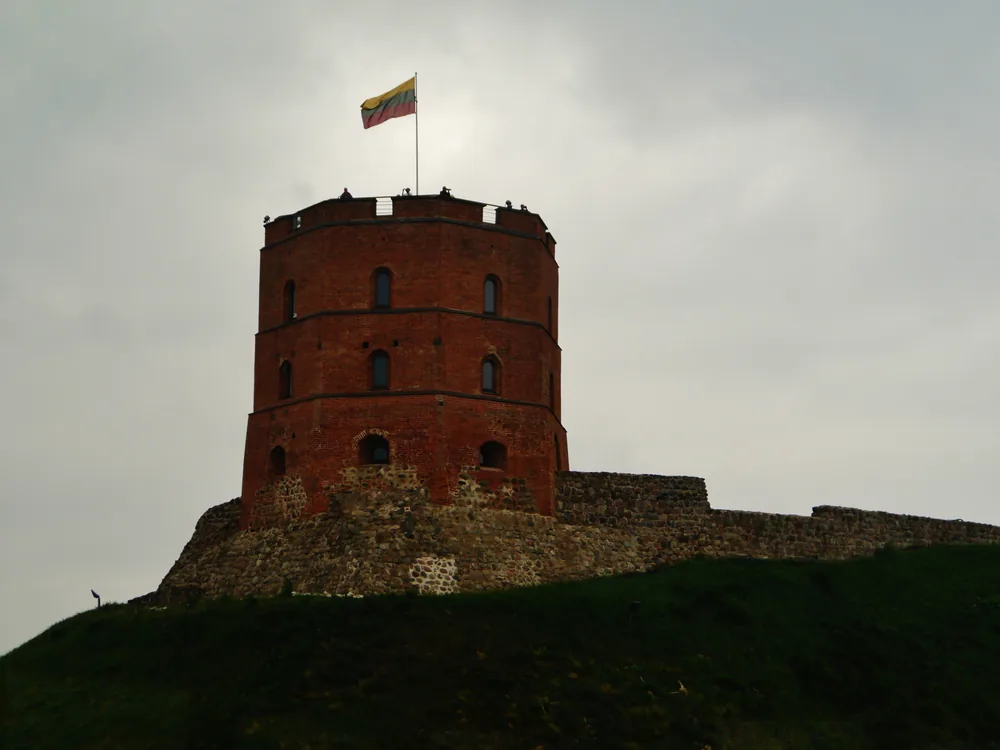
- ✦The Observation Tower with Cathedral Square panorama — the palace's Observation Tower gives views over Vilnius's Cathedral Square, the Cathedral Basilica, and the Gediminas Tower above — the Upper Castle that is the iconic skyline image of Vilnius; the three elements together (palace, cathedral, upper castle) form the historic nucleus from which Vilnius developed
- ✦The GetYourGuide guided tour (small-group) includes a licensed English-speaking guide (French available), museum entry for Routes I and II, and access to the Observation Tower — the most structured way to understand the palace's layered history, from medieval foundations to Renaissance court
Skip the queue with a guided tour
Skip-the-line tickets & expert guides
The Palace of the Grand Dukes of Lithuania stands on Cathedral Square in Vilnius, beside the Cathedral Basilica and directly below the Gediminas Tower that crowns the Upper Castle above. The three elements — cathedral, lower palace, upper tower — form the historic nucleus around which the medieval city grew, and together they represent the political and spiritual architecture of a state that was, at the height of its power, one of the largest in medieval Europe.
The Grand Duchy of Lithuania's territorial peak came in the 15th century, when the state stretched from the Baltic Sea in the northwest to the Black Sea coast in the south — covering roughly the area of present-day Lithuania, Latvia, Belarus, Ukraine, and significant parts of Poland and Russia. This was not a peripheral or marginal state but a major European power, with a court that attracted Italian architects, Flemish craftsmen, and diplomatic delegations from across the continent. The palace on Cathedral Square was the physical expression of this ambition: a Renaissance and Baroque complex whose ceremonial halls and royal apartments were designed to project the cultural sophistication appropriate to a European dynasty.
The palace's history has an unusual arc. It was demolished under Russian imperial rule in the early 19th century — part of a broader policy of erasing Lithuanian state symbols — and the site was built over. Archaeological excavations in the late 20th century rediscovered the foundations and, crucially, established the palace's groundplan and partial elevation with enough precision to support a historically documented reconstruction. The current building, completed in 2018, was erected directly over the excavated foundations; the archaeology has not been disturbed but preserved beneath the new construction, visible through glass floors in Route I.
The museum is structured around two routes that the GetYourGuide guided tour covers in sequence. Route I descends to the archaeological level, where the medieval and early modern foundations are displayed in their original positions; visitors walk the actual groundplan of the 14th–16th century palace while the guide explains what each space was used for. Route II moves through the reconstructed upper floors — the ceremonial halls furnished with period pieces, the royal apartments, and the three-storey Renaissance courtyard that served as the ceremonial centre of the palace complex. The Observation Tower completes the visit with views over Cathedral Square, the Cathedral, and the Gediminas Tower rising above on its limestone cliff.
The tour runs in small groups with a licensed guide — a significant advantage over self-guided visiting at a site where the relationship between the visible reconstruction and the invisible archaeology requires explanation to be fully understood.
History
A fortified seat at the confluence of the Vilnia and Neris rivers is documented from the early 14th century, associated with the Gediminid dynasty that unified the Lithuanian lands. The Lower Castle complex on Cathedral Square developed alongside the Upper Castle (Gediminas Tower) above it, the two forming the defended core of the medieval capital. The palace was substantially rebuilt in Renaissance style under Sigismund II Augustus (reigned 1544–1572), the last Jagiellon king, who brought Italian architects to Vilnius and transformed the complex into a structure comparable to other Renaissance royal courts of the period. The palace was sacked during the Muscovite invasion of 1655 and subsequently damaged by fire; rebuilding in the late 17th and early 18th century partially restored it in Baroque style. Russian imperial administration acquired the site after the partitions of the Polish-Lithuanian Commonwealth in the late 18th century; the palace was demolished between 1801 and 1810. Archaeological excavations beginning in 1987 rediscovered the foundations; the Lithuanian government authorised reconstruction in the 1990s, completed in 2018. The palace and Old Town are inscribed as a UNESCO World Heritage Site.
How to Visit
Getting there: The palace is on Cathedral Square (Katedros aikštė) in Vilnius Old Town, 5 minutes' walk from the Gates of Dawn and the main pedestrian spine of Pilies Street. Cathedral Square is served by multiple bus lines; the Old Town is entirely walkable from most Vilnius hotels.
Tickets: Walk-up entry for both museum routes is approximately €14 per adult. The GetYourGuide small-group guided tour includes the licensed guide, museum entry for Routes I and II, and access to the Observation Tower — no additional purchases needed on arrival.
Practical tips: The Gediminas Tower (Upper Castle) is a 10-minute walk up the hill behind the palace — the two together make a logical half-day circuit, covering both the Lower Castle (palace) and the Upper Castle tower in the same visit. The glass-floor sections in Route I require some visitors to look directly down at the exposed archaeology; those with vertigo should be aware of this. The Observation Tower closes in poor weather.
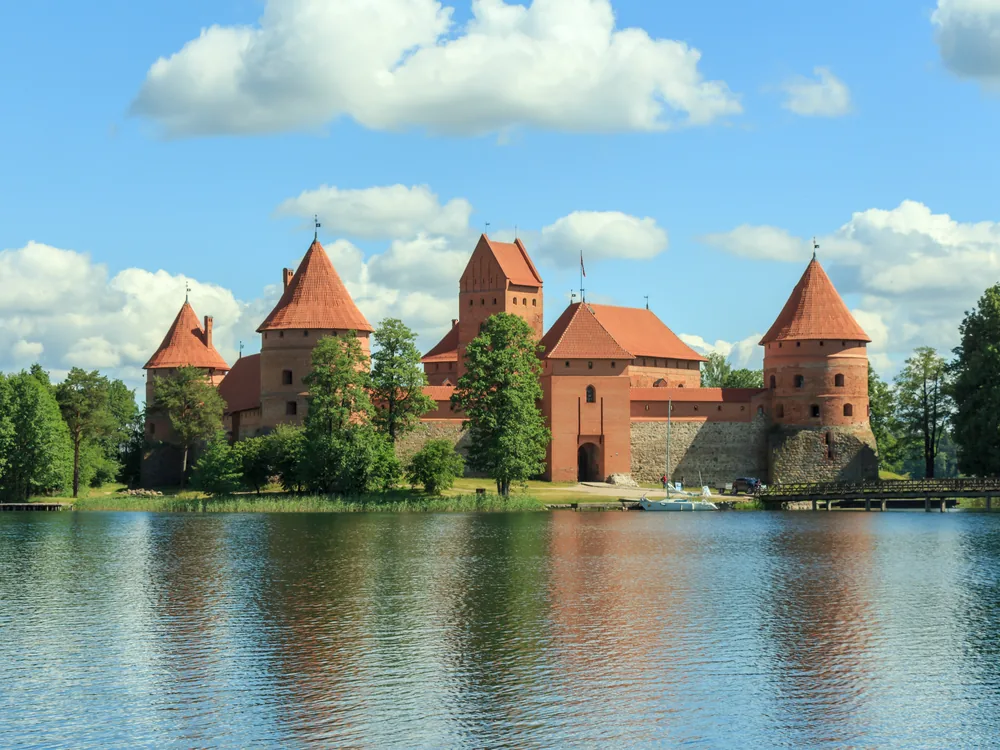
Combine with: Gediminas Tower (directly above on the limestone hill — the iconic Upper Castle tower that completes the Cathedral Square picture; the two sites together form the historic heart of Vilnius; walk-up entry ~€5 separately) and Trakai Island Castle (~28 km west — the 15th-century red-brick island castle on Lake Galvė, the most photogenic castle in the Baltic states and the seat of Grand Duke Vytautas).
Frequently Asked Questions
The Russian imperial administration demolished the Palace of the Grand Dukes between 1801 and 1810, as part of a broader policy of reshaping Vilnius to reflect Russian rather than Lithuanian state identity. The demolition erased one of the primary symbols of the Grand Duchy's political history. Archaeological excavations beginning in 1987, during the period of Lithuanian national revival that preceded independence in 1990, rediscovered the foundations and established the palace's groundplan with sufficient precision to support a documented reconstruction. The decision to rebuild was controversial — some historians argued for preserving the archaeological site in an open or partially covered state rather than building over it — but the reconstruction was authorised, completed in 2018, and built directly over the preserved excavations. The foundation visibility in Route I is the compromise: the archaeology is preserved in situ beneath glass floors, and the rebuilt palace above replicates the 16th–17th century structure at approximately the documented scale.
Location
Katedros a. 4, LT-01143 Vilnius, Lithuania
Nearby Castles
Tours & Tickets
Powered by GetYourGuide
From
€44.1/ person