
Trakai Island Castle
Trakų salos pilis
Lithuania · Trakai County · Near Vilnius
Built 1409 · Gothic brick
This page is part of an independent travel guide and is not affiliated with, endorsed by, or operated by Trakai Island Castle.
© Unsplash
Quick Facts
- Hours
- Tue–Sun 10:00–18:00. Closed Mon
- Guided tour from
- €30
- Duration
- 2–3 hours
- Best time
- Summer
- Nearest city
- Vilnius
Featured Tour
Vilnius: Trakai Tour with Audio Guide and Minibus Transfers
Cancellation available · Instant confirmation
Highlights
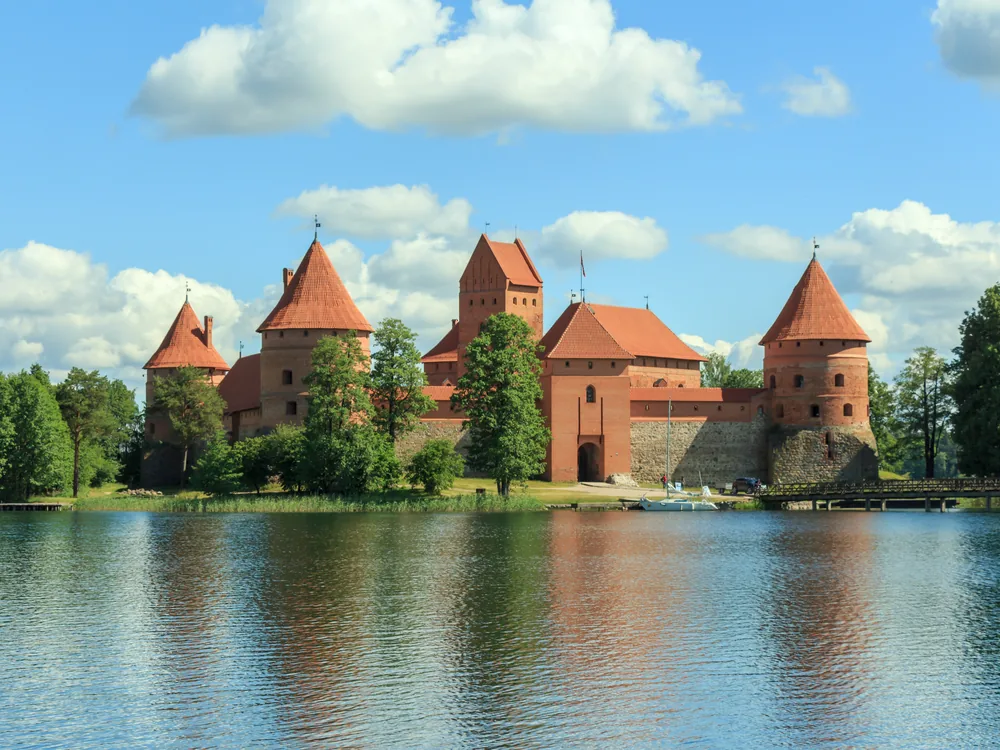
- ✦One of the most photogenic castles in Europe — a red Gothic brick fortress on an island in Lake Galvė, surrounded by water on all sides
- ✦Built by Grand Duke Vytautas the Great (1409) as the residential castle of the Lithuanian Grand Duchy at the height of its power
- ✦The only surviving island castle in Eastern Europe built on an artificial island
- ✦Houses the Trakai History Museum with exhibits on Lithuanian Grand Duchy culture and the Karaim community — a Turkic ethnic minority brought to Trakai by Vytautas
- ✦A day trip from Vilnius that combines medieval history, lake scenery, and the unique Karaim culture and cuisine
Skip the queue with a guided tour
Skip-the-line tickets & expert guides
Trakai Island Castle is one of those rare buildings where beauty and history achieve something close to perfection. The red brick Gothic towers rise from a small island in Lake Galvė, 28 km west of Vilnius, their reflections in the still water completing a picture that appears almost too picturesque to be real. Built on an artificial island in the early 15th century by Grand Duke Vytautas the Great of Lithuania — at the time ruler of the largest territorial state in Europe — the castle served as the residential and ceremonial heart of the Lithuanian Grand Duchy during the period of its maximum power.
The castle was heavily damaged after Lithuania was incorporated into the Russian Empire in the 18th century and fell into ruin during the 19th and early 20th centuries. A painstaking reconstruction carried out between 1951 and 1987 restored the main tower, walls, and residential buildings to their 15th-century appearance, using original medieval brick techniques throughout. The result is a building that reads as genuinely medieval despite being substantially reconstructed — a testimony to the quality of the restoration work.
The town of Trakai surrounding the lake is home to the Karaim community — a small Turkic-speaking group of Jewish faith who were brought from Crimea by Vytautas in the 1390s to serve as palace guards. Their distinctive kenesas (prayer houses) and the Karaim ethnographic museum in Trakai provide one of the most unusual cultural encounters in the Baltic states. The local Karaim dish — kibinai, a pastry filled with mutton — is available in restaurants along the main street.
History
Trakai has been the capital of the Lithuanian lands since the early 14th century. The first castle here was built on the peninsula (Peninsular Castle) by Grand Duke Gediminas around 1321. His son Kęstutis later moved the residential castle to the island in Lake Galvė, beginning construction around 1362. The Island Castle was substantially rebuilt and expanded by Kęstutis's son Vytautas the Great between 1409 and 1430, creating the castle complex that stands today.
Vytautas ruled Lithuania from 1392 to 1430, the period of its greatest territorial extent — the Grand Duchy stretched from the Baltic to the Black Sea. Trakai Castle was the centre of this empire and the site of numerous state events, diplomatic receptions, and the imprisonment of political rivals including Vytautas's cousin, the Polish king Władysław II Jagiełło, who was held here briefly in 1382. The Battle of Grunwald (1410), at which Vytautas commanded the Lithuanian-Polish forces that destroyed the Teutonic Knights, was planned and celebrated at Trakai.
After Vytautas's death in 1430, political power shifted to Vilnius and Kraków. Trakai remained a residence but declined in importance. The castle was badly damaged during the wars of the 17th century and fell into complete ruin during the 18th. The Lithuanian Soviet government undertook an ambitious reconstruction beginning in 1951, completing the main tower and inner courtyard by 1961 and finishing the outer walls and moat by 1987.
How to Visit
Getting there: Trakai is 28 km west of Vilnius. Regular minibuses depart from Vilnius Bus Station (Sodų g. 22) every 30 minutes (35–45 minutes); trains from Vilnius station also run (45 minutes, less frequent). By car, take the A1 motorway west. From the Trakai bus stop, walk along Karaimų Street to the lakeside — the castle is visible from the shore and a wooden footbridge crosses to the island (15 minutes on foot from the bus).
Tickets: Walk-up admission is €12 for adults, €5 for children. The GetYourGuide "Vilnius: Trakai Tour with Audio Guide and Minibus Transfers" includes minibus transfers from Vilnius and an audio guide for the 4-hour round trip.
Practical tips: Try kibinai — the Karaim mutton pastry available from restaurants along Karaimų Street — for lunch before or after the castle. If the lake freezes in January or February, it is sometimes possible to walk on the ice to the castle; check local conditions before attempting this.
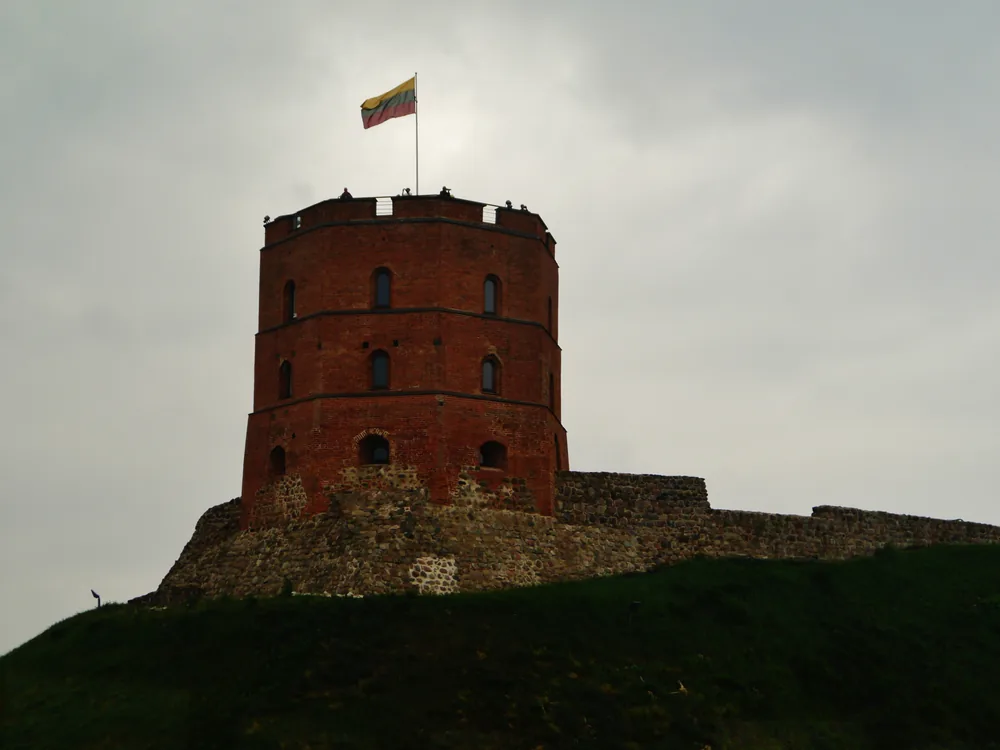
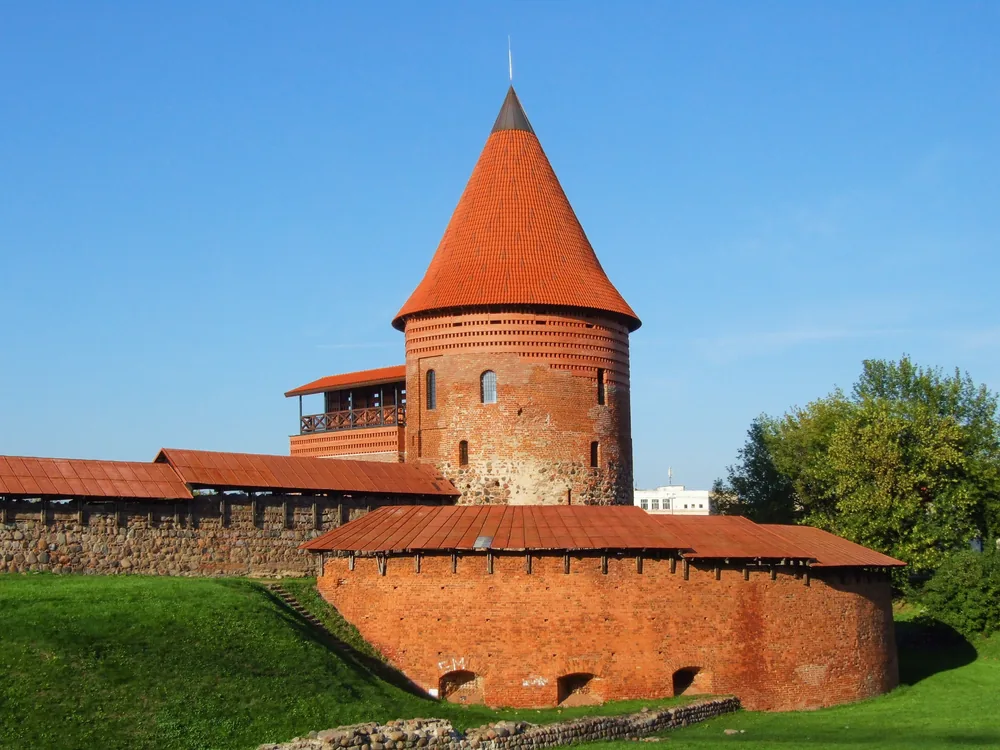
Combine with: Gediminas Tower in Vilnius, 28 km east, is Lithuania's national symbol and an easy same-day pairing with Trakai. Kaunas Castle, Lithuania's first brick fortress 90 km east, is the starting point for the Nemunas River castles circuit.
Frequently Asked Questions
The Karaim are a Turkic-speaking ethnic group who practice Karaism — a form of Judaism that accepts only the Hebrew Bible and rejects later rabbinic tradition. Grand Duke Vytautas brought approximately 380 Karaim families from Crimea to Trakai in the 1390s to serve as palace guards. Today, the Trakai Karaim community numbers fewer than 100 people but maintains its unique language, religion, and traditions. Their kenesa (prayer house) on Karaimų Street is one of only three in the world.
Location
Pilies sala 4, Trakai 21104, Lithuania
Nearby Castles
Tours & Tickets
Powered by GetYourGuide
From
€30/ person