Raudondvaris Manor
Raudondvario dvaras
Lithuania · Kaunas District, Nevėžis River, ~9km northwest of Kaunas · Near Raudondvaris
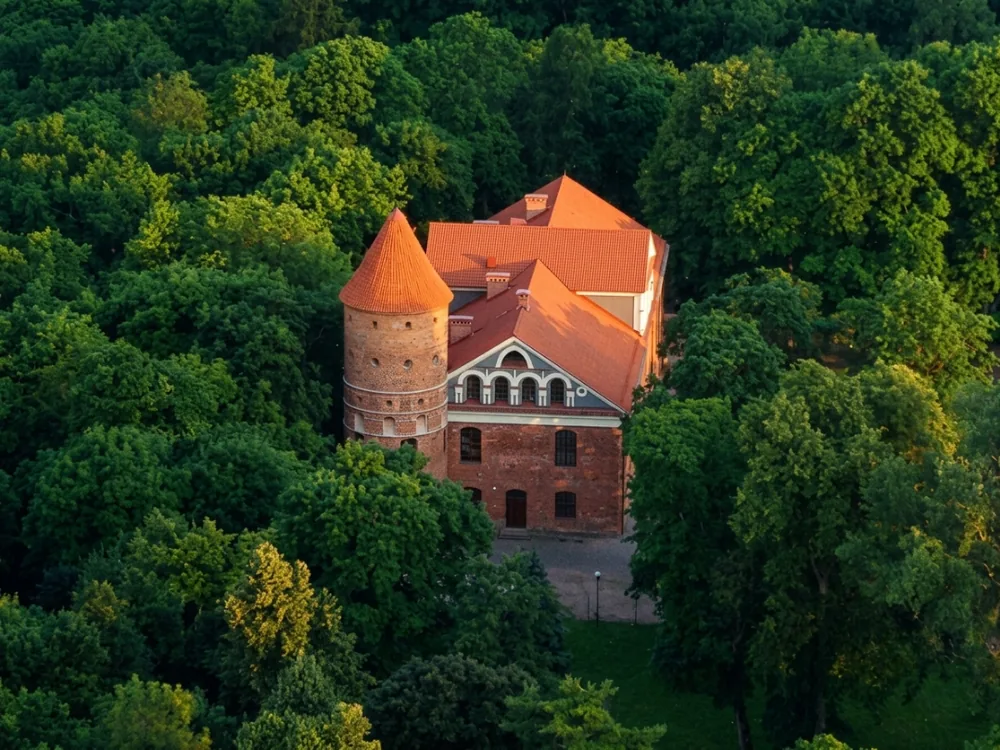
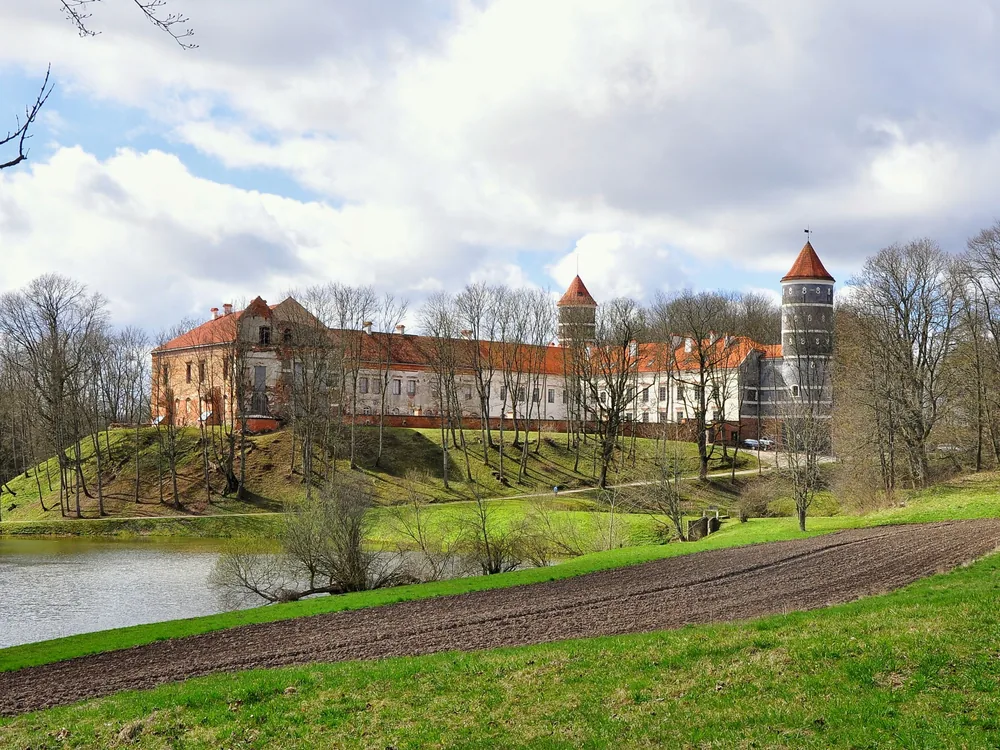
Built 1392 · Gothic Revival red-brick manor over a Teutonic castle core — the site's construction history runs from a pagan hillfort (first recorded 1392) to the Teutonic Order's Königsburg (a garrisoned castle of 80 knights and 400 soldiers), through a Renaissance manor built for Queen Barbara Radziwiłł in 1549, to the Gothic Revival brick mansion built 1832–1855 by Count Emmanuel Benedykt Tyszkiewicz; a round tower on the southern side is believed to be a physical survival from the Teutonic-period construction, retained through all subsequent rebuilds; the name 'Raudondvaris' (Red Manor) derives from the red brick that defines the building at every phase of its history; the Gothic Revival remodel produced steeply pitched roofs, pointed windows, and battlemented parapets typical of the 19th-century romantic medievalism that characterized aristocratic building across Central and Eastern Europe
This page is part of an independent travel guide and is not affiliated with, endorsed by, or operated by Raudondvaris Manor.
© Castles & Palaces
Quick Facts
- Hours
- Mon–Sun Varies
- Guided tour from
- €199
- Duration
- 45 minutes–1 hour (manor and grounds); 10 hours (GetYourGuide full Nemunas River Castles circuit from Vilnius)
- Best time
- May to September
- Nearest city
- Raudondvaris
Featured Tour
From Vilnius: Kaunas & Nemunas River Castles Tour
Cancellation available · Instant confirmation
Highlights
- ✦Queen Barbara Radziwiłł's manor (1549) — Sigismund II Augustus, King of Poland and Grand Duke of Lithuania, gave the property to his wife Barbara Radziwiłł in 1549; she had the red-brick manor built that gave the surrounding village its name (Raudondvaris = Red Manor); Barbara Radziwiłł was the most powerful woman in the Grand Duchy, whose marriage to Sigismund caused a constitutional crisis and whose death in 1551 inspired enduring Polish-Lithuanian cultural memory
- ✦The Teutonic Order's Königsburg — before becoming a royal manor, the site was a Teutonic Order castle built after 1392, garrisoned with 80 knights and 400 soldiers; the name Königsburg (King's Castle in German) reflects its status as one of the Order's primary installations in the contested border territories between Prussia and Lithuania
- ✦The Tyszkiewicz family's old-master art collection — Count Emmanuel Benedykt Tyszkiewicz acquired the manor in 1819 and rebuilt it as a Gothic Revival residence (1832–1855); the Tyszkiewicz family used the manor to house an art collection that reportedly included works attributed to Leonardo da Vinci, Rubens, Caravaggio, and Jan Matejko — an extraordinary concentration of old-master painting in a provincial Lithuanian manor that was dispersed during the upheavals of the 20th century
- ✦The surviving Teutonic tower — a round tower on the southern side of the complex is believed to predate the 16th-century manor and to be a physical survival from the Teutonic-period Königsburg, retained through the Renaissance and Gothic Revival rebuilds; if confirmed, it is the oldest visible architectural element on the site
- ✦GetYourGuide Kaunas & Nemunas River Castles day tour from Vilnius (max 7 guests, 10 hours) — includes a dedicated guided stop at Raudondvaris Manor alongside Kaunas Castle, Raudonė Castle, and Panemunė Castle
Skip the queue with a guided tour
Skip-the-line tickets & expert guides
The name Raudondvaris means Red Manor in Lithuanian — a name that describes the building at every period of its history, since red brick has been the primary construction material at this site from the Teutonic Order's 14th-century fortification through the 16th-century royal manor and the 19th-century aristocratic rebuild. Raudondvaris is a place where the layers of Lithuanian history — medieval, royal, aristocratic, and Soviet — have accumulated in a single property on the banks of the Nevėžis River, 9 kilometres northwest of Kaunas.
The site's documented history begins in 1392, when the surrounding region of Samogitia was ceded to the Teutonic Order as part of the Ostrów Agreement — a treaty in which the Grand Duke of Lithuania temporarily surrendered the western Lithuanian territories to the Order in exchange for support against a rival claimant to the Lithuanian throne. The Teutonic Order, finding itself in possession of a strategically located hilltop above the Nevėžis River, built a castle called Königsburg (King's Castle in German): a garrisoned installation with 80 knights and 400 soldiers, equipped to serve as both a military position and an administrative center for the Order's new territory.
The Teutonic Order's control of Samogitia lasted until 1411 — the aftermath of the Battle of Grunwald, when the Order's decisive defeat forced the return of the territory to Lithuania under the terms of the Peace of Thorn. The Königsburg became Lithuanian property, and the site gradually transitioned from a military installation to a royal manor. Over the following century, ownership moved through the Kings of Poland and Grand Dukes of Lithuania, making Raudondvaris part of the royal domain rather than a private noble possession.
The most historically resonant episode in the manor's royal period came in 1549, when Sigismund II Augustus, King of Poland and Grand Duke of Lithuania, gave the property to his wife Barbara Radziwiłł. The gift had a specific meaning: Barbara Radziwiłł was already one of the most powerful women in the Grand Duchy before her marriage to Sigismund, and the marriage itself had generated a constitutional crisis — the Polish-Lithuanian nobility had objected strenuously to a king marrying a Lithuanian noble rather than a foreign princess, and the Sejm (parliament) had attempted to block the marriage for years before Sigismund prevailed. Barbara's ownership of Raudondvaris was brief: she died in 1551, two years after receiving it, at the age of approximately 30. Her death inspired a long tradition of Polish-Lithuanian cultural commemoration, including plays, novels, and operas about the beautiful queen whose marriage to the king the nobility resented and whose early death inspired grief that lasted for decades.
It was Barbara who had the red-brick manor built that gave the surrounding village its name — the manor that replaced whatever remained of the Teutonic-era Königsburg and established the residential character of the site as distinct from its military origins. After Barbara's death, the property returned to royal hands and continued to circulate through the Lithuanian-Polish noble establishment over the following centuries.
The Tyszkiewicz family acquired the manor in 1819 and defined its modern appearance. Count Emmanuel Benedykt Tyszkiewicz commissioned the comprehensive rebuild of 1832–1855 that produced the Gothic Revival brick mansion currently standing — steeply pitched roofs, pointed window arches, battlemented parapets, and the romantic medievalism typical of 19th-century aristocratic building across Central and Eastern Europe. A round tower on the southern side of the complex is believed to be a physical survival from the Teutonic-period Königsburg, retained through the Renaissance and Gothic Revival rebuilds as the oldest visible element of the site's construction history.
The Tyszkiewicz family's most extraordinary contribution to Raudondvaris was cultural rather than architectural. Over the course of the 19th century, the family assembled an art collection at the manor that was reportedly one of the most significant in the Grand Duchy of Lithuania — including works attributed to Leonardo da Vinci, Rubens, Caravaggio, and the Polish historical painter Jan Matejko. The provenance and current whereabouts of most of these works are uncertain; the collection was dispersed during the upheavals of the First World War, the Russian occupation, and the Soviet period, and the manor itself was nationalized in 1915 when the Tyszkiewicz family fled to escape the advancing Russian front. The family had occupied the manor from 1819 to 1915 — 96 years of continuous aristocratic habitation and cultural accumulation that the 20th century undid in a matter of weeks.
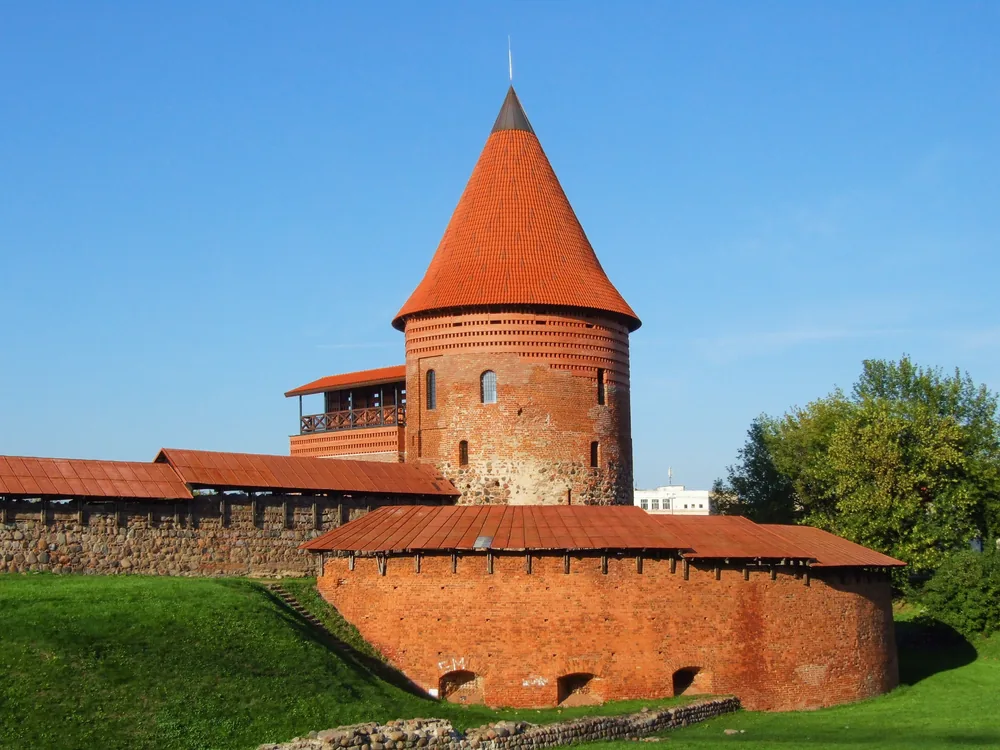
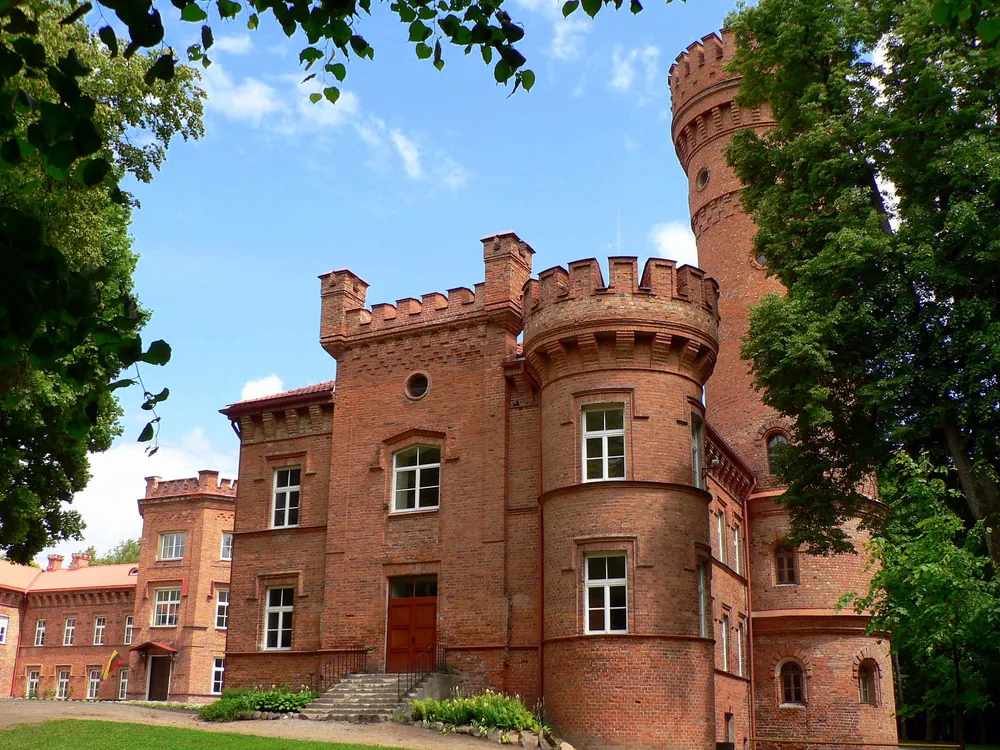
Raudondvaris Manor is the second stop on the Nemunas River Castles circuit, a chain of four fortifications and manor houses in the Nemunas and Nevėžis river valleys that constitutes Lithuania's most concentrated medieval and early modern architectural sequence. [Kaunas Castle](/castles/lithuania/kaunas-castle), 9 kilometres downstream at the Nemunas-Neris confluence, is the circuit's starting point and the first brick castle of the Grand Duchy. [Raudonė Castle](/castles/lithuania/raudone-castle), further down the Nemunas, preserves a 34-metre cylindrical tower from its Renaissance phase. [Panemunė Castle](/castles/lithuania/panemune-castle), the westernmost of the four, was built from 1604 and confiscated by the Tsarist authorities after its owner led the failed November Uprising of 1830.
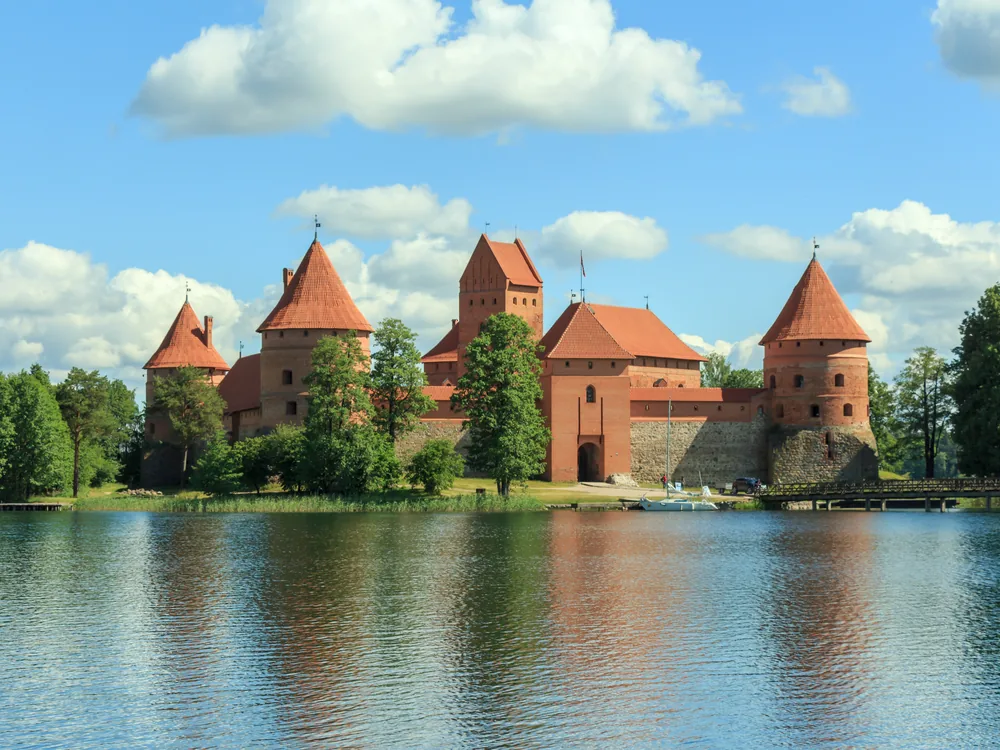
For Lithuania's other principal fortifications: [Trakai Island Castle](/castles/lithuania/trakai-island-castle) in the lake district 90 kilometres northeast is the Grand Duchy's most visually dramatic medieval castle; [Gediminas Tower](/castles/lithuania/gediminas-tower) in Vilnius is the upper castle of the Grand Duchy's capital.
History
The site at Raudondvaris appears in records from 1392, when the region of Samogitia was ceded to the Teutonic Order and the Order built 'Königsburg' castle on the hilltop above the Nevėžis River, garrisoning it with 80 knights and 400 soldiers. The Battle of Grunwald and the Peace of Thorn in 1411 returned Samogitia to Lithuania, and Königsburg became Lithuanian royal property. Through the 15th and 16th centuries the estate circulated through the Polish-Lithuanian royal domain.
The episode that gave the site its current name came in 1549, when King Sigismund II Augustus gave the manor to his wife Queen Barbara Radziwiłł. Barbara had the red-brick manor built that named the surrounding village Raudondvaris — Lithuanian for Red Manor — an identity the building has held ever since. She died in 1551, and the property returned to royal hands. Various noble owners followed through the 16th to early 19th centuries.
The Tyszkiewicz family acquired the manor in 1819. A fire in 1831 destroyed the remaining wooden structures, and Count Emmanuel Benedykt Tyszkiewicz undertook a Gothic Revival rebuilding between 1832 and 1855, assembling a notable art collection in the process. The family fled the advancing Russian front in 1915, the manor was nationalised, and various institutional uses followed through the Soviet period. Restoration and opening for tourism came after Lithuanian independence in 1990.
How to Visit
Getting there: Raudondvaris is 9 km from central Kaunas by car (approximately 15 minutes); local buses from Kaunas also serve the village. Confirm current opening hours before visiting.
Tickets: Walk-up admission details vary — confirm at visitkaunas.lt before visiting. The GetYourGuide "From Vilnius: Kaunas & Nemunas River Castles Tour" is a 10-hour small-group circuit (max 7) from Vilnius covering all four Nemunas valley castles, with lunch included — the recommended option for visiting without a rental car.
Practical tips: Opening hours and access vary by season and event programming; the main tourist season is May–September. The manor grounds are the most consistently accessible part of the site; interior access depends on current exhibitions and events.
Combine with: Kaunas Castle, Lithuania's first brick fortress 9 km east at the Nemunas-Neris confluence, is the natural starting point for the Nemunas river circuit before Raudondvaris. Raudonė Castle, further downstream, preserves a climbable 34-metre Renaissance tower with panoramic valley views.
Frequently Asked Questions
Barbara Radziwiłł (c.1520–1551) was a Lithuanian noblewoman who became the second wife of Sigismund II Augustus, King of Poland and Grand Duke of Lithuania. Their marriage was deeply controversial: the Polish-Lithuanian nobility objected to a king marrying a Lithuanian noble rather than a foreign princess, and the Sejm attempted to block the marriage for years. Sigismund prevailed, and in 1549 he gave Raudondvaris to Barbara — it was at this point that the red-brick manor she commissioned named the surrounding village. Barbara died two years later in 1551, at approximately age 30, and her early death inspired a lasting cultural legacy in Polish and Lithuanian literature and opera. Her brief ownership of Raudondvaris connects this Nevėžis River manor to one of the most dramatic dynastic episodes in the Grand Duchy's history.
Location
Raudondvario g. 78, Raudondvaris, Kaunas District, Lithuania
Nearby Castles
Tours & Tickets
Powered by GetYourGuide
From
€199/ person