
Panemunė Castle
Panemunės pilis
Lithuania · Jurbarkas District, Nemunas River, near Smalininkai · Near Jurbarkas
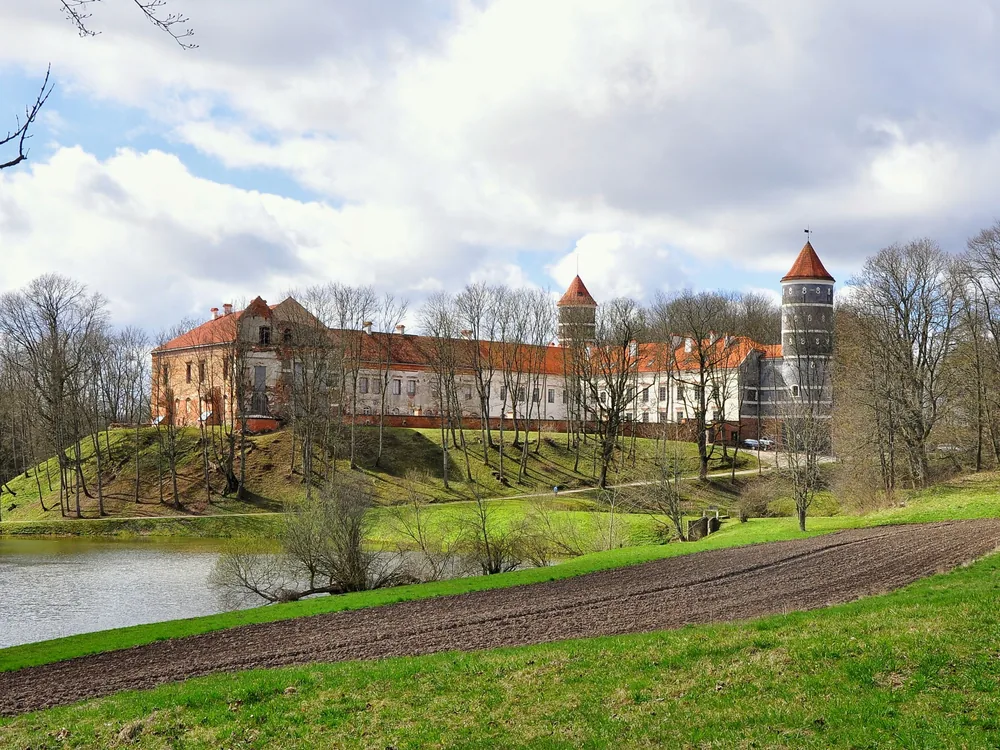
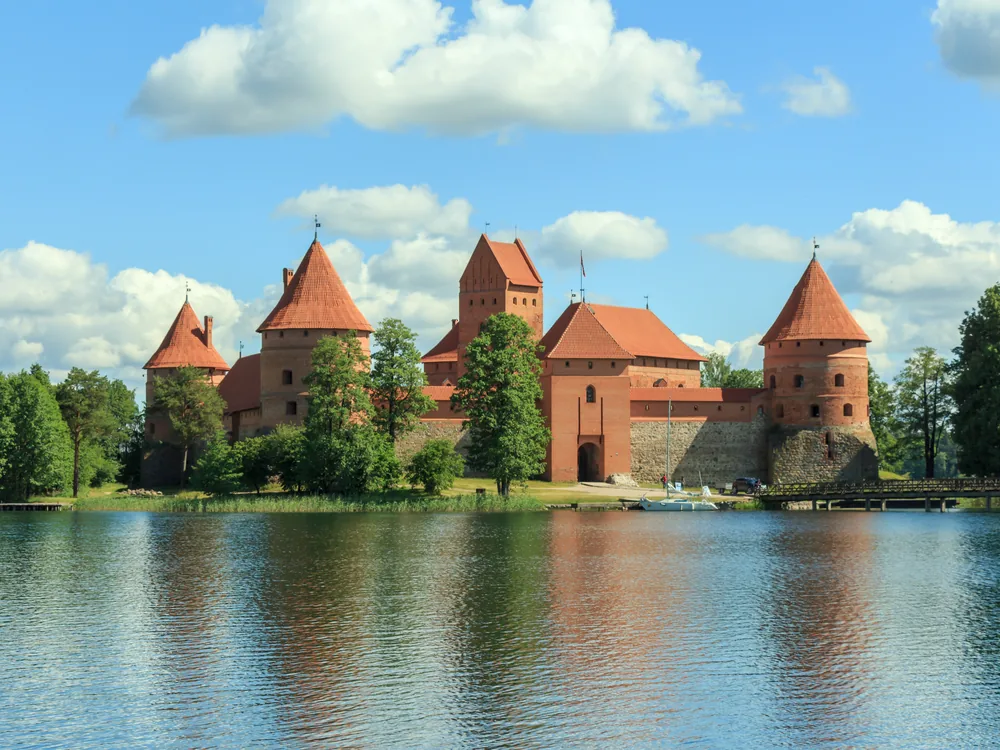
Built 1313 · Renaissance-Baroque nobleman's residence built 1604 by Dutch architect Peter Nonhardt, over the site of the Teutonic Order's Christmemel fortress; the building's main block combines Renaissance structural proportions with Baroque ornamental elements added in later phases, particularly the 1759-1783 renovations by Antanas Anupras Gelgaudas; subsequent Neo-Classical refinements reflect the Classicist taste of the late 18th century; the overall character is that of a relatively intimate Polish-Lithuanian nobleman's country seat rather than a grand palace — a scale appropriate to the provincial nobility of the western Lithuanian borderland; the castle is now operated by the Vilnius Academy of Arts as an arts and culture venue
This page is part of an independent travel guide and is not affiliated with, endorsed by, or operated by Panemunė Castle.
© Castles & Palaces
Quick Facts
- Hours
- Tue–Sun 10:00–17:00. Closed Mon
- Guided tour from
- €199
- Duration
- 1–1.5 hours (castle and grounds); 10 hours (GetYourGuide full Nemunas River Castles circuit from Vilnius)
- Best time
- May to September
- Nearest city
- Jurbarkas
Featured Tour
From Vilnius: Kaunas & Nemunas River Castles Tour
Cancellation available · Instant confirmation
Highlights
- ✦The Teutonic Christmemel (1313) — the site's first recorded structure was the Teutonic Order's Christmemel fortress, established in 1313 at the mouth of the Jūra River where it enters the Nemunas; it was captured the following year (1314) by Grand Duke Vytenis of Lithuania, one of the earliest documented major Lithuanian military victories against the Teutonic Order in the lower Nemunas region
- ✦Built 1604 by Dutch architect Peter Nonhardt — the Renaissance-Baroque manor house that replaced the Teutonic military installation was designed by Peter Nonhardt, a Dutch-born architect working in the Polish-Lithuanian Commonwealth; Nonhardt represents the international architectural exchange that characterized the Commonwealth's cultural life in the early 17th century, bringing Western European building practices to the Lithuanian frontier
- ✦Antanas Gelgaudas and the November Uprising (1830–1831) — the castle's most historically consequential owner was Antanas Anupras Gelgaudas, Elder of Samogitia, who acquired it in 1759 and undertook major renovations; his descendant (and near-namesake) Antanas Gelgaudas led the November Uprising of 1830–1831 as commander-in-chief of the Lithuanian forces fighting for independence from Tsarist Russia; when Gelgaudas died fighting, the Tsarist authorities confiscated the estate immediately, transferring it to Russian imperial ownership — a punitive sequestration that was standard practice against families associated with the uprising
- ✦Vilnius Academy of Arts — since Lithuanian independence in 1990, Panemunė Castle has been managed by the Vilnius Academy of Arts as an arts venue, hosting exhibitions, artist residencies, and cultural events; the transformation from a Tsarist-confiscated noble estate to a contemporary arts institution is characteristic of many Lithuanian manor houses that survived Soviet-era institutional use
- ✦The westernmost castle on the Nemunas circuit — Panemunė Castle is the furthest downstream of the four Nemunas River Castles, positioned where the river begins its final approach to the Curonian Lagoon and the Baltic Sea; the surrounding landscape is the flat, river-meadow terrain of the lower Nemunas, quite different from the hillier country around Kaunas
- ✦GetYourGuide Kaunas & Nemunas River Castles day tour from Vilnius (max 7 guests, 10 hours) — includes a dedicated guided stop at Panemunė Castle alongside Kaunas Castle, Raudondvaris Manor, and Raudonė Castle
Skip the queue with a guided tour
Skip-the-line tickets & expert guides
Panemunė Castle sits at the far western end of the Nemunas River Castles chain, on the flat riverside terrain of the lower Nemunas near the mouth of the Jūra tributary — the furthest downstream of the four fortifications that mark the Grand Duchy of Lithuania's principal river frontier with the Teutonic Order. The site's history begins earlier than the castle itself: in 1313, the Teutonic Order established the fortress of Christmemel here, at the confluence of the Jūra and the Nemunas, as part of the network of military positions that gave the Order control of the lower river system. In 1314, Grand Duke Vytenis of Lithuania captured Christmemel — one of the earliest major Lithuanian victories over the Teutonic Order documented in the written record, and one that established the strategic importance of this particular river junction in the century of conflict that followed.
The military installations of the Teutonic period were superseded in 1604, when the site's then-owners commissioned a new building designed by Peter Nonhardt, a Dutch-born architect working in the Polish-Lithuanian Commonwealth. Nonhardt represents the international cultural and architectural exchange that characterized the Commonwealth at the height of its confidence: architects, artists, and craftsmen from Western and Central Europe brought their building traditions into the Baltic and Lithuanian regions, creating a hybrid architectural culture that expressed the Commonwealth's cosmopolitan aspirations. The manor house Nonhardt built at Panemunė was a Renaissance-Baroque structure appropriate to the scale and taste of the Lithuanian provincial nobility — neither the grand palatial ambition of the Vilnius magnates nor the modest timber building of the rural gentry, but a comfortable, ornamental residence that signalled the owner's status without the resources of the truly great Lithuanian families.
The most consequential period of the castle's history begins with Antanas Anupras Gelgaudas, Elder of Samogitia, who acquired Panemunė in 1759 and undertook a comprehensive renovation that introduced Baroque and Neo-Classical elements into the existing 17th-century structure. Gelgaudas was one of the most powerful men in western Lithuania — the Elder of Samogitia was a major administrative and social position in the Grand Duchy's provincial hierarchy — and his investment in Panemunė reflected both his personal taste and his desire to establish the castle as an appropriate seat for his family.
The castle's most dramatically consequential historical moment came not through the building itself but through the political choices of a subsequent family member bearing nearly the same name. Antanas Gelgaudas — the Elder's descendant and near-namesake — became commander-in-chief of the Lithuanian forces in the November Uprising of 1830–1831. The November Uprising was the largest armed resistance to Tsarist Russian rule in the territories of the former Grand Duchy of Lithuania and the former Kingdom of Poland — a coordinated insurrection that sought to restore the pre-partition Polish-Lithuanian Commonwealth by force of arms. The uprising ultimately failed: the Tsarist military suppressed it after months of fighting, and the consequences for the families of those who had led it were severe. When Antanas Gelgaudas died fighting in the course of the uprising — in some sources at Šiauliai in 1831 — the Tsarist authorities confiscated the Panemunė estate as a punitive sequestration, a standard practice applied against families associated with the uprising throughout the former Lithuanian and Polish territories. The castle passed into Russian imperial ownership and did not return to Lithuanian hands until after independence.
The Soviet period saw the castle used for institutional purposes — an experience shared by most Lithuanian manor houses that survived the 20th century without complete demolition or abandonment. Since Lithuanian independence in 1990, Panemunė Castle has been managed by the Vilnius Academy of Arts, Lithuania's principal art and design university, which operates it as a venue for exhibitions, artist residencies, summer schools, and cultural events. The transformation from Tsarist-confiscated noble estate to contemporary arts institution gives the castle a current use that is both culturally appropriate and practically sustainable — a pattern successfully replicated with other Lithuanian manor houses that found institutional patrons after 1990.
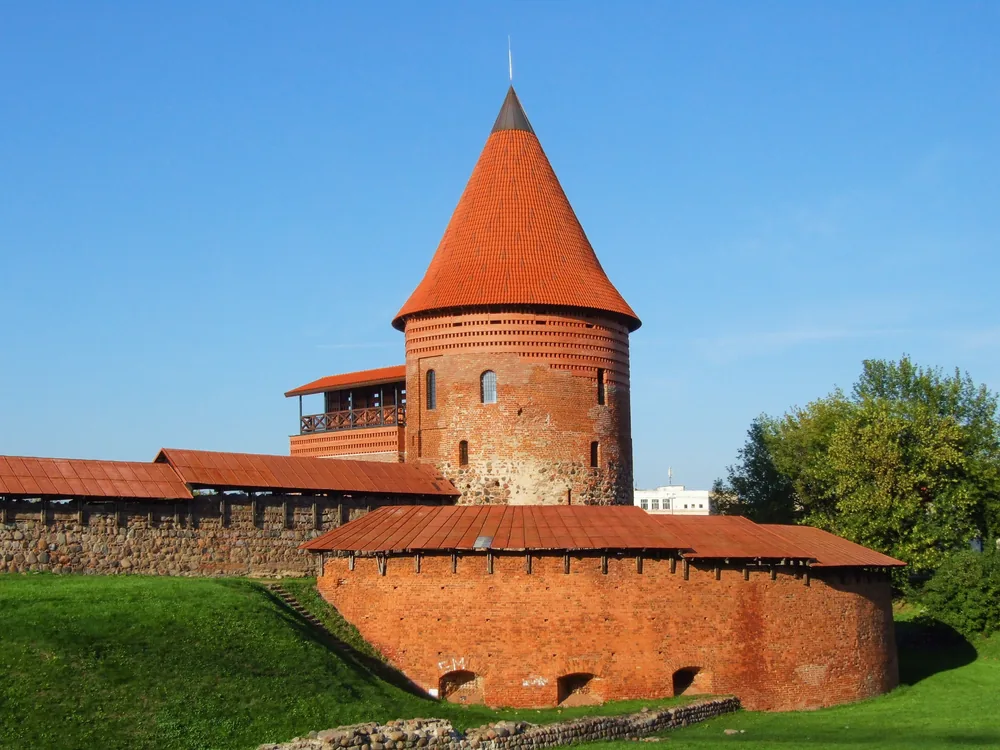
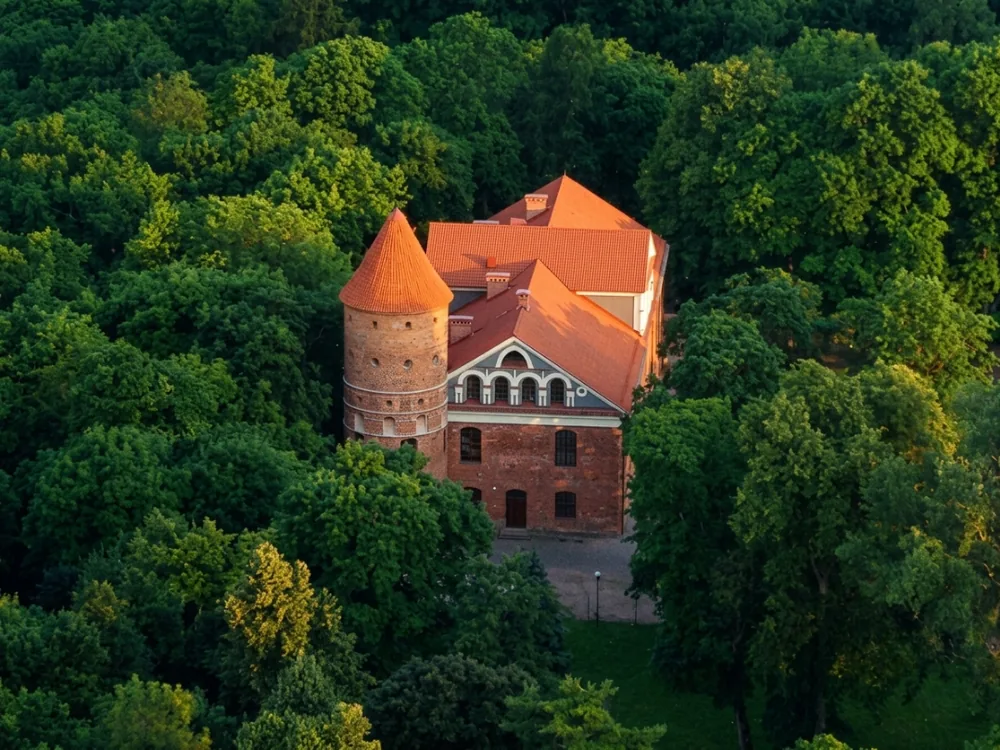
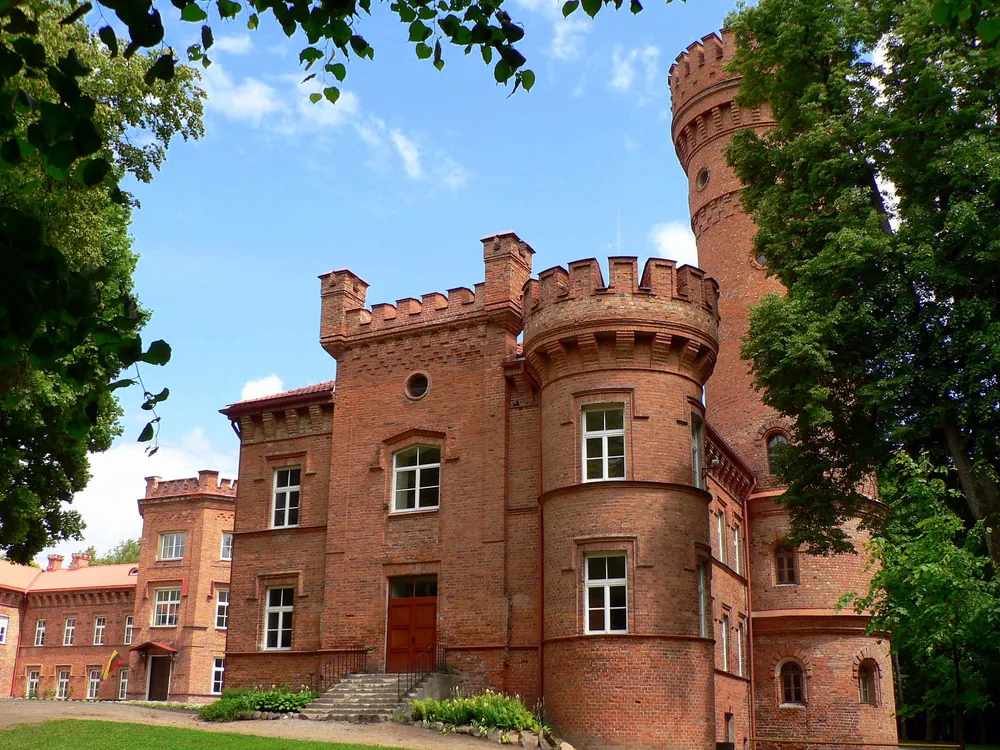
The castle is the final stop on the Nemunas River Castles circuit. [Raudonė Castle](/castles/lithuania/raudone-castle), 30 kilometres upstream, preserves the 34-metre cylindrical tower of the Teutonic Order's Bayersburg as a climbable observation platform. [Raudondvaris Manor](/castles/lithuania/raudondvaris-manor), 80 kilometres upstream, was Queen Barbara Radziwiłł's red-brick manor before the Tyszkiewicz family filled it with old masters. [Kaunas Castle](/castles/lithuania/kaunas-castle), at the Nemunas-Neris confluence 100 kilometres upstream, is the first brick castle of the Grand Duchy of Lithuania.
For the broader Lithuanian castle network: [Trakai Island Castle](/castles/lithuania/trakai-island-castle) in the lake district northeast of Vilnius is the most visually striking medieval castle in Lithuania. [Gediminas Tower](/castles/lithuania/gediminas-tower) in Vilnius is the upper castle of the Grand Duchy's capital.
History
The Teutonic Order established Christmemel fortress at the Jūra-Nemunas confluence in 1313, controlling the furthest downstream crossing of the Nemunas on the Teutonic-Lithuanian frontier. Just one year later, Grand Duke Vytenis of Lithuania captured Christmemel in one of the early major Lithuanian victories over the Order — a reversal that established the site as Lithuanian rather than Teutonic territory for the century that followed. The Battle of Grunwald in 1410 definitively broke Teutonic Order military power, and the Nemunas valley remained in Lithuanian control.
The current building dates not from the medieval military period but from 1604, when Jonuš Eperješ — who had acquired the site in 1597 — commissioned the Dutch architect Peter Nonhardt to build a Renaissance-Baroque manor house on the riverside site. Antanas Anupras Gelgaudas, Elder of Samogitia, acquired the castle in 1759 and undertook a major Baroque and Neo-Classical renovation completed in 1783. The political drama that defines the castle's modern history came during the November Uprising against Russian rule in 1830–31: Gelgaudas served as the Lithuanian commander-in-chief of the uprising, died fighting in 1831, and the Tsarist authorities confiscated the Panemunė estate as punitive sequestration — passing the castle to Russian imperial ownership.
Various institutional uses followed through the Soviet period. Lithuanian independence in 1990 transferred the castle to the Vilnius Academy of Arts, which operates it as an arts venue.
How to Visit
Getting there: The castle is near Smalininkai in Jurbarkas District, accessible by car from Jurbarkas (approximately 20 km). The GetYourGuide Nemunas River Castles tour departs from Vilnius and is the easiest way to reach all four castles without a rental car.
Tickets: Walk-up admission details vary with the Vilnius Academy of Arts' exhibition programme — confirm at vda.lt before visiting. The GetYourGuide "From Vilnius: Kaunas & Nemunas River Castles Tour" is a 10-hour small-group circuit (max 7) covering all four Nemunas valley castles — Kaunas, Raudondvaris, Raudonė, and Panemunė — in a single day, with lunch included.
Practical tips: The castle's access schedule varies with the Vilnius Academy of Arts' programming, concentrated in the summer season (May–September). Visit in the afternoon if completing the Nemunas river circuit from Kaunas — Panemunė is the westernmost and furthest downstream of the four castles.
Combine with: Kaunas Castle, Lithuania's first brick fortress at the Nemunas-Neris confluence 100 km upstream, is the essential starting point for the river circuit. Raudonė Castle, 30 km upstream, preserves a climbable 34-metre Renaissance tower with panoramic views over the valley.
Frequently Asked Questions
Antanas Gelgaudas, whose family owned Panemunė Castle, led the Lithuanian forces in the November Uprising of 1830–1831 — the largest armed insurrection against Russian rule in the former Polish-Lithuanian Commonwealth territories. When the uprising was suppressed and Gelgaudas died fighting in 1831, the Tsarist authorities confiscated the Panemunė estate as a punitive measure. This was standard practice across the former Commonwealth: families identified as leaders or significant participants in the uprising had their estates sequestered and transferred to Russian imperial ownership. The Gelgaudas family did not recover the property.
Location
Panemunėlis, Jurbarkas District, Lithuania
Nearby Castles
Tours & Tickets
Powered by GetYourGuide
From
€199/ person