
Kaunas Castle
Kauno pilis
Lithuania · Kaunas, confluence of the Nemunas and Neris rivers · Near Kaunas
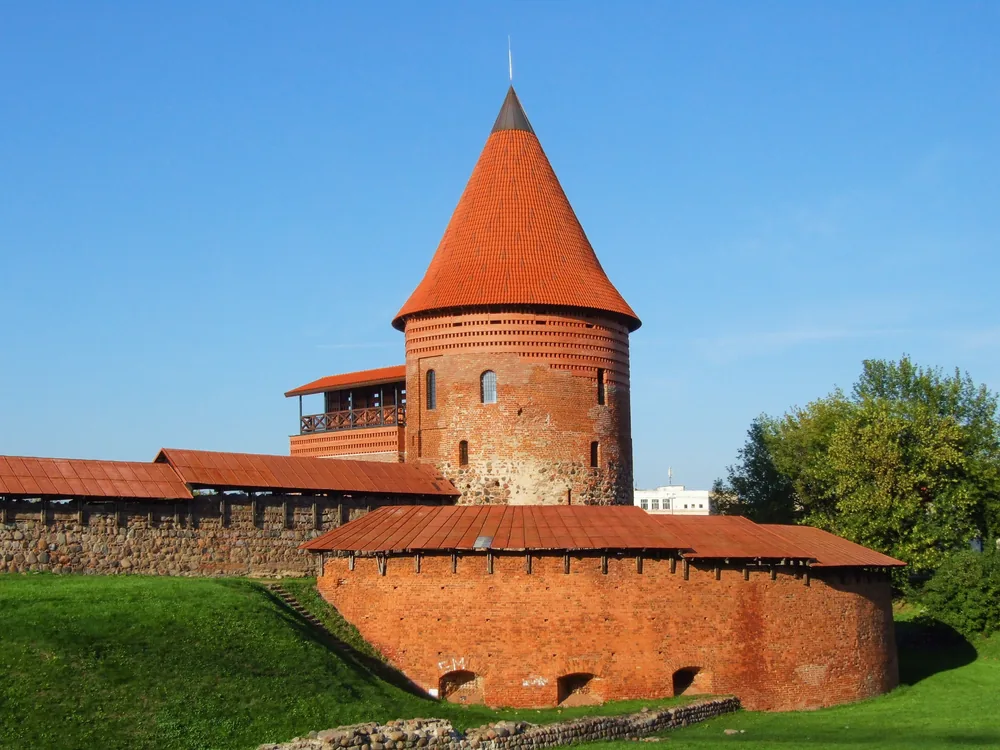
Built 1362 · Gothic brick river-confluence fortress — a rectangular enclosure with round towers at the corners, walls up to 2.5 metres thick, built at the precise geographic point where the Nemunas and Neris rivers meet; the construction materials (brick manufactured locally from the Kaunas clay deposits) and the structural approach (thick walls designed to resist direct assault and siege machinery rather than artillery) reflect mid-14th-century military engineering; approximately one-third of the original circuit survives, primarily the western tower and sections of the curtain wall; the surviving structure is the first example of brick military construction in the Grand Duchy of Lithuania's documented building history
This page is part of an independent travel guide and is not affiliated with, endorsed by, or operated by Kaunas Castle.
© Castles & Palaces
Quick Facts
- Hours
- Tue–Sun 10:00–18:00. Closed Mon
- Guided tour from
- €199
- Duration
- 1–1.5 hours (castle and museum); 10 hours (GetYourGuide full Nemunas River Castles circuit from Vilnius)
- Best time
- May to September
- Nearest city
- Kaunas
Featured Tour
From Vilnius: Kaunas & Nemunas River Castles Tour
Cancellation available · Instant confirmation
Highlights
- ✦First brick castle in the Grand Duchy of Lithuania — the historical significance of Kaunas Castle is architectural as well as military: this was the first time Lithuanian builders employed brick (rather than timber and earthworks) as the primary construction material for a military installation, a technical and organizational achievement that predated Lithuania's full Christianization and its integration into the European brick-building tradition
- ✦The strategic position at the Nemunas-Neris confluence — the castle was not placed here by accident; the convergence of the Grand Duchy's two most important rivers created a bottleneck that any army moving from western Prussia into the Lithuanian heartland had to navigate; the castle controlled the crossing point and gave the medieval city of Kaunas its reason to exist in its particular location
- ✦The 1362 Teutonic Order siege — the most historically documented event in the castle's early history; Teutonic Knights besieged the new fortress while Lithuanian forces were engaged elsewhere; Prince Vaidotas commanded the defense for a prolonged period before the siege succeeded; the event defined the castle's military purpose and demonstrated the Teutonic Order's strategic reach into Lithuanian territory during the peak of the Baltic Crusades
- ✦Post-Grunwald decline into peaceful use — after the Battle of Grunwald in 1410 broke the Teutonic Order's military power definitively, Kaunas Castle's strategic function evaporated; the following centuries were spent as a venue for diplomatic meetings and the residence of the local governor, reflecting the broader shift of medieval Lithuanian military investment from river-junction castles to the consolidated political structures of the Grand Duchy
- ✦GetYourGuide Kaunas & Nemunas River Castles day tour from Vilnius (max 7 guests, 10 hours) — a small-group guided circuit from Vilnius covering all four Nemunas valley castles: Kaunas Castle, Raudondvaris Manor, Raudonė Castle, and Panemunė Castle in a single day
Skip the queue with a guided tour
Skip-the-line tickets & expert guides
Kaunas Castle stands at the precise point where the Nemunas and Neris rivers converge — the geographic bottleneck that determined where the city of Kaunas would be built and why a castle there mattered enough to make it the first brick military structure the Grand Duchy of Lithuania ever constructed. The castle's significance is double: strategic, as the fortress controlling the most critical river junction in medieval Lithuania, and architectural, as the first use of fired brick in Lithuanian military building — a technical and organizational achievement that preceded the Grand Duchy's full adoption of European building practices.
The construction of Kaunas Castle is associated with the early 1360s, the period when the Grand Duchy of Lithuania was in sustained conflict with the Teutonic Order — the German military-religious order that had been granted control of Prussia by the Holy Roman Empire and had been steadily pressing eastward into Lithuanian and Latvian territory since the 13th century. The Baltic Crusades, as the series of campaigns against the pagan Lithuanian and Latvian peoples was called, created a persistent military pressure on the Grand Duchy's western frontier for nearly two centuries. Kaunas, as the most accessible deep penetration point via the Nemunas River valley from the Teutonic Order's territory in Prussia, required a permanent defensive installation capable of slowing or stopping an army moving upstream.
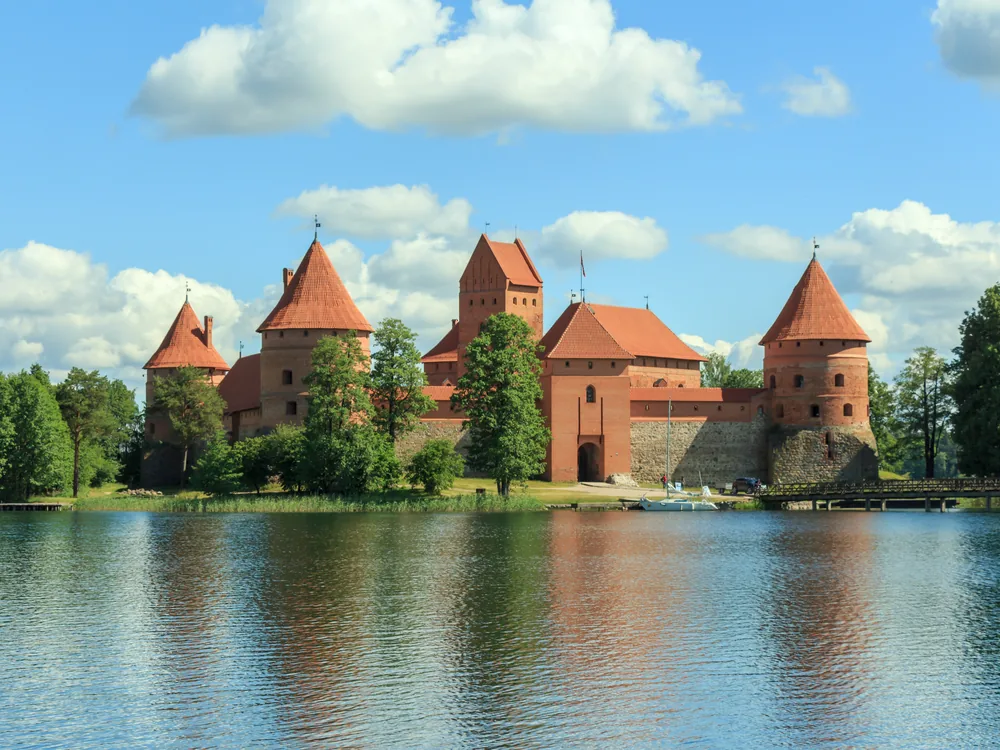
The castle that was built to address this requirement was a rectangular brick enclosure with round towers at the corners — a standard European military design of the mid-14th century, adapted to the specific geography of the river junction site. The walls were up to 2.5 metres thick, designed to resist direct assault and the siege machinery of the period. The total enclosed area was approximately 5,200 square metres. The materials were fired brick manufactured locally from the clay deposits around Kaunas — the same material that would later define the architectural character of Kaunas's historic center.
The military value of the new construction was tested almost immediately. In 1362, Teutonic Knights besieged Kaunas Castle while Lithuania's main military forces were engaged elsewhere. The chronicle record of this event names Prince Vaidotas as the commander of the castle's defense — a rare personal attribution in the fragmentary documentation of 14th-century Lithuanian military history. The garrison held for a prolonged period, but the siege ultimately succeeded; the Teutonic Order took the castle after the extended investment. The loss was a significant symbolic blow as well as a tactical one: the first brick castle of the Grand Duchy had fallen within a few years of its construction.
The strategic calculus changed permanently fifty years later. The Battle of Grunwald in 1410 — a combined Polish-Lithuanian victory over the Teutonic Order that remains one of the largest battles of the medieval period — broke the Order's military capacity to mount the kind of large-scale campaigns that had been threatening the Grand Duchy's western frontier since the 13th century. After Grunwald, Kaunas Castle ceased to be a front-line military installation and shifted into the quieter role of an administrative center: a venue for diplomatic meetings, a residence for the local governor, an occasional assembly point for regional administration. The castle's significance became historical rather than strategic.
The physical survival of the castle is partial: approximately one-third of the original circuit remains, predominantly the western round tower and sections of the adjacent curtain wall. The eastern portions were damaged by flooding and gradual deterioration over the centuries of reduced maintenance that followed the castle's obsolescence as a military structure. What survives has been consolidated and is now presented as a museum, with the visible masonry of the 14th-century brick construction accessible to visitors.
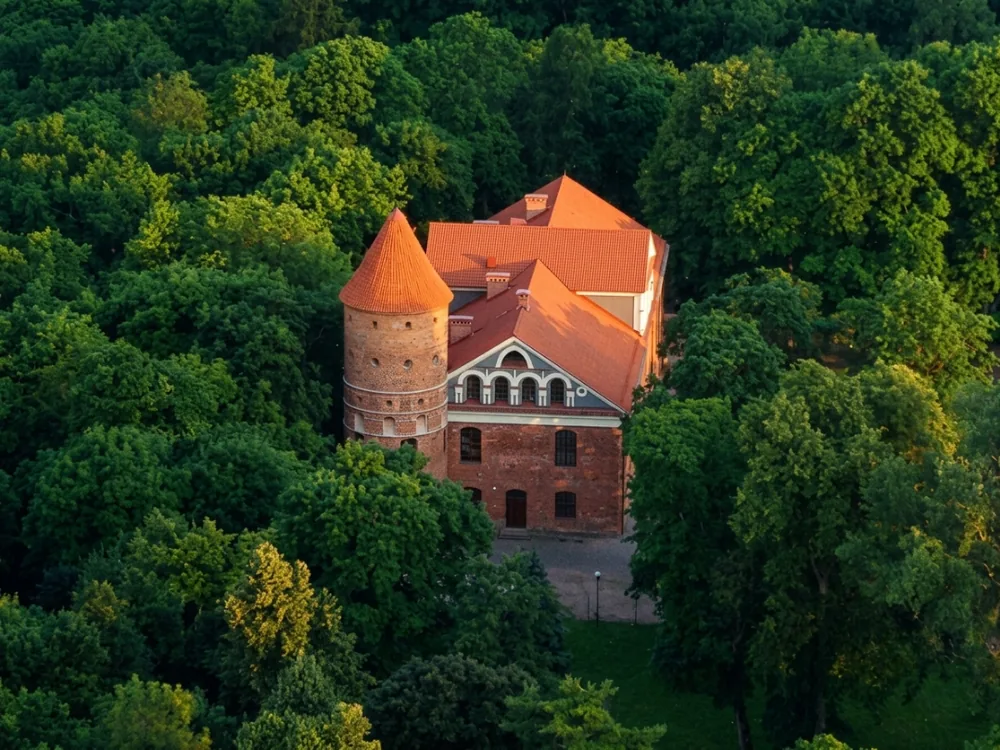
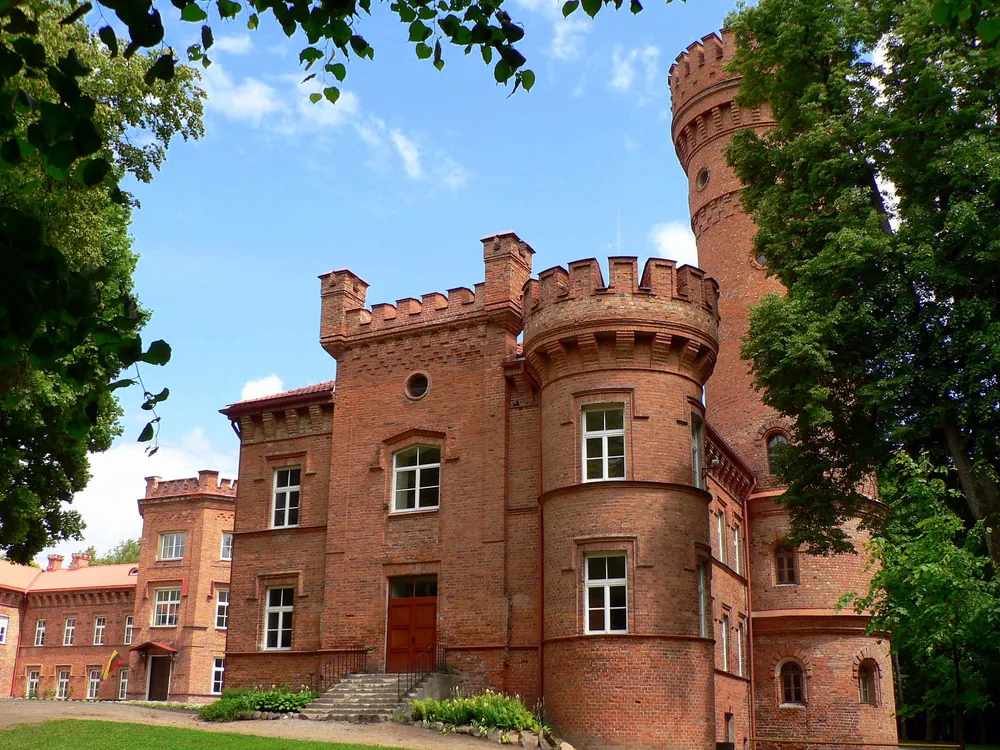
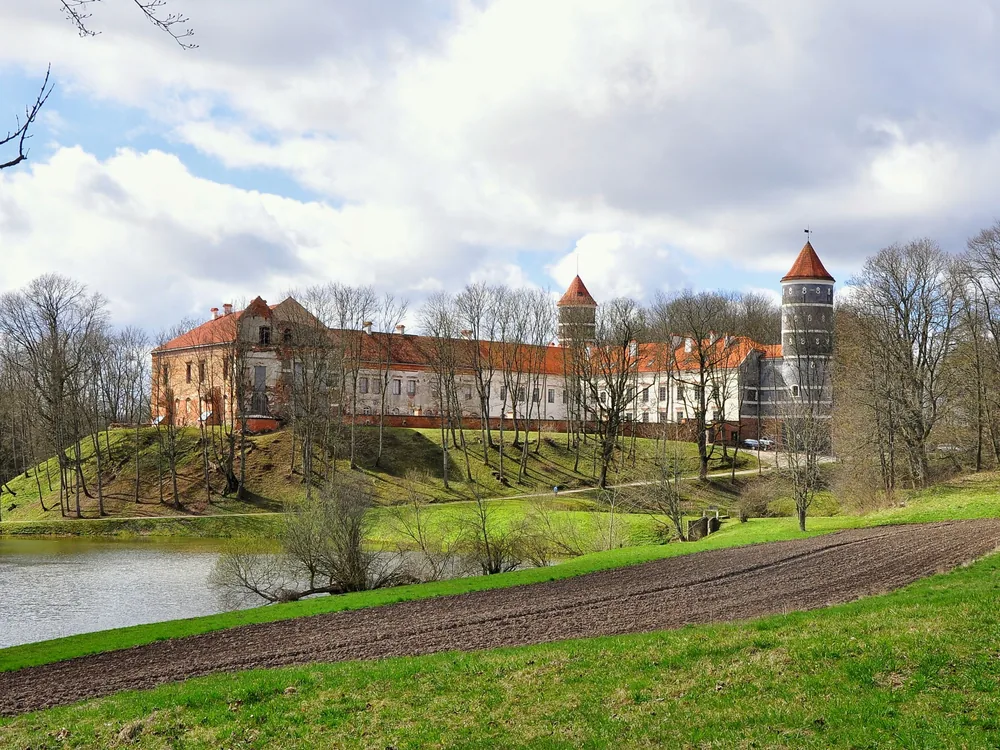
Kaunas Castle is the starting point of the Nemunas River Castles circuit — the chain of fortifications and manor houses along the Nemunas and Nevėžis rivers that represents Lithuania's most concentrated assembly of medieval and early modern defensive architecture. [Raudondvaris Manor](/castles/lithuania/raudondvaris-manor), 9 kilometres to the northwest on the Nevėžis River, was the Teutonic Order's Königsburg before Queen Barbara Radziwiłł made it her own. [Raudonė Castle](/castles/lithuania/raudone-castle), further down the Nemunas toward the sea, preserves a 34-metre Renaissance tower climbable as an observation platform. [Panemunė Castle](/castles/lithuania/panemune-castle), the westernmost of the four, was built from 1604 and confiscated by the Tsarist authorities after its owner led a failed 19th-century uprising against Russia.
For Lithuania's other principal fortifications: [Trakai Island Castle](/castles/lithuania/trakai-island-castle), 90 kilometres northeast, is the Grand Duchy's most visually striking medieval castle, built on an island in Lake Galvė. [Gediminas Tower](/castles/lithuania/gediminas-tower) in Vilnius is the upper castle of the Grand Duchy's capital, dating from the early 14th century.
History
c.1360s: Construction of Kaunas Castle begins — the first brick military structure in the Grand Duchy of Lithuania, built at the Nemunas-Neris river confluence to defend against the Teutonic Order. 1362: Teutonic Knights besiege the castle under Prince Vaidotas's defense; the siege succeeds and the Teutonic Order takes the castle. Late 14th century: Castle returns to Lithuanian control. 1410: Battle of Grunwald breaks Teutonic Order military power; Kaunas Castle's front-line strategic function ends. 15th–18th century: Castle used as an administrative center — diplomatic meetings, governors' residence; physical fabric gradually deteriorates. Post-18th century: Partial flooding and structural loss; approximately two-thirds of the original circuit lost. Present day: Surviving western tower and curtain wall sections consolidated and opened as a museum; the first brick castle of Lithuania preserved as a historic monument.
How to Visit
Getting there: Kaunas is 100 km from Vilnius — about 90 minutes by train or car. The castle is in the Old Town on Pilies Street at the Nemunas-Neris confluence, a 5-minute walk from the main train and bus stations.
Tickets: Admission applies; check current prices at the castle or at kaunomuziejus.lt. The GetYourGuide "From Vilnius: Kaunas & Nemunas River Castles Tour" is a small-group 10-hour circuit from Vilnius covering all four Nemunas valley castles — Kaunas, Raudondvaris, Raudonė, and Panemunė — in a single day, with lunch included.
Practical tips: The surviving western tower and curtain wall sections are the oldest brick elements; the museum inside is compact and focused on the castle's medieval military history. If doing the full Nemunas castles circuit, visit Kaunas first thing in the morning before heading deeper into the valley.
Combine with: Raudondvaris Manor, 9 km northwest on the Nevėžis River, is the closest of the Nemunas valley castles and a natural first extension. Trakai Island Castle, 90 km northeast, is Lithuania's most striking medieval fortress and pairs well with Kaunas on a two-day Lithuania itinerary.
Frequently Asked Questions
Kaunas Castle represents two firsts: it was the first structure in the Grand Duchy of Lithuania to use fired brick as the primary building material for a military fortification, and it was the front-line bulwark against the Teutonic Order at the most strategically critical river junction in medieval Lithuania. The Teutonic Order's siege of 1362 is one of the best-documented events in 14th-century Baltic military history, making Kaunas Castle an important reference point in the broader history of the Baltic Crusades — the century-long conflict between the German military-religious orders and the last pagan state in medieval Europe.
Location
Pilies g. 17, Kaunas 44280, Lithuania
Nearby Castles
Tours & Tickets
Powered by GetYourGuide
From
€199/ person