
Raudonė Castle
Raudonės pilis
Lithuania · Tauragė County, Nemunas River, Raudonė village · Near Jurbarkas
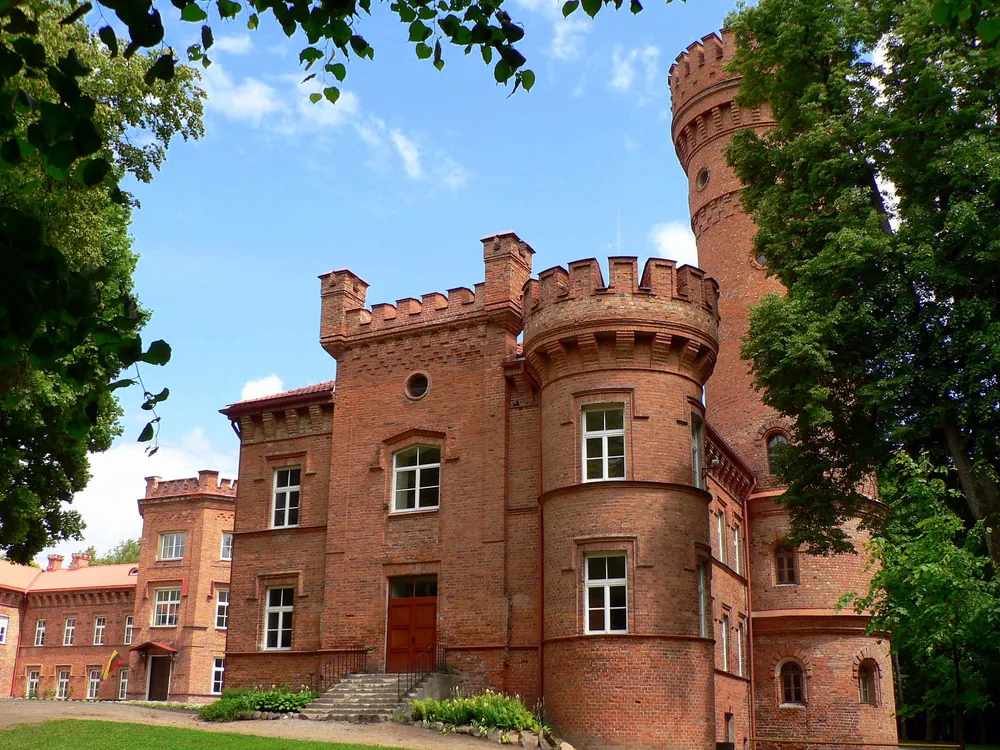
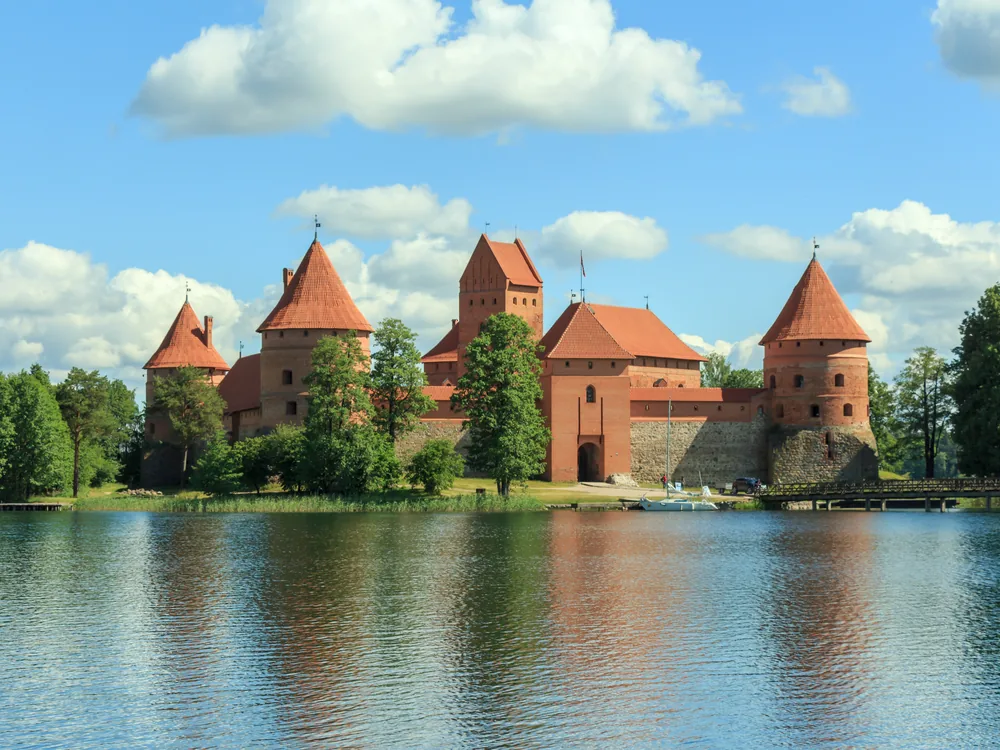
Built 1340 · Renaissance manor with a prominent cylindrical observation tower — the castle's most visible feature is a 34-metre cylindrical brick tower from the late 16th century, still intact and accessible as a public observation platform; the main residential block is a Renaissance nobleman's manor built by Krispin Kirschenstein in the late 16th century on the site of the Teutonic Order's Bayersburg; subsequent owners — including the family of Laurynas Stuoka-Gucevičius, the Lithuanian architect who designed Vilnius Cathedral — added Classicist refinements; the combination of a German merchant's Renaissance manor with a Teutonic-era cylindrical tower that outlasted multiple rebuilds gives Raudonė its distinctive layered silhouette above the Nemunas floodplain
This page is part of an independent travel guide and is not affiliated with, endorsed by, or operated by Raudonė Castle.
© Castles & Palaces
Quick Facts
- Hours
- Tue–Sun 10:00–17:00. Closed Mon
- Guided tour from
- €199
- Duration
- 1–1.5 hours (castle exterior and tower climb); 10 hours (GetYourGuide full Nemunas River Castles circuit from Vilnius)
- Best time
- May to September
- Nearest city
- Jurbarkas
Featured Tour
From Vilnius: Kaunas & Nemunas River Castles Tour
Cancellation available · Instant confirmation
Highlights
- ✦The 34-metre cylindrical tower — the castle's defining feature and most visited element; built in the late 16th century and surviving intact through centuries of ownership changes, Russian imperial control, and Soviet-era use; it functions as a public observation platform in summer and offers the most extensive view across the Nemunas floodplain of any accessible structure along the Lithuanian section of the river
- ✦The Teutonic 'Bayersburg' — the site's first name in the historical record is Bayersburg ('Bavarian Castle' in German), a Teutonic Order fortress on the high ground above the Nemunas established in the early 14th century during the Baltic Crusades; after the Battle of Grunwald (1410) ended Teutonic control of the region, the castle passed through Lithuanian grand-ducal and then private ownership
- ✦Krispin Kirschenstein's Renaissance manor — Sigismund II Augustus granted the site to Krispin Kirschenstein, a Prussian merchant, who built the Renaissance manor house in the late 16th century; the transformation from a military installation to a nobleman's private residence reflects the broader Lithuanian transition from frontier castle to peaceful nobility in the post-Grunwald period
- ✦The White Maiden of Bayersburg — the castle's persistent folk legend tells of a young woman who was walled up in the tower centuries ago and whose spirit is said to appear on the tower stairs; the legend has been documented in Lithuanian folklore collections and is still associated with the castle by local people
- ✦The Stuoka-Gucevičius connection — the Olędzki family, subsequent owners of Raudonė, employed the architect Laurynas Stuoka-Gucevičius (1753–1798), who is best known for designing Vilnius Cathedral in its current Neoclassical form; his involvement at Raudonė connects a Nemunas River provincial castle to the most significant public building project in Lithuania's capital
- ✦GetYourGuide Kaunas & Nemunas River Castles day tour from Vilnius (max 7 guests, 10 hours) — includes a dedicated guided stop at Raudonė Castle alongside Kaunas Castle, Raudondvaris Manor, and Panemunė Castle
Skip the queue with a guided tour
Skip-the-line tickets & expert guides
Raudonė Castle stands on a rise above the Nemunas River in the Tauragė County, its 34-metre cylindrical tower the most visible element in the Nemunas floodplain landscape for kilometres in either direction. The tower is climbable. From the top, the view extends across the river's broad floodplain, the meadows and river islands of the lower Nemunas valley, and the low agricultural plain that stretches toward the Curonian Lagoon and the Baltic Sea beyond. This is the view from the Teutonic Order's watchtower over one of the most contested river corridors in medieval Northern Europe.
The site's earliest documented name is Bayersburg — Bavarian Castle in German — a Teutonic Order fortress established in the early 14th century on the commanding high ground above the Nemunas. The name Bayersburg suggests either Bavarian builders or Bavarian knights among the founding garrison; the Teutonic Order's membership drew from across the Holy Roman Empire, and the specific naming of Baltic installations after German regional origins was common practice throughout the 13th and 14th centuries. The site's location — on a defensible rise above a river that was simultaneously a natural highway into Lithuanian territory and a barrier against forces moving north from Prussia — made it strategically central to the Teutonic Order's campaign to establish a permanent military corridor from Prussia into the Lithuanian heartland.
The Teutonic Order's control of the Nemunas corridor ended with the Battle of Grunwald in 1410, the decisive Polish-Lithuanian victory that broke the Order's capacity for sustained offensive operations in the Baltic region. Bayersburg passed into Lithuanian hands as part of the broader transfer of Teutonic Order territory that followed Grunwald and the subsequent Peace of Thorn. For the following century and a half, the site remained in the royal domain — a frontier position that had lost its primary military function and was gradually transitioning to residential use.
The most consequential private ownership of the site came when Sigismund II Augustus, King of Poland and Grand Duke of Lithuania, granted Raudonė to Krispin Kirschenstein, a Prussian merchant who had established himself in the Lithuanian commercial and courtly world. Kirschenstein was not a traditional Lithuanian nobleman but a representative of the merchant class that had become increasingly integrated into the Baltic nobility through commerce and royal service. He built the Renaissance manor house in the late 16th century that established the residential character of the site — a building appropriate to the prosperity of a successful merchant-nobleman rather than to the military requirements of a 14th-century crusading order. The 34-metre cylindrical tower that remains the castle's most recognizable feature was part of Kirschenstein's construction program, either built new or substantially rebuilt on an earlier Teutonic-era foundation; it represents the Renaissance nobleman's taste for combining medieval defensive symbolism with the scale required for an impressive private residence.
Subsequent owners added further architectural layers. The Olędzki family, who acquired Raudonė in the early 18th century, employed the architect Laurynas Stuoka-Gucevičius (1753–1798) to undertake Classicist modifications to the manor house. Stuoka-Gucevičius is Lithuania's most significant 18th-century architect — his primary commission was Vilnius Cathedral, rebuilt in its current Neoclassical form between 1783 and 1801, making him directly responsible for the most prominent public building in the Grand Duchy of Lithuania's capital. The Raudonė engagement connects this provincial Nemunas River castle to the architectural history of Vilnius itself.
The 19th century brought Russian imperial ownership through the Platon Zubov family — Zubov was a favourite of Catherine the Great and received extensive Lithuanian estates as part of the Russian absorption of the Grand Duchy of Lithuania. Soviet-era use of the castle for various institutional purposes prevented the physical abandonment that destroyed many other Lithuanian manor houses, though the architectural integrity of the interior suffered.
The folk tradition of the White Maiden of Bayersburg is one of Lithuania's better-documented castle legends. The narrative tells of a young woman, typically identified as the daughter of an early castle owner, who was walled up inside the tower — either as a punishment, a sacrifice, or a victim of jealous rivals — and whose ghost appears on the tower stairs. The legend has been collected in Lithuanian folklore anthologies and continues to be associated with the castle by local people in the surrounding villages; the particular darkness of the tower staircase during the climb makes the association viscerally comprehensible even for visitors who approach the story skeptically.
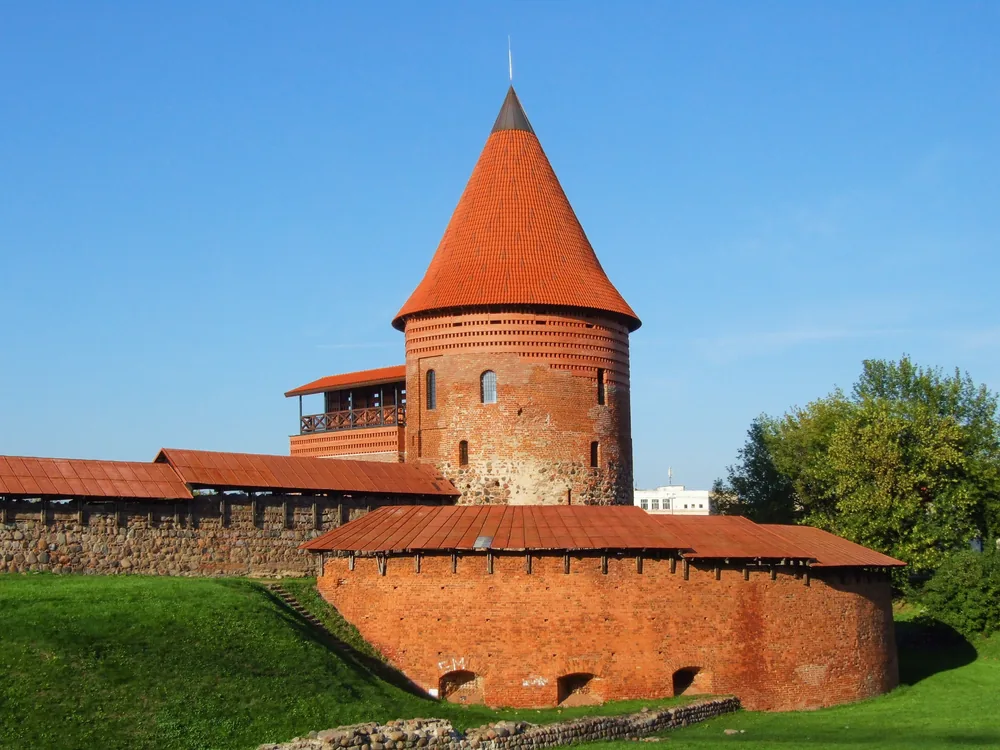
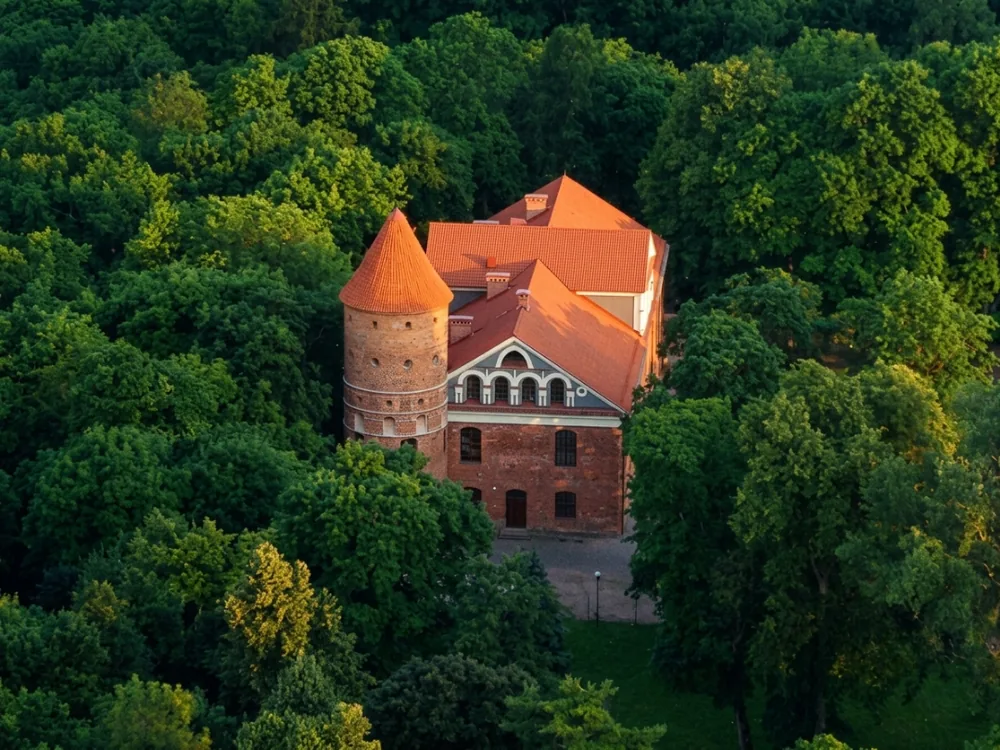
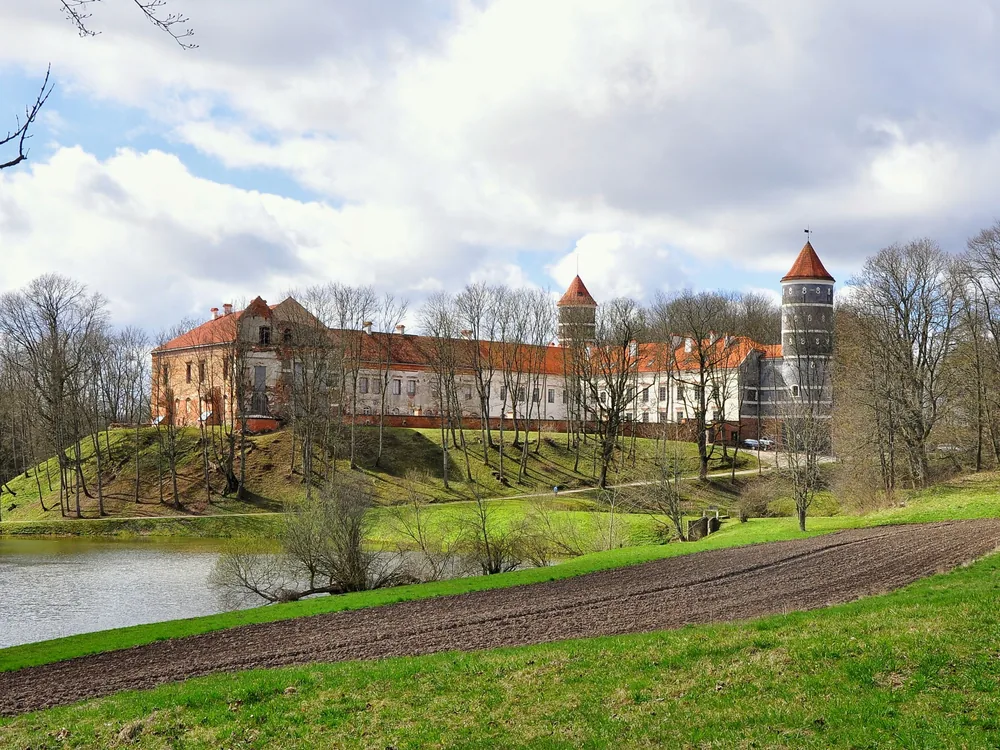
Raudonė is the third castle on the Nemunas River Castles circuit. [Kaunas Castle](/castles/lithuania/kaunas-castle), the first brick castle of the Grand Duchy, is at the Nemunas-Neris confluence 75 kilometres upstream. [Raudondvaris Manor](/castles/lithuania/raudondvaris-manor), 65 kilometres upstream, was Queen Barbara Radziwiłł's red-brick manor and the Tyszkiewicz family's old-master gallery. [Panemunė Castle](/castles/lithuania/panemune-castle), 30 kilometres downstream, was built in 1604 by a Dutch architect and confiscated by the Tsarist authorities after its owner led the November Uprising of 1830.
For Lithuania's other major fortifications: [Trakai Island Castle](/castles/lithuania/trakai-island-castle) in the lake district is the most visually dramatic medieval castle in Lithuania. [Gediminas Tower](/castles/lithuania/gediminas-tower) in Vilnius is the upper castle of the Grand Duchy's capital, designed as part of the same defensive system that protected the city Stuoka-Gucevičius later rebuilt.
History
Early 14th century (c.1340): Teutonic Order establishes 'Bayersburg' fortress on the Nemunas high ground during the Baltic Crusades. 1410: Battle of Grunwald ends Teutonic Order control; Bayersburg becomes Lithuanian royal domain. 15th century: Castle in Lithuanian royal hands, transitioning from military to administrative use. Late 16th century: Sigismund II Augustus grants site to Krispin Kirschenstein; Kirschenstein builds Renaissance manor and the 34-metre cylindrical tower. Late 18th century: Olędzki family ownership; architect Laurynas Stuoka-Gucevičius (designer of Vilnius Cathedral) undertakes Classicist modifications. 19th century: Russian Prince Platon Zubov family ownership after the Russian absorption of the Grand Duchy. Soviet period: Castle used for institutional purposes; interior fabric compromised. Post-1990: Consolidated and opened to visitors in independent Lithuania; tower accessible as observation platform.
How to Visit
Getting there: Raudonė village is about 20 km northeast of Jurbarkas on the Nemunas riverside road, accessible by car or local bus from Jurbarkas. The castle is open May–September; confirm current hours via the Jurbarkas tourism portal before visiting.
Tickets: Walk-up admission details are available at the castle site. The GetYourGuide "From Vilnius: Kaunas & Nemunas River Castles Tour" is a 10-hour small-group circuit (max 7) from Vilnius covering all four Nemunas valley castles, with lunch included — the easiest option for visiting without a rental car.
Practical tips: The 34-metre cylindrical tower is the primary reason to visit — climb the narrow circular staircase for the most extensive view over the Nemunas floodplain from any accessible structure on the Lithuanian section of the river. The tower climb is steep and not suitable for visitors with limited mobility.
Combine with: Kaunas Castle, Lithuania's first brick fortress 75 km upstream at the Nemunas-Neris confluence, is the natural starting point for the full river circuit. Panemunė Castle, 30 km downstream, closes the circuit at the westernmost point of the Nemunas castle chain.
Frequently Asked Questions
Yes — the 34-metre cylindrical tower is open to visitors during the castle's operating season (May–September) and is the principal reason to visit Raudonė. The climb involves multiple flights of stairs inside a narrow circular staircase and is not accessible for visitors with limited mobility, but for those who can manage it, the view from the top over the Nemunas floodplain is the most extensive available from any publicly accessible structure on the Lithuanian section of the river.
Location
Pilies g. 2, Raudonė, Jurbarkas District, Lithuania
Nearby Castles
Tours & Tickets
Powered by GetYourGuide
From
€199/ person