
Casa Rocca Piccola
Casa Rocca Piccola
Malta · Valletta · Near Valletta
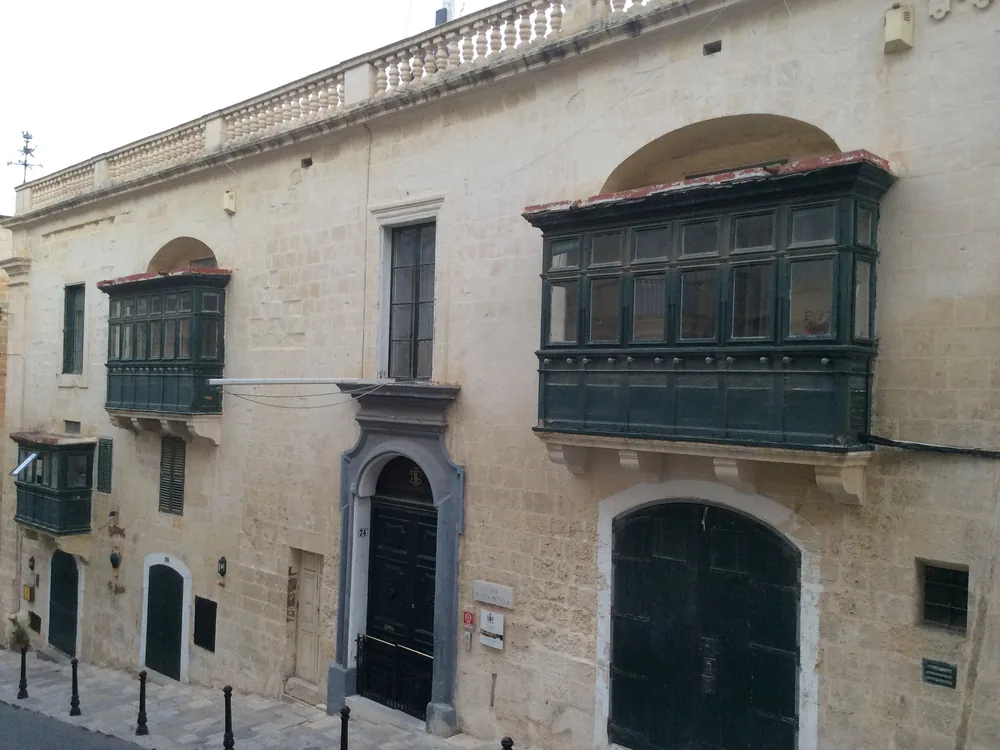
Built 1580 · Baroque-era noble family palace, still inhabited — built for Don Pietro La Rocca, a Knight of Malta, in the late 16th or early 17th century on Republic Street (the spine of Valletta's grid plan); the building follows the Valletta standard for noblemen's residences: a main street facade with a rusticated entrance portal and upper-floor windows framed in stone, access to an internal courtyard, and a sequence of principal rooms on the piano nobile; the palace's character is one of accumulated layers — rooms furnished with period furniture, silver, and painting collections assembled across four centuries and arranged for habitation rather than museum display; beneath the palace, a network of tunnels cut into the limestone bedrock served as an air raid shelter in the Second World War; the building is currently the inhabited home of the de Piro family, Marquises de Piro and Barons of Budach
This page is part of an independent travel guide and is not affiliated with, endorsed by, or operated by Casa Rocca Piccola.
© Castles & Palaces
Quick Facts
- Hours
- Mon–Sat 10:00–16:00. Closed Sun
- Entry via GetYourGuide
- €12
- Duration
- 45 minutes–1 hour (guided or audio-guided visit)
- Best time
- October to April
- Nearest city
- Valletta
Featured Tour
Casa Rocca Piccola Palace and Museum Entrance Ticket
Cancellation available · Instant confirmation
Highlights
- ✦Still a family home — unlike most heritage buildings of comparable age and quality, Casa Rocca Piccola is the active inhabited home of the de Piro family, Maltese nobles who have lived there for generations; the rooms are furnished as a home rather than arranged as a museum, with period furniture, family silver, ancestral portraits, and objects accumulated across four centuries of continuous family occupation
- ✦50+ rooms filled with 400 years of de Piro family history — the interior covers the principal apartments, a formal dining room, bedrooms, a chapel, a costume collection, and the garden; the ancestral portraits of the Marquises de Piro and Barons of Budach trace the family's Maltese noble history; the combination of aristocratic furnishing and genuine domestic occupation gives the visit a character distinct from any state-run palace museum
- ✦The WWII air raid shelter tunnels — cut into the limestone bedrock directly beneath the palace during the Second World War, when Malta was subjected to some of the heaviest aerial bombing in European history (1940–1943); the tunnels sheltered more than 100 people from the bombing of Valletta; visitors walk through the tunnel network on the same visit as the palace rooms above, descending from an 18th-century sala to a 1940s rock-cut shelter in the same 45-minute tour
- ✦Valletta's only open inhabited noble palace — Valletta was built by the Knights of Malta from 1566 following the Great Siege, designed as a planned Baroque grid city from the start; its noble palaces, including Casa Rocca Piccola, were built for Knights and Maltese nobles along Republic Street and its parallel arteries; today Casa Rocca Piccola is the only one of these privately inhabited palaces that has remained in a single family's ownership and is open to visitors
- ✦Don Pietro La Rocca and the Knights of Malta — the palace was built for a Knight of Malta in the late 16th or early 17th century, during the period when Valletta was establishing itself as the Order's permanent headquarters following the victory of the 1565 Great Siege; the Knights' construction of Valletta and their fortification of the Grand Harbour are the context for the city's remarkable architectural coherence, of which Casa Rocca Piccola is a residential example
- ✦GetYourGuide entry ticket: palace, museum, garden, and WWII shelter
Tickets & tours
Book through GetYourGuide
Valletta was designed as a city from the start. Following the Ottoman siege of 1565 — the Great Siege, in which the Knights of Malta held the island against a force vastly larger than their own, at enormous cost on both sides — the Order of St John decided to build an entirely new capital on the exposed Sciberras peninsula that the Ottomans had used as their primary artillery position during the siege. The Grand Master Jean Parisot de la Valette commissioned a Baroque grid plan from the Maltese military engineer Francesco Laparelli (himself a student of Michelangelo), and construction of the city began immediately in 1566. Valletta was designed and built as a unified military-civic entity: straight streets intersecting at right angles, regular defensive bastions around the perimeter, and standardized palace blocks for the Knights and Maltese nobles who were to inhabit it.
Casa Rocca Piccola was built within this planned city for Don Pietro La Rocca, a Knight of Malta, in the late 16th or early 17th century — within the first two generations of Valletta's existence. Its position on Republic Street (Strada San Giorgio in its original designation), the city's principal commercial and processional artery running the full length of the peninsula, was the most prestigious residential address in Valletta. The building follows the Valletta standard for nobles' residences: a rusticated street portal, a cortile (internal courtyard), and principal rooms on the piano nobile above.
The de Piro family, who have owned the palace for several generations, are Maltese nobility holding the titles Marquis de Piro and Baron of Budach. The current owner, Marquis Nicholas de Piro, opened the palace to visitors in 1987 — a decision to share the building rather than convert it to institutional use, which preserved the one quality that makes Casa Rocca Piccola distinctive among Malta's historic houses: it looks like someone lives there because someone does. The piano nobile rooms are furnished as a home — not arranged for optimal visitor flow or labelled with museum-standard interpretation — but as a sequence of rooms that a family has filled across 400 years of continuous occupation. A Baroque dining table is set for a dinner that won't happen today; a silver tea service sits on a sideboard alongside family photographs; ancestral portraits of Marquises de Piro look down from the walls of a sala where contemporary family objects occupy the same surfaces as 18th-century furniture.
Beneath this inhabited 17th-century interior, the WWII tunnels tell a different story. Malta's position as the Allied base in the central Mediterranean made it one of the most heavily bombed territories in European history during 1940–1943: the Axis forces attempted to neutralise the island's airfields and harbour through sustained aerial bombardment that at its most intense in April 1942 dropped more tonnage on Malta in a month than on London in a year. Valletta, as the capital and harbour city, was a primary target. The limestone bedrock beneath the city was cut into an extensive system of shelters and passages, some ancient and some cut specifically for the war; beneath Casa Rocca Piccola, the de Piro family cut tunnels that sheltered more than 100 people during raids.
Visitors to the palace walk both levels on the same 45-minute guided or audio tour: from the 17th-century sala and its ancestral portraits, down into the tunnels with their wartime fittings and the evidence of how a noble family and their dependents survived the bombing campaign of 1942 three floors below the most bombed street in the most bombed city in Europe. The juxtaposition of historical scales — Baroque furnishing above, wartime survival below — is the visit's defining experience.
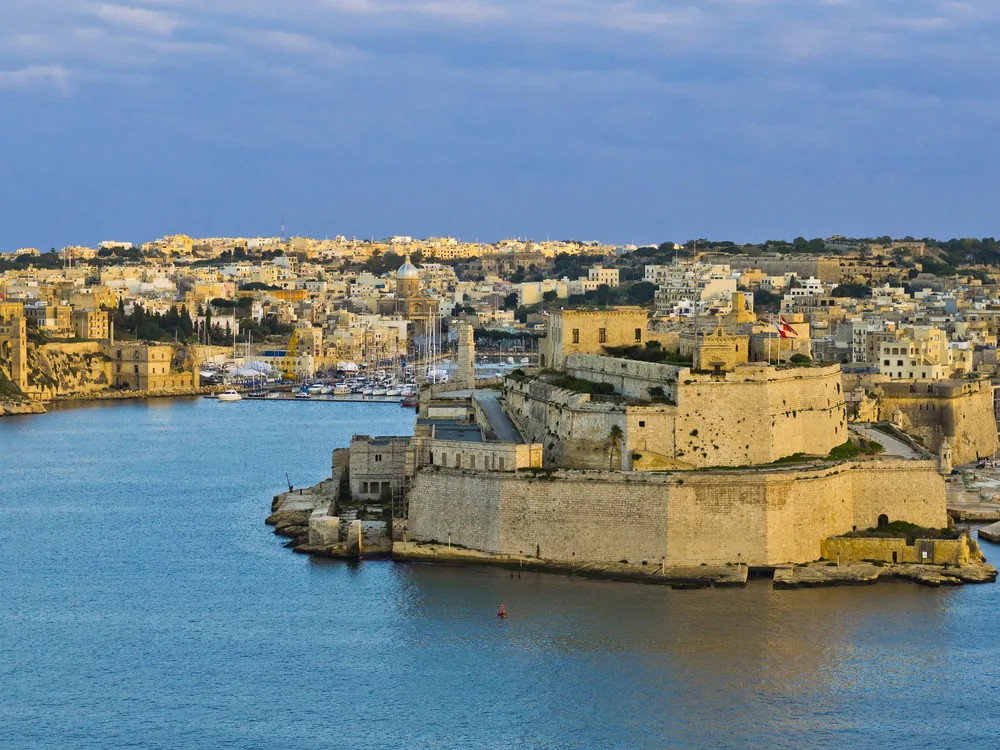
The palace sits on Republic Street, a few minutes' walk from the Grand Master's Palace (now the Maltese Parliament) and the co-cathedral of St John, which contains Caravaggio's The Beheading of Saint John the Baptist — the only work Caravaggio signed. [Fort St Angelo](/castles/malta/fort-st-angelo) across the Grand Harbour in Birgu was the Knights of Malta's original headquarters before Valletta was built and the fortification whose garrison survived the 1565 Great Siege. [Palazzo Falson in Mdina](/castles/malta/palazzo-falson), Malta's ancient hilltop capital, is the island's other significant private-house museum in a comparable format.
History
The Great Siege of Malta in 1565 — the Ottoman campaign that Grand Master Jean de la Valette and the Knights of St John held against a vastly larger force at enormous cost — ended with an immediate decision to build an entirely new capital. Valletta's construction began in 1566 to a grid plan by Francesco Laparelli. Casa Rocca Piccola was built for Don Pietro La Rocca, a Knight of Malta, on Republic Street in the late 16th or early 17th century, making it among the earliest noble residences in the planned city — one of the first generations of private buildings to rise in a city that had been conceived as a fortress.
The palace passed through ownership over the following centuries before the de Piro family — Maltese nobles holding the titles Marquis de Piro and Baron of Budach — acquired it and established the occupancy that continues today. The Second World War's Siege of Malta brought aerial bombardment of Valletta between 1940 and 1943, and the de Piro family responded by cutting tunnels beneath the palace that served as an air raid shelter for over 100 people. Those tunnels are now part of the visitor circuit.
In 1987, Marquis Nicholas de Piro opened the palace to visitors while maintaining it as the family's inhabited home — a combination of private residence and heritage attraction that gives the visit an authenticity difficult to find elsewhere. Guided and audio tours run Tuesday to Saturday.
How to Visit
Getting there: Casa Rocca Piccola is on Republic Street, Valletta's main artery — a 10-minute walk from the City Gate bus terminal and ferry connections. Valletta is easily reached from all parts of Malta by bus, or by ferry from Sliema and St Julian's.
Tickets: Walk-up admission is €10 for adults. The GetYourGuide "Casa Rocca Piccola Palace and Museum Entrance Ticket" covers the principal rooms, costume collection, garden, and WWII tunnels on a 45-minute guided or audio-guided tour.
Practical tips: Book in advance at casaroccapiccola.com, especially May–September when Valletta is at its busiest. The palace is closed Sundays and on Maltese public holidays; the unaired rooms are most comfortable October–April.
Combine with: Fort St Angelo across the Grand Harbour in Birgu was the Knights' original headquarters and the fortress at the heart of the 1565 Great Siege — the essential counterpart to Valletta's civil architecture. Palazzo Falson in Mdina is Malta's other significant private-house museum in a comparable format.
Explore more castles in Castles in Malta.
Frequently Asked Questions
Yes — Casa Rocca Piccola is the current inhabited home of the de Piro family. Marquis Nicholas de Piro and his family live in the palace while opening the principal rooms to visitors. The rooms accessible on the tour are furnished as living spaces, not as a rearranged museum, which means the furniture, objects, and art are in their domestic positions rather than arranged for visitor flow or interpretation. This is what makes the visit different from a conventional historic house: it reads as an inhabited home because it is one. Booking in advance is particularly advisable because the house's function as a private residence means schedule variations are possible.
Location
74, Republic Street, Valletta VLT 1117, Malta
Nearby Castles
Tours & Tickets
Powered by GetYourGuide
From
€12/ person