
Fort St. Angelo
Fortizza Sant'Anġlu
Malta · Birgu (Vittoriosa) · Near Valletta
Built 1091 · Medieval Norman, progressively modified through the Knights of St. John and Royal Navy periods
This page is part of an independent travel guide and is not affiliated with, endorsed by, or operated by Fort St. Angelo.
© Unsplash
Quick Facts
- Hours
- Daily 09:00–19:00
- Entry via GetYourGuide
- €20
- Duration
- 1.5–2 hours
- Best time
- October to May
- Nearest city
- Valletta
Featured Tour
Birgu: Fort St. Angelo E-ticket with Audio Tour
Cancellation available · Instant confirmation
Highlights
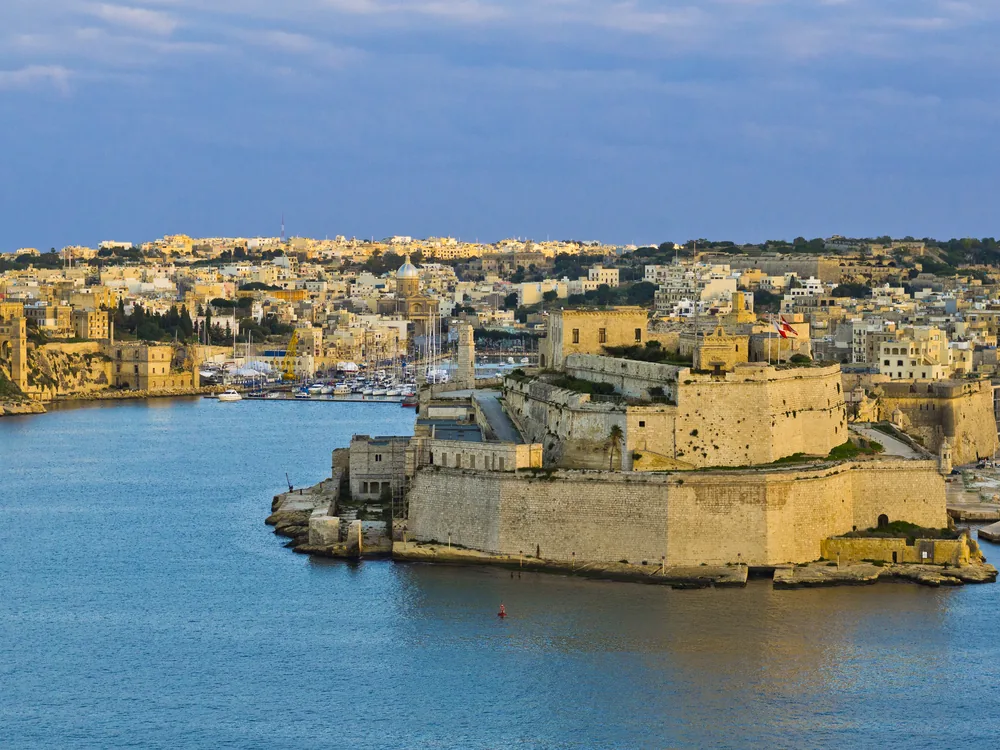
- ✦The Grand Harbour panorama from the upper gun platforms — Valletta's Baroque fortifications across the water, Senglea point across Dockyard Creek, and the open harbour mouth, the same view Grand Masters and admirals studied for five centuries and from which the Ottoman fleet was first sighted in May 1565
- ✦The Great Siege of 1565, when Grand Master Jean Parisot de Valette commanded a four-month defence against an Ottoman force of roughly 180 ships and 40,000 troops from this fort, ending in the relief of 7 September and the founding of Valletta directly across the harbour
- ✦Norman origins dating to 1091, when Roger I of Sicily captured Malta from the Arabs and established the first castle here, including St. Anne's Chapel, possibly the oldest surviving building in Malta
- ✦The Royal Navy years as HMS Egmont and later HMS St Angelo, including 69 direct hits during the World War II siege of Malta that contributed to King George VI's unprecedented 1942 award of the George Cross to the entire island
- ✦The five-minute ferry crossing from Valletta's waterfront to Birgu, the most atmospheric approach to the fort and the closest modern visitors can come to seeing it as the Ottoman fleet once did, from the water
Skip the queue with a guided tour
Skip-the-line tickets & expert guides
Fort St. Angelo is not a romantic ruin, a palatial residence, or a cultural showpiece — it is a working military fortress that has been continuously occupied and modified for nine hundred years. Norman, Arab, Knights Hospitaller, French, British and Maltese authorities have all held it. It has been besieged by the Ottoman Empire and bombed by the Luftwaffe. It served as a Royal Navy base until 1979 and only opened to the public in 2016. The fort is physically modest — no great hall, no decorated apartments, no formal gardens — but the density of historical events attached to it is extraordinary. Grand Master Jean de Valette sat in this fort while 40,000 Ottoman troops assaulted Malta's harbours. King George VI awarded the George Cross to this island because the fort and the docks around it refused to break. Stand on the upper ramparts and look across Grand Harbour to Valletta, and you are looking at a city that was built because this fort held.
The Order of St. John, the Knights Hospitaller, arrived in Malta in 1530 as refugees, having been expelled from Rhodes by Suleiman the Magnificent in 1522. They were given the island as a fief by the Holy Roman Emperor Charles V and did not expect it to be a permanent home, initially occupying the medieval castle at Birgu with reluctance. Within a generation they had rebuilt it into the most formidable harbour fortress in the central Mediterranean. The strategic logic was simple and total: Grand Harbour, with its deep water and sheltered creeks, was the finest natural harbour between Gibraltar and Alexandria, and whoever controlled it controlled the central Mediterranean's trade routes. The Ottomans understood this, which is why they sent 40,000 men to take it in 1565. After the siege, the Knights built Valletta — the new fortified city visible across the harbour from Fort St. Angelo — to ensure the harbour could never be seriously threatened again. The fort remained their headquarters until Napoleon's forces arrived in 1798, dissolving the Order's governing power; the British took Malta in 1800, beginning the fort's next five hundred years.
The parallel between the Great Siege of 1565 and the Axis siege of Malta in 1940–1942 was not lost on contemporaries. Malta occupied the same strategic position it had four centuries earlier — the central Mediterranean chokepoint — and its airfields and harbour allowed the Royal Air Force and Royal Navy to interdict Axis supply lines to North Africa, which is why the Axis attempted to neutralise it through air bombardment. Between June 1940 and November 1942, Malta absorbed more bomb tonnage than any comparable area in any theatre of the war, and the docks around Fort St. Angelo — where submarines, destroyers and minesweepers were repaired and resupplied — were a primary target. The fort itself was hit sixty-nine times. The Maltese civilian population's refusal to break, combined with the Navy's determination to hold the harbour, prompted King George VI's unprecedented collective decoration: the George Cross, awarded to the island of Malta in April 1942, now hangs in the President's Palace in Valletta, with a replica displayed in the fort's interpretation spaces.
The most atmospheric way to arrive is by the Valletta-Birgu ferry, a five-minute crossing of Grand Harbour that gives the harbour panorama in reverse, the fort's walls growing as you approach from the water — the way the fort was meant to be seen. From the Birgu landing stage, it is a ten-minute walk along the quay to the fort gate. Allow 1.5 hours inside, and combine the visit with a walk through Birgu's medieval streets — the Inquisitor's Palace, the Maritime Museum and the parish church of St. Lawrence are all within easy reach, making a complete half-day on the harbour's south side.
History
Evidence of fortification on the Birgu promontory dates to the Arab period of Malta (870–1091), but the present fortress's origins are Norman: Roger I of Sicily conquered Malta in 1091 and established the Castrum Maris, or Castle by the Sea, on this strategic point controlling the inner creeks of Grand Harbour. St. Anne's Chapel within the fort, possibly the oldest surviving building in Malta, dates from this Norman or early medieval period, and the fortification developed further under successive Sicilian, Aragonese and Spanish rulers. When the Knights of St. John arrived in Malta in 1530 — having reluctantly accepted the island as a fief from Charles V after losing Rhodes to Suleiman the Magnificent in 1522 — they rapidly transformed Castrum Maris into Fort St. Angelo, adding bastions, gun platforms, the Magisterial Palace and an underground dungeon system, and establishing it as the Grand Master's residence and the Order's administrative headquarters. A pre-siege fortification programme through the 1550s and early 1560s, under Grand Masters Juan de Homedes and Jean de Valette, included the construction of Fort St. Elmo at the tip of the opposite Valletta peninsula.
The Ottoman fleet arrived in Grand Harbour on 18 May 1565 — some 180 vessels and approximately 40,000 troops under Admiral Piyale Pasha and the corsair Turgut Reis. Grand Master Jean Parisot de Valette commanded from Fort St. Angelo throughout the siege, refusing evacuation to Sicily. Fort St. Elmo fell on 23 June after a month of continuous assault, and de Valette responded to the mutilation of the Knights' dead by executing Ottoman prisoners and firing their heads from Fort St. Angelo's guns across the harbour. The fort's artillery played a critical role covering the defence of Fort St. Michael and Senglea through August, and a Spanish relief force landed on 7 September, prompting the Ottoman withdrawal. Roughly 250 Knights and 7,000 Maltese died, and the Ottoman expansion westward was effectively ended. De Valette broke ground for the new fortified city of Valletta on 28 March 1566 on the bare promontory directly opposite Fort St. Angelo; the city was completed in 1571 and named in his honour, though he died in 1568 before seeing it finished. Fort St. Angelo became the harbour guardian to Valletta's gate.
Napoleon seized Malta in June 1798, dissolving the Knights' sovereignty and garrisoning Fort St. Angelo with French troops for two years, until a Maltese uprising and British naval blockade led to the British capture of the fort in September 1800. Malta was formally incorporated into the British Empire in 1814, and the Royal Navy made Grand Harbour and Fort St. Angelo its Mediterranean fleet base, designating the fort HMS Egmont in 1900 and later HMS St. Angelo in 1933. Over 3,000 air raids struck Malta between 1940 and 1942, with 69 direct hits on the fort, and King George VI awarded the George Cross to Malta on 15 April 1942 in recognition of the island's endurance. The Royal Navy departed Fort St. Angelo on 31 March 1979, and after Malta's 1964 independence and a long conversion process, Heritage Malta opened the fort to the public in September 2016.
How to Visit
Getting there: The most atmospheric approach is by ferry from Valletta's Ta' Liesse waterfront terminal to Birgu (about 5 minutes), followed by a 10-minute walk along the Vittoriosa Waterfront to the fort entrance. Bus route 2 from Valletta also serves Birgu; by car, park near the Maritime Museum.
Tickets: Walk-up admission is €10 for adults, €4 for children aged 6–11, under 6 free. The GetYourGuide "Birgu: Fort St. Angelo E-ticket with Audio Tour" includes the audio tour alongside entry. Open daily 09:00–19:00 (March–October) and 10:00–16:00 (November–February); confirm at heritagemalta.mt.
Practical tips: Prioritise the upper gun platforms for the Grand Harbour panorama, the Magisterial Palace interpretation spaces for the Great Siege narrative, and St. Anne's Chapel — the oldest building in the complex. The audio tour makes the fort's layout significantly more legible; allow 1.5 hours inside.
Combine with: Casa Rocca Piccola in Valletta, the island's last inhabited noble palace, pairs naturally with Fort St. Angelo as the civil and military faces of the same Knights-era harbour story. The medieval streets of Birgu — the Inquisitor's Palace and Maritime Museum are 10 minutes on foot — complete a full half-day on the harbour's south shore.
Explore more castles in Castles in Malta.
Frequently Asked Questions
The Great Siege of 1565 was a four-month Ottoman attempt to capture Malta from the Knights of St. John, involving roughly 180 ships and 40,000 troops against around 700 Knights and 8,000 Maltese militia. Grand Master Jean Parisot de Valette commanded the defence from Fort St. Angelo throughout, refusing evacuation, and the fort's artillery covered the critical defence of Fort St. Michael and Senglea before a Spanish relief force forced an Ottoman withdrawal on 7 September. The siege's outcome ended Ottoman westward expansion in the Mediterranean and led directly to the founding of Valletta.
Location
Xatt l-Assedju l-Kbir 1565, Birgu, Malta
Nearby Castles
Tours & Tickets
Powered by GetYourGuide
From
€20/ person