
Palazzo Falson
Palazzo Falson
Malta · Mdina · Near Mdina
Built 1233 · Second-oldest standing building in the walled city of Mdina; medieval two-storey palace built on Sicilian models around an internal courtyard with an overlying piano nobile; formerly known as Palazzo Cumbo-Navarra and Casa dei Castelletti; inherited in the early 16th century by Vice Admiral Michele Falson; hosted Grand Master Philippe Villiers de L'Isle Adam in 1530 after he took formal possession of Mdina for the Knights of St John; last private owner Captain Olof Frederick Gollcher (1889–1962), a Swedish-descended collector, researcher and philanthropist whose 3,500-object collection now fills 17 rooms; reopened as a museum in May 2007 after restoration by Fondazzjoni Patrimonju Malti
This page is part of an independent travel guide and is not affiliated with, endorsed by, or operated by Palazzo Falson.
© Castles & Palaces
Quick Facts
- Hours
- Tue–Sun 10:00–17:00. Closed Mon
- Entry via GetYourGuide
- €12
- Duration
- 1.5 hours
- Best time
- Year-round
- Nearest city
- Mdina
Featured Tour
Palazzo Falson Historic House Museum entrance ticket
Cancellation available · Instant confirmation
Highlights
- ✦The second-oldest standing building in Mdina — a medieval palace dating from c.1233, built on Sicilian models around an internal courtyard with the principal rooms on the piano nobile above
- ✦In 1530, Grand Master Philippe Villiers de L'Isle Adam was received here after the ceremony formalizing the Knights of St John's possession of Malta — the founding moment of the Knights' Maltese rule
- ✦A collection of 3,500 objects across 45 sub-collections and 17 rooms, assembled largely in one lifetime by Captain Olof Frederick Gollcher O.B.E. (1889–1962), of Swedish descent — paintings, silver, furniture, jewellery, Oriental rugs, armoury, and a library of over 4,500 rare books and manuscripts
- ✦The audio guide (included, available in six languages) moves visitors through the rooms in their original domestic arrangement, preserving the intimacy of a house rather than the formality of a gallery
- ✦The rooftop terrace café offers a genuine panorama over Mdina's rooftops and across the Maltese countryside toward the sea — a view earned rather than incidental
Skip the queue with a guided tour
Skip-the-line tickets & expert guides
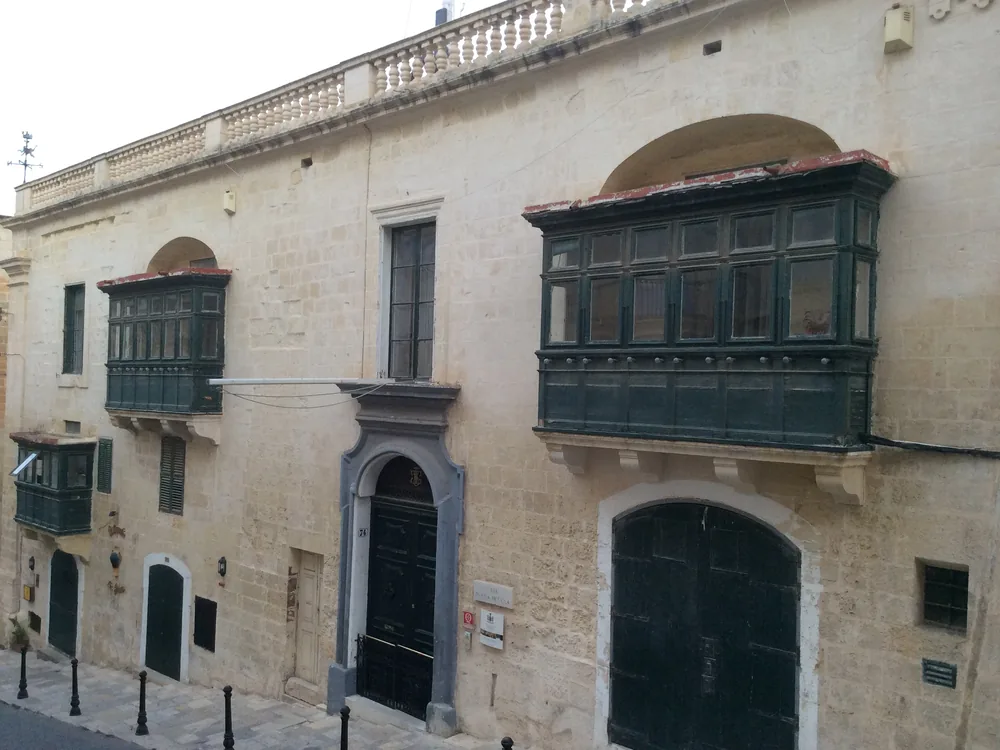
Behind an unassuming façade on Villegaignon Street, Mdina's principal artery, stands the second-oldest building still standing in Malta's former capital — a medieval palace that has passed through Norman, Sicilian, and Maltese noble hands before ending up, improbably, as the private collection of a 20th-century Swedish-Maltese adventurer. Palazzo Falson holds one of the richest small museum collections in the Mediterranean: 3,500 objects across 17 rooms, assembled not by a dynasty over centuries but largely by one man in one lifetime.
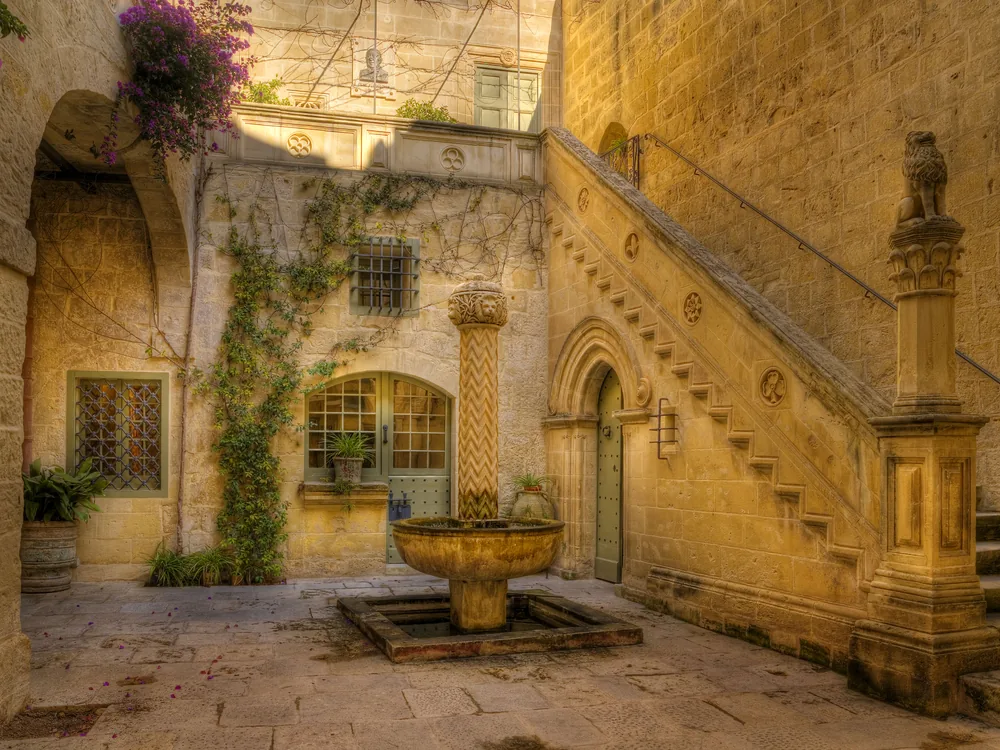
The building's origins reach back to the early 13th century, fashioned on Sicilian models as a two-storey family residence wrapped around an internal courtyard, with the principal living quarters on the piano nobile above. It passed through several noble names — Cumbo-Navarra, Casa dei Castelletti, the Norman House — before being inherited in the early 16th century by Vice Admiral Michele Falson, head of Mdina's town council, whose name the palace has carried since. The building's connection to one of the defining episodes in Maltese history came in November 1530, when Emperor Charles V's gift of Malta to the Knights of St John was formalized. Philippe Villiers de L'Isle Adam, the Order's first Grand Master in Malta, was received here by Maltese nobles after the ceremony in which he took formal possession of Mdina — a detail that ties this building directly to the moment the Knights of St John began their two-and-a-half-century rule over the island.
The palazzo's modern character owes almost everything to its last private resident. Captain Olof Frederick Gollcher O.B.E. (1889–1962) was a figure of Swedish descent who spent his life on Malta and spent that life, in considerable part, collecting. The resulting accumulation is extraordinary in its scope: paintings attributed to Mattia Preti, Jusepe de Ribera, Jakob-Ferdinand Voet, Charles Beale, and Juriaen van Streeck; silver, furniture, jewellery, Oriental rugs from across the Islamic world; European armoury; and a library of over 4,500 books and rare manuscripts that fills an entire room of the piano nobile. Gollcher was not simply a buyer — he was a researcher, artist, and philanthropist, and the collection reflects a personal, connoisseurial intelligence working across disciplines rather than institutional procurement driven by category or period. Forty-five distinct sub-collections spread through 17 rooms give the museum a density and variety that is unusual at this scale.
Fondazzjoni Patrimonju Malti (the Maltese Heritage Foundation) undertook a comprehensive restoration of the building and reopened Palazzo Falson as a public museum in May 2007. The self-guided visit, with an audio guide available in six languages and included in the entrance price, moves through the rooms in something close to their original domestic arrangement — visitors move through the palazzo as Gollcher lived in it, rather than through a gallery rearranged for display. The piano nobile rooms are particularly striking: the library, the armoury, the room with the Oriental rugs. The rooftop terrace and café offer views across Mdina's honey-coloured roofscape and out toward the Maltese countryside and the sea — a perspective available almost nowhere else in the city at this height without climbing a rampart.
Palazzo Falson sits within Mdina itself, the Silent City: Malta's walled former capital, a compact medieval and Baroque hill town of roughly 300 residents that has become one of the most visited heritage sites on the island, its stone-paved streets and honey-coloured palaces familiar to millions from their use as a filming location for Game of Thrones (it appeared as King's Landing in early seasons). The palazzo is one of several notable buildings along Villegaignon Street, alongside Palazzo Vilhena (now the Natural History Museum) and the Mdina Cathedral, and it works naturally as one element of a walking circuit of the old city — though it merits its own full visit rather than being reduced to a single stop on a busier itinerary.
Combine the palazzo with a walk of Mdina's ramparts for the views across the central Maltese plain and, if time allows, with a visit to Rabat immediately outside the walls — the Roman Domus Romana (a Roman townhouse with superb mosaics) and the catacombs of St. Paul and St. Agatha are within ten minutes' walk and together document Malta's exceptional depth of inhabitation, from Roman through early Christian to medieval.
History
The building's foundations date from c.1233, making it the second-oldest standing structure in the walled city of Mdina. It was built on Sicilian architectural models, as was common in medieval Malta under the rule of the Kingdom of Sicily, and passed through several noble families across the medieval and early modern periods before being inherited by Vice Admiral Michele Falson in the early 16th century. The Falson name has remained attached to the building since.
In 1530, the palazzo gained its most historically significant connection: Grand Master Philippe Villiers de L'Isle Adam, leading the Knights of St John to Malta after their expulsion from Rhodes, was received here by Maltese nobles following the formal ceremony in which he took possession of Mdina on behalf of the Order. This moment marked the beginning of the Knights' roughly 250-year rule over Malta.
The palazzo's last private owner, Captain Olof Frederick Gollcher (1889–1962), assembled a collection of some 3,500 objects across paintings, silver, furniture, armoury, manuscripts, and decorative arts during his lifetime. On his death he bequeathed the collection and building to Fondazzjoni Patrimonju Malti (the Maltese Heritage Foundation), which undertook a restoration and reopened the building as a public museum in May 2007.
How to Visit
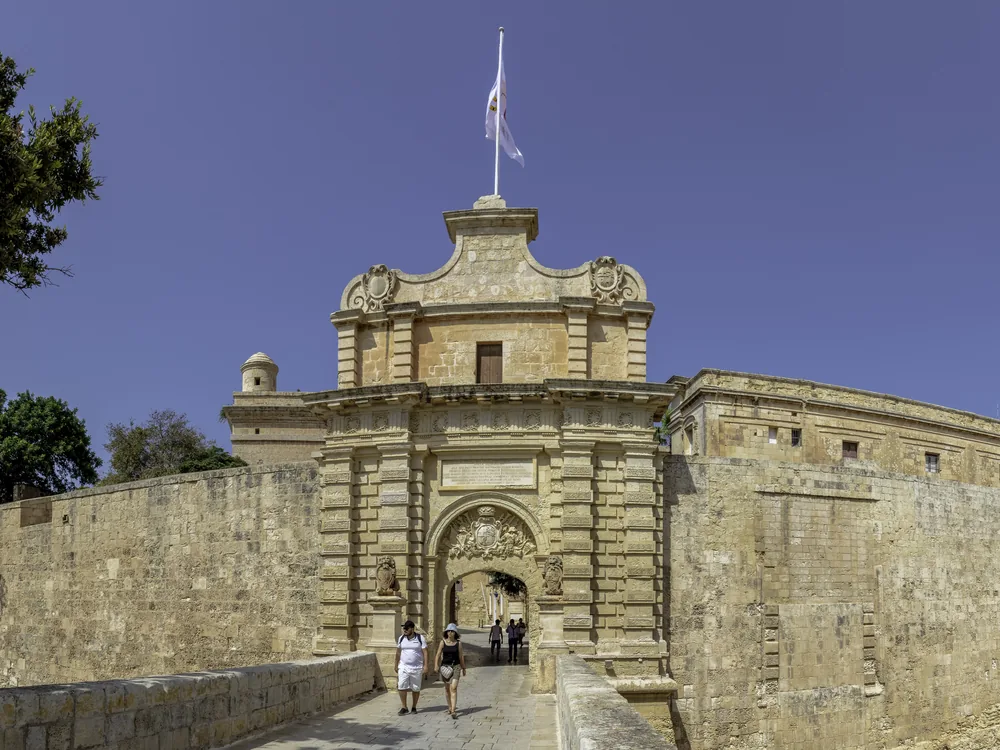
Getting there: Mdina is roughly 30 minutes from Valletta by bus (routes 51, 52, 53 from Valletta bus terminus) or by car. The walled town of Mdina is fully pedestrianised; visitors park outside the walls and enter on foot through the Mdina Gate. Palazzo Falson is a short walk from the gate along Villegaignon Street — the main artery of the old city.
Tickets: The GetYourGuide entrance ticket includes the audio guide in six languages and is the official museum ticket. Children under 6 are not permitted. Allow 60–90 minutes for the collection rooms plus the rooftop café.
Closed Mondays. Check current hours at palazzofalson.com before visiting, particularly around Maltese public holidays.
Practical tips: Allow 1.5 hours for the visit.
Combine with: Mdina's ramparts (free, open access) offer views across the central Maltese plain unavailable from the streets. Immediately outside the Mdina Gate, Rabat contains the Roman Domus Romana (a Roman townhouse with exceptional floor mosaics) and the catacombs of St. Paul and St. Agatha — a pairing that traces Malta's full depth of inhabitation without requiring a car.
Explore more castles in Castles in Malta.
Frequently Asked Questions
Captain Olof Frederick Gollcher O.B.E. (1889–1962), a Malta-based collector of Swedish descent, spent decades assembling an eclectic private collection across 45 distinct sub-collections: paintings attributed to Mattia Preti, Jusepe de Ribera and others; silver; European armoury; Oriental rugs; furniture; jewellery; and a library of over 4,500 rare books and manuscripts. After his death the collection was bequeathed to Fondazzjoni Patrimonju Malti, which restored the building and opened it as a public museum in 2007. The 3,500-object collection is displayed across 17 rooms in the building's original domestic arrangement.
Location
Villegaignon Street, Mdina MDN 1150, Malta
Nearby Castles
Tours & Tickets
Powered by GetYourGuide
From
€12/ person