
Bender Fortress
Tighina Fortress / Cetatea Tighina
Moldova · Bender (Tighina), Transnistria (Pridnestrovian Moldavian Republic) · Near Bender
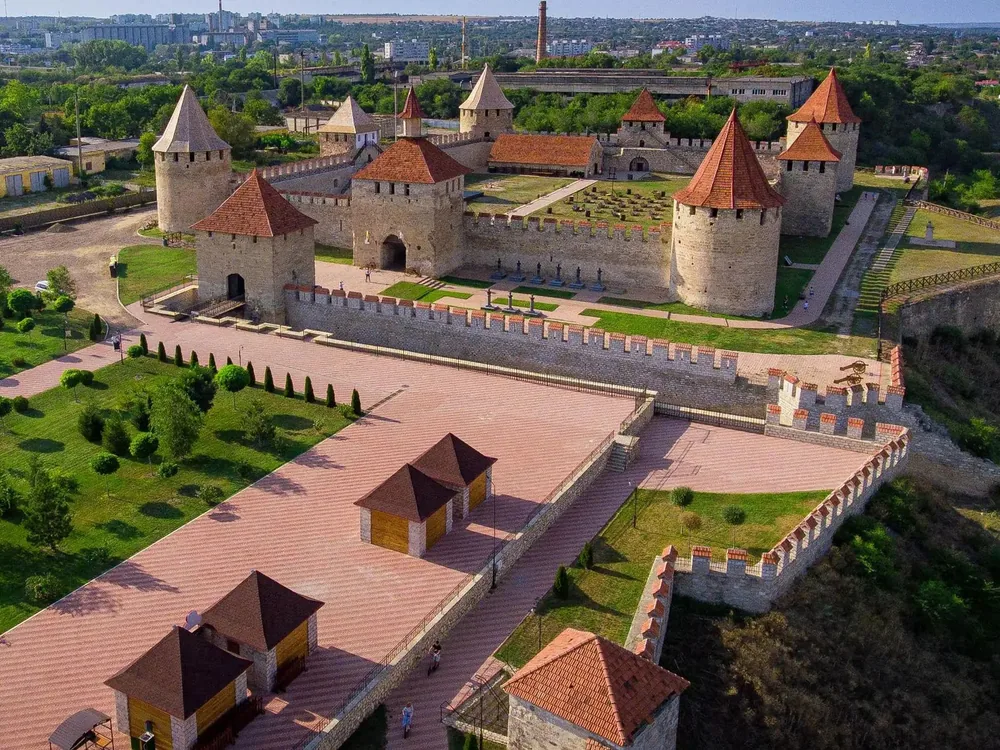
Built 1408 · Moldavian and Ottoman medieval fortress; founded by Stephen the Great in the 15th century and massively expanded by Ottoman forces in the 16th century into a large stone stronghold with corner bastions, curtain walls, and an internal keep; one of the largest and best-preserved Ottoman-era fortifications in Eastern Europe; an on-site Military Museum occupies part of the inner compound
This page is part of an independent travel guide and is not affiliated with, endorsed by, or operated by Bender Fortress.
© Castles & Palaces
Quick Facts
- Hours
- Daily 09:00–17:00
- Guided tour from
- €96
- Duration
- 1.5–2 hours (fortress + Military Museum)
- Best time
- April to October
- Nearest city
- Bender
Featured Tour
One Day Tour in Transnistria
Cancellation available · Instant confirmation
Highlights
- ✦Founded by Stephen the Great of Moldavia — Bender Fortress was built by Stefan cel Mare (Stephen the Great), one of the most celebrated rulers in Moldavian history, as part of his fortification programme against Ottoman expansion; the Moldavian foundation layer underlies the much larger Ottoman reconstruction that followed
- ✦The Ottoman expansion — after the Ottomans captured the fortress in 1538, they massively enlarged it into one of the largest and most heavily built fortifications in the region; the stone bastions, curtain walls, and internal keep are primarily the 16th-century Ottoman phase, giving the fortress a dramatically different character from the original Moldavian structure
- ✦One of Eastern Europe's best-preserved Ottoman-era fortifications — Bender/Tighina Fortress survives in substantial condition, with significant sections of wall, bastions, and towers still standing; far better preserved than most comparable Ottoman fortifications in the region
- ✦The on-site Military Museum — housed within the inner compound, documenting the fortress's military history from the Moldavian period through the Soviet era; entrance included in the GetYourGuide tour
- ✦⚠️ Transnistria context — Bender is in Transnistria, an internationally unrecognised breakaway territory aligned with Russia, outside the practical control of the Moldovan government; the GetYourGuide full-day tour from Chișinău includes fortress entry, Military Museum entry, hotel pickup/drop-off from Chișinău, and an English/German-speaking travel companion for the full day
Skip the queue with a guided tour
Skip-the-line tickets & expert guides
Bender Fortress stands on the west bank of the Dniester River, in the city of Bender (also known by its Moldavian name Tighina) — a city that has been politically complicated since 1990, when Transnistria declared its independence from Moldova. Transnistria is an internationally unrecognised, Russia-aligned breakaway territory that controls the narrow strip of land between the Dniester River and the Ukrainian border. It is not under the practical authority of the Moldovan government in Chișinău. Visiting Bender Fortress means crossing into Transnistria — an administrative border checkpoint on the road from Chișinău, a passport check, and a registration slip that must be retained for the return crossing. The economy inside the territory is entirely cash-only; Visa and Mastercard are not accepted. Ukrainian passport holders and some other nationalities have faced restricted crossing. This is the context in which Bender Fortress should be understood before any discussion of its considerable historical interest.
The fortress was originally built by Stefan cel Mare — Stephen the Great of Moldavia — in the late 15th century, as part of his programme of fortifying the Moldavian principality's Dniester frontier against Ottoman pressure. Stephen is one of the most celebrated rulers in Moldavian and Romanian history, remembered for decades of successful resistance against the Ottoman Empire and for commissioning more than 40 churches and monasteries across Moldavia. The fortress he built at Tighina was a relatively modest structure by the standards of what followed.
In 1538, the Ottoman Empire captured the fortress and renamed the city Bender. The Ottomans then undertook a massive expansion programme that transformed the Moldavian fortification into one of the largest military complexes in the entire region: stone bastions capable of mounting heavy artillery, extended curtain walls, a fortified inner keep, and ancillary structures within the walls. The resulting fortress is primarily an Ottoman construction — the Moldavian foundation is archaeologically present but architecturally subsumed. This Ottoman-era complex is what visitors see today, and it is one of the best-preserved Ottoman fortifications in Eastern Europe.
The fortress is also notable for the episodes that took place within it: the Swedish king Charles XII took refuge here after his defeat at the Battle of Poltava in 1709 and spent several years under Ottoman protection; the Zaporozhian Cossack leader Ivan Mazepa died here; and the early modern fortress saw repeated conflict in the Russo-Turkish Wars of the 18th and 19th centuries.
The GetYourGuide full-day tour from Chișinău covers the crossing into Transnistria, the Bender Fortress visit, the on-site Military Museum, and a wider programme through Tiraspol — Transnistria's capital, where Soviet-era monuments, a functioning Soviet-aesthetic administrative centre, and an abandoned amusement park provide a context for the fortress visit that is genuinely unlike any other heritage day trip in Eastern Europe. Fortress entry and Military Museum entry are both included in the tour price, as is hotel pickup from Chișinău or the airport.
History
A fortified position on the west bank of the Dniester at the Bender crossing existed from antiquity, but the documented Moldavian fortress was established by Stephen the Great of Moldavia (Stefan cel Mare) in the late 15th century as part of his fortification of the Dniester frontier. After Stephen's death in 1504, Moldavia's capacity to resist Ottoman expansion weakened; the Ottomans captured Tighina/Bender in 1538 and immediately began transforming it into a major frontier stronghold. The 16th-century Ottoman reconstruction produced the large stone fortress that survives today. In 1709, Swedish king Charles XII arrived at Bender after his catastrophic defeat at Poltava, and the city became the site of a complex diplomatic standoff between Charles (who refused to leave) and his Ottoman hosts (who eventually expelled him by force in 1713 — the 'Kalabalik' episode). The fortress changed hands repeatedly in the Russo-Turkish Wars of the 18th and 19th centuries before being incorporated into the Russian Empire in 1812. The Soviet period saw further military use. Transnistria's declaration of independence from Moldova in 1990 and the brief armed conflict of 1992 left Bender in the de facto Transnistrian territory, where it has remained.
How to Visit
Getting there: Bender is approximately 70 km east of Chișinău, across the Transnistrian administrative border. By car or bus from Chișinău, cross at the main checkpoint on the road toward Tiraspol — present a passport and receive a registration slip (keep it for the return crossing). The crossing is generally routine for most Western and EU passport holders but is not a standard international border. Ukrainian passport holders and some other nationalities may face restrictions — check current crossing conditions before travelling independently. The GetYourGuide full-day tour from Chișinău provides hotel pickup and handles all crossing logistics with an experienced travel companion.
Tickets: Walk-up entry to Bender Fortress and the on-site Military Museum costs approximately €5 per adult, €2 per child, paid in Transnistrian rubles at the site (cash only — no cards accepted anywhere in Transnistria). The tour confirms both the Tighina Fortress entrance ticket and the Military Museum entrance ticket as INCLUDED in the tour price. Hotel pickup/drop-off from Chișinău or the airport and a full-day English/German-speaking travel companion are also included. The only exclusions are a meal at the inn (€15) and souvenirs (€10).
Practical tips: Bring cash in Euros or Moldovan lei for the day — Transnistrian rubles can be exchanged at the border. No Visa or Mastercard is accepted anywhere in the territory. Retain your registration slip from the border crossing for the return journey. The travel companion is experienced with Transnistrian crossing procedures and logistics; first-time visitors to the territory will find the guided tour significantly more straightforward than independent travel. The wider Tiraspol programme included in the tour — Soviet monuments, the Stalin-era administrative buildings, the abandoned amusement park — gives essential context for the fortress's current political setting.
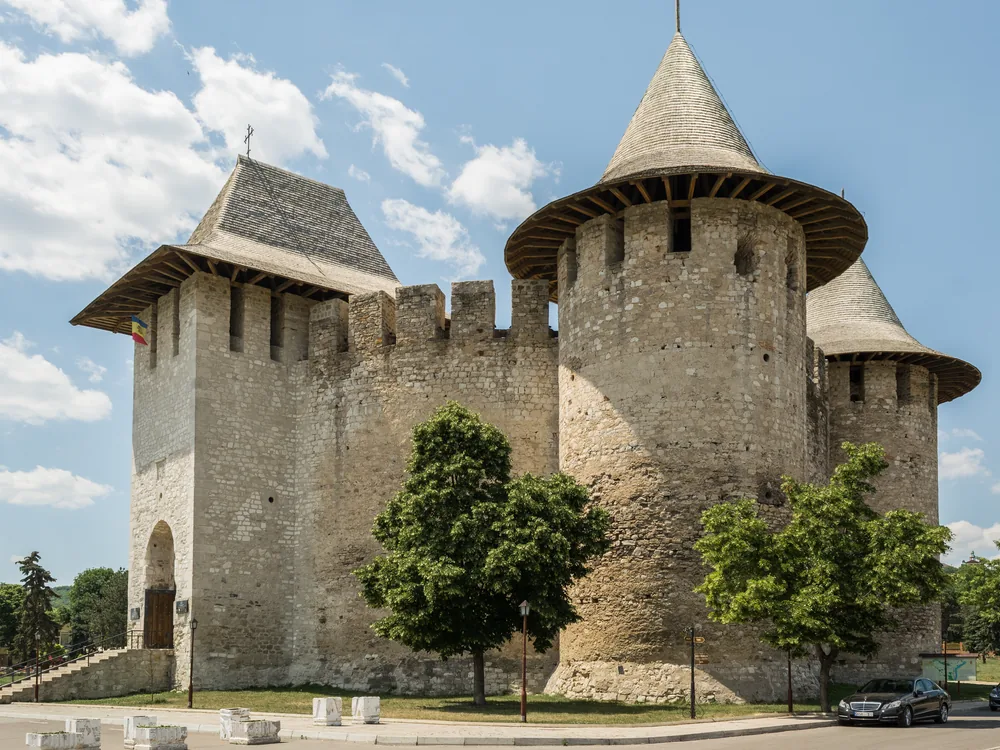
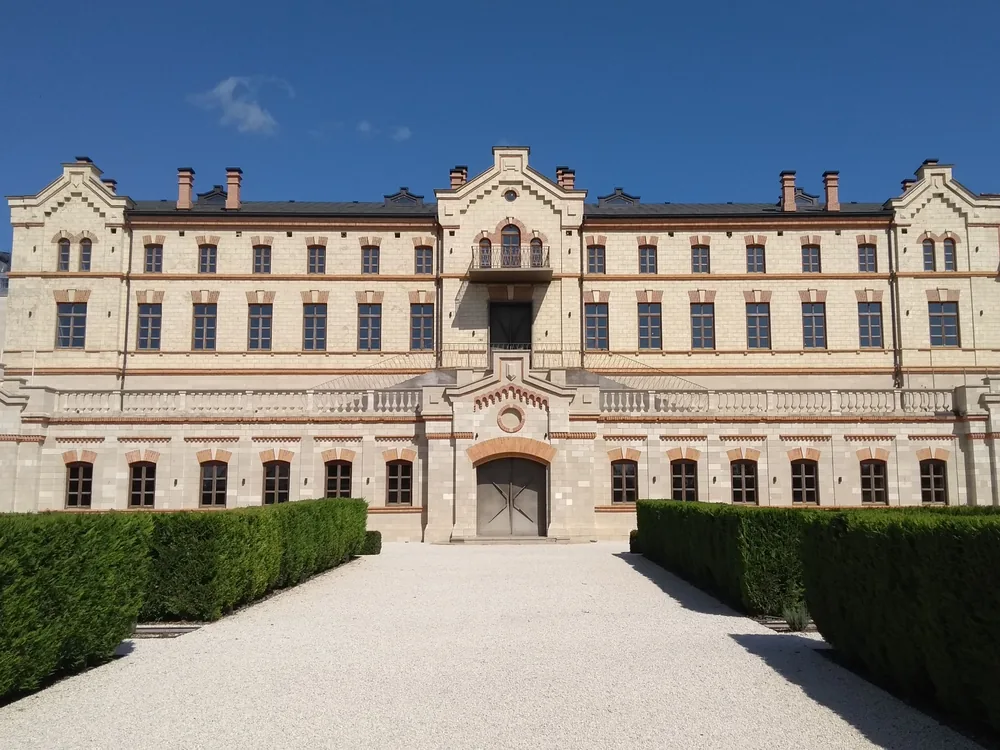
Combine with: Soroca Fortress (~160 km north in northern Moldova — the Genoese-to-Moldavian circular Renaissance fortress on the Dniester, also built by Stephen the Great, one of the finest examples of 15th-century military architecture in Eastern Europe) and Mimi Castle (~70 km west near Anenii Noi — Moldova's most scenic 19th-century wine estate, with a château-style manor, wine caves, and award-winning Feteasca Neagra).
Frequently Asked Questions
Transnistria (the Pridnestrovian Moldavian Republic, or PMR) is a breakaway territory that declared independence from Moldova in 1990 following the dissolution of the Soviet Union. It is not internationally recognised as a sovereign state by any UN member country, but it functions with its own government, currency (Transnistrian ruble), police, military, and administrative structures, with strong Russian political and economic support. The 1992 armed conflict between Moldovan forces and Transnistrian separatists (supported by Russian troops) ended in a ceasefire and has not resumed. Day-to-day life in Transnistria is peaceful, and tens of thousands of tourists visit annually — primarily from Eastern Europe and organised tours from Chișinău. The territory has a reputation as a Soviet time capsule rather than a conflict zone, and tourist infrastructure for day visits is well established. That said, Transnistria is not under Moldovan government control, Visa/Mastercard do not function there, and Ukrainian passport holders face crossing restrictions. Assess current conditions before visiting independently.
Location
Tighina Fortress, Bender (Tighina), Transnistria (PMR)
Nearby Castles
Tours & Tickets
Powered by GetYourGuide
From
€96/ person