
Mimi Castle
Castel Mimi
Moldova · Anenii Noi District — Bulboaca village, ~30 km east of Chișinău, Moldova · Near Chișinău
Built 1900 · French château style, designed and built by Italian architects and craftsmen invited specifically to Bulboaca for the project; the first building in Bessarabia constructed using reinforced concrete; set on a wine estate with formal gardens, a hedge maze, historic cellars, and original production halls
This page is part of an independent travel guide and is not affiliated with, endorsed by, or operated by Mimi Castle.
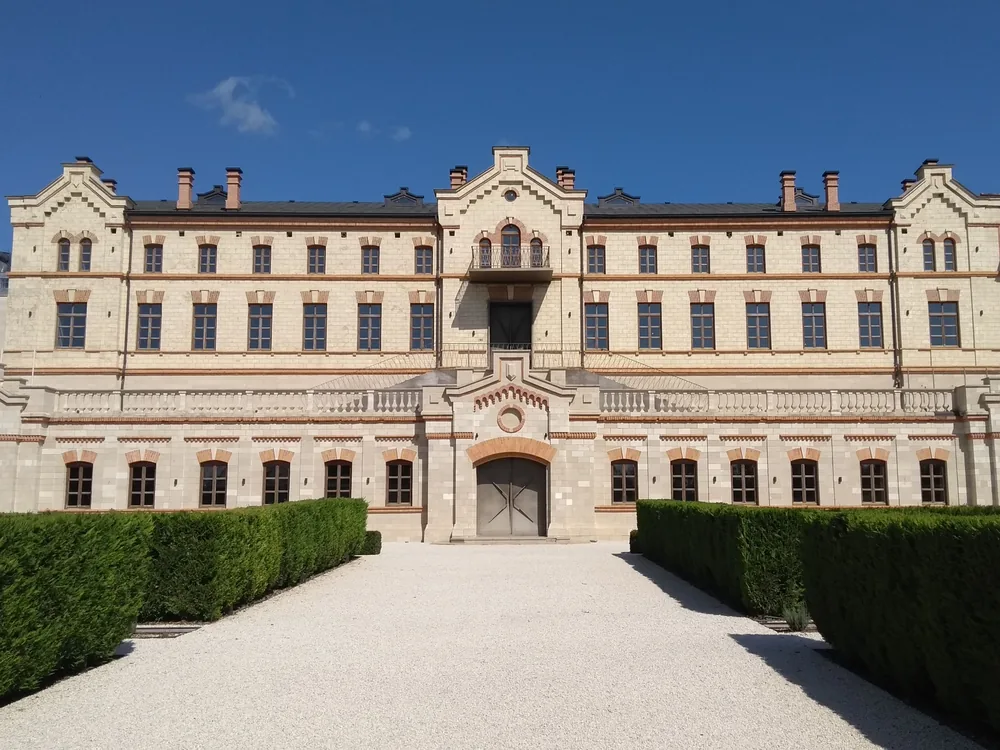
© Castles & Palaces
Quick Facts
- Hours
- Wed–Sun By reservation only (last tour departs 16:00). Closed Mon & Tue
- Guided tour from
- €210
- Duration
- 2–3 hours (guided tour including wine tasting)
- Best time
- Late summer and harvest season
- Booking
- Required — book 2+ days ahead
- Nearest city
- Chișinău
Featured Tour
Chișinău & Castel Mimi Wine Tour – With Wooden Monastery
Cancellation available · Instant confirmation
Highlights
- ✦Commissioned around 1893 by Constantin Mimi (1868–1935), the last Russian-appointed Governor of Bessarabia — a man who had trained seriously in viticulture and winemaking in France and returned with a precise ambition: to build an authentic French-style wine château on his Bulboaca estate, not a decorative country house
- ✦Designed and built by Italian architects and craftsmen brought specifically to Bulboaca for the project — a direct import of Italian building expertise into the Bessarabian countryside, producing a building that looks architecturally out of place in Moldova in exactly the way its patron intended
- ✦The first building in the entire historical region of Bessarabia constructed using reinforced concrete — in the 1890s, when Monier's patent for the material was barely twenty-five years old, this was a genuine engineering novelty and a sign that Mimi was building for permanence rather than convenience
- ✦Today ranked among the world's most beautiful winery estates — the restored château, historic cellars, formal gardens, and hedge maze are all included on guided tours, which combine architectural history with wine tasting from the estate's own production across a 2–3 hour visit
- ✦A working winery with over 125 years of continuous production history — Bulboaca wines had already achieved national and international recognition by 1900; Castel Mimi is not a preserved museum set up to look like a winery, but a functioning estate that has been making wine on this land since before the 20th century began
Skip the queue with a guided tour
Skip-the-line tickets & expert guides
Constantin Mimi was born in 1868 and rose to become the last Russian-appointed Governor of Bessarabia — one of the highest imperial civil posts in the region — but the formative experience that shaped what he would build at Bulboaca was not his administrative career. It was the time he spent in France, studying viticulture and winemaking seriously and returning with a precise vision: an authentic French-style wine estate designed by architects who actually knew that form. The craftsmen he brought to Bulboaca were Italian, summoned specifically for the project and not drawn from any local tradition. The building they completed, starting in 1893, is consequently one of the stranger architectural objects in Moldova: a French château designed by Italians, commissioned by a Bessarabian governor of the Russian Empire, in a wine-growing village east of Chișinău.
Among the building's technical distinctions, one deserves particular mention. Mimi Castle was the first structure in the entire historical region of Bessarabia built using reinforced concrete. In the 1890s — when Monier's patent for the material was barely twenty-five years old and it remained experimental across much of Europe — its use in rural Bessarabia was genuinely forward-thinking. Mimi was building for permanence. The estate he created around the château included formal gardens, a hedge maze, historic production cellars, and original manufacturing halls. By 1900, the wines from Bulboaca had already achieved national recognition — this was a working winery from the outset, not a vanity project that happened to grow some vines. The production history at Bulboaca now stretches back over 125 years, making Castel Mimi one of the oldest continuously operating wine estates in Moldova.
Soviet nationalization of private agricultural land disrupted the estate's ownership during the mid-20th century, as it did for most of Moldova's privately held wine production. The specific nature of the estate's Soviet-era use is not well documented in accessible English-language sources, and claims about this period should be treated with appropriate caution. Post-Soviet restoration revived the château, gardens, cellars, and maze under the Castel Mimi name. The brand has since become internationally recognized, and the estate appears regularly on lists of the world's most distinctive winery destinations.
Mimi Castle is not a medieval fortress. Visitors expecting the stone walls and military history of Soroca Fortress — Moldova's other castle on this site, 120 km north on the Dniester — will find something entirely different: a Belle Époque wine château in a formal garden, where the guided tour passes through historic cellars and ends with a tasting. The architecture is the frame; the wine and the setting are the point. For the visitor who wants a refined afternoon in a genuinely unusual building with a glass of something from vines that have been growing on this land since the 1890s, Mimi Castle is Moldova's most complete estate experience.
History
Constantin Mimi's path to building a French-style château in Bessarabia began with a career in the Russian imperial civil service and a detour into French viticulture. Born in 1868, he eventually reached the office of Governor of Bessarabia — the last to hold the position under Russian imperial appointment — but the project that defined his legacy was agricultural and architectural rather than administrative. His exposure to winemaking and château culture in France gave him a model, and in the early 1890s he moved to realise it: Italian architects and craftsmen were brought specifically to Bulboaca for the task, not recruited locally. Construction began in 1893. The finished building was the first in Bessarabia to be constructed using reinforced concrete, a material barely two decades past Monier's foundational patent and still considered experimental in much of Europe. The château was surrounded from the outset by a working wine estate; by 1900, Bulboaca production had achieved national recognition, and the estate's wines were known beyond Bessarabia. Mimi died in 1935. The Soviet period brought nationalization of the estate and a transformation of its purpose whose precise details remain thinly documented in accessible sources. Post-Soviet restoration began after Moldovan independence and eventually produced the Castel Mimi identity that the estate carries today — a wine resort and tourism operation that has rebuilt the château, gardens, maze, and historic cellars into one of Moldova's most visited private attractions.
How to Visit
Getting there: Mimi Castle (Castel Mimi) is in Bulboaca village, approximately 30 km east of Chișinău — about 40 minutes by car via the A2 national road toward Căuşeni. No public transport connects Chișinău directly to Bulboaca — visitors arrive by private car, taxi, or the featured GetYourGuide guided tour with hotel pickup from Chișinău.
Tickets: No walk-up admission exists — all visits are pre-booked guided tours including wine tasting. Book through the castle's own website (castelmimi.md) or via the GetYourGuide guided tour — a small-group guided tour covering Chișinău city highlights, Mimi Castle (tour + wine tasting), and the wooden monastery at Hîrjauca, with hotel pickup from Chișinău. The estate is closed Monday and Tuesday; the last tour departs at 4:00 PM, and a surcharge applies for later-afternoon slots.
Practical tips: Closed Monday and Tuesday — don't build a Chișinău itinerary around a Mimi Castle visit without confirming the current weekly schedule. The hedge maze and formal gardens are part of the exterior tour before entering the château and cellars — allow the full 2–3 hours rather than planning a quick visit. Some alternative GetYourGuide tours combine Mimi Castle with Transnistria (a de facto unrecognized breakaway territory), which involves a checkpoint crossing — the featured GetYourGuide tour above uses the wooden monastery at Hîrjauca instead, a gentler pairing without the geopolitical complexity.
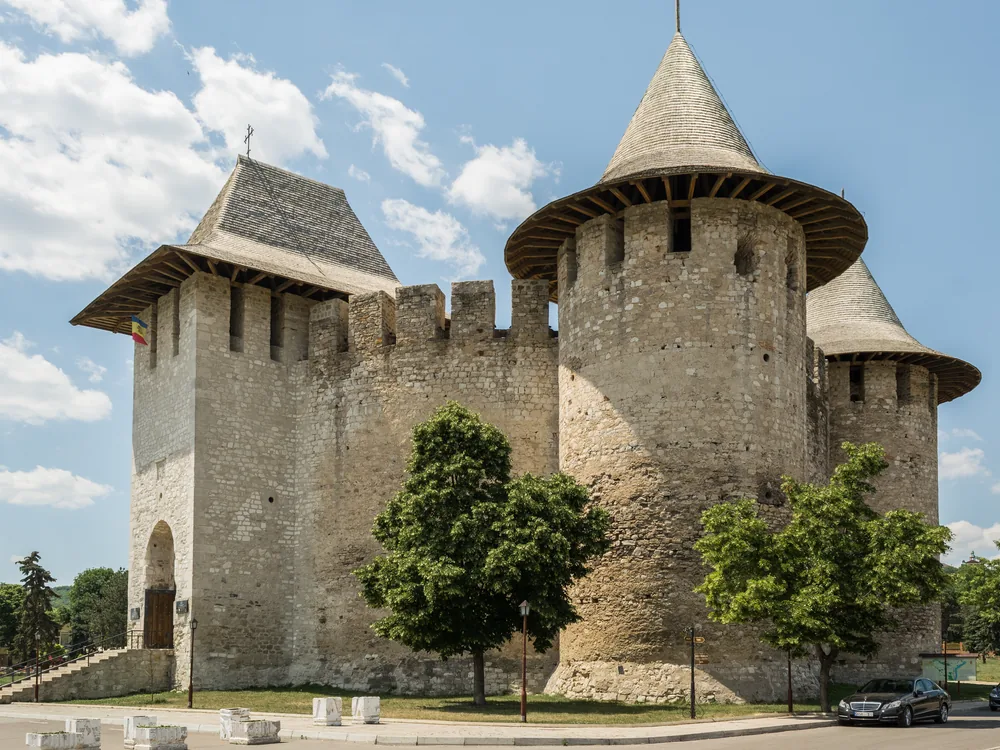
Combine with: Soroca Fortress (~120 km north — Moldova's other castle page: a 1499 Ottoman-era round fortress on the Dniester River, an entirely different kind of Moldovan heritage site from the Belle Époque wine château at Bulboaca).
Frequently Asked Questions
No — it is a French-style wine château built starting in 1893, not a medieval fortress. The name 'castle' reflects the architectural style of the building (château means castle in French) and is the reason it is sometimes called 'the castle of Moldova', but it has no medieval origin and was never a military fortification. It is Moldova's only building of this châteaux type.
Location
Strada Dacia 1, Bulboaca, Anenii Noi District, MD-6512, Moldova
Nearby Castles
Tours & Tickets
Powered by GetYourGuide
From
€210/ person