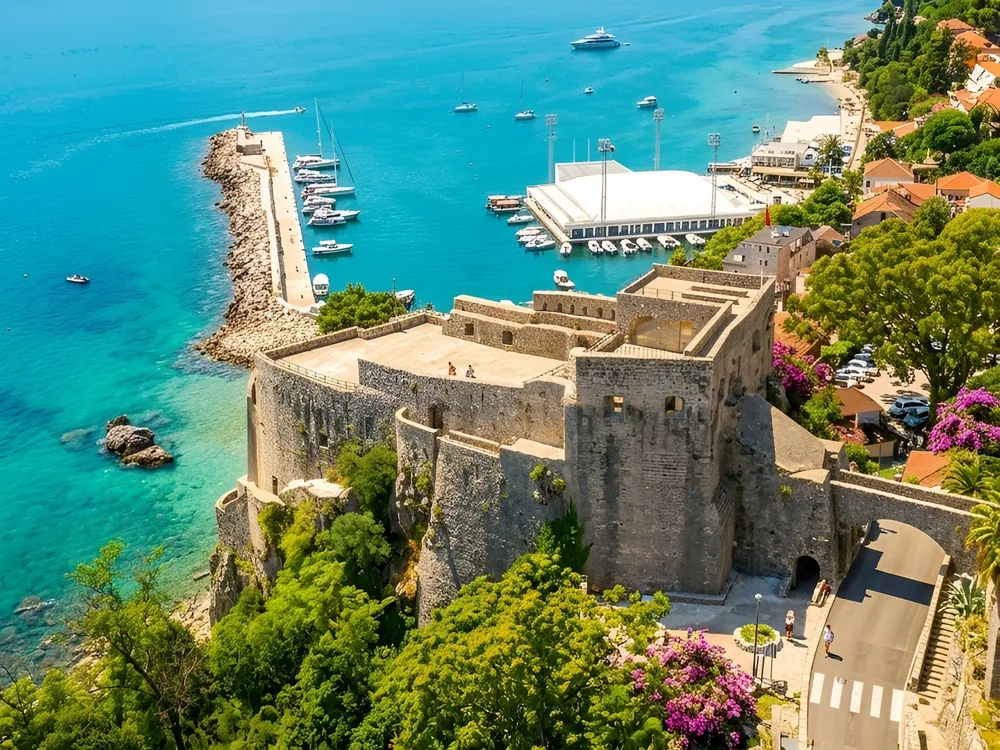
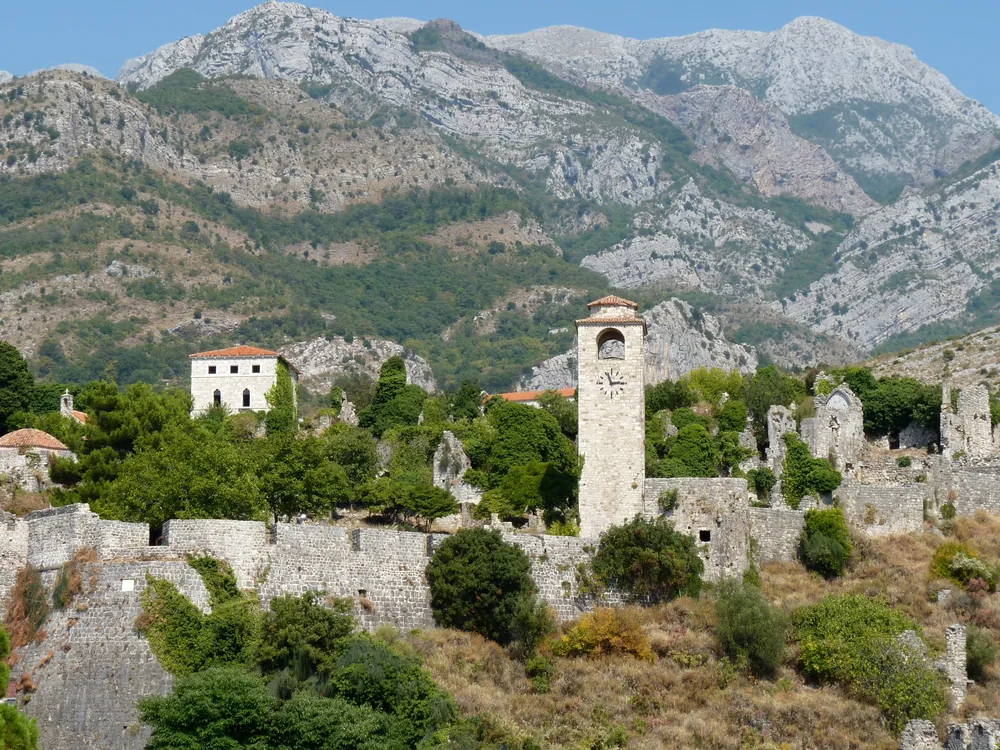
Forte Mare Fortress
Tvrđava Forte Mare
Montenegro · Herceg Novi, Montenegro · Near Herceg Novi
Built 1382 · Late medieval coastal fortress built by the Bosnian King Tvrtko I in 1382 as the first structure of the town of Herceg Novi; the sea-facing walls and towers were subsequently strengthened by the Ottoman Empire (1482–1687) and the Republic of Venice (1687–1797) — each period leaving distinct architectural traces in the masonry; the fortress sits on a cliff edge above the Adriatic at the western approach to the Bay of Kotor, with the town's Old Town quarter immediately behind its landward walls; freely accessible at all times, no entrance fee
This page is part of an independent travel guide and is not affiliated with, endorsed by, or operated by Forte Mare Fortress.
© Castles & Palaces
Quick Facts
- Hours
- Mon–Sun open
- Guided tour from
- €29
- Duration
- 45 minutes – 1 hour self-guided; 1.5 hours on the GetYourGuide Old Town walking tour
- Best time
- April to October
- Nearest city
- Herceg Novi
Featured Tour
Herceg Novi: Old Town Walking Tour Culminating at Forte Mare
Cancellation available · Instant confirmation
Highlights
- ✦Founded by the last Bosnian king — Forte Mare was built in 1382 by Tvrtko I, the Bosnian king who founded Herceg Novi ('New Castle') as a salt-trading port; this makes Forte Mare the oldest structure in the town and the direct physical expression of the moment Herceg Novi came into existence; the town's identity as a planned royal trading settlement is inseparable from the fortress that Tvrtko I built to protect and assert ownership of the Bay of Kotor approach
- ✦Bosnian, Ottoman, and Venetian layers in one wall — the fortress passed through three distinct imperial periods, each of which left architectural traces in the surviving structure; the original 14th-century Bosnian walls were modified during the Ottoman occupation (1482–1687), then significantly reworked by Venetian military engineers after the Republic of Venice took the town in 1687; the Venetian winged lion reliefs embedded in the walls are the most visible legacy of the final imperial period, and the contrast between Ottoman and Venetian construction techniques is legible in the different wall sections to an informed eye
- ✦Free and always open — Forte Mare has no entrance gate or ticket office; it is freely accessible at all times, making it one of the very few fortress sites on the Adriatic coast that visitors can explore without any booking, payment, or opening-hours restriction; this also means it is frequently quieter than comparable fortress sites like Kotor's city walls, which charge admission
- ✦Old Town walking tour culminating at the fortress — the GetYourGuide guided tour is a 1.5-hour walk through Herceg Novi's Old Town led by a licensed local guide, covering the town's stepped streets, squares, and Ottoman and Venetian architecture before concluding at Forte Mare — described in the tour's copy as 'the tour's crowning jewel'; the guided format provides the historical context (Bosnian founding, Ottoman and Venetian layers, 20th-century Yugoslavian history) that makes the fortress's layered fabric legible
- ✦Bay of Kotor viewpoint — Forte Mare's cliff-edge position at the western entrance to the Bay of Kotor gives views over the bay's inner water toward the mountains on the opposite shore and the walled city of Kotor at the bay's innermost point; this is one of the first views of the full Bay of Kotor panorama available from the Adriatic side, and the fortress walls frame it in a way that the town's lower seafront promenade does not
Skip the queue with a guided tour
Skip-the-line tickets & expert guides
Forte Mare Fortress stands on a cliff at the western entrance to the Bay of Kotor, its walls rising directly from the rock above the Adriatic. It is the oldest structure in Herceg Novi — built in 1382 by the Bosnian king Tvrtko I when he founded the town as a salt-trading port and named it Novi ('New') to distinguish it from older settlements on the bay. The fortress that Tvrtko I built to protect and assert his ownership of the bay entrance is the founding moment of Herceg Novi itself, and the town's subsequent history is written in the modifications that each subsequent occupying power made to the original Bosnian walls.
The Ottoman Empire took Herceg Novi in 1482 and held it for over two centuries, during which the fortress was rebuilt and expanded as a significant naval position controlling access to the bay. The Republic of Venice captured the town in 1687 after a brief but decisive military campaign and held it until the Napoleonic dissolution of the republic in 1797; the Venetian military engineers who reworked the fortress left their characteristic mark in the form of Venetian winged lion reliefs embedded in the walls — the same symbol visible on fortresses across the Dalmatian coast and the Adriatic islands. The Russian Empire briefly took the town in 1806 before it passed to the Napoleonic Kingdom of Italy, then to the Austrian Empire, then to the Kingdom of Yugoslavia, and finally to independent Montenegro.
Among the Bay of Kotor's fortress sites, Forte Mare is distinctive for its combination of historical depth and free access. Kotor's city walls — an UNESCO World Heritage component — charge an admission fee and have defined opening hours; Forte Mare has neither. The fortress is freely accessible at all times, its gates open, its cliff-edge terraces available to anyone who walks up through the Old Town's stepped streets.
The GetYourGuide walking tour covers Herceg Novi's Old Town before culminating at Forte Mare as its final stop. The 1.5-hour guided walk provides the historical commentary that the fortress's layered fabric rewards — without a guide, the distinction between the Bosnian, Ottoman, and Venetian wall sections, and the significance of the winged lion reliefs, are easy to miss. The fortress itself is free to enter at any point; the tour's value is the licensed guide's expertise applied to both the town and the fortress.
History
Forte Mare was built in 1382 by Tvrtko I of Bosnia as the founding structure of the new town of Herceg Novi. The town changed hands repeatedly: it was taken by Herzegovina Duke Stjepan Vukčić Kosača in 1441 (who gave it the name 'Herzeg' that became 'Herceg'), by the Ottoman Empire in 1482, and by the Republic of Venice in 1687 after the Great Turkish War. Venice held the town until the republic's dissolution in 1797; the fortress then passed to France, Russia (briefly), the Napoleonic Kingdom of Italy, and the Austrian Empire before becoming part of the Kingdom of Yugoslavia after World War I. Montenegro became an independent state in 2006. Forte Mare is managed as a public open space and heritage site by the municipality of Herceg Novi.
How to Visit
Getting there: Forte Mare is in the Old Town of Herceg Novi, reached on foot from the main Njegoševa promenade via the stepped streets of the old quarter. Herceg Novi is at the western end of the Bay of Kotor, approximately 90 km from Dubrovnik (Croatia) by road and 50 km from Kotor by road. Regular buses run from Kotor and Podgorica. The town is also a frequent cruise ship stop.
Tickets: Forte Mare is free to enter at all times — no ticket, no gate, no opening hours restriction. Walk up through the Old Town's stepped streets to reach it. The GetYourGuide Old Town walking tour includes expert guided commentary on the Old Town and Forte Mare — a licensed local guide who covers the fortress's historical layers as the tour's culminating stop; the tour's value is the guided interpretation, not fortress entry.
Practical tips: The cliff-edge terraces of Forte Mare are the best viewpoint in Herceg Novi for the Bay of Kotor panorama — arrive in the late afternoon when the western sun illuminates the bay and the mountains on the opposite shore. The stepped streets of the Old Town between Trg Herceg Stjepana (the main square) and the fortress are worth walking slowly for the Ottoman-period architecture and Venetian stone details. The fortress is also particularly atmospheric at dusk, when the tour groups from the cruise ships have departed.
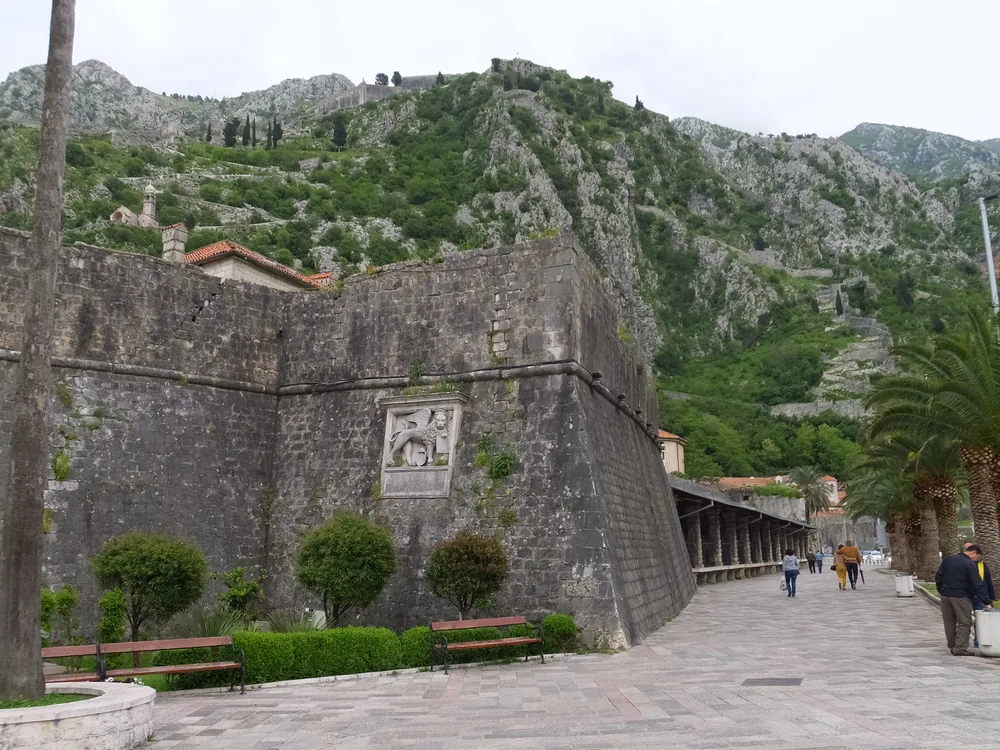
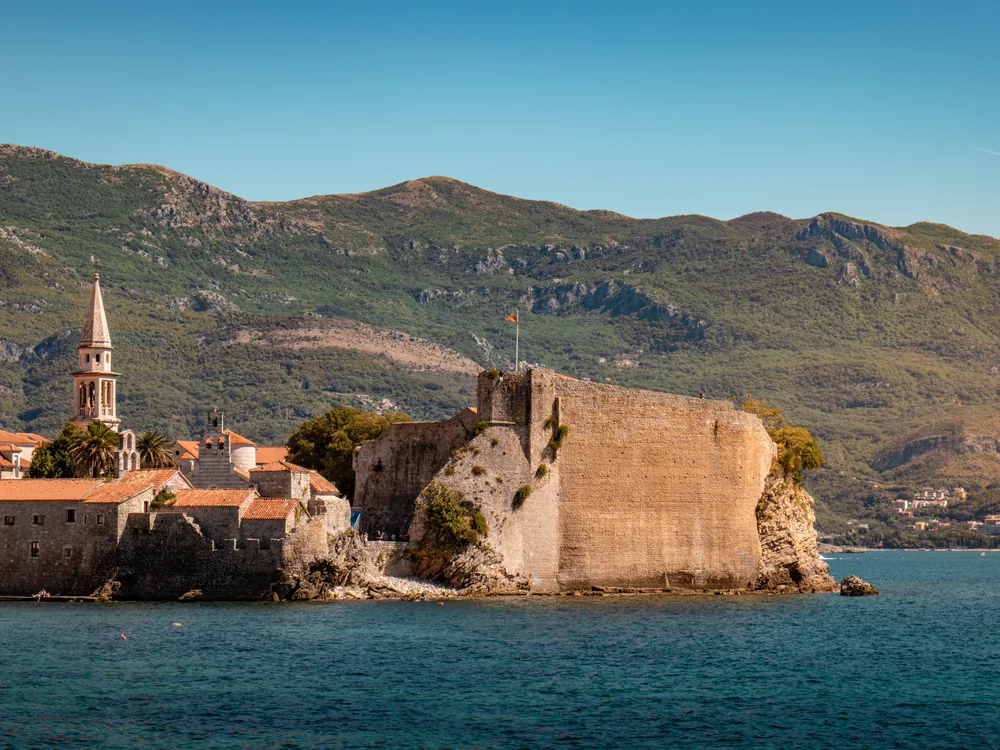
Combine with: Kotor City Walls (50 km east around the bay — the UNESCO-listed medieval city walls of Kotor, rising dramatically up the limestone cliffs above the city and enclosing one of the best-preserved medieval townscapes on the Adriatic) and Budva Citadel (50 km southeast along the coast — the fortified old town of Budva on a small Adriatic peninsula, Montenegro's most visited coastal heritage site).
Frequently Asked Questions
Yes — Forte Mare has no entrance gate, no ticket office, and no opening hours. It is freely accessible at all times of day and night, unlike most comparable fortress sites on the Adriatic coast. This is unusual: Kotor's city walls charge admission, Dubrovnik's city walls charge substantial admission, and most Venetian-period fortresses in the region have ticketed entry. Forte Mare's free access reflects its current status as a public open space within the municipality of Herceg Novi rather than a ticketed heritage attraction. The GetYourGuide walking tour visits the fortress with a guide but does not provide any special access — what it provides is expert interpretation of what you're looking at, which the fortress's layered history genuinely rewards.
Location
Forte Mare, Herceg Novi, Montenegro
Nearby Castles
Tours & Tickets
Powered by GetYourGuide
From
€29/ person