
Castle Helmond
Kasteel Helmond
Netherlands · North Brabant · Near Helmond
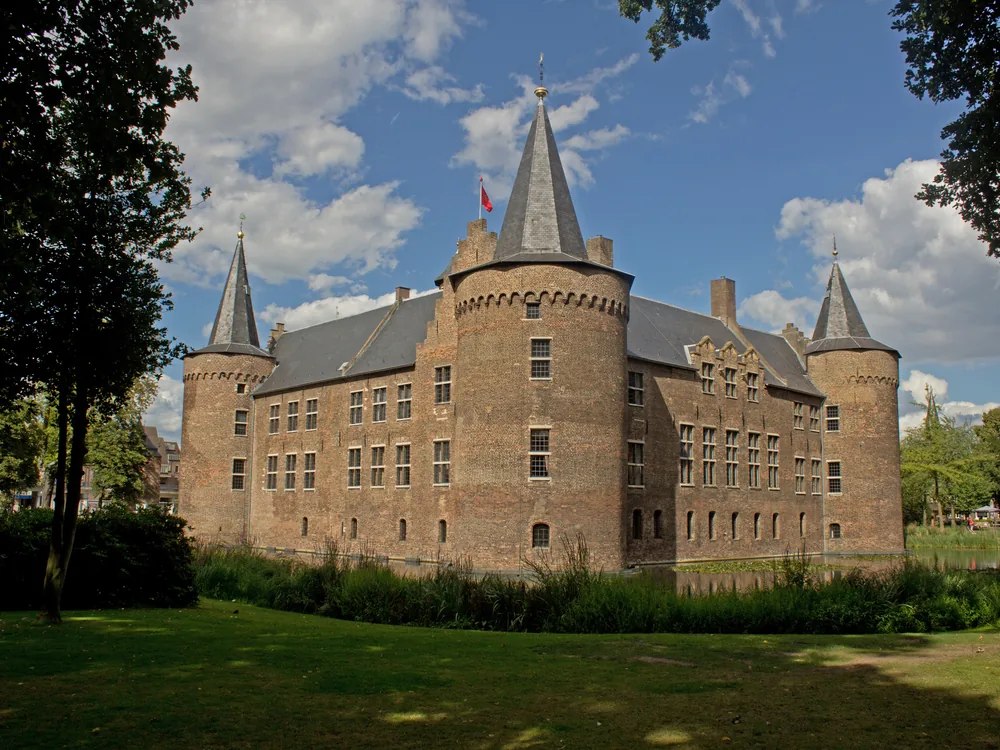
Built 1350 · Moated square-plan medieval castle from the mid-14th century, one of the best-preserved moated castles in the Netherlands, featuring four corner towers connected by curtain walls and set within an original water-filled moat; today houses Museum Helmond with permanent collection including work associated with Renaissance painter Lucas Gassel; note that the museum's contemporary art exhibition wing is temporarily closed until September 2026
This page is part of an independent travel guide and is not affiliated with, endorsed by, or operated by Castle Helmond.
© Castles & Palaces
Quick Facts
- Hours
- Tue–Sat 10:00–17:00. Sun 12:00–17:00. Closed Mon
- Entry via GetYourGuide
- €12
- Duration
- 1–2 hours
- Best time
- Year-round
- Nearest city
- Helmond
Featured Tour
Helmond: Castle Helmond Entry Ticket
Cancellation available · Instant confirmation
Highlights
- ✦One of the best-preserved square-plan moated castles in the Netherlands: four corner towers connected by curtain walls, set within an original water-filled moat, largely intact and in continuous use since the 14th century
- ✦Home to Museum Helmond, which occupies the castle and operates a permanent collection including work associated with Renaissance painter Lucas Gassel — a significant Flemish-school painter active in the early-to-mid 16th century whose landscapes are among the earliest detailed depictions of the Meierij (the North Brabant region) in art
- ✦Fully wheelchair accessible throughout — elevators serve all floors, making Castle Helmond one of the more genuinely accessible historic castle interiors in North Brabant, which is not always the case for buildings of this age and type
- ✦The entry ticket includes food and drinks from the museum café, a practical inclusion that makes the stop a fuller break rather than just a ticket-gate experience
- ✦Note: the museum's contemporary art exhibition wing is temporarily closed until September 2026 — the castle architecture, moat, and permanent collection are fully open
Skip the queue with a guided tour
Skip-the-line tickets & expert guides
In the centre of Helmond, surrounded by its original water-filled moat, a square-plan medieval castle stands largely as it was built in the mid-14th century: four corner towers, curtain walls connecting them, a drawbridge replaced by a permanent crossing, and the still-water moat that reflects the structure's silhouette on calm days. Kasteel Helmond is one of the better-preserved examples of this castle type in the Netherlands — a country whose medieval built heritage has suffered considerable attrition over centuries of flood, fire, economic repurposing, and urban development, making intact examples of 14th-century castle architecture genuinely valuable.
The castle was built in the second half of the 14th century for the Lords of Helmond, a minor noble family with jurisdictional authority over the town and its surrounding territory in the Meierij — the southeastern part of what is now North Brabant. The square-plan moated castle was the dominant defensive form for this level of lordship in the Low Countries during the period: not the larger, more irregular circuit castles of major princes and rulers, but compact, efficient defensive structures designed to project authority over a local agricultural territory and provide a defensible residence for the lord and his household. Helmond's example is notable for the completeness of its surviving fabric — the four towers and connecting walls are all still standing, and the water moat has been maintained rather than filled in and built over, which happened to the majority of similar structures in the Netherlands over the 19th and 20th centuries.
The castle today houses Museum Helmond, which gives the building its current institutional identity. The museum's permanent collection includes a significant number of works associated with Lucas Gassel — a Flemish-school Renaissance painter active in the early-to-mid 16th century, born in Helmont (as the town was then spelled) and documented as working in Brussels from around 1519. Gassel is not a household name in the way that Bruegel or Bosch are household names, but his work is of genuine art-historical interest: his landscape paintings are among the earliest detailed artistic depictions of the Meierij region, placing him within the tradition of Early Netherlandish painters who developed landscape as a legitimate subject in its own right rather than purely as a background for religious or mythological scenes. A number of his works survive in major museum collections across Europe, and the presence of Gassel-associated material in the castle that stands in his hometown gives the Museum Helmond a specificity that distinguishes it from a generic local museum.
A note on what is currently accessible: the museum's contemporary art exhibition wing is temporarily closed until September 2026. The permanent collection, castle architecture, moat, and the Gassel-associated works are all open during this period. Visitors planning a trip specifically to see the contemporary programme should check the museum's website for the reopening date before booking; visitors interested in the castle's architectural and historical character will not find the temporary closure materially limiting.
The castle is fully wheelchair accessible throughout, with elevators serving all floors — a practical point worth stating clearly because genuinely full accessibility in a working medieval castle is less common than accessibility signage alone would suggest. The entry ticket at €14 includes food and drinks from the museum café, which makes it a more complete visit than a straightforward ticket-gate entry. Helmond is 25 km east of Eindhoven, directly connected by rail, and is a realistic half-day stop from either Eindhoven or 's-Hertogenbosch (Den Bosch).
History
Kasteel Helmond was built in the second half of the 14th century for the Lords of Helmond as their fortified seat and administrative centre. The square moated plan with four corner towers and curtain walls is typical of minor noble castle construction in the Low Countries during this period. The castle passed through several noble families across the medieval and early modern period before its use shifted from noble residence to civic and institutional functions.
In the 20th century the castle became the home of Museum Helmond, which maintains and operates it today as a combined heritage monument and art museum. The permanent collection includes works associated with Renaissance painter Lucas Gassel, who was born in Helmond in the early 16th century. The museum's contemporary art wing is temporarily closed until September 2026; the permanent collection and castle architecture remain fully accessible.
How to Visit
Getting there: Castle Helmond is in the centre of Helmond, approximately 25 km east of Eindhoven. From Eindhoven Centraal, take the train to Helmond (12 minutes, frequent service); the castle is a 10-minute walk from Helmond station. By car, take the A270 from Eindhoven; parking is available in the town centre.
Tickets: €14 at the door, includes museum access and food/drinks from the café. The GetYourGuide entry ticket provides the same access. No advance booking required. Fully wheelchair accessible throughout.
Practical tips: The contemporary art exhibition wing is temporarily closed until September 2026 — the permanent collection, castle architecture, moat, and Lucas Gassel-associated works are all open during this period. Check museumhelmond.nl before visiting if the contemporary programme is your primary reason for the trip.
Combine with: Eindhoven (25 km west by rail) for the Van Abbemuseum and the Philips Museum. 's-Hertogenbosch / Den Bosch (35 km northwest) for the Jheronimus Bosch Art Center and the Gothic cathedral.
Frequently Asked Questions
Lucas Gassel (c.1480/1500 – c.1570) was a Flemish-school Renaissance painter born in Helmont (the early spelling of Helmond). He is documented as active in Brussels from around 1519 and is best known for his landscape paintings, which are among the earliest detailed artistic depictions of the North Brabant region. His work places him within the tradition of Early Netherlandish painters who helped establish landscape as a legitimate subject in its own right, and examples of his work survive in major collections across Europe. The Museum Helmond holds Gassel-associated material, giving the castle museum a specificity directly tied to the painter's origins in the town.
Location
Kasteelplein 1, 5701 NR Helmond, Netherlands
Nearby Castles
Tours & Tickets
Powered by GetYourGuide
From
€12/ person