
Loevestein Castle
Slot Loevestein
Netherlands · Gelderland · Near Gorinchem
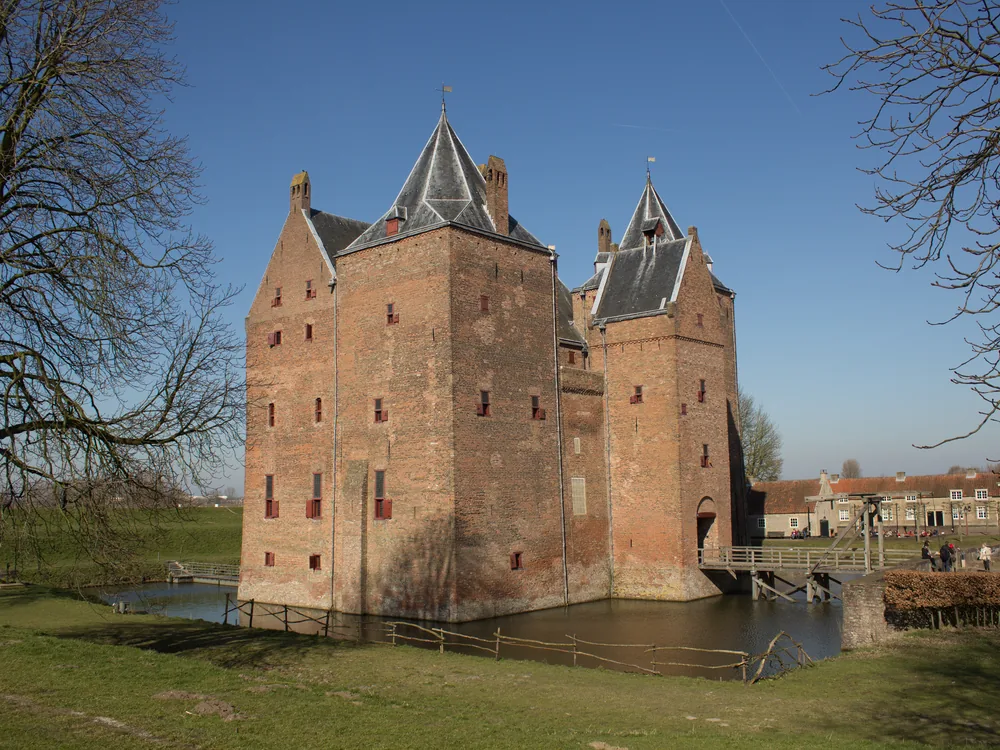
Built 1368 · Medieval castle at the strategic confluence of the Maas and Waal rivers in Gelderland; built c.1368 by Dirk Loef van Horne; served as a state prison for political prisoners for centuries; site of the escape of Hugo Grotius (1583–1645) — the father of international law — who was imprisoned here 1619–1621 and escaped in a chest of books smuggled out by his wife Maria van Reigersberch; now includes a reconstructed 18th-century soldiers' village within the castle walls; accessible only by ferry or on foot via the dyke
This page is part of an independent travel guide and is not affiliated with, endorsed by, or operated by Loevestein Castle.
© Castles & Palaces
Quick Facts
- Hours
- Tue–Sun 10:00–17:00. Closed Mon
- Entry via GetYourGuide
- €17
- Duration
- 2 hours
- Best time
- April to October
- Nearest city
- Gorinchem
Featured Tour
Loevestein Castle Entry Ticket
Cancellation available · Instant confirmation
Highlights
- ✦Site of one of the most celebrated prison escapes in European history: in 1621, the jurist Hugo Grotius — father of international law — escaped in a chest of books organised by his wife Maria van Reigersberch; the chest is on display in the castle
- ✦Built at the strategic confluence of the Maas and Waal rivers, where water on all sides made the castle both a formidable defensive position and an effective prison for political detainees across three centuries of Dutch history
- ✦A reconstructed 18th-century soldiers' village within the outer walls — houses, workshops, a bakery and gardens representing the lives of the military garrison and their families who formed a self-contained community inside the castle
- ✦Accessible only by ferry from Woudrichem or on foot along the dyke — no road reaches the castle, giving the approach across the wide river a quality of isolation that most Dutch castle visits cannot replicate
- ✦The wider landscape is the Biesbosch National Park and the great river delta of the Rhine-Meuse system — one of the largest freshwater wetland areas in western Europe
Skip the queue with a guided tour
Skip-the-line tickets & expert guides
In May 1621, a woman named Maria van Reigersberch arranged for a chest of books to be sent out of Loevestein Castle. The chest was heavy enough to require two men to carry it; the castle's guards were accustomed to the regular delivery and return of books for the castle's most distinguished prisoner, who had been confined here for two years. The chest was carried to a boat and away. When it was opened in Gorcum, the prisoner was inside: Hugo Grotius — jurist, theologian, playwright, poet, and the man who would become the intellectual architect of modern international law — had been smuggled out in a book chest organised by his wife and a loyal servant. He reached Antwerp, and eventually Paris, where he wrote the work that would define the laws between nations. He never returned to the Dutch Republic.
Hugo Grotius (Huig de Groot, 1583–1645) was, at the time of his imprisonment, one of the most accomplished men in the Dutch Republic. He had been appointed Pensionary of Rotterdam, had written the seminal defence of free maritime trade (Mare Liberum, 1609) that underpinned Dutch claims to the Asian spice trade, and had composed historical and theological works of lasting importance. His imprisonment at Loevestein came out of one of the most divisive episodes in Dutch Calvinist history: the Arminian or Remonstrant controversy, a theological dispute about predestination and free will that split the Reformed Church and became, in the hands of competing factions, a crisis of political legitimacy. The stadtholder Maurice of Nassau exploited the controversy to eliminate political opponents; Grotius, allied with Johan van Oldenbarnevelt, was convicted of treason and sentenced to life imprisonment in 1619. His escape two years later — Maria had replaced the linen in his book chest with her husband, covered him with linen and books to disguise the weight discrepancy, and bribed or distracted the guards — became one of the most celebrated escapes in European history. A replica of the chest is displayed prominently in the castle; the original is in the Rijksmuseum in Amsterdam.
From his Parisian exile, Grotius wrote De Jure Belli ac Pacis (1625) — On the Law of War and Peace — the foundational text of modern international law. The book argued that relations between sovereign states are governed by natural law: rules deriving from reason rather than from religion or royal decree, applicable to all nations regardless of their faith. The argument provided the intellectual framework on which European international relations and, eventually, the modern system of international law were built. Grotius never held political office again; he died in 1645 on a ship in the Baltic, returning from a diplomatic mission for Sweden. His portrait hangs in the castle.
The castle at Loevestein was not primarily a military fortress. From the late 14th century onward it functioned largely as a state prison, housing political prisoners of the Dutch state and, later, the Republic. The site was chosen for its natural security: the castle stands at the point where the Maas and Waal rivers converge, so that water on all sides made unauthorised departure conspicuous. Grotius was not the only notable prisoner; the castle held a succession of religious dissidents, political opponents and military prisoners across three centuries. The castle museum presents this history clearly, and the Grotius connection is the consistent thread.
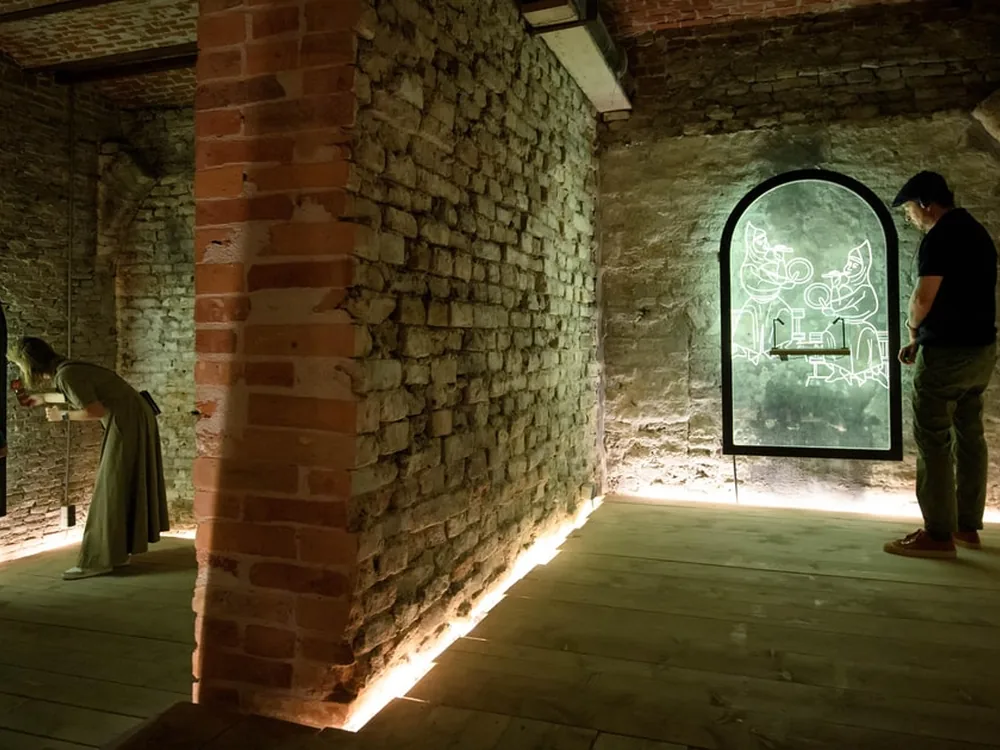
The castle experience today offers two distinct elements. The medieval castle itself — towers, walls, the great hall, the prison rooms — has been restored to reflect its period function and houses the Grotius exhibition. Alongside, within the outer walls, a complete 18th-century soldiers' village has been reconstructed: small houses, workshops, a bakery and garden representing the domestic life of the military garrison that occupied the castle in the 18th century — soldiers, wives, children, craftsmen, living within the castle walls in what amounted to a self-sufficient community. The contrast between the austere stone of the prison tower and the domestic scale of the reconstructed village gives the site an unusual range.
The approach to Loevestein is itself part of the experience. The castle is accessible only by ferry from Woudrichem, on the north bank of the Waal, or on foot along the dyke from Poederoijen to the south. No road reaches the castle gate. Arriving by ferry across a wide river, with the castle visible ahead and the Biesbosch wetlands stretching to the west, reproduces something of the isolation that made Loevestein effective as a political prison — and gives the visit a character that most Dutch castle destinations cannot match.
History
The castle was built around 1368 by Dirk Loef van Horne, who controlled the strategic confluence of the Maas and Waal rivers. After passing through the hands of the Duchy of Guelders and the Burgundian Netherlands, Loevestein came under the control of the States of Holland and was used from the late 16th century as a state prison for political detainees.
The castle's most historically significant event was the imprisonment and escape of Hugo Grotius (Huig de Groot, 1583–1645), the Dutch jurist and theologian who became the founding theorist of modern international law. Grotius was sentenced to life imprisonment in 1619 during the Remonstrant controversy; in 1621 his wife Maria van Reigersberch arranged his escape hidden in a chest of books sent out of the castle. From exile in Paris, Grotius wrote De Jure Belli ac Pacis (1625), the foundational text of modern international law.
The castle continued to function as a military installation and prison through the 18th century, housing a garrison whose daily life is now reconstructed in the soldiers' village within the outer walls. It has been a public heritage site since the 20th century and is managed as a castle museum focusing on the Grotius connection and the wider history of Dutch political imprisonment.
How to Visit
Getting there: Loevestein has no road access — the only approaches are by ferry from Woudrichem on the north bank of the Waal, or on foot along the dyke from Poederoijen on the south bank. The seasonal ferry (April to October) runs in coordination with castle opening hours — check slotloevestein.nl for current timetables before visiting. Woudrichem is reachable by bus from 's-Hertogenbosch, or by bicycle from Gorinchem (a 20-minute ride across the bridge). By car, park in Woudrichem or Poederoijen; the ferry and dyke walk each add 30 to 45 minutes each way, so factor this into your day.
Tickets: Walk-up entry €14 adult, children free. The GetYourGuide ticket covers full admission to the castle and soldiers' village with free cancellation — book in advance if ferry schedules are tight.
Practical tips: Plan your visit around the ferry schedule — if you miss the last boat, the dyke walk is a long detour. Inside, the Grotius exhibition is the highlight: the replica escape chest (the original is in Amsterdam's Rijksmuseum) is the most-visited object in the castle. The reconstructed 18th-century soldiers' village within the outer walls takes an extra 30 minutes to walk through and is worth the time. The castle is closed Mondays and has limited winter hours.
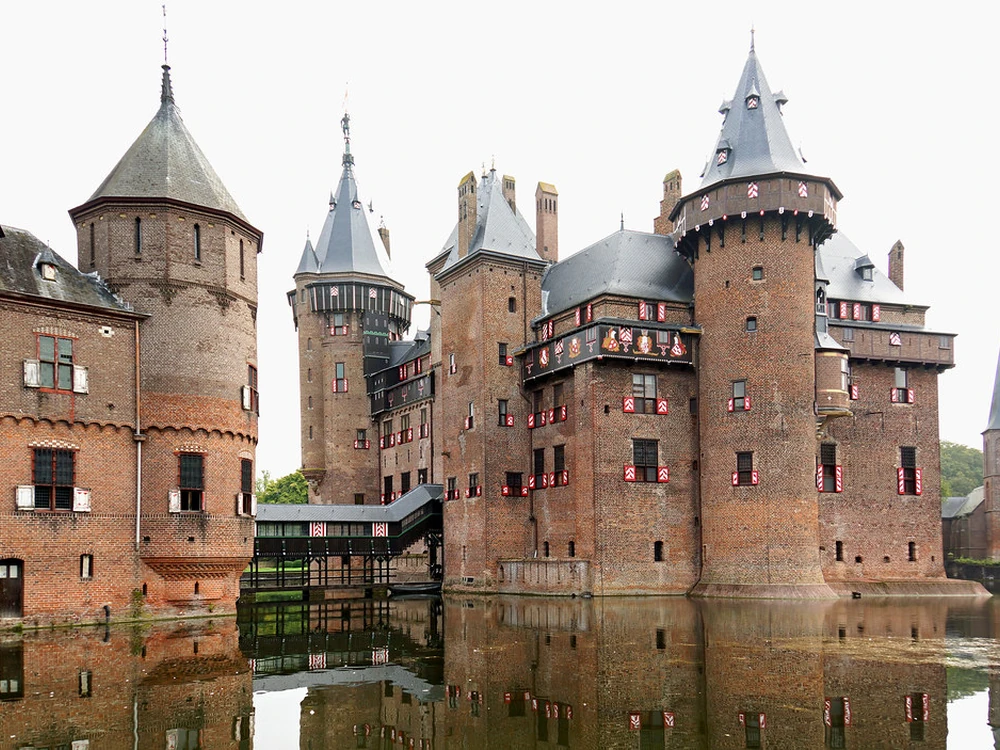
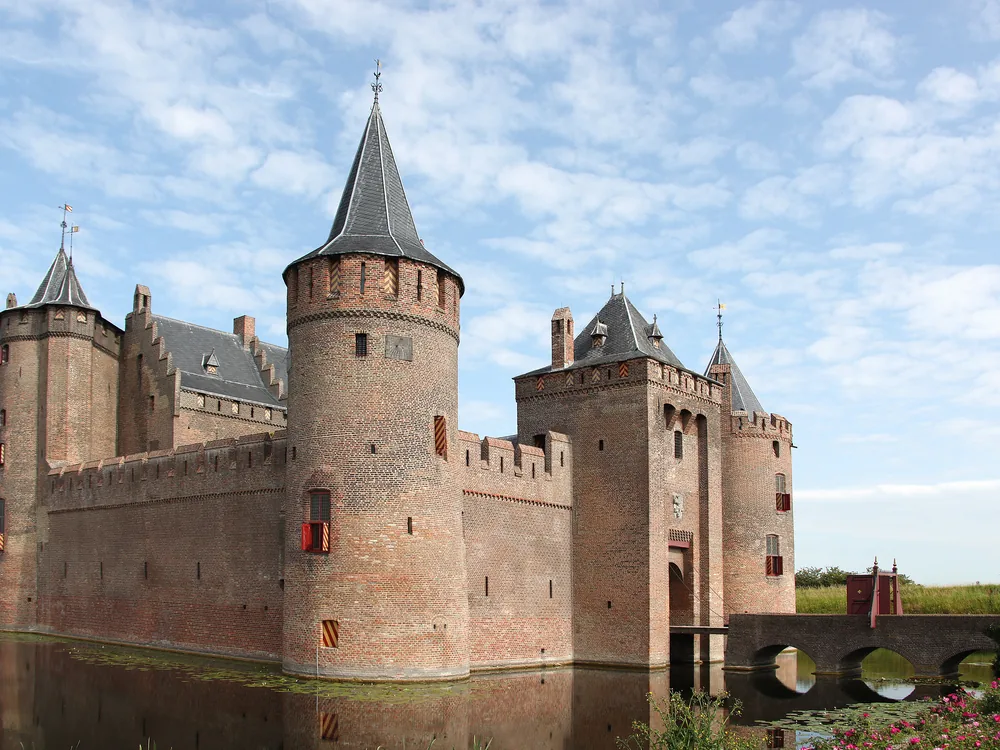
Combine with: De Haar Castle, near Utrecht about 55 km north, is the natural Netherlands pairing — a full-scale neo-Gothic castle in a wooded estate, a complete contrast to Loevestein's fortress character. Muiderslot, the best-preserved medieval castle in the Netherlands, is 80 km north near Amsterdam.
Frequently Asked Questions
Grotius's wife, Maria van Reigersberch, devised the escape. The castle's guards were accustomed to sending in chests of books for the prolific Grotius and returning them when finished. Maria had a chest modified to hold a person, replaced the usual book load with her husband, covered him with linen to disguise the weight, and arranged for the chest to be sent out as normal. The guards, perhaps bribed, perhaps inattentive, sent it through. The chest was opened in Gorcum; Grotius was inside and immediately fled to Antwerp and then Paris. A replica of the chest is on display at the castle; the original is in Amsterdam's Rijksmuseum.
Location
Slot Loevestein 1, 4305 RM Poederoijen, Netherlands
Nearby Castles
Tours & Tickets
Powered by GetYourGuide
From
€17/ person